

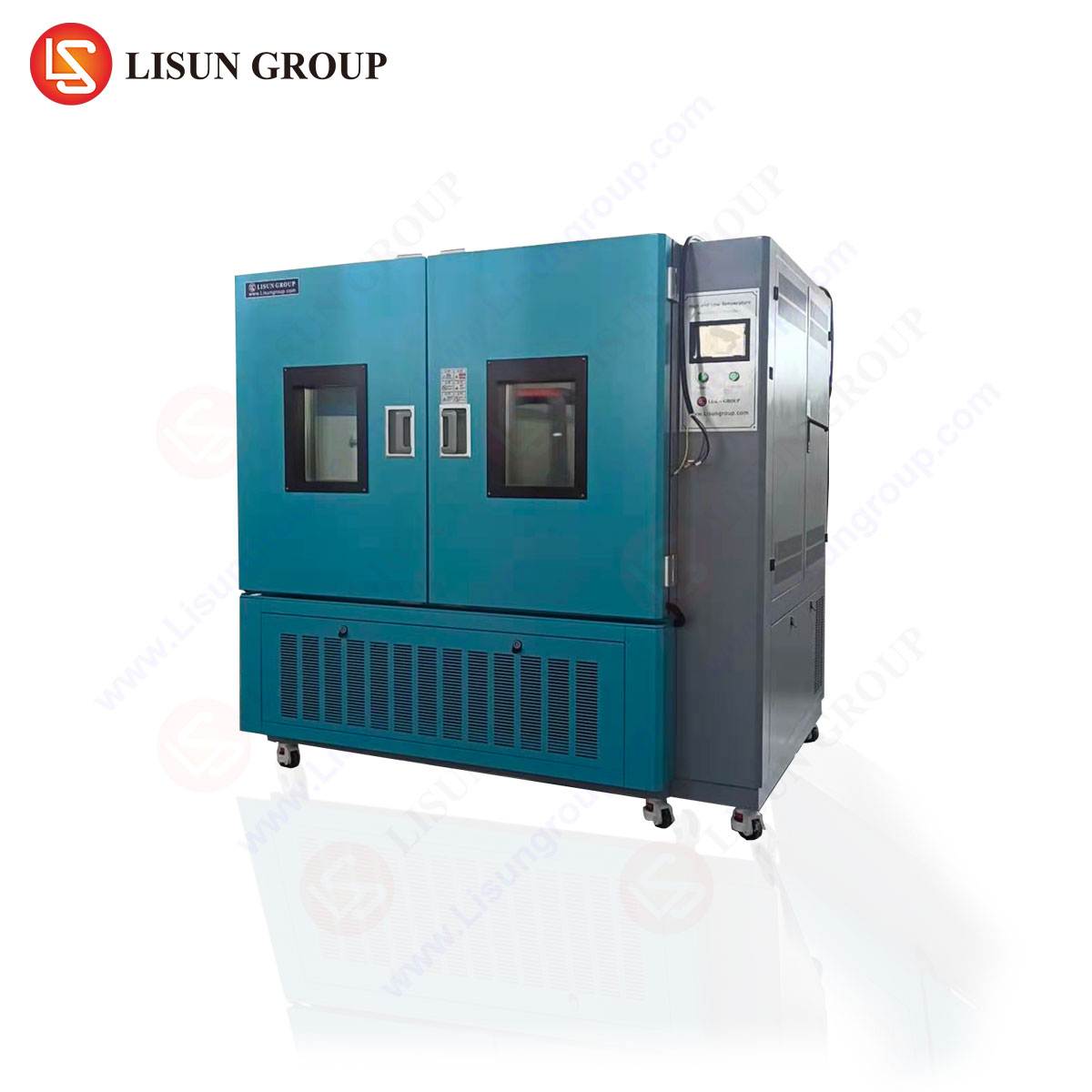



A Technical Analysis of Advanced Test Equipment for Plugs, Sockets, and Connectors: Principles, Standards, and Implementation
Introduction to Modern Compliance Verification
The global marketplace for electrical plugs, sockets, and interconnection devices is governed by a complex matrix of national and international safety standards. Manufacturers and testing laboratories face the persistent challenge of verifying that products not only meet these rigorous specifications but also demonstrate consistent performance across high-volume production runs. Traditional verification methods, often reliant on manual gauging and subjective visual inspection, introduce significant risks of human error, measurement inconsistency, and procedural drift over time. This necessitates the deployment of specialized, automated test equipment designed to deliver objective, repeatable, and fully documented assessments of critical dimensional and mechanical parameters. This article examines the technical architecture, operational principles, and industrial application of such systems, with a specific focus on integrated gauge systems for plugs and sockets.
Architectural Principles of Automated Dimensional Verification
Modern test equipment for connector verification is built upon a foundation of precision mechanical engineering, integrated sensor technology, and deterministic software control. The core architectural principle involves the replacement of manual gauge plates and feeler gauges with a programmable fixture that presents the device under test (DUT) to a series of calibrated measuring probes in a precise, repeatable sequence. A typical system comprises a rigid structural frame to minimize vibrational artifacts, a multi-axis DUT mounting stage, and an array of linear variable differential transformers (LVDTs) or laser displacement sensors. The system controller, often a dedicated industrial PC, executes a pre-defined test program that coordinates stage movement, sensor activation, data acquisition, and pass/fail determination against stored tolerance limits derived directly from the relevant standard (e.g., IEC 60884-1, BS 1363, AS/NZS 3112).
The software architecture is equally critical, transforming the hardware into a compliant verification instrument. It must provide a direct mapping between clauses of the standard and executable test routines. For instance, verification of pin diameter, pin length, entry profile, and shutter actuation force for a socket-outlet are programmed as discrete modules. The system logs all raw measurement data, associates it with a unique DUT identifier, and generates a comprehensive test report, creating an immutable audit trail for quality assurance and certification purposes.
The Role of Specialized Gauging Systems in Production Testing
Within this ecosystem of automated test equipment, dedicated gauge systems for plugs and sockets serve a vital function. These systems are engineered to perform the suite of dimensional and mechanical checks mandated by safety standards with a level of speed and precision unattainable through manual methods. A representative example of such a specialized instrument is the LISUN Gauges for Plugs and Sockets system. This apparatus is designed as a turnkey solution for verifying the conformity of AC pin configurations.
The operational principle involves the sequential application of standardized test gauges—simulating the checks performed by certification bodies—through automated, program-controlled actuators. The system can verify critical parameters such as the dimensions and spacing of line, neutral, and earth pins, the profile of pin tips to ensure correct entry into sockets, and the dimensional compliance of socket-outlet apertures and shutters. Force sensors integrated into the gauge application mechanism measure insertion and withdrawal forces, as well as shutter actuation force for socket-outlets, ensuring they fall within the permissible range: high enough to ensure secure contact, but low enough to allow safe user operation. By automating these checks, the system eliminates gauge wear inconsistencies and operator influence, ensuring every unit is assessed against an identical digital benchmark.
Technical Specifications and Operational Parameters of Integrated Gauge Systems
A system like the LISUN Gauges for Plugs and Sockets is characterized by a detailed specification sheet that defines its capabilities and compliance scope. Key technical parameters typically include:
- Applicable Standards: Direct support for IEC 60884-1, GB 2099.1, BS 1363, AS/NZS 3112, and other national derivatives.
- Test Voltage and Current: Provision for electrical tests performed by the gauges, such as 40-50V AC for certain circuit checks, at a minimal current (e.g., <0.25A).
- Dimensional Measurement Accuracy: High-resolution measurement of pin dimensions (e.g., diameter, length) with an accuracy of ±0.01mm or better.
- Force Measurement Range and Accuracy: Capability to measure insertion, withdrawal, and shutter forces from 0N to approximately 100N, with an accuracy of ±0.5% of full scale.
- Test Program Capacity: Storage for hundreds of distinct test programs covering various plug and socket types (Type A, B, C, D, E, F, G, I, etc.).
- Data Output: Automated generation of test reports in standard formats (PDF, Excel), with full data logging and traceability.
The following table illustrates a subset of typical verifications performed:
| Test Parameter | Standard Clause (Example) | Method | Typical Tolerance |
|---|---|---|---|
| Pin Diameter | IEC 60884-1 Section 9 | Go/No-Go gauge or dimensional scan | ±0.06mm |
| Pin Length | IEC 60884-1 Section 9 | Dimensional scan from reference plane | +0.0mm / -0.5mm |
| Pin Separation | IEC 60884-1 Section 9 | Precision gauge plate simulation | ±0.05mm |
| Shutter Actuation Force | IEC 60884-1 Section 13 | Force probe on shutter mechanism | 0.5N – 40N |
| Plug Withdrawal Force | BS 1363-1 | Controlled extraction from test socket | 3N – 40N |
Integration into Quality Assurance and Production Workflows
The deployment of automated test equipment necessitates strategic integration into existing quality assurance (QA) and production workflows. In a high-volume manufacturing environment, these systems are most effectively positioned at two key stages: first-article inspection (FAI) and end-of-line sampling or 100% testing. During FAI, a comprehensive battery of tests is run on pre-production samples to validate tooling and processes before full ramp-up. The detailed data output provides engineers with actionable insights to fine-tune molds and assembly jigs.
At the end of the production line, systems can be configured for high-speed cyclic testing of sampled units. The test sequence for a plug, for instance, can be completed in under 30 seconds, allowing for statistically significant sample sizes without creating a bottleneck. The immediate feedback loop is crucial; a trend indicating a pin diameter drifting toward the lower tolerance limit can trigger maintenance on an injection molding tool before non-conforming units are produced. This proactive approach to quality control, driven by data, reduces scrap, minimizes recall risk, and streamlines the certification process with notified bodies, who often view automated test data as highly reliable evidence of consistent manufacturing control.
Addressing Industry-Specific Challenges in Connector Testing
The plugs and sockets industry presents unique testing challenges that specialized equipment must address. Material variability is a primary concern. The dimensional stability of polymer housings can be affected by ambient temperature, humidity, and post-molding shrinkage. An automated system performs tests in a controlled, repeatable manner, isolating the DUT’s performance from environmental fluctuations in the lab. Furthermore, the wear and tear on mechanical components, such as socket shutters or plug pin retention mechanisms, must be predictable. Automated force and durability testing, where a plug is inserted and withdrawn thousands of cycles while monitoring force, provides accelerated life data that manual testing cannot feasibly generate.
Another challenge is the global proliferation of slightly different national standards. A manufacturer producing plugs for multiple export markets requires equipment that can be rapidly reconfigured. Advanced systems address this through quick-change gauge fixtures and software profiles that can be selected at the operator interface, enabling a single test station to validate products for dozens of markets, thereby optimizing capital equipment utilization.
Comparative Advantages of Automated Over Manual Testing Methodologies
The transition from manual to automated testing yields measurable advantages across technical, operational, and commercial dimensions. Technically, the precision of sensor-based measurement far exceeds the resolution of manual calipers or go/no-go gauges, which are subject to operator feel and interpretation. Data objectivity is paramount; the system’s pass/fail judgment is binary and based solely on the programmed tolerances, removing any subjective bias.
Operationally, throughput is significantly increased. A full suite of dimensional and mechanical tests that might take a skilled technician 10-15 minutes to perform manually can be executed automatically in under a minute with zero operator fatigue. This also mitigates the significant training burden and competency maintenance required for manual inspectors. Commercially, the reduction in human error directly decreases the risk of non-conforming products reaching the market, protecting brand reputation and avoiding the catastrophic costs associated with product recalls or safety incidents. The comprehensive digital record produced for each unit also provides robust defense in liability cases and simplifies audits.
Future Trajectories in Test Equipment Development
The evolution of test equipment for electrical accessories is aligned with broader trends in industrial digitization, often termed Industry 4.0. The next generation of systems will feature deeper connectivity, integrating directly with Manufacturing Execution Systems (MES) and Enterprise Resource Planning (ERP) platforms. Real-time test data will feed into plant-wide dashboards, providing live quality metrics and enabling predictive analytics. Machine learning algorithms may be applied to historical test data to identify subtle correlations between process parameters and dimensional outcomes, allowing for pre-emptive adjustments.
Furthermore, the integration of 3D optical scanning and machine vision is anticipated to expand. While traditional touch-probe systems are excellent for discrete point measurements, non-contact scanning can provide a complete volumetric analysis of complex geometries, such as the internal cavity of a socket or the undercut profile of a plug pin, enabling verification of features that are difficult to access mechanically. The convergence of high-precision mechanics, sophisticated sensors, and intelligent data analysis will continue to elevate the standard for safety, reliability, and efficiency in the manufacturing of essential electrical components.
Frequently Asked Questions (FAQ)
Q1: How does automated test equipment ensure alignment with updates to safety standards?
The system’s test programs are software-based and derived directly from the published requirements of the standard. When a standard is amended, the equipment manufacturer develops updated software modules or gauge profiles that reflect the new requirements. These are then distributed to users for installation, ensuring the test station remains compliant. This process is significantly more efficient and consistent than recalibrating and retraining for manual gauge sets.
Q2: Can a single system like the LISUN Gauges handle both plugs and sockets, and different form factors?
Yes, a comprehensive system is designed with modularity in mind. It will include interchangeable mounting fixtures and gauge heads to accommodate the distinct physical forms of plugs and socket-outlets. The software contains a library of test programs for various types (e.g., Type G, Type I, Type F). The operator simply selects the correct program and installs the corresponding fixture for the device under test.
Q3: What is the primary cause of measurement drift in such systems, and how is it managed?
The most sensitive components are the force sensors and dimensional probes (LVDTs). Potential drift can occur due to mechanical wear, temperature effects, or minor impacts. Management is achieved through a rigorous calibration schedule using traceable reference standards (e.g., standard weights for force, gauge blocks for dimension). High-end systems often include built-in diagnostic and self-check routines to alert operators to potential calibration issues before they affect test validity.
Q4: How is the data from these systems used beyond simple pass/fail decisions?
The continuous stream of quantitative data is a powerful tool for statistical process control (SPC). By analyzing measurement trends—such as the gradual decrease in pin diameter over a production run—quality engineers can identify tooling wear long before it produces a reject. This data is used to optimize preventive maintenance schedules, validate raw material batches, and provide empirical evidence of process capability (Cp/Cpk) to customers and certifiers.
Q5: Are these systems suitable for testing very low-volume or prototype parts, or are they only for production?
While the high throughput is most beneficial in production, the precision and repeatability are equally valuable in research, development, and prototyping phases. Engineers use the systems to verify that prototype molds or samples are to specification before committing to production tooling. The detailed data helps diagnose design flaws and ensures that prototypes submitted for certification are fully representative of the intended production design.