

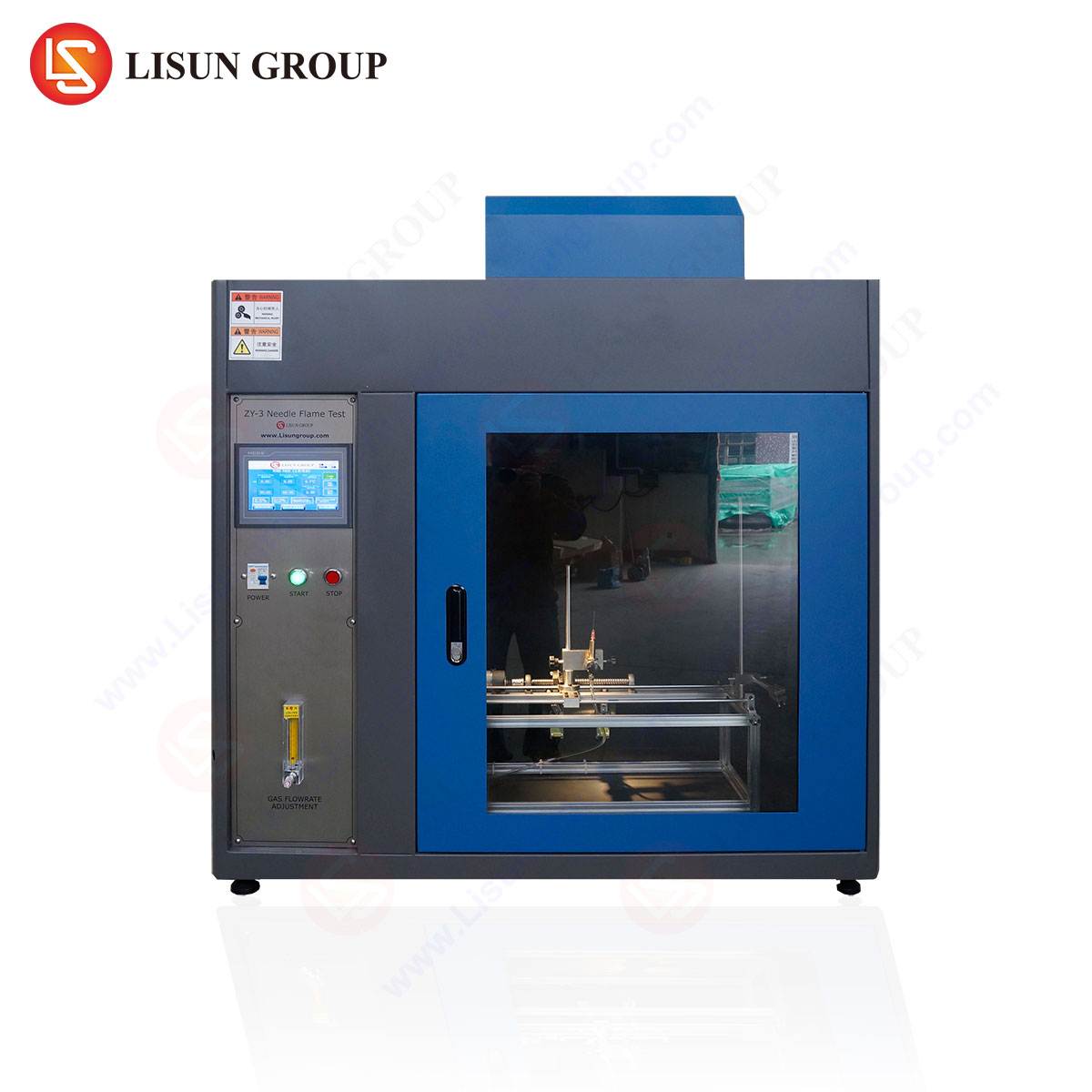



Advancing Fire Safety Compliance Through Rigorous Material Ignition Testing
The proliferation of complex electrical and electronic equipment across virtually every industrial and domestic sector has precipitated an intensified focus on fire safety compliance. The potential ignition sources within modern devices are manifold, ranging from overloaded components and faulty connections to external thermal stresses. Consequently, regulatory frameworks globally mandate stringent evaluation of the flammability and ignition resistance of materials used in product construction. Compliance is not merely a legal checkpoint but a fundamental component of product liability, brand integrity, and end-user safety. This article examines the critical role of standardized material flammability testing, with a specific focus on the glow-wire test methodology, and explores the application of advanced apparatus like the LISUN ZRS-3H Glow-wire Test Apparatus in ensuring conformity across diverse industries.
The Glow-Wire Test: Simulating Real-World Thermal Fault Conditions
Traditional flame tests, while valuable, do not fully encapsulate all potential fire hazards in electrical equipment. A significant risk originates from overheated or glowing components—such as a failing resistor, a poor connection, or an overloaded switch—that can act as a sustained ignition source for adjacent materials. The glow-wire test was developed to simulate precisely these conditions. The principle involves heating a standardized Nichrome wire element, shaped into a loop, to a precisely controlled temperature. This glowing element is then applied with a defined force to the test specimen for a set period.
The test evaluates three primary failure modes: ignition of the specimen, sustained flaming after removal of the glow wire, and the propagation of flame via dripping particles that may ignite a underlying tissue. Standards such as IEC 60695-2-10 through 2-13, GB/T 5169.10-13, and UL 746A define the procedures, temperatures (typically ranging from 550°C to 960°C), and pass/fail criteria. The selected test temperature correlates with the expected thermal stress a material might encounter in service, with higher temperatures applied to materials in closer proximity to potential fault sources.
Technical Specifications and Operational Principles of the LISUN ZRS-3H Apparatus
The LISUN ZRS-3H Glow-wire Test Apparatus represents a contemporary implementation of this standardized test, engineered for precision, repeatability, and operational efficiency. Its design addresses the exacting requirements of modern testing laboratories serving high-volume, multi-industry compliance programs.
Core Specifications:
- Temperature Control Range: 50°C to 1000°C, with a stability of ± 2°C at the glow-wire tip. This broad range accommodates all standard test severities.
- Heating Element: A compliant Nichrome wire loop, conforming to dimensional specifications outlined in relevant standards.
- Temperature Measurement: Utilizes a type K (NiCr-NiAl) thermocouple of specified diameter, welded into a drilled hole in the glow wire, ensuring direct and accurate temperature feedback.
- Test Force Application: A calibrated weight system applies a consistent 1.0 N ± 0.2 N force during the test period, eliminating operator-induced variability.
- Timing System: Automated digital timers control the heating stabilization period (typically 60 seconds), test application duration (30 seconds), and observation period post-ignition.
- Safety & Containment: Integrated fume extraction port, protective viewing window, and a constructed base chamber for containing test specimens and potential drips.
Operational Principle:
The apparatus operates through a defined sequence. The operator secures the specimen on a dedicated holder within the test chamber. The target temperature is set via a digital PID controller. Upon initiation, the system heats the glow wire, stabilizing at the setpoint. After stabilization, the apparatus (or a manual lever in semi-automatic modes) moves the specimen onto the stationary glow wire, applying the standard force for 30 seconds. Throughout application and a subsequent 30-second observation period, the specimen is monitored for ignition, flame duration, and ignition of a specified tissue paper by dripping particles. Data regarding glow-wire temperature, test duration, and ignition events are recorded for the formal test report.
Cross-Industry Application Scenarios for Glow-Wire Compliance
The universality of the glow-wire test stems from its simulation of a common fault mode across disparate technologies. Its application is critical in the following sectors:
Electrical and Electronic Equipment & Industrial Control Systems: Enclosures, terminal blocks, PCB substrates, and insulator housings must resist ignition from internal overloads. A programmable logic controller (PLC) housing, for example, is tested to ensure a fault in a power supply module does not ignite its polymeric casing.
Household Appliances and Consumer Electronics: Materials used in motor housings, switchgear, external casings of televisions, and internal supports within washing machines are subject to testing. The test verifies that a thermal runaway in a motor or a faulty connection in a power supply will not set the appliance ablaze.
Automotive Electronics and Aerospace Components: The confined, vibration-prone, and thermally challenging environments in vehicles and aircraft demand high material performance. Connectors, sensor housings, infotainment system components, and wiring ducting in an automobile’s engine compartment are tested at severe temperatures to guarantee safety under hood.
Lighting Fixtures and Electrical Components: Lamp holders, switch and socket faces, ballast housings, and LED driver enclosures are in direct proximity to electrical arcs and heat. The glow-wire test assesses whether these components can contain an internal fault without propagating fire.
Telecommunications and Office Equipment: Data servers, routers, power adapters, and printer housings contain densely packed electronics. Testing materials for these products prevents large-scale fire incidents in commercial and data center settings.
Medical Devices and Cable Systems: For medical devices, fire safety is paramount, especially for units used in oxygen-rich environments. Cable insulation and jacketing are tested to ensure they do not act as a wick, propagating flame from a localized fault along a cable tray.
Competitive Advantages of Automated and Precise Testing Instrumentation
Modern apparatus like the LISUN ZRS-3H provide distinct advantages over legacy or less sophisticated test equipment, directly impacting the reliability and efficiency of compliance verification.
Enhanced Repeatability and Reproducibility: Digital PID temperature control and automated force application minimize variables introduced by manual operation. This ensures test results are consistent within a lab and reproducible between different laboratories, a key requirement for international certification.
Improved Operational Safety and Data Integrity: Integrated fume extraction protects operators from potentially toxic pyrolysis products. Automated timing and data logging reduce human error in test execution and reporting, creating an auditable trail for certification bodies.
Testing Efficiency and Versatility: The wide temperature range and standardized fixture design allow a single apparatus to conduct tests for multiple standards and product categories. This flexibility is crucial for third-party testing labs and large manufacturers with diverse product portfolios.
Regulatory Alignment: Advanced apparatus are designed to be updated in line with evolving editions of IEC, GB, and UL standards. This future-proofs capital investment and ensures ongoing compliance as test methodologies are refined.
Interpreting Test Results and Integrating Findings into Product Design
A pass/fail determination is only the starting point. Quantitative and qualitative data from glow-wire testing are invaluable for research and development (R&D) and quality assurance (QA) teams.
Material Selection and Qualification: Testing different polymers, composites, or material grades at the target severity temperature provides comparative data. Engineers can select the most cost-effective material that meets the required Glow-Wire Ignition Temperature (GWIT) and Glow-Wire Flammability Index (GWFI) ratings.
Design Validation and Failure Analysis: Testing not just raw materials, but finished components—such as a switch assembly with metallic and polymeric parts—validates the entire design. Failure modes observed (e.g., dripping from a specific rib structure) inform targeted design revisions.
Supply Chain Quality Control: Batch-to-batch testing of supplied components ensures consistent material properties, guarding against substandard materials entering the production line and compromising final product safety.
Table 1: Example Glow-Wire Test Severities by Application
| Industry Sector | Example Component | Typical Test Severity (Glow-Wire Temperature) | Relevant Standard(s) |
| :— | :— | :— | :— |
| Household Appliances | External plastic casing of a power supply | 550°C – 750°C | IEC 60335-1, IEC 60695-2-11 |
| Automotive Electronics | Engine control unit (ECU) housing | 750°C – 960°C | ISO 20653, IEC 60695-2-12 |
| Lighting Fixtures | Polycarbonate lamp holder | 650°C – 850°C | IEC 60598-1, GB 7000.1 |
| Office Equipment | Printer fuser unit housing | 750°C – 850°C | IEC 60950-1 / IEC 62368-1 |
| Electrical Components | Circuit breaker housing | 850°C – 960°C | IEC 60898-1, UL 489 |
Navigating the Evolving Landscape of Fire Safety Standards
The regulatory environment for fire safety is dynamic. The transition from legacy safety standards (like IEC 60950-1 for IT equipment) to hazard-based safety engineering standards (IEC 62368-1 for audio/video and IT equipment) exemplifies this shift. IEC 62368-1 employs a risk-based methodology, where the required flammability classification of an enclosure depends on the calculated energy level of potential ignition sources inside it. This makes precise, reliable glow-wire testing even more critical, as material selection is directly tied to a quantified risk assessment.
Furthermore, global market access often requires demonstrating compliance with region-specific standards: IEC/EN in Europe, UL in North America, GB in China, and JIS in Japan. While harmonization efforts exist, nuances remain. A robust testing apparatus capable of adhering to the precise mechanical and procedural requirements of each standard suite is therefore an essential tool for companies pursuing international markets.
Frequently Asked Questions (FAQ)
Q1: What is the difference between the Glow-Wire Flammability Index (GWFI) and the Glow-Wire Ignition Temperature (GWIT)?
A: Both are derived from glow-wire tests but measure different properties. The GWFI is the highest temperature at which a material does not ignite or ignites but self-extinguishes within 30 seconds after glow-wire removal and does not ignite tissue paper via drips. It is a “pass/fail” index. The GWIT is the temperature 25°C above the maximum temperature at which the material does not ignite and does not burn with flames for more than 5 seconds. It is a temperature rating. GWIT is typically higher than GWFI for the same material.
Q2: For a new product, at what stage in the development cycle should glow-wire testing be conducted?
A: Testing should be integrated early in the design phase during material selection and again during the design validation stage. Early testing of material samples prevents costly redesigns later. Final pre-compliance testing on production-representative prototypes or finished components is essential before submitting for formal certification by a Nationally Recognized Testing Laboratory (NRTL).
Q3: How often should a glow-wire test apparatus be calibrated, and what does calibration involve?
A: Annual calibration is a minimum recommendation for accredited laboratories, though more frequent checks may be dictated by usage volume. Calibration should verify: 1) Temperature Accuracy: Using a traceable standard thermocouple at the glow-wire tip. 2) Force Application: Verifying the applied test force is 1.0 N ± 0.2 N. 3) Timer Accuracy: Confirming the digital timers meet the required precision. 4) Glow-wire Dimensions: Ensuring the loop conforms to standard specifications.
Q4: Can the LISUN ZRS-3H test both finished products and raw material samples?
A: Yes, the apparatus is designed for this flexibility. Standard fixtures accommodate flat material test plaques as specified in the standards. For finished components (e.g., a switch or socket), custom or adjustable specimen holders can be used to securely position the product so that the relevant surface is presented to the glow wire, allowing for realistic testing of the final assembly.