




A Comprehensive Analysis of Fire Hazard Evaluation for Materials and Components
The proliferation of complex electrical and electronic systems across modern industries has irrevocably increased the potential for fire initiation within end-use environments. A singular fault condition—be it a compromised insulation system, an overloaded connector, or a failed capacitive component—can generate sufficient thermal energy to ignite adjacent materials. Consequently, rigorous fire safety compliance testing is not merely a regulatory formality but a fundamental engineering discipline integral to product design, risk mitigation, and ultimately, the preservation of life and property. This article delineates the technical principles, standardized methodologies, and critical apparatus involved in evaluating the flammability of materials and components, with particular emphasis on the needle flame test as a pivotal assessment tool.
The Thermodynamic and Chemical Basis of Material Flammability
Flammability is not an intrinsic material property but a complex behavioral response contingent upon a confluence of factors including piloted ignition energy, heat release rate, flame spread velocity, and the production of smoke and combustible gases. The fundamental process involves the thermal decomposition of a solid material (pyrolysis) to produce volatile fuels, which subsequently mix with atmospheric oxygen and ignite upon exposure to a sufficient ignition source. The propensity of a material to undergo this process is governed by its chemical structure, additive composition (e.g., flame retardants), physical form, and orientation.
Testing methodologies simulate credible fault conditions. For instance, a failing transistor within an industrial control system may act as a miniature heating element, while a poor connection in an automotive wiring harness can create a localized high-resistance point generating intense heat. Compliance tests, therefore, employ calibrated ignition sources—such as glow wires, burning bars, or needle flames—to replicate these real-world thermal insults in a controlled, repeatable laboratory setting. The objective is to quantify the material’s response: does it ignite, and if so, for how long does it combust after the ignition source is removed? Does it produce flaming droplets or particles that can propagate the fire to underlying materials, such as a desktop beneath faulty office equipment or carpeting below a household appliance?
The Needle Flame Test: Simulating Small, Localized Ignition Sources
Among the suite of fire tests, the needle flame test occupies a specific and vital niche. It is designed to assess the fire hazard presented by a small, low-energy flame that may result from an electrical fault of limited duration or energy, such as a brief short circuit. The test is particularly relevant for components where a larger ignition source, like the glow-wire, may be excessively severe or not representative of the actual risk. The principle involves applying a defined small flame from a specified burner to the test specimen for a predetermined period, then observing its combustion behavior.
The test evaluates several key parameters:
- Ignition Susceptibility: Whether the specimen ignites during flame application.
- Flame Persistence: The duration of any continued flaming after the test flame is removed.
- Propagation Potential: Whether burning droplets or debris are shed, which could ignite a specified tissue paper layer positioned below the specimen.
- Damage Extent: The linear extent of charring or material destruction.
Standards such as IEC 60695-11-5, GB/T 5169.5, and the analogous clauses within end-product standards (e.g., IEC 62368-1 for audio/video and IT equipment) define the precise apparatus, flame characteristics (nominally 12mm ± 1mm height), application times (e.g., 30s), and pass/fail criteria. The needle flame test is extensively mandated for components where small-scale ignition is a credible risk, including miniature switches, socket assemblies, small wiring harnesses, printed circuit board substrates, and encapsulating materials for telecommunications or medical device components.
Apparatus Specification: The LISUN ZY-3 Needle Flame Tester
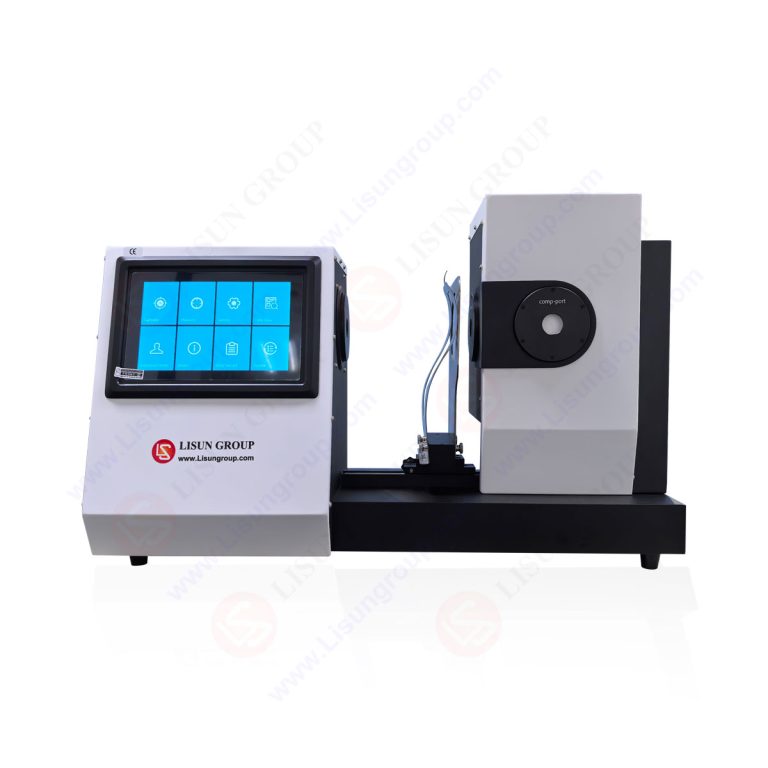
The validity and reproducibility of fire test data are wholly dependent on the precision, consistency, and compliance of the test apparatus. The LISUN ZY-3 Needle Flame Tester is engineered to meet the exacting requirements of international needle flame test standards. Its design prioritizes operational safety, precise flame control, and repeatable positioning to ensure that observed material behavior is a function of the specimen itself, not apparatus variability.
Core Specifications and Design Features:
- Burner System: Utilizes a precision needle valve and specific burner tip to generate a stable, consistent flame. The gas supply (typically 99% purity butane) is regulated to maintain the flame height at the required 12mm ± 1mm, adjustable via a calibrated gauge.
- Timing and Automation: Incorporates a digital programmable timer for accurate control of flame application duration (typically 0-999.9s). The ignition and retraction of the burner can be automated, removing operator variability and enhancing test consistency.
- Specimen Positioning: Features an adjustable specimen holder and a calibrated scale for positioning the burner tip at the mandated 45-degree angle and precise distance (e.g., 8mm from the flame cone to the specimen) as per the standard. A sliding platform facilitates safe, repeatable introduction of the specimen to the flame.
- Safety and Containment: Constructed with a stainless steel enclosure and a viewing window of high-temperature-resistant glass. An integrated exhaust system is recommended for connection to laboratory ventilation to remove combustion products.
- Calibration Accessories: Includes tools for verifying flame height and temperature using a calibrated thermocouple (e.g., a 0.5mm Type K) as specified in the standards, ensuring traceable calibration.
Technical Advantages in Compliance Testing:
The ZY-3’s design addresses common pitfalls in flammability testing. The precision gas flow control ensures the flame energy input is constant across tests. Automated movement eliminates the potential for human error in flame application timing and angle. The robust construction and safety features protect the operator and allow for the testing of materials that may produce significant smoke or flare-ups. For laboratories servicing multiple industries—from automotive electronics suppliers to medical device manufacturers—this reliability is paramount for generating audit-ready compliance data.
Industry-Specific Applications and Risk Mitigation
The needle flame test, facilitated by apparatus like the LISUN ZY-3, is applied across a diverse spectrum of industries to address unique risk profiles.
- Electrical Components & Household Appliances: Miniature circuit breakers, relay housings, switchgear casings, and internal supports for appliances like food processors or coffee makers are tested to ensure a fault in a motor or heater does not cause the surrounding plastic to sustain combustion.
- Automotive Electronics: As vehicles incorporate more dense electronics (ADAS sensors, infotainment systems), components like wire-to-terminal seals, small connector bodies, and control module housings are evaluated to prevent fire propagation from a single point failure in the harsh under-hood or cabin environment.
- Lighting Fixtures: Especially for LED drivers and compact luminaires, the plastic enclosures and internal optical components are tested to verify they do not support flame from a hypothetical electrical arc within the confined space.
- Medical Devices: For portable or implantable devices, the plastic casings of controls, battery compartment materials, and wire insulation are scrutinized. The test ensures that a malfunction does not create a patient fire hazard, a critical consideration for devices used in oxygen-enriched environments.
- Aerospace & Aviation: While subject to even more stringent standards (e.g., FAA regulations), the principle applies to non-critical interior components, wiring insulation, and accessory housings where weight-saving materials must still resist ignition from small electrical faults.
- Cable and Wiring Systems: While bulk cable testing often uses larger flames, the needle flame test is applicable to small-gauge wiring, cable ties, marking sleeves, and other ancillary components used in bundling or identification within equipment.
Interpreting Test Results and Integration into Product Design
A compliant test result—indicating self-extinguishment within a specified time and absence of incendiary droplets—is a key data point in a broader safety engineering assessment. It informs material selection, component geometry (e.g., wall thickness, use of ribs), and system design (e.g., placement away from potential heat sources). Engineers must consider that a material passing a needle flame test may still fail under the more severe thermal stress of a glow-wire test; the selection of the appropriate test is governed by the foreseeable fault conditions and the applicable end-product safety standard.
Data from such tests is increasingly used in comparative material analysis and in qualifying alternative materials for supply chain flexibility. A table summarizing a typical test protocol and criteria is illustrative:
Table 1: Exemplary Needle Flame Test Parameters (Based on IEC 60695-11-5)
| Parameter | Specification | Purpose/Notes |
| :— | :— | :— |
| Test Flame | Butane, ≥95% purity | Provides consistent calorific value. |
| Flame Height | 12 mm ± 1 mm | Defines the energy and size of the ignition source. |
| Flame Application Time | 30 s (common) | Simulates duration of a transient fault. Other times (e.g., 10s, 120s) may be specified. |
| Burner Position | 45° angle, tip 8mm from specimen | Standardizes the impingement geometry. |
| Pass/Fail Criteria (Typical) | Flaming time ≤ 30s after removal; No ignition of tissue paper by droplets. | Specific criteria are defined by the end-product standard. |
| Observations Recorded | Time to ignition (if any), duration of flaming, production of droplets, extent of damage. | Provides quantitative and qualitative data for analysis. |
Conclusion: The Role of Precision Testing in a Safety Ecosystem
Fire safety compliance testing, exemplified by the needle flame methodology, constitutes a critical technical barrier against product-related fire hazards. It transforms subjective assessments of material behavior into objective, standardized, and reproducible data. The efficacy of this process is inextricably linked to the precision and reliability of the test apparatus. Equipment such as the LISUN ZY-3 Needle Flame Tester provides the necessary controlled environment to generate this vital data with high repeatability. For manufacturers across the electrical, electronic, automotive, and medical sectors, investing in rigorous testing supported by capable instrumentation is a fundamental component of responsible product development, regulatory fulfillment, and the overarching imperative of user safety.
Frequently Asked Questions (FAQ)
Q1: How does the needle flame test differ from the glow-wire test?
The needle flame test uses a small, open flame (simulating a brief, low-energy fire source like a small electrical arc) and is often applied to smaller components or those where such a flame is a credible risk. The glow-wire test uses a heated element (simulating an overheated or glowing component like a faulty resistor) at a set temperature (e.g., 550°C to 960°C) and is typically applied to equipment enclosures and supports where longer-term overheating is foreseeable. The tests address different fault scenarios and are often required in sequence for a comprehensive assessment.
Q2: What is the importance of the tissue paper placed beneath the specimen during the test?
The layer of tissue paper is a sensitivity indicator for burning droplets or debris. Its ignition constitutes a test failure, as it demonstrates the specimen’s ability to propagate fire to nearby combustible materials (like wiring, dust, or other polymers) that may be present in the final application. This is a critical hazard in vertically stacked equipment like server racks or industrial control panels.
Q3: Can the LISUN ZY-3 tester be used for standards other than IEC 60695-11-5?
Yes, while designed to meet IEC 60695-11-5 and GB/T 5169.5 precisely, the fundamental parameters (adjustable flame height, timing, positioning) allow it to be used for other national or corporate standards that are technically equivalent or specify a similar needle flame procedure. Always verify the specific apparatus requirements of the standard in question.
Q4: How often should the needle flame tester be calibrated, and what does calibration involve?
Calibration should be performed at least annually, or as required by a laboratory’s quality system (e.g., ISO/IEC 17025). Key calibration activities include verifying the accuracy of the digital timer, checking and adjusting the gas flow to ensure the flame height is precisely 12mm, and using a calibrated thermocouple to verify the flame temperature at a reference point. Proper calibration ensures traceability and the validity of all test data generated.
Q5: What are the key safety precautions when operating a needle flame tester?
Essential precautions include: operating the apparatus in a well-ventilated area or with an active exhaust system to remove combustion products; wearing appropriate personal protective equipment (lab coat, safety glasses, heat-resistant gloves); ensuring the gas supply connections are secure and leak-free; having a suitable fire extinguisher readily available; and never leaving the apparatus unattended while the flame is ignited.