

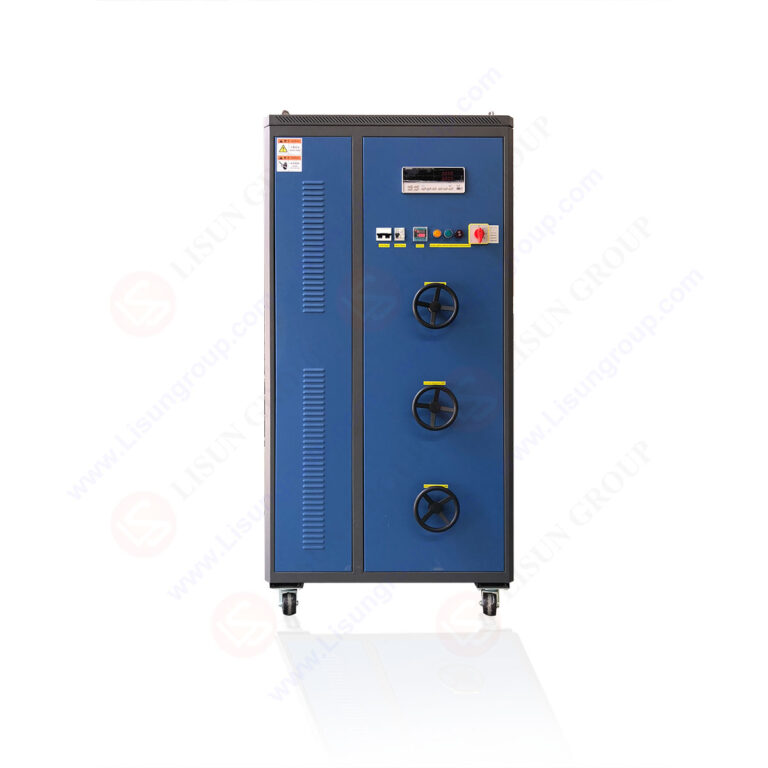



Advancements in Material Flammability Assessment: The Role of Controlled Ignition Testing
The proliferation of complex electrical and electronic systems across diverse sectors—from automotive electronics to medical devices—has necessitated a parallel evolution in fire safety evaluation methodologies. The primary objective is no longer merely to prevent ignition but to rigorously assess the behavior of materials and components under fault conditions that simulate real-world failures. A critical tool in this evaluative arsenal is the needle flame test, a precise simulation of a small ignition source applied to a specimen. This article examines the technical principles, standardized applications, and instrumental implementation of this test, with a specific focus on the engineering and operational paradigms embodied by the LISUN ZY-3 Needle Flame Test Apparatus.
Simulating Fault-Induced Ignition Sources in Confined Environments
Traditional large-scale flammability tests, while valuable for assessing overall fire load, often fail to address the incipient stage of a fire originating from an electrical fault. Overheating components, arcing connections, or failed insulating materials can generate localized, high-temperature points sufficient to ignite adjacent polymeric materials. The needle flame test is engineered to replicate this precise scenario. It employs a controlled, small-scale flame derived from a specified mixture of butane gas, applied to a test specimen for a predetermined period. The core investigative parameters extend beyond simple ignition to include the duration of subsequent flame persistence after the removal of the test flame, the extent of material consumption, and the propensity for dripping particles to ignite a secondary substrate (simulating the spread of fire to underlying materials).
This methodology is particularly salient for industries where components operate in enclosed, ventilation-limited spaces. In automotive electronics, for instance, a wiring harness insulator smoldering due to a short circuit within a door panel presents a vastly different risk profile than an open flame in a well-ventilated area. The needle flame test provides quantifiable data on whether such a fault would self-extinguish or propagate. Similarly, for printed circuit board (PCB) substrates within telecommunications equipment or industrial control systems, the test evaluates the flame-retardant efficacy of the laminate material when subjected to the thermal insult of a failing surface-mount resistor or transformer.
Standardization and Compliance: The Regulatory Framework for Needle Flame Testing
The technical execution and pass/fail criteria for needle flame testing are rigorously defined by international and national standards, ensuring consistency and reproducibility across testing laboratories and manufacturing jurisdictions. The most widely referenced standard is IEC 60695-11-5, “Fire hazard testing – Part 11-5: Test flames – Needle-flame test method – Apparatus, confirmatory test arrangement and guidance.” This standard meticulously details the apparatus specifications, gas flow rates (105 mL/min ± 5 mL/min for a 99% purity butane supply), flame dimensions (12mm ± 1mm height), calibration procedures, and test protocols.
Compliance with this and related standards (such as certain test sequences within IEC 60335 for household appliances or ISO 9772 for plastics) is not merely a best practice but a mandatory requirement for market access in most global regions. For a manufacturer of electrical components like switches or sockets, demonstrating that the housing material passes the needle flame test is a fundamental step in achieving CE, UL, or CCC certification. The test verifies that a fault within the component—such as a degraded contact causing localized overheating—will not lead to the housing sustaining combustion, thereby containing the failure. In the aerospace and aviation components sector, where weight-saving polymers are ubiquitous, adherence to similar stringent protocols (often derived from IEC standards) is critical for cabin safety and system integrity.
Engineering Precision in Test Apparatus: The LISUN ZY-3 Paradigm
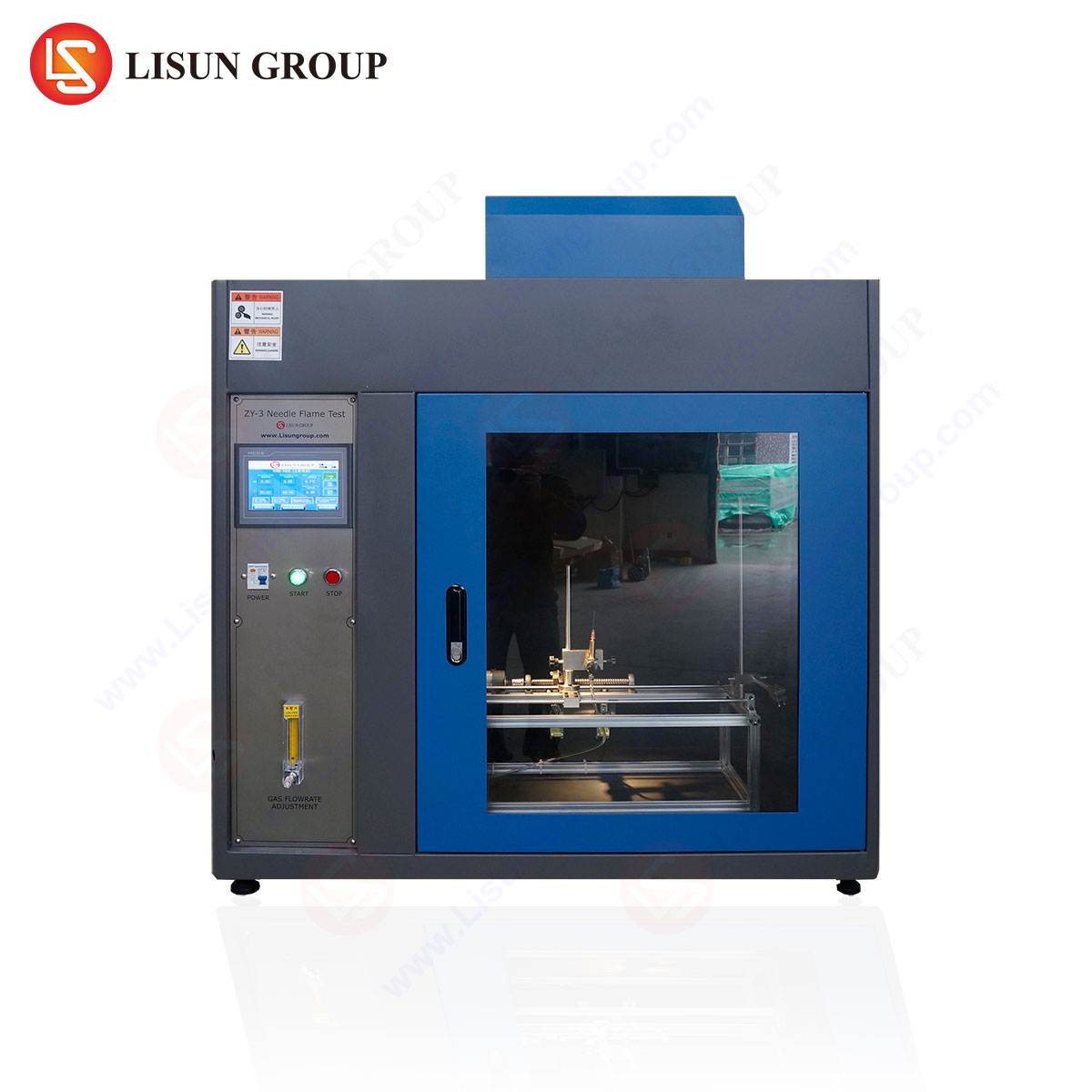
The reliability of any standardized test is intrinsically linked to the precision, repeatability, and safety of the apparatus employed. The LISUN ZY-3 Needle Flame Test Apparatus represents a contemporary implementation designed to meet the exacting demands of modern compliance laboratories. Its engineering prioritizes accurate flame application, consistent environmental control, and operational safety.
Core Specifications and Functional Principles:
The apparatus consists of several integrated subsystems. A precision needle burner, with an orifice diameter of 0.5mm ± 0.1mm, is fed by a regulated butane supply line incorporating a fine-adjustment valve and flow meter to maintain the stipulation of 105 mL/min. The burner is mounted on a movable assembly, allowing for precise positioning of the flame at the required 45° or other specified angle relative to the horizontal test specimen. A critical feature is the automated timing system, which controls the application duration of the test flame (typically 30 ± 1 seconds, as per standard) and subsequently measures the after-flame time (t₁) and after-glow time (t₂) with millisecond accuracy.
The test chamber is constructed from stainless steel and incorporates a heat-resistant glass observation window, enabling clear visual assessment without exposure risk. An internal black background with a calibrated scale facilitates the measurement of flame height during calibration. The specimen holder is adjustable to accommodate components of various geometries—from a cable sample to a complete small appliance housing. An integral fume extraction port, compatible with standard laboratory extraction systems, is essential for removing combustion products.
Technical Data Table: LISUN ZY-3 Key Parameters
| Parameter | Specification |
| :— | :— |
| Applicable Standard | IEC 60695-11-5, GB/T 5169.5, et al. |
| Burner Orifice Diameter | Φ0.5mm ± 0.1mm |
| Gas Flow Rate | 105 mL/min (adjustable, with flow meter) |
| Flame Application Time | 0 ~ 99.99s (digital timer, programmable) |
| After-flame/glow Timer | 0 ~ 99.99s (automatic detection optional) |
|Flame Height Adjustment| 12mm ± 1mm (via gas flow and gauge)|
| Burner Angle | 0° ~ 45° adjustable (typically fixed at 45°) |
| Chamber Dimensions | Approx. 0.75m³ (stainless steel construction) |
| Power Supply | AC 220V / 50Hz or AC 120V / 60Hz |
Cross-Industry Application Scenarios and Failure Mode Analysis
The utility of the needle flame test, as facilitated by apparatus like the LISUN ZY-3, spans the entire spectrum of modern technology sectors. Its application is scenario-based, targeting specific failure modes.
In Electrical and Electronic Equipment and Consumer Electronics, the test is applied to enclosures, PCB materials, and internal barriers. For example, the plastic chassis of a desktop computer power supply unit is tested to ensure that a fault in the primary switching circuitry does not cause the enclosure to ignite. The test specimen is often conditioned at elevated temperature and humidity prior to testing to simulate aged material properties.
For Automotive Electronics, components like engine control units (ECUs), sensor connectors, and infotainment system modules are evaluated. A key consideration is the potential for dripping. The standard requires a layer of surgical cotton to be placed 200mm ± 5mm below the test specimen. If burning droplets ignite the cotton, the test is typically deemed a failure, as this simulates the ignition of flammable materials (e.g., carpeting or sound insulation) beneath a dashboard.
Lighting Fixtures, particularly those using LED technology with integrated drivers, are tested on their external casings and internal light-guide components. The compact nature of modern fixtures means heat dissipation is limited, increasing the risk of thermal runaway in driver components, which the needle flame simulates.
In the Medical Devices sector, the housing of portable monitors, syringe pump casings, and insulation on internal wiring are common test subjects. The imperative is to prevent any fire incident in oxygen-rich or critical care environments. The test provides evidence that a single internal fault will be contained.
Telecommunications Equipment and Industrial Control Systems often employ the test on cable management trays, module casings, and fan housings within server racks or control cabinets. The focus is on preventing a fault in one module from propagating via material flammability to adjacent, potentially critical, systems.
Aerospace and Aviation Components apply even more stringent derivations of the test to materials used in cabin interiors, wiring insulation, and electronic bay components, where the consequences of fire are catastrophic and evacuation options are limited.
Operational Advantages and Methodological Integrity
The design philosophy behind apparatus like the LISUN ZY-3 confers several distinct advantages that translate directly to testing integrity and laboratory efficiency. Repeatability and Reproducibility are paramount; the precision gas flow control and rigid burner positioning ensure that the applied ignition source is consistent across tests, days, and operators. This reduces statistical variance in results, leading to more reliable material qualification data.
Enhanced Safety Protocols are integral. The enclosed chamber, coupled with mandated fume extraction, protects the operator from exposure to potentially toxic combustion products. Secure specimen clamping prevents movement during testing, which could invalidate results or create a hazard. Calibration Simplicity is another critical factor. The apparatus design includes straightforward mechanisms for verifying and adjusting flame height and temperature using a calibrated thermocouple (as per the confirmatory test in IEC 60695-11-5), ensuring the apparatus remains within standard tolerances with minimal downtime.
Furthermore, the Adaptable Specimen Fixturing allows the same core apparatus to test a wide array of product forms—from a flat plaque of insulating material to a three-dimensional socket housing or a length of cable. This versatility makes it a cost-effective solution for laboratories serving multiple industries, from component manufacturers to third-party certification bodies.
Interpreting Results and Informing Material Science
The output of a needle flame test is not merely a binary pass/fail. Detailed reporting includes quantitative data: precise after-flame time (t₁), after-glow time (t₂), and the maximum extent of damage (char length) measured from the point of flame application. The observation of whether burning droplets occurred and if they ignited the underlying cotton is qualitatively recorded.
This data feeds directly back into the material science and design engineering processes. A material that exhibits a long after-flame time may be reformulated with different flame-retardant additives or have its geometry modified to reduce heat retention. For designers of office equipment or household appliances, this testing informs decisions on wall thickness, vent placement, and the selection of internal barriers. It provides empirical evidence to support the choice of a more expensive, but more flame-retardant, polymer over a standard grade, balancing safety, cost, and performance.
In essence, the needle flame test, executed with precision instrumentation, serves as a crucial gatekeeper. It validates that the materials and components forming the backbone of our technological infrastructure possess an inherent resistance to the propagation of fire from small, but plausible, electrical faults. This proactive assessment is a foundational element of product safety, risk mitigation, and regulatory compliance across the global manufacturing landscape.
FAQ: Needle Flame Testing and Apparatus
Q1: What is the primary purpose of the surgical cotton placed beneath the test specimen in the needle flame test?
A1: The layer of surgical cotton simulates a secondary, easily ignitable substrate (such as dust, loose wiring insulation, or fabric) that may be present in the end-use environment. Its ignition by falling burning droplets or particles from the test specimen constitutes a test failure, as it indicates the initial fault has the potential to propagate fire to surrounding materials.
Q2: Can the LISUN ZY-3 apparatus be used for testing components that are not in a standard flat plaque form?
A2: Yes. A key feature of robust apparatus like the ZY-3 is its adaptable specimen holding system. Three-dimensional components, such as connector housings, switch enclosures, or small finished product assemblies, can be securely mounted using clamps, stands, or custom fixtures (manufactured by the user as needed) to present the test surface in the orientation specified by the relevant product standard.
Q3: How frequently should the needle flame test apparatus be calibrated, and what does calibration involve?
A3: Calibration should be performed at regular intervals as dictated by the laboratory’s quality procedures (e.g., annually) and whenever the burner nozzle is changed or maintenance is performed. The primary calibration activity, as per IEC 60695-11-5, is the “confirmatory test.” This involves using a calibrated thermocouple to measure the temperature rise of a specified copper block when subjected to the flame for a set time. Adjustments to gas flow are made until the temperature rise falls within the standard’s required range (e.g., from 100°C ± 2°C to 700°C ± 3°C within 23.5s ± 1.0s), verifying the correct thermal output of the flame.
Q4: What are the critical pre-test conditioning parameters for specimens, and why are they important?
A4: Specimens are often conditioned in a controlled atmosphere (e.g., 23°C ± 2°C and 50% ± 5% relative humidity for at least 48 hours) and may also be subjected to elevated temperature aging (e.g., 70°C for 168 hours) or other treatments prior to testing. This conditioning standardizes the specimen’s moisture content and simulates long-term thermal aging effects, ensuring the test results reflect the material’s performance not just in its “as-manufactured” state, but throughout its expected service life.
Q5: For a cable manufacturer, which part of the cable is typically subjected to the needle flame test?
A5: The test is typically applied to finished cable samples. The flame is applied to the outer sheath or jacket material. The assessment criteria include the after-flame time of the sheath itself and, critically, whether burning droplets from the sheath or underlying insulation fall and ignite the cotton indicator. Some specific cable standards may also require testing of internal insulation materials separately.