

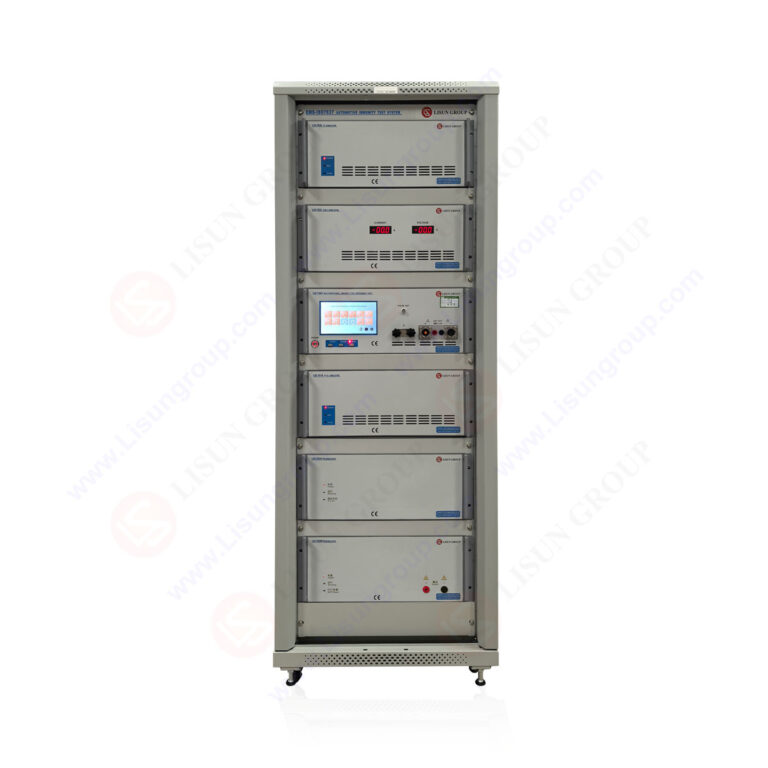



Advancements in Material Safety: A Technical Analysis of Flammability Testing Solutions
The proliferation of complex electrical and electronic systems across diverse sectors has necessitated a rigorous, standardized approach to evaluating material safety under fault conditions. Flammability testing, a critical subset of product safety validation, serves as the primary methodology for assessing the propensity of materials and components to ignite, propagate flame, and contribute to fire hazards. This technical analysis examines the underlying principles, evolving standards, and instrumental solutions that define modern flammability assessment, with a particular focus on needle flame test methodologies as a fundamental compliance tool.
The Imperative of Simulated Fault Condition Testing
Electrical and electronic equipment (EEE) is inherently susceptible to internal fault scenarios. These can arise from component failure, insulation breakdown, connector arcing, or software-induced overloads. Such faults often generate localized, high-temperature ignition sources—small flames, glowing wires, or overheated elements—that are not adequately simulated by large-scale fire tests. The primary objective of targeted flammability testing is to evaluate whether a material or sub-assembly, when exposed to a representative small ignition source, will ignite and, if so, to what extent the flame will spread. The consequences of failure in this domain are severe, encompassing risk to human life, destruction of property, and systemic operational failure in critical infrastructure. Industries ranging from household appliances and automotive electronics to aerospace components and medical devices mandate such testing to comply with international safety standards and mitigate inherent risks.
Deconstructing the Needle Flame Test Methodology
Among the suite of flammability tests, the needle flame test holds a distinct position due to its simulation of a small, targeted flame akin to that produced by a faulty electrical connection. The test procedure, standardized under IEC 60695-11-5, IEC 60950-1, and other derivative standards, involves the application of a defined propane flame from a specified burner to a test specimen for a predetermined period. The flame is typically applied to the specimen’s surface or, critically, to predetermined fault points such as seams, joints, or areas near current-carrying parts. Following flame application, observations are meticulously recorded: ignition time, duration of independent combustion (after the test flame is removed), extent of flame spread, and the behavior of any drips that may fall onto a prescribed layer of surgical cotton, simulating the ignition of adjacent materials.
The quantitative and qualitative data derived are used to assign a flammability classification. This classification directly informs design decisions, material selection, and the implementation of necessary protective measures, such as the addition of flame-retardant compounds, the use of metallic shields, or the redesign of enclosures to isolate potential ignition sources.
The LISUN ZY-3 Needle Flame Test Apparatus: Technical Specifications and Operational Fidelity
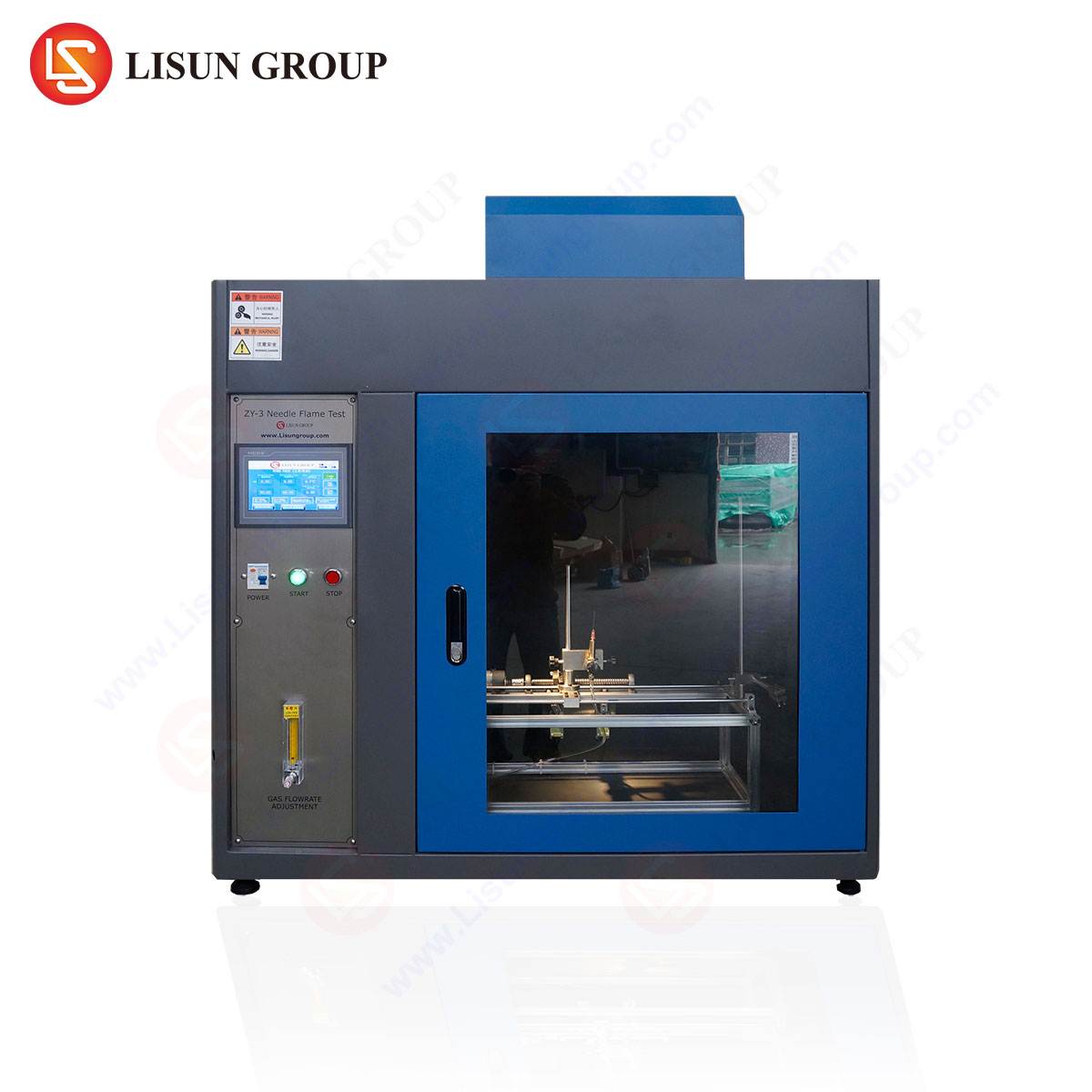
The LISUN ZY-3 Needle Flame Test Apparatus embodies a precision-engineered solution for conducting standardized needle flame tests. Its design prioritizes repeatability, user safety, and strict adherence to the geometric and thermodynamic parameters stipulated in international standards.
Core Specifications and Design Philosophy:
The apparatus features a high-precision needle burner with an internal diameter of 0.5 mm ± 0.1 mm, ensuring consistent flame geometry. The propane supply system is regulated via a dual-stage control, comprising a coarse adjustment valve and a fine-tuning flowmeter, allowing for precise calibration to the required 1000 mm ± 20 mm flame height (or 12 mm ± 1 mm blue cone height, as per some standards). A built-in flame gauge simplifies this calibration process. The test duration is managed by an automatic timing system with a range of 0–999.9 seconds, programmable to 0.1-second accuracy, which controls both the application time and the post-ignition observation period. The specimen stage offers multi-axis adjustability—horizontal, vertical, and rotational—enabling precise alignment of the flame to the test point as dictated by the product standard. A fully enclosed stainless steel test chamber, integrated with a transparent observation window and forced exhaust system, contains fumes and ensures operator safety.
Testing Principle and Standardized Workflow:
Operation follows a regimented protocol. The specimen is securely mounted on the adjustable stage. The burner is positioned at the specified angle (typically 45°) and distance from the test point. Following flame calibration, the automated timer initiates the test. Upon completion of the flame application period, the burner retracts automatically or is manually removed, and the timer continues to record the after-flame and after-glow times of the specimen. The entire process, from the behavior of the specimen to the ignition of any drips on the cotton indicator layer, is documented. This systematic approach ensures that results are attributable solely to material performance, not instrumental variance.
Industry-Specific Applications and Risk Mitigation
The application of needle flame testing is pervasive across industries where electrical energy is converted, controlled, or transmitted. Its role is to validate that products can contain or resist ignition from internal faults.
- Electrical and Electronic Equipment & Industrial Control Systems: Here, testing focuses on insulating materials, PCB substrates, enclosures of power supplies, and contact blocks within relays and contactors. A fault in a motor drive’s output stage, for instance, could overheat a terminal block; the ZY-3 test verifies the block’s material does not readily propagate flame to adjacent wiring.
- Household Appliances and Consumer Electronics: Components such as switch housings, internal wiring harness connectors, and plastic bezels on kitchen appliances are evaluated. The test simulates a fault in a heating element controller or a short circuit within a gaming console’s power supply.
- Automotive Electronics: With the rise of electric vehicles and advanced driver-assistance systems (ADAS), testing extends to battery management system (BMS) enclosures, wiring conduits, sensor housings, and infotainment system components. The test assesses resistance to flames from potential wiring harness faults.
- Lighting Fixtures and Electrical Components: Lamp holders, ballast housings, switchgear enclosures, and socket bodies are tested to ensure a fault within the component does not lead to enclosure fire. For LED drivers, the plastic housing material is a key test candidate.
- Telecommunications Equipment and Office Equipment: Network router casings, server blade chassis, plastic parts of printers, and power adapters for laptops are subjected to testing to prevent fire spread in data centers or office environments.
- Medical Devices and Aerospace Components: For patient monitors, imaging device enclosures, or avionics bay components, the stakes involve not only fire but also toxic fume emission. Testing here often employs stricter criteria, and the ZY-3’s precise flame control is critical for generating reproducible results for certification bodies like the FAA or regulatory agencies.
- Cable and Wiring Systems: While cables undergo larger-scale flame tests, needle flame testing is applicable to cable glands, marking tags, and other ancillary plastic components that could be exposed to a localized fault.
Comparative Advantages in Precision and Compliance
The value of a testing instrument lies in its ability to generate reliable, auditable data. The LISUN ZY-3 differentiates itself through several key attributes that directly impact testing integrity and laboratory efficiency.
First, its calibration fidelity is paramount. The integrated fine-adjustment flowmeter and flame gauge allow operators to achieve the exact flame dimensions required by the standard, a non-negotiable prerequisite for valid results. Second, the automated timing and ignition system eliminates human error from the test sequence, ensuring consistent flame application and accurate measurement of combustion times. Third, the robust construction and safety design—the sealed chamber, heat-resistant materials, and exhaust system—protect the operator and the laboratory environment from harmful combustion products. Finally, its versatile specimen positioning system accommodates the vast array of component shapes and sizes encountered across different industries, allowing for testing in the most vulnerable orientation as specified by the end-product standard.
From a compliance perspective, the apparatus is designed to meet the exacting requirements of IEC 60695-11-5, GB/T 5169.5, and is instrumental in demonstrating conformity to the flame test clauses of IEC 60950-1 (ITE), IEC 62368-1 (Audio/Video, Information and Communication Technology), IEC 60335-1 (Household Appliances), and a multitude of other sector-specific standards. Its precision directly contributes to reducing inter-laboratory variability, a persistent challenge in safety testing.
Integration into a Comprehensive Safety Assurance Protocol
It is critical to position the needle flame test within a broader hazard-based safety engineering (HBSE) framework, as outlined in standards like IEC 62368-1. The test is not an isolated activity but a targeted verification step. The process begins with a hazard analysis identifying potential ignition sources within a product. The needle flame test is then deployed to validate that the materials and construction at those specific fault points provide an adequate level of protection. Results feed back into the design loop, informing material choices, geometric layouts, and the inclusion of barriers. Furthermore, data from such tests are essential for technical construction files (TCF) submitted to Notified Bodies for CE marking or other global market access certifications.
Conclusion
The relentless innovation in material science and electronic miniaturization continues to present new challenges for product safety. Flammability testing, particularly through precise methodologies like the needle flame test, remains a cornerstone of risk mitigation. Instruments such as the LISUN ZY-3 Needle Flame Test Apparatus provide the necessary technological foundation to execute these tests with the repeatability and accuracy demanded by international standards and regulatory bodies. By enabling designers and validation engineers to rigorously assess product response to simulated fault conditions, these solutions play an indispensable role in safeguarding lives, property, and the continuous operation of critical systems across the global technological landscape.
FAQ: Needle Flame Testing and the LISUN ZY-3 Apparatus
Q1: What is the primary difference between a needle flame test and a glow-wire test?
Both simulate fault conditions but differ fundamentally in the ignition source. The needle flame test (IEC 60695-11-5) applies a small, open flame, simulating a fire initiated by burning gases or liquids from a fault. The glow-wire test (IEC 60695-2-10/11/12/13) uses an electrically heated element to simulate overheating components or glowing contacts. The choice of test is dictated by the type of fault condition identified in the product’s hazard analysis.
Q2: How often should the LISUN ZY-3 apparatus be calibrated, and what does calibration involve?
Calibration frequency should follow the laboratory’s quality procedure, typically annually or biannually. Critical calibration points include: verifying the propane flow rate to ensure correct flame height, checking the accuracy of the automatic timer, and confirming the dimensional accuracy of the burner orifice and positioning scales. Using a certified flowmeter and a traceable stopwatch for cross-verification is standard practice.
Q3: Can the ZY-3 test non-metallic materials used in automotive interior applications?
While automotive interiors are often governed by different horizontal flame spread tests (e.g., FMVSS 302), the needle flame test is highly relevant for automotive electronics. Components like electronic control unit (ECU) housings, connectors, and sensors within the passenger compartment or engine bay may require needle flame testing as per automotive-specific standards derived from IEC 60695, often with tailored severity levels.
Q4: What are the key pass/fail criteria in a standard needle flame test?
Criteria are defined by the end-product standard. Common metrics include: after-flame time (must not exceed a specified duration, e.g., 30 seconds), extent of flame spread (must not reach reference marks), and behavior of drips (must not ignite the surgical cotton indicator layer placed below the specimen). The specific limits vary significantly between standards like IEC 60950-1 and IEC 62368-1.
Q5: How does the forced exhaust system in the ZY-3 chamber impact test results?
The exhaust system is designed to remove combustion products after the test flame is extinguished and during the chamber cooling period. Its operation is carefully controlled to ensure it does not influence the test flame or the burning behavior of the specimen during the critical flame application and after-flame observation phases. This prevents the buildup of toxic fumes for operator safety without compromising test integrity.