




Glow-Wire Ignition Temperature: A Foundational Metric for Fire Hazard Assessment in Electrotechnical Products
Introduction to Fire Hazard Evaluation in Electrotechnical Components
The proliferation of electrical and electronic equipment across domestic, industrial, and critical infrastructure environments has necessitated the development of rigorous, standardized methodologies for assessing fire safety. Among the most critical parameters in this evaluative landscape is the Glow-Wire Ignition Temperature (GWIT). This metric serves not as a direct simulation of real-world failure modes, but as a sophisticated, reproducible means of quantifying a material or component’s resistance to ignition under conditions of thermal stress emanating from an overheated or glowing element. The GWIT test provides a quantifiable threshold—the highest temperature at which a test specimen does not ignite, or if it does, extinguishes within a specified temporal window after removal of the glow-wire. This data is indispensable for designers, engineers, and regulatory bodies tasked with mitigating fire risks inherent in devices ranging from miniature automotive sensors to large-scale industrial control panels.
The principle underpinning GWIT assessment is the application of a precisely heated element—the glow-wire—to a test specimen under controlled laboratory conditions. The test evaluates not merely flammability, but more specifically, ignitability under a sustained, localized thermal insult. This distinction is crucial; a material may exhibit favorable flammability ratings in vertical or horizontal burn tests yet possess an unacceptably low GWIT, indicating vulnerability to ignition from internal faults such as overloaded connections, resistive heating in poor contacts, or overheating components. Consequently, GWIT has been enshrined within international standards, primarily the IEC 60695-2-1x series, which governs glow-wire testing methodologies and forms a cornerstone of safety certification for electrotechnical products globally.
Defining the Glow-Wire Ignition Temperature Threshold
Formally, the Glow-Wire Ignition Temperature is defined as the temperature 25 Kelvin (or 25°C) above the maximum test temperature at which a material or assembly, when tested in accordance with prescribed standards, fulfills one of two pass/fail criteria over a set of three trials. First, the specimen must not ignite. Second, if flames or glowing do occur on the specimen, they must self-extinguish within 30 seconds after removal of the glow-wire, and any surrounding tissue paper used to detect burning droplets or particles must not ignite. The “25 K above” clause ensures a safety margin is integrated into the material’s rated performance.
Determining GWIT is an iterative process. Testing begins at a predetermined temperature, often guided by material datasheets or previous knowledge. The test temperature is increased in fixed increments (typically 25 K or 50 K) until the failure criteria are met. The GWIT is then reported as the temperature 25 K below this failure point. For instance, if a specimen passes at 775°C but ignites and burns for longer than 30 seconds at 800°C, the GWIT for that material is recorded as 775°C. This rigorous, tiered approach yields a precise, conservative value that informs material selection and component design. It is a key differentiator from the related Glow-Wire Flammability Index (GWFI), which establishes the temperature at which a material ceases to ignite or self-extinguish during application of the glow-wire, rather than after its removal.
The Critical Role of Standardized Testing Apparatus
The integrity and reproducibility of GWIT data are wholly dependent on the precision and compliance of the testing apparatus. The equipment must meticulously replicate the conditions mandated by IEC 60695-2-13. This includes a electrically heated nickel/chromium wire of defined dimensions (typically 4 mm diameter) formed into a specific loop shape, a precision mechanism to apply a consistent 1.0 N ± 0.2 N force, a calibrated temperature measurement system (using a Type K thermocouple welded to the top surface of the wire loop), and a controlled environment. Any deviation in wire composition, applied force, temperature calibration, or timing mechanisms can introduce significant variance, rendering results non-compliant and potentially unsafe for making engineering decisions.
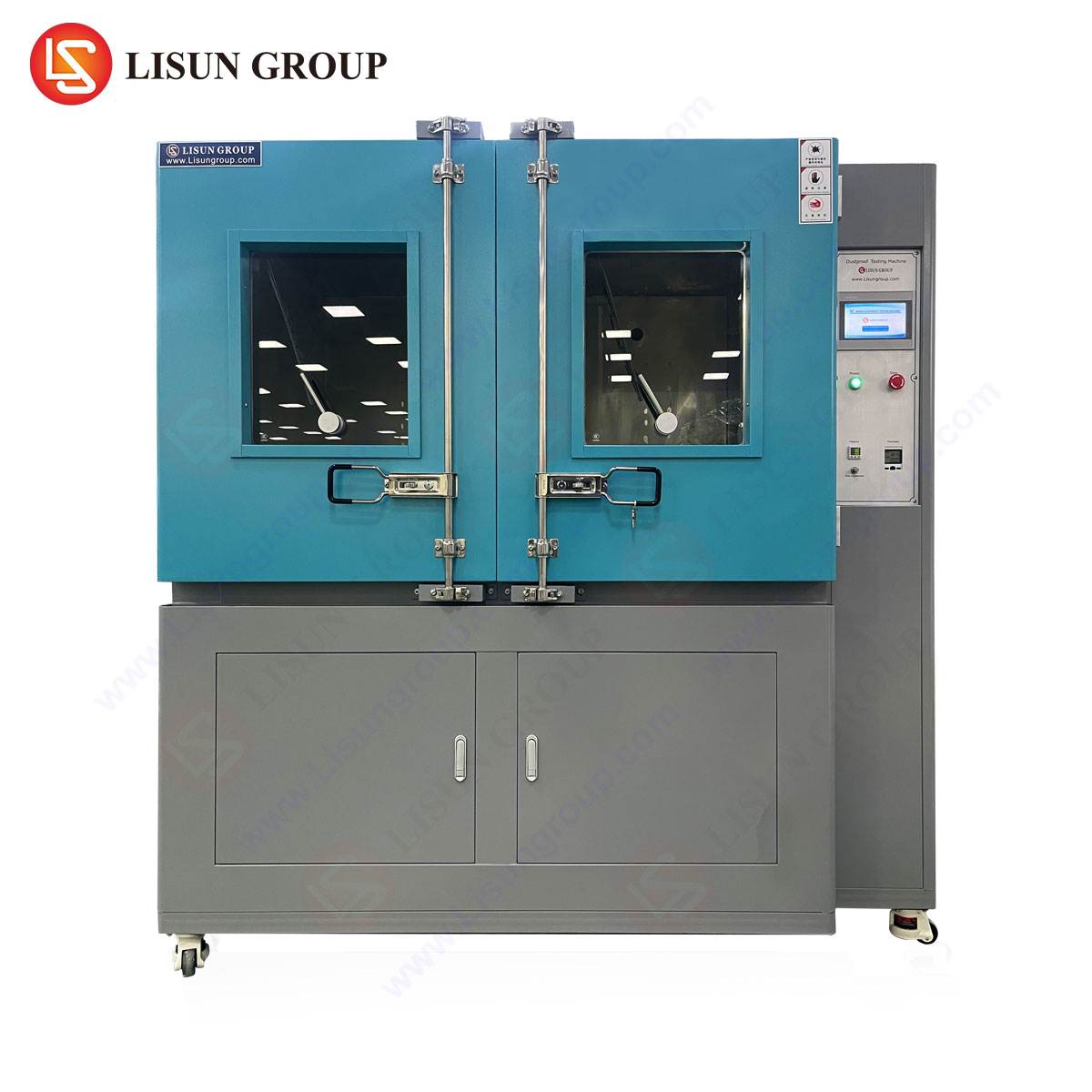
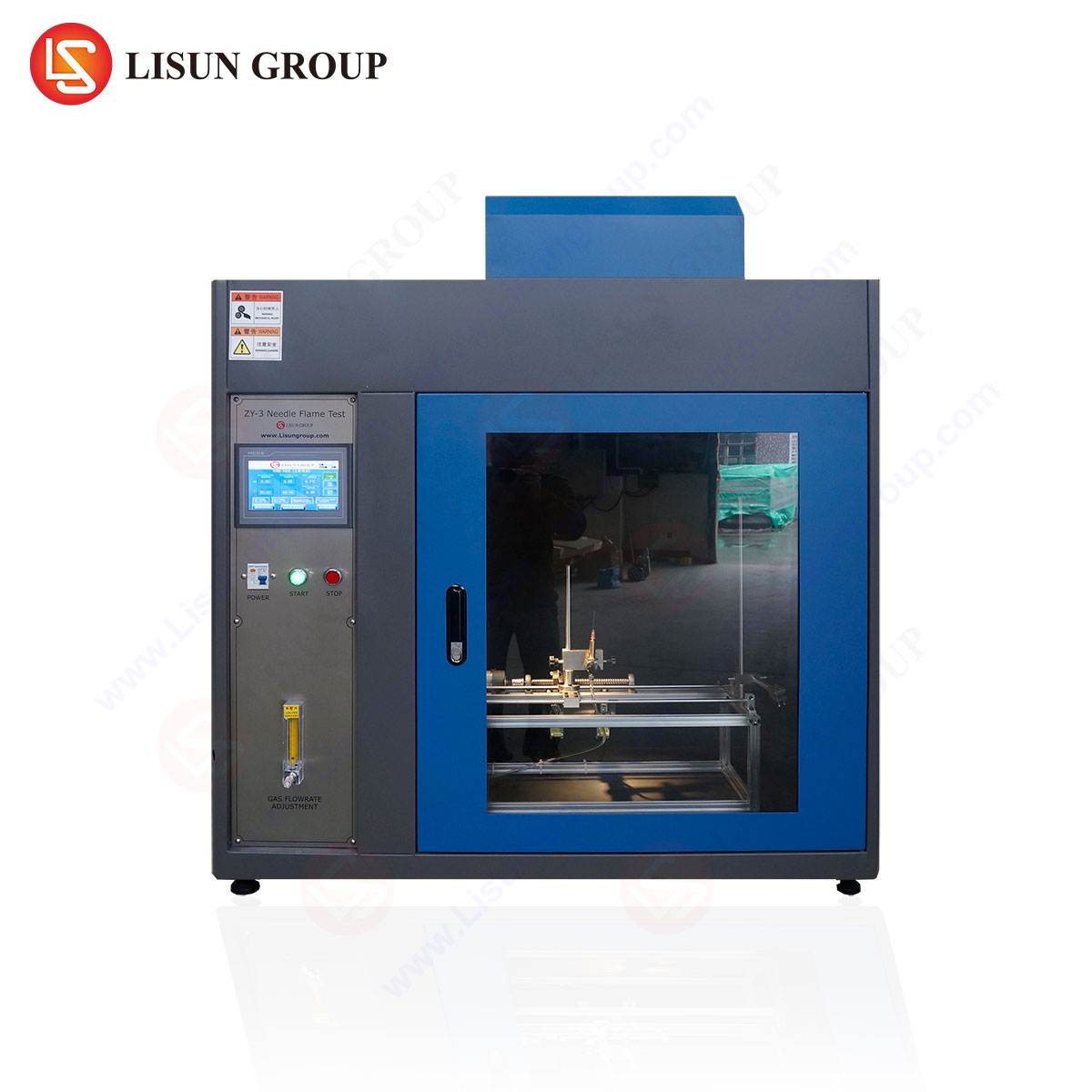
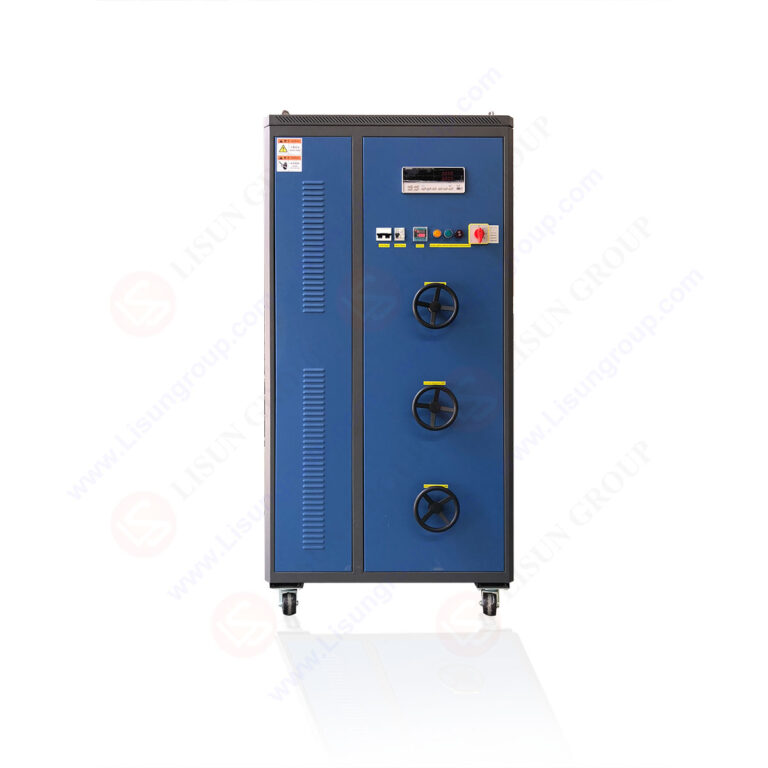
In this context, the LISUN ZY-3 Needle Flame Test Apparatus emerges as a sophisticated instrument engineered to meet and exceed these stringent requirements. While its nomenclature references “Needle Flame,” the ZY-3 is a versatile platform designed to conduct a suite of tests, including the full suite of glow-wire evaluations (GWIT, GWFI) per IEC 60695-2-11 to -13, UL 746A, and other national standards. Its design philosophy centers on achieving the highest levels of accuracy, repeatability, and user safety, making it a preferred solution for certification laboratories, quality assurance departments, and research institutions across the aforementioned industries.
Technical Specifications and Operational Principles of the LISUN ZY-3 Apparatus
The LISUN ZY-3 is characterized by a suite of technical specifications that ensure procedural fidelity. The core heating element is a high-purity nickel/chromium (80/20) alloy wire, conforming to standard dimensions. The temperature control system is microprocessor-based, allowing for precise digital setpoint and real-time monitoring with a resolution of 1°C. The apparatus incorporates a high-precision thermocouple spot-welded to the glow-wire, as per standard, ensuring direct and accurate temperature feedback to the PID controller, which maintains stability within ± 2°C of the setpoint.
The application of the 1.0 N force is achieved via a calibrated spring-loaded mechanism, guaranteeing consistent contact pressure between the glowing element and the test specimen. The test chamber is constructed from flame-retardant and heat-resistant materials, featuring a clear observation window for safe monitoring. A critical safety feature is the integrated exhaust system, which evacuates combustion products, maintaining a safe laboratory environment. The specimen holder is adjustable to accommodate components of various geometries and sizes, from a small switch housing to a section of a printed circuit board assembly.
Operationally, the test follows a strict sequence: the specimen is mounted, the target temperature is set, and the glow-wire is heated. Upon reaching thermal equilibrium, the apparatus automatically or manually advances the glow-wire to contact the specimen for a period of 30.0 seconds ± 1.0 second. After this period, the glow-wire retracts automatically. The observer then records whether ignition occurred and, if so, times the duration of flaming or glowing on the specimen itself. The use of a specified tissue paper layer beneath the specimen provides a validated method for detecting incendiary droplets.
Industry-Specific Applications and Risk Mitigation
The application of GWIT testing via apparatus like the LISUN ZY-3 spans the entire spectrum of the electrotechnical sector, each with unique risk profiles.
- Electrical and Electronic Equipment & Industrial Control Systems: Here, GWIT assessment is applied to enclosures, terminal blocks, busbar insulation, and relay housings. A low GWIT in a contactor housing could lead to a cascade failure if an internal arc generates sufficient localized heat.
- Household Appliances and Consumer Electronics: Components such as motor housings in food processors, internal supports for heating elements in kettles, and the plastic chassis of power supplies are routinely tested. The test simulates a fault condition where a loose connection or failed component becomes incandescent.
- Automotive Electronics: Under-hood components face extreme ambient temperatures. GWIT testing for connectors, sensor bodies, and control unit housings ensures they do not become an ignition source if subjected to thermal overload from a short circuit, even in an engine compartment environment.
- Lighting Fixtures and LED Drivers: Modern LED drivers contain switching power supplies that can fault. The plastic housings of these drivers and the bodies of lamp holders must have a sufficiently high GWIT to contain such a fault without igniting.
- Telecommunications and Data Center Equipment: Power distribution units (PDUs), server chassis, and router housings are evaluated. The high density of current-carrying parts increases the risk of thermal faults.
- Medical Devices and Aerospace Components: In these ultra-high-reliability fields, GWIT testing is part of a comprehensive hazard analysis. For medical devices, it ensures safety in oxygen-rich environments. In aerospace, it addresses fire risks in confined, inaccessible panels within an aircraft’s avionics bay.
- Electrical Components and Wiring Systems: This is the foundational application. Switches, sockets, circuit breaker casings, and cable insulation are all subject to GWIT requirements to prevent a single point of failure from initiating a fire.
Comparative Advantages in Precision Testing
The LISUN ZY-3 offers distinct competitive advantages that translate directly into more reliable safety data and operational efficiency. First is its calibration integrity. The direct thermocouple welding and advanced PID control algorithm minimize temperature gradient errors, a common source of inter-laboratory variance. Second, its mechanized force application removes the human error inherent in manual lever systems, guaranteeing the exact 1.0 N contact force is applied each time. Third, its modular design and software integration allow for seamless data logging and report generation, essential for audit trails in ISO/IEC 17025 accredited laboratories.
Furthermore, the apparatus’s construction from durable, thermally stable materials ensures long-term calibration stability, reducing downtime and maintenance costs. The intuitive human-machine interface (HMI), often a point of failure in complex instruments, is designed for clarity, reducing operator training time and procedural errors. When compared to simpler or less automated systems, the ZY-3 provides a higher degree of confidence that the generated GWIT values are a true and repeatable property of the material under test, not an artifact of the equipment.
Standards Compliance and Regulatory Implications
Compliance with international standards is not optional; it is a market-access requirement. The GWIT test methodology detailed in IEC 60695-2-13 is harmonized across many national and regional regulations. For example, it is referenced in the IEC 60335 series for household appliances, IEC 60950 for IT equipment (superseded but still influential), IEC 62368 for audio/video and ICT equipment, and the IEC 60601 series for medical electrical equipment. Automotive standards like ISO 20653 also invoke similar principles for component protection.
A test apparatus must therefore demonstrably comply with the mechanical, thermal, and procedural stipulations of these standards. The LISUN ZY-3 is designed from the ground up for this compliance. Its use enables manufacturers to generate test reports that are readily accepted by certification bodies such as UL, TÜV, Intertek, and CSA, smoothing the path to CE, UL, and other mandatory marks. In a regulatory landscape increasingly focused on fire prevention, the ability to produce defensible, standards-compliant GWIT data is a critical competitive asset.
Interpreting GWIT Data for Material Selection and Design
The numerical GWIT value is a powerful tool for engineers. It allows for comparative material selection early in the design phase. For instance, when designing a new household socket, an engineer might compare polyamide 66 (with a typical GWIT of 650-750°C) to a phenolic resin (with a typical GWIT often above 850°C). The choice will balance this safety parameter against cost, mechanical strength, and manufacturability.
However, GWIT is a property of the final product assembly in its end-use thickness and configuration, not just the raw material. A thin-walled molding may exhibit a lower GWIT than a thick test plaque of the same polymer due to reduced thermal mass. Therefore, testing on actual production components or representative assemblies is imperative. The adjustable specimen holder of the ZY-3 facilitates this real-world testing, allowing designers to validate not just the material, but the specific geometry and wall thickness of their component.
Conclusion: Integrating GWIT into a Holistic Safety Strategy
The Glow-Wire Ignition Temperature represents a fundamental, quantifiable pillar in the fire hazard assessment of electrotechnical products. Its value lies in its simulation of a severe, localized thermal fault—a scenario that other flammability tests do not address. Determining this parameter with accuracy is non-negotiable for ensuring product safety and achieving regulatory compliance across global markets.
The reliability of the GWIT result is inextricably linked to the precision and standards-conformity of the test apparatus employed. Advanced systems like the LISUN ZY-3 Needle Flame Test Apparatus provide the necessary control, repeatability, and data integrity to transform a standardized test procedure into a trusted engineering datum. By integrating rigorous GWIT evaluation, supported by capable instrumentation, into the product development lifecycle, manufacturers in sectors from consumer electronics to aerospace can effectively mitigate fire risks, protect end-users, and fulfill their obligations under international safety frameworks.
Frequently Asked Questions (FAQ)
Q1: What is the key difference between GWIT and the Glow-Wire Flammability Index (GWFI)?
A1: The fundamental difference lies in the timing of the observation period. GWFI determines the temperature at which a material does not ignite, or self-extinguishes within 30 seconds while the glow-wire is still in contact. GWIT, conversely, determines the temperature 25 K below that at which a material may ignite but must self-extinguish within 30 seconds after the glow-wire has been removed. GWIT generally represents a more stringent assessment of post-ignition behavior.
Q2: Can the LISUN ZY-3 test non-standard or unusually shaped components?
A2: Yes, a primary design feature of the ZY-3 is its adaptable specimen holding system. While standard tests are performed on flat plaques of specified dimensions, the apparatus can be configured to hold actual production components such as switch housings, connector bodies, or sections of assembled circuit boards, provided they can be securely positioned to meet the geometric requirements of the standard (e.g., distance to the supporting base).
Q3: How often does the glow-wire heater element need to be replaced, and what affects its lifespan?
A3: The nickel/chromium glow-wire is consumable. Its lifespan depends on the frequency of testing and the temperatures used. Continuous operation at very high temperatures (e.g., above 900°C) will accelerate oxidation and embrittlement. Regular visual inspection for significant pitting, distortion, or cracks is necessary. For laboratories conducting high-volume testing, having calibrated spare assemblies on hand is recommended to minimize downtime. The ZY-3 is designed to facilitate this changeover.
Q4: For a new material, at what temperature should GWIT testing begin?
A4: There is no universal starting point. The process should be informed by the material supplier’s datasheet, which often provides a suggested range or typical value. If no data exists, a preliminary test at a moderate temperature (e.g., 550°C or 600°C) can be conducted to gauge behavior. The test then proceeds in increments (as per the standard, often 25 K or 50 K) until the failure criteria are met, at which point the GWIT can be calculated.
Q5: Is GWIT testing sufficient on its own to guarantee a product’s fire safety?
A5: No. GWIT is a critical component of a holistic fire hazard assessment, but it is not comprehensive. A complete evaluation typically includes other tests such as flammability classification (e.g., UL 94), tracking resistance, hot wire ignition (HWI), and fault condition testing on the final product. GWIT specifically addresses ignition from glowing sources; other mechanisms, such as arc ignition or external flame impingement, require different standardized tests.