

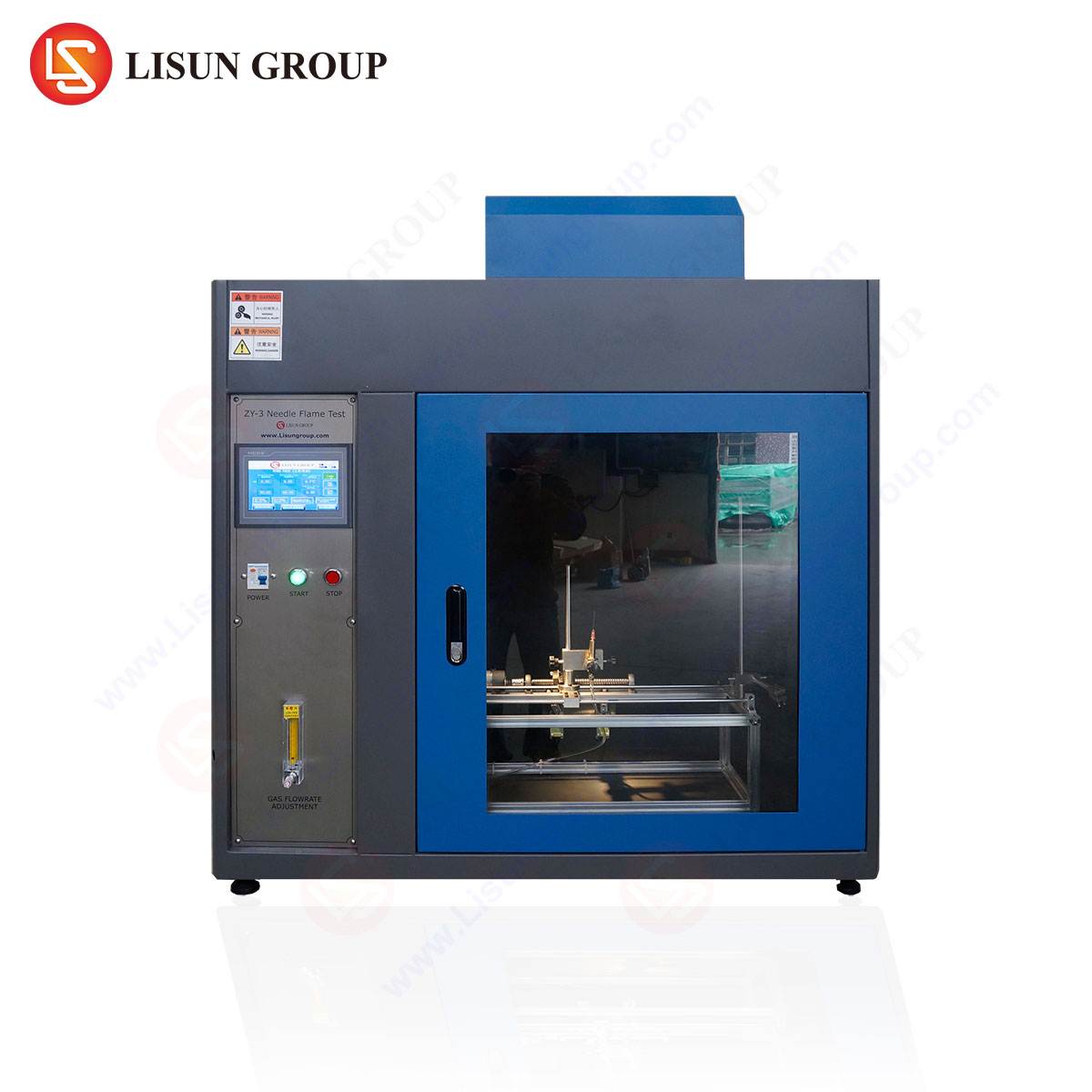



Fundamentals of Glow-Wire Ignition Susceptibility
The propensity of insulating materials to resist ignition and prevent flame propagation under thermal stress constitutes a cornerstone of electrical safety engineering. Among the myriad of testing methodologies developed to quantify this characteristic, the glow-wire test stands as a particularly severe and revealing assessment. This procedure simulates a specific type of thermal fault condition, such as an overheating component or a poor electrical connection, which could occur within an electrotechnical product. The test evaluates not only the material’s ability to avoid ignition but also its capacity to self-extinguish should ignition occur and to limit the spread of any resulting flames. The consequences of material failure under such conditions are severe, ranging from localized damage to complete product combustion, posing significant fire hazards and risks to personal safety. Consequently, glow-wire testing has been codified into international standards, primarily the IEC 60695-2 series, making it a mandatory verification step for a vast array of products across global markets.
Operational Principles of the Glow-Wire Apparatus
At its core, the glow-wire test employs a prescribed loop of resistance wire, typically a nickel/chromium alloy, which is heated electrically to a specific temperature. This heated element, the “glow-wire,” is then applied with a defined force to the test specimen for a predetermined period. The apparatus must maintain the wire temperature within a tight tolerance, typically ± 15°C, during the pre-application phase and ensure a consistent application force, usually 1.0 N ± 0.2 N. The test’s objective is to observe the specimen’s reaction to this thermal insult. Key observations include whether the specimen ignites, the duration of any flames post-application (flame persistence), and whether dripping of molten material occurs and if such drips ignite a underlying tissue paper layer. The temperature of the glow wire is selected based on the end-product standard, with common test severities being 550°C, 650°C, 750°C, and 850°C, reflecting varying levels of potential thermal stress expected in service.
The LISUN ZRS-3H Glow-Wire Test Apparatus: A Technical Overview
The LISUN ZRS-3H Glow-wire Test Apparatus represents a sophisticated implementation of the testing principles outlined in IEC 60695-2-10, IEC 60695-2-11, IEC 60695-2-12, and IEC 60695-2-13. It is engineered to deliver precise, repeatable, and compliant results essential for certification and quality assurance. The system’s design integrates several critical subsystems to achieve this. A high-precision temperature control system utilizes a proprietary thermocouple spot-welded to the glow-wire tip, ensuring accurate temperature measurement and feedback to a digital PID controller. This allows for stable temperature maintenance and rapid recovery after specimen application. The mechanical application mechanism is equally critical; it employs a low-friction, counterbalanced system to guarantee the consistent application of the 1.0 N force, free from gravitational or mechanical inconsistencies.
The apparatus features a comprehensive timing and data acquisition suite. It automatically records the glow-wire heating time, application duration, and post-application flame time (ti and te). The test chamber is constructed from stainless steel and is equipped with a draught shield to eliminate the influence of ambient air currents on the test results. A viewing window allows for safe observation, while internal lighting ensures clear visibility. An integrated fume extraction port is standard, allowing for the safe removal of potentially hazardous pyrolysis products generated during testing. The specimen clamping mechanism is designed to accommodate a wide range of geometries, from flat plaques to complex molded components, ensuring secure and repeatable positioning.
Key specifications of the LISUN ZRS-3H include a temperature range from 500°C to 1000°C, a timing accuracy of 0.1 seconds, and a temperature control accuracy of ± 2°C during the heating phase and ± 15°C during application. Its design prioritizes user safety with interlock systems that prevent movement of the glow-wire arm when the chamber door is open and automatic power cutoff upon test completion or in the event of a system fault.
Material Response and Failure Mode Analysis
During a test, materials exhibit a range of behaviors that are meticulously documented and analyzed. A successful outcome, typically a GWIT (Glow-Wire Ignition Temperature) or GWFI (Glow-Wire Flammability Index) pass, is characterized by no ignition or by self-extinguishing flames within a specified time limit and without ignition of the tissue paper by drips. Failure modes, however, provide critical diagnostic information. Sustained flaming combustion (exceeding 30 seconds for GWFI assessment) indicates a fundamental lack of flame-retardant properties in the material formulation. Ignition of the tissue paper by burning drips is a critical failure, as it demonstrates the material’s propensity to propagate fire to adjacent materials or surfaces. Other observable phenomena include significant glowing of the specimen, deep penetration of the glow-wire, and the volume and nature of smoke produced. This post-test analysis is not merely about pass/fail determination; it offers invaluable feedback to material scientists and design engineers for improving product formulations and component layouts to enhance inherent safety.
Industry-Specific Applications and Compliance Imperatives
The mandate for glow-wire testing permeates virtually every sector involving electrotechnical products. Its application is tailored to the specific risks and operational environments of each industry.
In Household Appliances and Consumer Electronics, standards like IEC 60335-1 mandate testing for components that may be subjected to overload conditions, such as switch housings, socket outlets, and internal supports. A toaster’s crumb tray or a power supply enclosure for a television must resist ignition from a simulated faulty heating element.
The Automotive Electronics sector, governed by standards such as those from ISO, requires components in the passenger compartment and engine bay to withstand thermal faults. Connectors, control module housings, and wiring harness components are routinely tested to prevent vehicle fires.
For Lighting Fixtures, particularly those using high-wattage sources like LEDs where heat sinking is critical, the ballast housings, lamp holders, and diffusers are subject to glow-wire testing as per IEC 60598-1. The Electrical Components industry, including manufacturers of switches, relays, and sockets, relies heavily on this test to validate the safety of the insulating materials that form the body of these devices.
In Industrial Control Systems and Telecommunications Equipment, the reliability and fire safety of enclosures for programmable logic controllers, servers, and routers are paramount. These products often operate continuously and must not propagate a fire initiated by an internal electrical fault.
More critically, Medical Devices and Aerospace and Aviation Components demand the highest levels of material performance. A failed glow-wire test in an oxygen-rich environment or within a confined, life-sustaining system could have catastrophic consequences, making compliance with stringent industry-specific standards non-negotiable.
Comparative Advantages of the ZRS-3H Testing System
The LISUN ZRS-3H distinguishes itself in the competitive landscape of safety testing equipment through several engineered advantages. Its calibration stability is a primary benefit; the direct thermocouple welding technique and advanced PID control algorithm minimize temperature drift over time, reducing the frequency of recalibration and enhancing long-term data integrity. Operational efficiency is achieved through an intuitive human-machine interface (HMI) that guides the user through the test sequence, automates data logging, and stores multiple test protocols for different standards. This reduces operator error and increases testing throughput.
The mechanical robustness of the application mechanism ensures that the critical 1.0 N force is applied consistently, test after test, a factor that is often a point of variance in less sophisticated apparatuses. Furthermore, the ZRS-3H’s design incorporates serviceability and component longevity. The glow-wire holder is designed for easy replacement, and the chamber is built with durable, easy-to-clean materials to withstand the harsh byproducts of combustion testing. This combination of precision, usability, and durability provides laboratories with a lower total cost of ownership and a higher degree of confidence in their certification data.
Integrating Glow-Wire Data into Product Development
Progressive manufacturers do not treat glow-wire testing as a mere final compliance checkpoint. Instead, it is integrated early and often into the product development lifecycle. During the material selection phase, comparative testing of different polymer grades using the LISUN ZRS-3H provides quantitative data to guide designers toward cost-effective, safe materials. In the prototyping stage, the test is used to validate the design of components, such as wall thickness, ribbing, and the placement of metallic heat sinks, which can dramatically alter a material’s performance under thermal stress. This iterative testing and refinement process, enabled by reliable and readily available apparatuses, prevents costly last-minute design changes and material substitutions. It fosters a culture of “safety by design,” where fire resistance is an inherent property of the product, rather than a feature added merely to pass a final audit.
Navigating International Standards and Test Parameters
Adherence to the precise protocols of international standards is fundamental to the validity of any glow-wire test. The two primary indices determined are the Glow-Wire Flammability Index (GWFI) and the Glow-Wire Ignition Temperature (GWIT). The GWFI is the highest temperature at which a material does not ignite or, if it does, self-extinguishes within 30 seconds after removal of the glow-wire and does not ignite the tissue paper. The GWIT is the temperature 25°C (or in some cases, 50°C or 75°C) above the maximum temperature at which the material does not ignite, with a sustained flaming time not exceeding 5 seconds. The selection of test temperature, specimen thickness (typically 0.75 mm ± 0.1 mm, 1.5 mm ± 0.1 mm, or 3.0 mm ± 0.2 mm), and pass/fail criteria are strictly dictated by the end-product standard. A laboratory utilizing the LISUN ZRS-3H must therefore possess a deep understanding of these nuanced requirements to configure the apparatus correctly and interpret the results within the appropriate regulatory framework.
Frequently Asked Questions
Q1: What is the typical calibration interval for the LISUN ZRS-3H, and what does calibration involve?
A: It is recommended that the apparatus undergoes a full calibration annually or following any component replacement that may affect metrology. Calibration involves verifying the temperature accuracy of the glow-wire tip using a traceable standard, confirming the application force is 1.0 N ± 0.2 N, and validating the accuracy of all timers. LISUN provides calibration services and certificates traceable to national standards.
Q2: Can the ZRS-3H test non-planar or irregularly shaped components?
A: Yes. The specimen holding fixture is designed to be adaptable. While standards often specify testing on flat plaques for material qualification, the apparatus can securely hold actual production components, such as connector housings or switch bodies, provided they can be positioned so that the test surface is accessible and can withstand the application force.
Q3: How does the apparatus account for the thermal load and potential cooling effect when the glow-wire is applied to a specimen?
A: The IEC 60695-2-10 standard specifies that the temperature drop of the glow-wire during application must not exceed a certain limit. The LISUN ZRS-3H is designed with a sufficiently powerful heating system and a responsive control loop to minimize this temperature drop and ensure the test severity is maintained. The pre-load temperature is monitored to guarantee it is within the required tolerance before application.
Q4: What safety features are integrated into the ZRS-3H to protect the operator?
A: The apparatus includes multiple safety interlocks that prevent the glow-wire from moving or heating when the test chamber door is open. An automatic fume extraction system is recommended to remove toxic gases. The unit is constructed with heat-resistant materials, and the viewing window is made of a protective material to shield the operator from potential fragments or intense light.
Q5: For a new product, how is the appropriate glow-wire test temperature determined?
A: The test temperature is not chosen arbitrarily. It is mandated by the specific product safety standard that governs the device. For example, IEC 60335-1 for household appliances specifies different test temperatures for different types of components. The product manufacturer must identify the applicable standard and its precise requirements to select the correct test severity.