








An Analytical Framework for Hardness Testing in Electromechanical Product Safety
The evaluation of material hardness and structural integrity constitutes a fundamental pillar of product safety and reliability engineering, particularly within sectors governed by stringent international standards. Hardness testing, in its broadest definition, extends beyond traditional metallurgical indentation methods to encompass assessments of a product’s resistance to penetration, deformation, and mechanical stress from pointed or blunt probes. This domain is critical for ensuring that enclosures, user-accessible parts, and internal components do not pose electrical, mechanical, or physical hazards during normal use or foreseeable misuse. The technical apparatus employed for these evaluations must deliver precise, repeatable, and standards-compliant results to validate design robustness across diverse industries.
Defining the Scope of Safety-Critical Hardness Assessments
Within product safety standards such as those from the International Electrotechnical Commission (IEC), Underwriters Laboratories (UL), and other national bodies, hardness testing is explicitly mandated for specific applications. The primary objective is to simulate interactions with objects that a product might encounter, including tools, jewelry, or children’s fingers. A key application is verifying that openings in enclosures—designed to prevent access to hazardous live parts—are sufficiently robust to resist deformation by test probes. Similarly, the assessment of insulation materials, protective covers, and external casings requires validated methods to ensure they cannot be easily compromised, which could lead to electric shock, energy hazards, or mechanical injury. The testing philosophy moves from abstract risk to quantifiable mechanical force, translating regulatory requirements into empirical data.
Biomechanical Simulation through Standardized Test Probes
The cornerstone of this evaluative process is the deployment of geometrically and mechanically defined test instruments. These devices are not arbitrary but are engineered to replicate specific threat profiles with high fidelity. The most prevalent categories include test fingers, test probes, and test pins, each with distinct geometries, applied forces, and acceptance criteria as detailed in standards like IEC 61032, IEC 60529 (IP Code), and UL 60950-1. The test finger, for instance, simulates the dimensions and articulation of a human finger to check for accessibility to dangerous parts. Test probes, often more rigid and pointed, assess the strength of openings and the effectiveness of barriers. Test pins provide an even more stringent evaluation for smaller apertures. The calibration and construction of these tools are paramount; any deviation in material hardness, joint articulation, or tip radius can invalidate test results, leading to non-conformities or, critically, undetected safety flaws in fielded products.
The LISUN Series: Precision Instrumentation for Compliance Verification
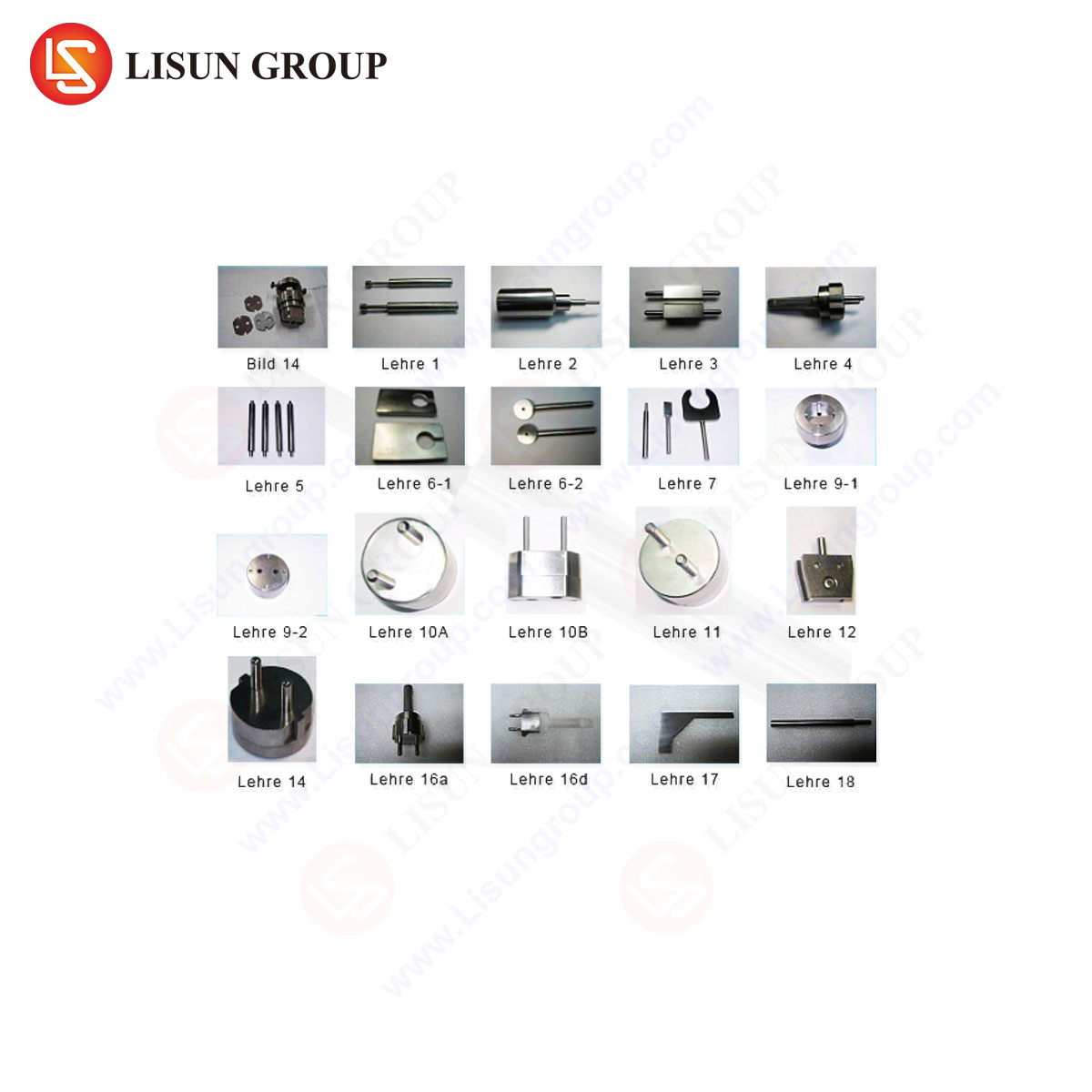
Among the specialized equipment developed for this sector, the LISUN series of test fingers, probes, and pins represents a calibrated instrument suite engineered for rigorous standards compliance. These tools are manufactured to the exacting dimensional and material specifications outlined in international safety standards, serving as a primary reference for testing laboratories and quality assurance departments globally.
The LISUN Test Finger (IEC 61032 Probe 11-B) is a articulated, jointed simulation of the human finger. Constructed from materials such as heat-treated aluminum alloy and stainless steel, it possesses specified articulation limits and a precise tip radius. It is typically used with a spring mechanism to apply a standardized force, often 10N ± 0.5N, or in some interpretations, up to 30N. Its application is ubiquitous: verifying that openings in a household appliance’s housing, a telecommunications cabinet, or an industrial control panel cannot be penetrated, thereby preventing contact with mains-voltage components or moving parts.
The LISUN Test Probe (e.g., IEC 61032 Probe 13) is a more rigid, straight instrument designed for testing the robustness of openings. Made from hardened steel, it applies a greater force, commonly 30N ± 1.5N, to evaluate whether a barrier will deform or break under stress. This is critical for assessing socket outlets, connector ports in office equipment, or ventilation slots in automotive electronics where a rigid object like a tool or key might be inserted.
The LISUN Test Pin (e.g., IEC 61032 Probe 18) is the most stringent of the common probes, featuring a small-diameter, tapered pin. It applies a force of 1N ± 0.1N to test very small openings that might be found in toys, miniature connectors, or medical device interfaces. Its purpose is to ensure that even the smallest accessible opening does not allow passage to a hazardous part.
Table 1: Representative Specifications for LISUN Test Instruments
| Instrument | Standard Reference | Typical Tip Geometry | Applied Force | Primary Material |
| :— | :— | :— | :— | :— |
| Test Finger | IEC 61032 Probe 11-B | 8mm radius hemisphere | 10N / 30N (context-dependent) | Aluminum alloy, Stainless Steel |
| Test Probe | IEC 61032 Probe 13 | 3mm diameter cylinder, hemispherical end | 30N ± 1.5N | Hardened Steel |
| Test Pin | IEC 61032 Probe 18 | Tapered pin, 3mm long, 0.35mm tip radius | 1N ± 0.1N | Hardened Steel |
Application Across the Electromechanical Product Spectrum
The deployment of this testing methodology is vast and cross-industrial. In Electrical and Electronic Equipment and Household Appliances, test fingers verify that back panels and service openings cannot be breached without a tool. For Lighting Fixtures, especially recessed or portable types, probes ensure that lamp compartments are secure. Automotive Electronics, subjected to vibration and potential misuse, require validation that control unit housings resist probe penetration.
Medical Devices demand extreme rigor; an infusion pump or patient monitor must have openings that withstand probe testing to maintain isolation integrity. Aerospace and Aviation Components use these tests to ensure cockpit and in-flight entertainment system panels are secure against accidental intrusion. In the Toy and Children’s Products Industry, the test pin is particularly vital for ensuring battery compartments and small openings cannot be compromised, preventing swallowing hazards or access to button cells.
For Cable and Wiring Systems, gland entries and connector shrouds are tested. Office Equipment like printers and power strips are checked for safety of output slots and vents. Every Electrical Component—from switches to sockets—undergoes this testing as a fundamental part of its safety certification, forming a non-negotiable checkpoint in the design validation workflow.
Metrological Principles and Calibration Integrity
The underlying principle of this testing is applied mechanics: the interaction of a defined geometry under a controlled force with a test specimen. The outcome is a binary pass/fail based on accessibility, but the process is quantitative. The force application must be consistent and measurable, often using calibrated push-pull gauges or integrated spring systems. The articulation of a test finger must be free-moving yet within strict angular limits to accurately simulate finger joint movement. The hardness of the probe material itself must exceed that of any material it tests to prevent probe deformation, which would corrupt the test. Regular calibration of both the force application mechanism and the dimensional accuracy of the probes against master gauges is essential for maintaining laboratory accreditation and test result validity. Traceability to national measurement institutes is a hallmark of professional-grade equipment like the LISUN series.
Competitive Advantages of Standardized Test Apparatus
The utility of a dedicated test apparatus lies in its repeatability, accuracy, and auditability. While ad-hoc tools might be fabricated, they risk non-compliance due to subtle dimensional errors or inappropriate material properties. Professional systems offer distinct advantages. They provide metrological traceability, with calibration certificates linking each instrument to international standards. Durability and consistency are ensured through the use of hardened materials and precision machining, preventing wear that would alter test results over time. Ergonomic and functional design, such as knurled handles and integrated force stops, improves tester consistency and reduces human error. Furthermore, using recognized equipment like the LISUN series facilitates regulatory acceptance, as certification bodies are familiar with these tools and trust their conformity to prescribed specifications, thereby streamlining the product approval process.
Integration into a Comprehensive Safety Testing Regime
Hardness testing with probes and fingers is rarely an isolated activity. It is integrated into a larger test sequence that may include dielectric withstand tests (hipot), ground bond continuity checks, and fault condition simulations. For example, after a test probe is applied to an opening, a standardized test finger might be used to check for accessibility. If the barrier is compromised, a subsequent electric strength test may be performed on the now-accessible part to determine if a hazard exists. This integrated approach is mandated in standards like IEC 62368-1 for audio/video and IT equipment, which defines hazard-based safety engineering. The data from mechanical probe tests directly informs the classification of energy sources and the effectiveness of safeguards, making these tools integral to the modern safety engineering paradigm.
Future Trajectories in Mechanical Safety Testing
The evolution of this field is closely tied to advancements in materials and product design. As products become smaller and use novel composites or polymers, the mechanical response to probe testing may change, potentially requiring updates to test parameters or the development of new probe geometries. Furthermore, the rise of connected devices in the Internet of Things (IoT) and wearable electronics introduces new form factors and user interaction modes that must be evaluated for safety. The core principles, however, remain constant: the need for simulated human interaction with equipment under defined mechanical conditions. The ongoing refinement of international standards will continue to rely on precise, reliable instrumentation to translate theoretical safety goals into demonstrable product compliance, ensuring that technological innovation does not come at the expense of user protection.
FAQ: Hardness Testing Probes and Procedures
Q1: What is the critical difference between a test finger (Probe B) and a test probe (Probe 13) in application?
The test finger (IEC 61032 Probe 11-B) simulates a human finger to check for accidental contact with hazardous parts during typical user interaction. It is jointed and applies a moderate force. The test probe (e.g., Probe 13) is a rigid, straight tool simulating a tool or key. It applies a higher force (30N) to test the mechanical strength of barriers and openings, determining if they can be compromised by more deliberate or forceful action.
Q2: How often should test fingers and probes be calibrated, and what is checked during calibration?
Calibration intervals are typically annual, aligned with laboratory accreditation requirements (e.g., ISO/IEC 17025). Calibration verifies dimensional accuracy (tip radii, joint angles, overall lengths) against master gauges and validates the applied force mechanism (e.g., spring force) using a traceable force gauge. A calibration certificate provides evidence of conformity to the standard’s specifications.
Q3: Can a single test probe be used for compliance with multiple regional standards (e.g., IEC, UL, GB)?
Often, yes, provided the specifications are harmonized. Many standards, such as IEC 61032, are adopted nationally with minimal deviation. Probes manufactured to the IEC specification, like the LISUN series, are generally accepted for testing to UL, EN, and GB standards that reference identical probe geometries and forces. However, the tester must always verify the specific clause in the target standard to confirm full compliance.
Q4: In testing a medical device with a very small opening, which probe is appropriate, and what is the pass/fail criterion?
For a small opening (e.g., <1mm), the test pin (IEC 61032 Probe 18) is used, applying a 1N force. The pass criterion is that the pin cannot penetrate the opening to make contact with a hazardous live part or a hazardous moving part. The test is often combined with an electrical check: if the pin can enter, the device may be powered on and a dielectric test or contact check performed on the pin to see if a hazardous voltage is present.
Q5: What common mistake can invalidate a test finger accessibility check?
A frequent error is the incorrect application of force or articulation. The test finger must be inserted and manipulated in every possible orientation with its specified force. If the finger’s joints are stiff or not allowed to articulate freely, or if the applied force is not maintained correctly, the test does not accurately simulate real-world finger access, potentially leading to a false pass. Using a properly maintained, calibrated instrument with a trained operator is essential.