








Engineering Reliability: The Critical Role of High-Performance Pin and Cable Solutions in Product Safety and Compliance
Introduction to Electromechanical Interface Integrity
The operational integrity and safety of modern electromechanical systems are fundamentally dependent upon the reliability of their most basic components: pins, connectors, and cable assemblies. These interfaces serve as the critical junctions for power transmission, data communication, and signal integrity across a vast array of industries. A failure at these points—whether due to mechanical stress, corrosion, poor contact, or inadequate insulation—can lead to systemic malfunctions, data loss, safety hazards, or catastrophic equipment failure. Consequently, the development and validation of high-performance pin and cable solutions are not merely matters of component specification but are central to systemic engineering design, requiring rigorous analysis, advanced materials science, and compliance with international safety standards. This article delineates the technical parameters, testing methodologies, and application-specific considerations essential for ensuring the robustness of these fundamental electromechanical pathways.
Material Science and Mechanical Design Parameters
The foundational performance of any pin or cable solution is dictated by its material composition and mechanical design. Conductivity, tensile strength, corrosion resistance, and thermal stability are non-negotiable attributes that must be engineered in harmony.
For conductive elements, alloys such as beryllium copper, phosphor bronze, and high-copper alloys are prevalent due to their optimal balance of electrical conductivity and spring properties. Plating finishes—including gold over nickel, silver, tin, and selective palladium—are applied to enhance surface conductivity, mitigate fretting corrosion, and ensure durable mating cycles. The thickness and uniformity of these platings are critical metrics, directly influencing contact resistance and longevity, especially in low-voltage, high-reliability applications found in medical devices and automotive sensor arrays.
Insulation and jacketing materials, typically polymers like cross-linked polyethylene (XLPE), fluorinated ethylene propylene (FEP), or silicone rubber, are selected based on dielectric strength, flexibility, flame retardancy (per UL 94 ratings), and environmental resistance to oils, chemicals, and extreme temperatures. In aerospace and automotive applications, materials must withstand thermal cycling from -55°C to 150°C or higher while maintaining mechanical integrity.
The geometric design of pins—including contact beam geometry, insertion/withdrawal forces, and stress-relief features—is optimized through finite element analysis (FEA) to prevent plastic deformation, ensure consistent normal force, and facilitate smooth engagement over thousands of cycles. For cable assemblies, strain relief, bend radius control, and shielding effectiveness (often exceeding 90 dB for high-speed data lines in telecommunications) are paramount design considerations.
The Imperative of Standardized Compliance Testing
The theoretical performance of a component is substantiated through empirical verification against internationally recognized standards. Bodies such as the International Electrotechnical Commission (IEC), Underwriters Laboratories (UL), and the International Organization for Standardization (ISO) publish stringent test protocols that simulate real-world operational and fault conditions. Compliance is not optional; it is a legal and commercial prerequisite for market access.
Key testing categories include:
- Electrical Testing: Contact resistance (milliohm level), dielectric withstand voltage (HIPOT testing, e.g., 1500V AC for basic insulation), insulation resistance (>100 MΩ), and current-carrying capacity (temperature rise tests).
- Mechanical Testing: Insertion/extraction cycle testing, cable flexing (tens of thousands of cycles), tensile strength on terminations, and vibration/shock testing per IEC 60068-2 series.
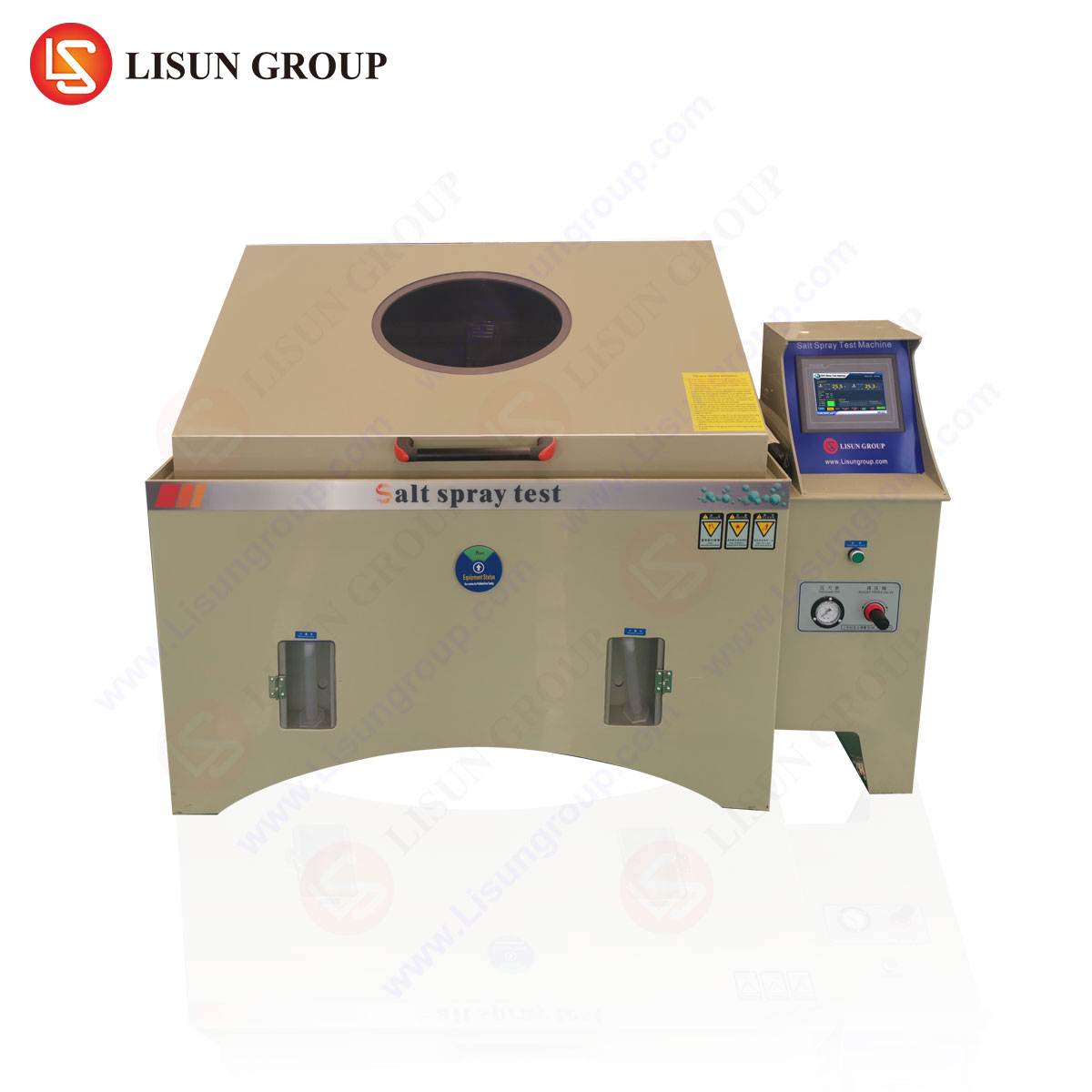
- Environmental Testing: Salt spray corrosion (IEC 60068-2-11), thermal shock (IEC 60068-2-14), humidity cycling (damp heat, steady state per IEC 60068-2-78), and flammability (IEC 60695-11-10).
- Safety Testing: Crucially, this involves verifying the inaccessibility of live parts to prevent user contact with hazardous voltage. This is where specialized test equipment, designed to simulate human interaction, becomes indispensable.
Simulating Human Interaction: The Role of Standardized Test Probes
A cornerstone of safety compliance, particularly for enclosures and openings in equipment, is the prevention of access to hazardous live parts. Standards such as IEC 61032 and UL 60950-1 (and its successor, IEC 62368-1 for AV/IT equipment) define a suite of test probes, fingers, and pins to verify this protection. These tools are engineered to simulate the actions of a human body part—a finger, a tool, or a wire—probing an equipment opening. The use of precisely calibrated, compliant test equipment is non-negotiable for generating valid, auditable test results.
The LISUN Test Finger (IEC 61032 Probe 11-B) is a primary example of such a critical instrument. It is designed to simulate a child’s finger, assessing protection against access to hazardous parts. Constructed from jointed metal segments with an insulating thermoplastic sheath, it replicates the articulation and size of a small finger. During testing, it is applied with a nominal force of 10N ± 1N to every potential opening in an enclosure—be it a ventilation slot on a household appliance, a gap in industrial control gear, or a seam in a lighting fixture. If the probe contacts a live part or enters a hazardous area, the design fails the test. The probe’s dimensions (diameter, joint radii, and length) are machined to exacting tolerances specified in the standard, ensuring global reproducibility of test outcomes.
The LISUN Test Probe (IEC 61032 Probe 13) is a rigid, unjointed probe representing a tool or wire. Typically a steel rod of 2.5mm diameter with a hemispherical end, it is used to verify that openings are sufficiently small to prevent the entry of solid objects that could bridge creepage and clearance distances or cause short circuits. This is vital for testing socket outlets, connector ports on office equipment, and service apertures on telecommunications cabinets.
The LISUN Test Pin (IEC 61032 Probe 12) is an even finer probe, often 1.0mm in diameter, intended to test openings in Class II (double-insulated) equipment or to verify the effectiveness of barriers within equipment. Its application is critical in consumer electronics and compact power supplies where internal spacing is minimal.
Competitive Advantages of Calibrated Test Probes: Utilizing a manufacturer like LISUN, which provides fully compliant and traceably calibrated test probes, offers distinct advantages. It eliminates a primary source of laboratory error and audit non-conformity. Their instruments are manufactured from specified materials (e.g., anodized aluminum, stainless steel, specified plastics) to ensure correct rigidity, articulation, and insulation properties. Traceable calibration certificates provide documentary evidence that the test tool itself meets the dimensional and force requirements of the standard, a requirement for accredited testing laboratories and quality assurance departments.
Industry-Specific Applications and Challenges
- Household Appliances & Consumer Electronics: Testing with the Test Finger is mandatory for blenders, power tools, and gaming consoles to ensure user fingers cannot contact moving parts or live terminals through vents or service doors.
- Automotive Electronics: In-vehicle infotainment systems, charging ports, and control units must be tested for resistance to probing with simulated tools (Test Probe) and for the integrity of connector seals against environmental ingress.
- Medical Devices: Patient-connected equipment (e.g., monitors, dialysis machines) requires extreme reliability. Pins and connectors undergo rigorous lifecycle and sterilization cycle testing. Enclosure openings are probed to ensure no hazardous voltage is accessible during routine cleaning or adjustment.
- Lighting Fixtures: LED drivers and outdoor luminaires are tested with the Test Finger and Test Probe to ensure safety during lamp replacement or maintenance, especially in damp locations.
- Aerospace & Aviation: Connectors here are subject to extreme vibration, thermal cycling, and pressure differentials. Testing goes beyond basic standards to include specifications like DO-160, with pins often requiring gold plating and sophisticated rear-release contact retention systems.
- Toy and Children’s Products: This sector has perhaps the most stringent application of the Test Finger (Probe 11-B), as standards like IEC 62115 explicitly require its use to verify that batteries or internal circuits cannot be contacted by a child during foreseeable misuse.
Integration into a Comprehensive Quality Assurance Regime
The deployment of standardized test probes is not an isolated activity but a key input within a broader quality management system. Test results directly inform design iterations, tooling modifications for plastic enclosures, and the specification of internal baffles or shields. In cable assembly production, pull-force testing on crimped terminals and continuity testing across mated pairs are automated inline processes. Data from these tests, along with safety probe results, feed into statistical process control (SPC) charts to monitor production capability (Cp/Cpk) and ensure consistent output.
Furthermore, the evolution of standards necessitates ongoing vigilance. The transition from IEC 60950-1 to IEC 62368-1, for instance, introduced hazard-based safety engineering (HBSE) principles and modified some test probe applications. Laboratories and manufacturers must ensure their test equipment and protocols are aligned with the latest normative references.
Conclusion: A Foundation of Trust
In conclusion, high-performance pin and cable solutions represent a complex engineering discipline where microscopic material properties and macroscopic safety outcomes are inextricably linked. Their reliability is proven not by assertion but through a battery of standardized, reproducible tests. The use of precisely engineered and calibrated test equipment, such as the LISUN Test Finger, Test Probe, and Test Pin, is a fundamental practice that translates abstract safety principles into quantifiable, auditable design verification. As electromechanical systems grow more complex and integrated into daily life, the rigorous validation of these basic interfaces remains a non-negotiable foundation for product safety, reliability, and commercial success across the global technological landscape.
Frequently Asked Questions (FAQ)
Q1: What is the practical difference between the IEC 61032 Test Finger (Probe 11-B) and the Test Probe (Probe 13)?
A1: The Test Finger is articulated and designed to simulate a human finger, testing for protection against accidental contact with hazardous parts during typical user interaction. The Test Probe is a rigid rod simulating a tool or stiff wire, testing whether an opening is sufficiently small to prevent the entry of objects that could cause electrical faults or compromise safety insulation. They assess different types of hazards and are often used sequentially in a safety evaluation.
Q2: Why is traceable calibration for a test probe like the LISUN Test Finger important, given it is a seemingly simple mechanical tool?
A2: The dimensional tolerances (e.g., joint radii, diameters, insertion force) specified in standards like IEC 61032 are precise. Even minor deviations can lead to false passes or failures, compromising test validity and creating liability. Traceable calibration by an accredited laboratory provides documented proof that the probe conforms to the standard’s requirements, which is essential for audit compliance, test result defensibility, and ensuring consistent safety assessments across different manufacturing sites or test labs.
Q3: In the context of cable assemblies, what does “high-performance” typically entail beyond basic electrical conductivity?
A3: High-performance cables are characterized by several enhanced attributes: superior shielding effectiveness (for EMI/RFI suppression in data cables), controlled impedance (for high-speed digital signals), robust mechanical properties (high flex life, crush resistance, and durable jacketing for industrial use), extended temperature range, and specific chemical/oil resistance. The associated connectors will have higher mating cycle ratings, more secure locking mechanisms, and contacts designed for lower insertion force and higher current density.
Q4: How often should standardized test probes be recalibrated?
A4: Recalibration intervals depend on usage frequency, handling conditions, and the quality management system requirements (e.g., ISO/IEC 17025). A common industry practice is an annual recalibration cycle. However, probes should also be inspected visually for damage (nicks, bends, wear on joints) before each critical use, and recalibrated immediately if any damage is suspected or after any event that could affect their geometry.
Q5: Are these safety probe tests only relevant for the final product, or should they be applied during the design phase?
A5: They are critically important during the design and prototyping phase (Design Verification). Identifying and rectifying enclosure or internal barrier flaws early prevents costly tooling modifications and production delays later. Applying probe testing to first-article samples and during design reviews is a best practice that integrates safety engineering into the development process, rather than treating it as a final inspection checkpoint.