


The Role of Dust Ingress Testing in Modern Product Validation
In the relentless pursuit of product durability and operational integrity across diverse industrial sectors, environmental simulation testing stands as a critical gatekeeper. Among these validation protocols, dust ingress testing occupies a specialized yet indispensable niche. It serves not merely as a quality check but as a fundamental engineering analysis, predicting a product’s performance and longevity in particulate-laden environments. The systematic introduction of controlled dust atmospheres within specialized test chambers allows designers and validation engineers to identify failure modes, verify protective enclosures, and ensure compliance with international safety and performance standards. This process directly correlates to reduced field failures, enhanced brand reputation, and mitigated liability risks.
Fundamental Principles of Dust Ingress Simulation
Dust test chambers operate on the principle of controlled contamination, replicating the deleterious effects of fine particulate matter on mechanical and electrical systems. The testing is primarily governed by two key ingress protection (IP) codes defined in IEC 60529: IP5X and IP6X. IP5X, or “dust protected,” indicates that while some dust may enter the enclosure, it shall not penetrate in a quantity sufficient to interfere with the satisfactory operation of the equipment or impair safety. IP6X, “dust tight,” represents a more stringent requirement, permitting no ingress of dust under prescribed test conditions.
The simulation leverages finely graded talcum powder, typically with a particle size distribution specified in the standard (e.g., 75% of particles between 1μm and 75μm, with 50% below 20μm). This powder is fluidized and circulated within the test chamber by a controlled airflow system, creating a homogeneous dust cloud of specified density. The test specimen, mounted on a turntable to ensure uniform exposure, is subjected to this environment under negative pressure relative to the chamber atmosphere (for IP5X and IP6X). This pressure differential forces the dust-laden air toward potential ingress points—seals, gaskets, button interfaces, ventilation grilles, and mating surfaces. Post-test examination involves meticulous internal inspection for dust accumulation, complemented by functional testing to verify no degradation in performance.
Quantifying Failure Modes Across Critical Industries
The consequences of dust ingress are seldom superficial; they cascade into systemic failures. In Electrical and Electronic Equipment and Industrial Control Systems, dust accumulation on printed circuit boards (PCBs) can create conductive bridges, leading to short circuits, signal leakage, or electrochemical migration. For Automotive Electronics—such as engine control units (ECUs), sensors, and infotainment systems—abrasive dust particles can degrade connector pin integrity and compromise sealing membranes, while thermal insulation from dust layers can cause components to overheat. Lighting Fixtures, particularly those in outdoor or industrial settings, suffer from lumen depreciation and color shift as dust coats optical surfaces and LED arrays, in addition to potential overheating of drivers.
Telecommunications Equipment and data center hardware face risks of fan blockage and impaired heat sink efficacy, precipitating thermal runaway. In Medical Devices, dust ingress is not merely a reliability issue but a critical safety hazard; particulate contamination in surgical tools, patient monitors, or imaging systems can lead to device malfunction, calibration drift, or biological contamination. Aerospace and Aviation Components must withstand silica-rich dust in desert operations or volcanic ash, where ingestion can disrupt avionics cooling and sensor accuracy. Even seemingly benign Office Equipment like printers and scanners experience paper feed errors, optical sensor obscuration, and mechanical jamming due to particulate accumulation.
The LISUN SC-015 Dust Sand Test Chamber: A Technical Overview
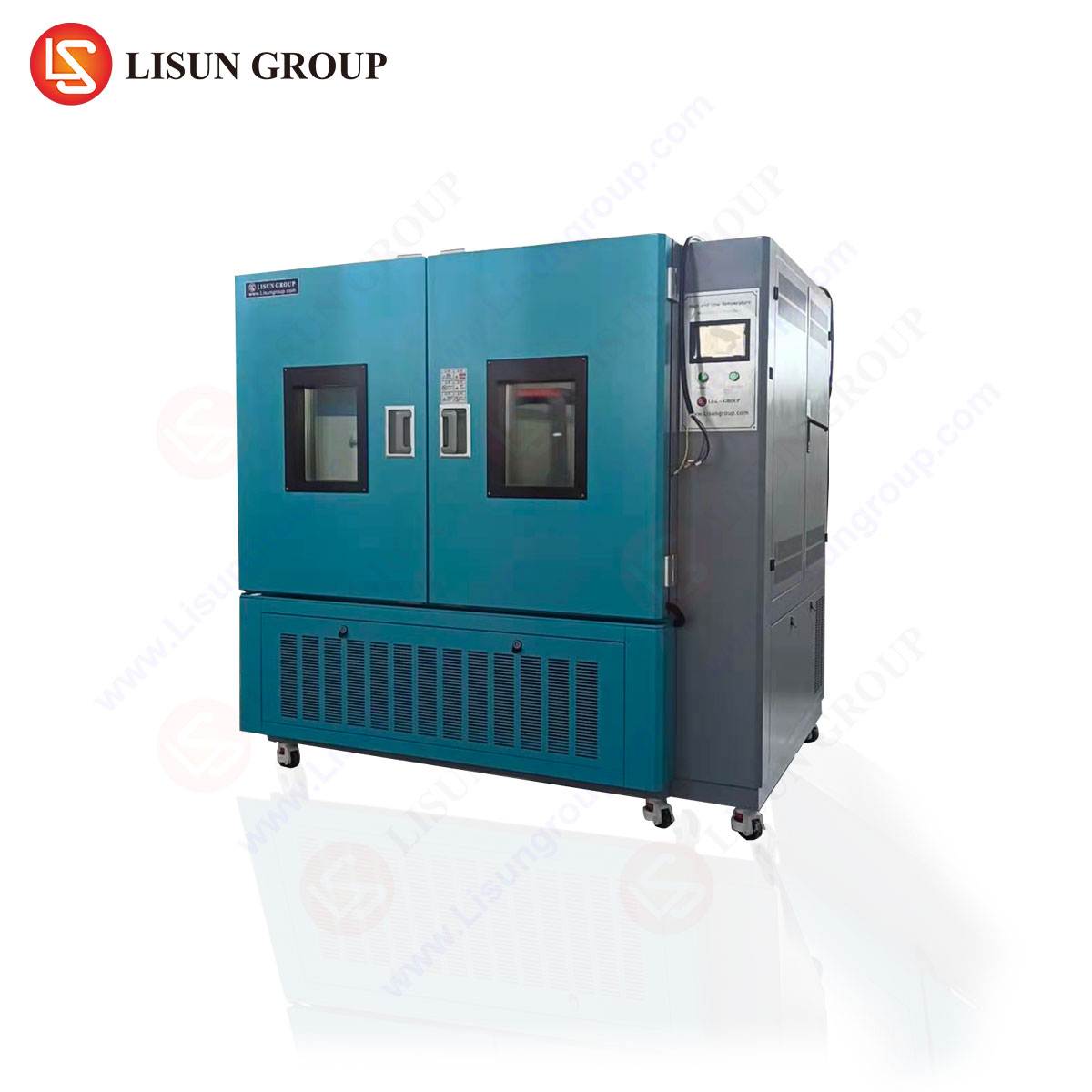
The LISUN SC-015 Dust Sand Test Chamber represents a engineered solution for rigorous IP5X and IP6X compliance testing. It is designed to deliver reproducible and standards-compliant conditions for a broad spectrum of product categories.
Testing Principle and Chamber Dynamics: The chamber utilizes a closed-loop airflow system. A controlled volume of test dust is placed in a conical reservoir at the chamber’s base. Compressed air, regulated for precise pressure and flow, is injected through a diffuser, fluidizing the dust. A circulating fan then draws the aerosolized dust into the main test volume, ensuring a uniform cloud. The specimen is mounted on a low-speed turntable (typically 1-3 rpm) to eliminate exposure shadowing. For IP6X testing, a vacuum system creates and maintains a sustained negative pressure inside the test item, typically drawing 80-120 mbar below atmospheric pressure, as per standard requirements.
Key Specifications and Design Features:
- Chamber Volume: 0.5 cubic meters (SC-015 model), providing sufficient workspace for most components and small assemblies.
- Dust Concentration: Configurable and monitorable to maintain the required density per IEC 60529.
- Airflow Velocity: Adjustable within a range (e.g., 0.5 – 2.0 m/s) to simulate various environmental conditions.
- Turntable: Electrically driven, with adjustable rotation speed, capable of handling specified load capacities.
- Dust Filtration System: Integrated high-efficiency filters in the exhaust path to prevent laboratory contamination and allow for safe dust recovery or disposal.
- Control System: Digital microprogrammable controller with touchscreen interface for setting test parameters—duration, vacuum level, dust circulation cycles, and turntable motion. Data logging capabilities are standard for audit trails.
- Construction: Interior surfaces are typically stainless steel for corrosion resistance and ease of decontamination. Viewing windows with sealed illumination allow for real-time observation without interrupting the test.
Standards Compliance and Validation Frameworks
The LISUN SC-015 is engineered to facilitate testing aligned with major international standards, which form the bedrock of product compliance. Primary among these is IEC 60529: Degrees of Protection Provided by Enclosures (IP Code). Additionally, the chamber supports testing per ISO 20653: Road vehicles — Degrees of protection (IP code), which is critical for Automotive Electronics. Other relevant standards include MIL-STD-810G, Method 510.5 for military equipment, and various industry-specific derivations from ASTM and DIN.
The chamber’s design emphasizes repeatability. Critical to this is the calibration of dust cloud density, often verified by gravimetric analysis or optical scattering methods. The maintenance of a stable pressure differential is continuously monitored via digital manometers. This rigorous adherence to controlled parameters ensures that test results are not chamber-specific but are objective assessments of the product’s design, enabling valid cross-comparisons and benchmarking.
Strategic Applications in Product Development and Validation
The deployment of a dust test chamber like the LISUN SC-015 spans the entire product lifecycle. During the Design and Prototyping Phase, it is used for comparative testing of different sealing technologies—evaluating O-ring materials, gasket designs, and labyrinth seal geometries for Electrical Components such as switches, sockets, and connectors. In Validation and Qualification, it serves as the definitive pass/fail gateway for IP certification prior to market release. For Failure Analysis, products returned from field deployments in dusty environments can be subjected to identical test conditions to confirm root cause and inform design revisions.
Consider a manufacturer of Consumer Electronics, such as a ruggedized smartphone. Using the SC-015, engineers can quantitatively assess whether a new adhesive-backed membrane over speaker grilles adequately resists talcum powder ingress while maintaining acoustic performance. A producer of Cable and Wiring Systems for solar farms can validate the IP rating of junction box seals against fine desert silt. Manufacturers of Household Appliances like robotic vacuum cleaners or outdoor air conditioning units rely on such testing to ensure internal motors and control boards are protected from the very debris they are designed to manage.
Competitive Advantages of Precision Dust Testing Equipment
The value proposition of a dedicated, precision instrument like the LISUN SC-015 extends beyond basic compliance. First, it offers Enhanced Test Fidelity through precise parameter control, moving beyond rudimentary “dust box” tests that may yield false positives or negatives. This reduces the risk of non-conformities discovered during third-party certification audits. Second, it Accelerates Development Cycles by bringing reliable environmental simulation in-house, eliminating the delays and costs associated with outsourcing to external test labs. Third, it provides Defensible Data for supply chain negotiations, warranty determinations, and regulatory submissions. The ability to generate standardized test reports strengthens a company’s position when certifying components from subcontractors or defending against product liability claims.
Furthermore, the chamber’s versatility across industries—from Medical Devices to Aerospace Components—makes it a strategic capital investment for diversified manufacturers or dedicated test laboratories. The operational efficiency gained from automated test cycles, combined with the safety provided by contained filtration systems, lowers the total cost of ownership while elevating the technical rigor of the quality assurance process.
Conclusion
Dust ingress testing is a non-negotiable element of modern product validation, translating abstract environmental challenges into quantifiable, actionable engineering data. The LISUN SC-015 Dust Sand Test Chamber embodies the necessary tooling to execute this critical function with the precision, repeatability, and standards alignment demanded by global markets. By enabling designers to proactively identify and remediate vulnerabilities, such equipment directly contributes to the manufacture of robust, reliable, and compliant products that perform as intended throughout their service life, regardless of the particulate challenges they encounter.
FAQ Section
Q1: What is the typical test duration for IP5X and IP6X testing in a chamber like the LISUN SC-015?
A1: Test durations are prescribed by the applicable standard. For IEC 60529, the standard test duration is 8 hours for both IP5X and IP6X. However, this can be subject to product-specific requirements or other standards (like automotive ISO 20653, which may specify 2, 8, or 24-hour tests). The chamber’s programmable controller allows for precise setting and automation of the test cycle.
Q2: Can the SC-015 chamber test for sand ingress, or is it only for fine dust?
A2: The SC-015 is primarily designed for the fine talcum powder specified in IP code testing (IEC 60529). For testing with larger, abrasive sand particles as required by some automotive or military standards (e.g., MIL-STD-810, Sand and Dust), a different type of chamber with appropriate abrasion-resistant construction and particle injection systems is typically needed. It is crucial to select test equipment aligned with the specific particulate and standard mandated for your product.
Q3: How is the dust cloud uniformity verified within the test chamber?
A3: Uniformity is a critical performance metric. It can be verified through several methods. A common qualitative method involves placing witness plates at various locations inside the empty chamber, running a test cycle, and comparing the dust deposition. Quantitative methods may involve laser particle counters or gravimetric analysis using filter samplers at multiple points. Chamber manufacturers should provide guidance on validation procedures to ensure compliance.
Q4: What maintenance is required for the chamber after extensive testing?
A4: Regular maintenance is essential for longevity and result consistency. Key tasks include: carefully removing and safely disposing of or recycling used test dust; cleaning the interior surfaces and airflow ducts to prevent caking; inspecting and replacing HEPA filters on the exhaust system as needed; checking seals on doors and viewports; and calibrating pressure sensors and flow meters according to a scheduled program.
Q5: Our product has internal moving parts that operate during normal use. Can we test it under power in the chamber?
A5: Yes, this is often a critical requirement for a realistic test. Many dust test chambers, including models like the SC-015, are equipped with electrical feed-through ports or coupling interfaces. These allow for power, signal, and data cables to be connected to the test specimen while it is operating inside the sealed chamber. This enables real-time functional monitoring during the dust exposure, which is vital for assessing performance degradation.