

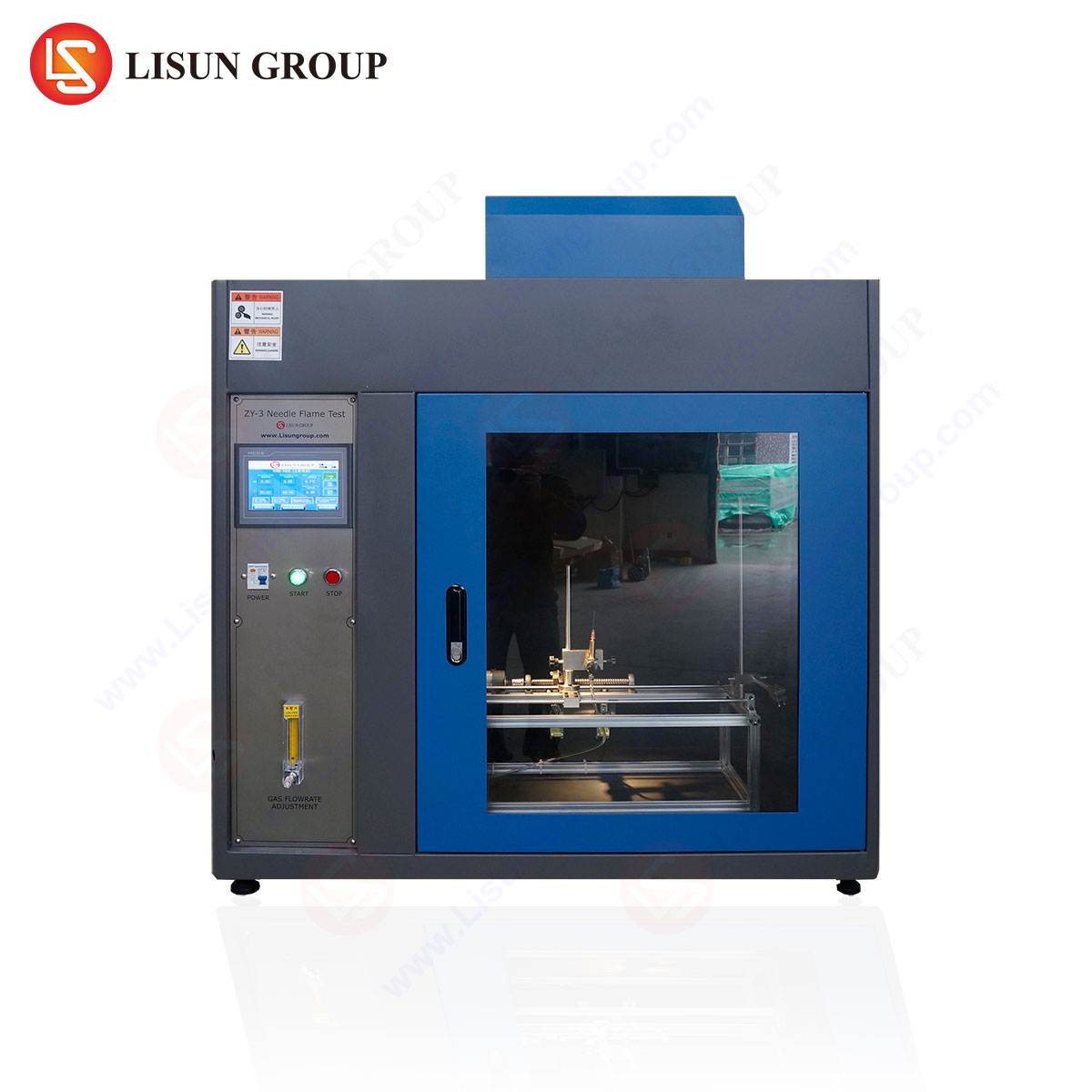



Methodologies for Validating Enclosure Integrity: Performing IP5X and IP6X Dust Ingress Tests
The long-term reliability and operational safety of electrical and electronic equipment are fundamentally contingent upon the integrity of their enclosures. Ingress Protection (IP) ratings, as codified in international standards such as IEC 60529, provide a systematic classification for the degrees of protection offered against the intrusion of solid foreign objects and water. Among these, the IP5X (dust protected) and IP6X (dust tight) ratings represent critical benchmarks for devices intended for deployment in environments where particulate contamination is a persistent threat. This article delineates the formalized procedures, underlying principles, and necessary apparatus for conducting standardized IP5X and IP6X dust ingress testing, with a specific examination of an integrated testing solution.
Interpretation of the IP5X and IP6X Classification Codes
The IP code’s first numeral specifically denotes protection against solid particle ingress. An ‘X’ in the second position indicates that water ingress testing is not applicable for the classification under discussion. The distinction between IP5X and IP6X is not merely incremental but defines a categorical difference in performance.
A rating of IP5X signifies that the enclosure provides a “dust protected” level of security. The test is designed to verify that while dust may enter the enclosure, it does not do so in a quantity sufficient to interfere with the satisfactory operation of the equipment or to impair safety. Crucially, it allows for a limited, non-hazardous ingress.
Conversely, an IP6X rating denotes a “dust tight” enclosure. The test is far more stringent, with the performance criterion requiring that no dust whatsoever penetrates the housing. This absolute prohibition on ingress is essential for components where even minuscule particulate matter can cause catastrophic failure, such as in optical systems, precision bearings, or high-voltage connections.
Fundamental Principles of the Test Methodology
Both tests employ a talcum powder dust medium, specified as finely ground limestone (calcium carbonate) with a prescribed particle size distribution. The powder is kept in a suspended, turbulent state within a test chamber, creating a dense, uniform dust cloud that envelops the test specimen. The key operational variable is the negative pressure differential maintained inside the enclosure under test.
For an IP5X test, the enclosure is subjected to the dust cloud under its normal internal pressure (i.e., no artificial pressure differential is applied beyond what might occur from temperature variations or internal airflow). The test assesses the enclosure’s ability to resist dust ingress under passive conditions.
The IP6X test imposes a more aggressive condition. A vacuum pump is used to create and maintain a sustained negative pressure differential inside the enclosure relative to the ambient chamber pressure, typically at a level of 2 kPa (20 mbar) or as specified by the relevant product standard. This pressure differential actively attempts to draw dust particles through any potential leakage paths—seals, gaskets, cable glands, mating surfaces, and microscopic pores—thereby validating the absolute integrity of the sealing design.
Apparatus Specification: The Integrated Dust Test Chamber
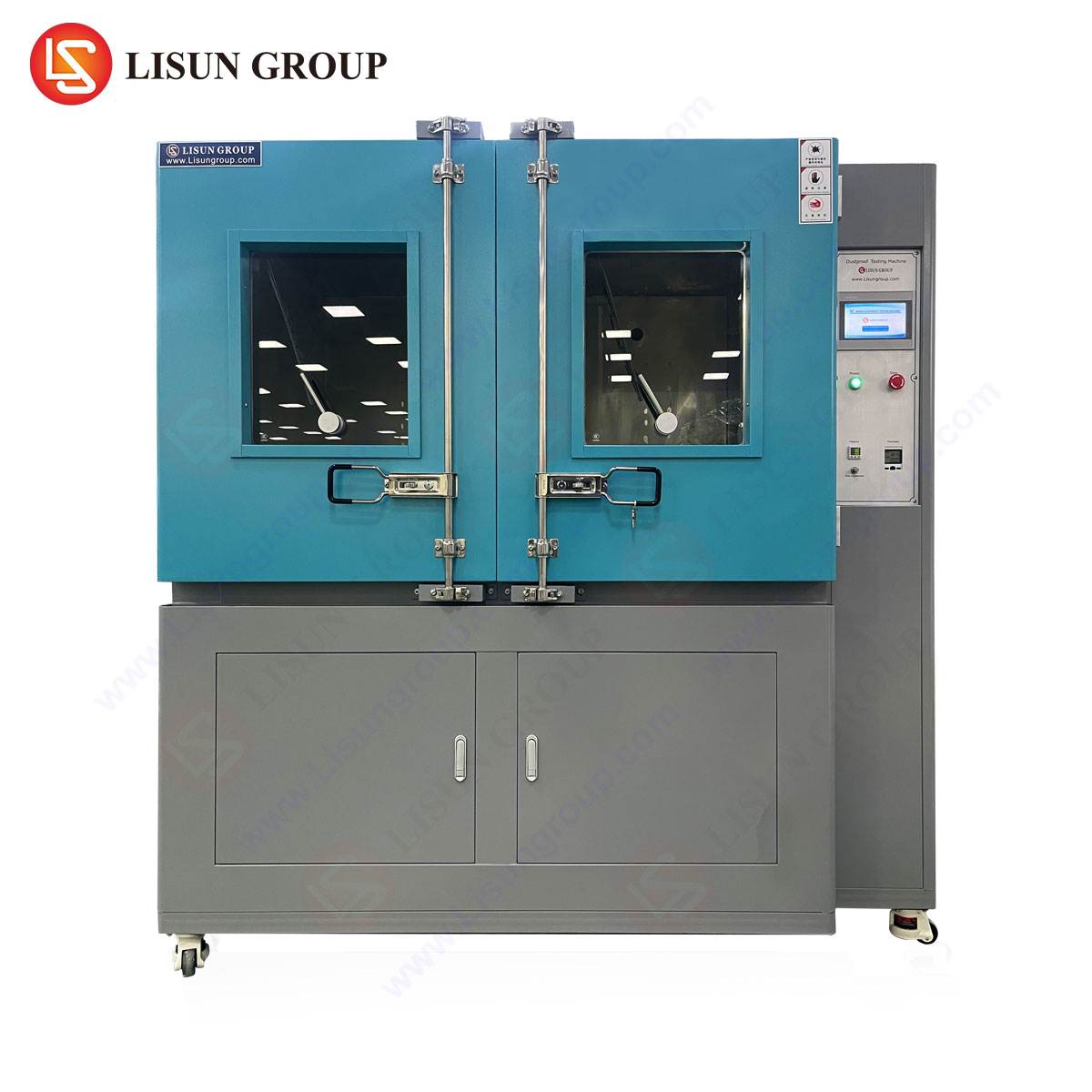
Accurate, repeatable testing necessitates precise control over the test environment. A dedicated dust test chamber, such as the LISUN SC-015 Dust Sand Test Chamber, is engineered to meet the exacting requirements of IEC 60529 and other cognate standards like GB/T 4208. This apparatus integrates the critical subsystems into a single, controlled instrument.
The chamber typically consists of a sealed test volume with a transparent viewing window, a dust circulation system employing a controlled blower or agitator, a dust injection and sieving mechanism to ensure proper particle suspension, and a specimen mounting port with a vacuum connection for IP6X testing. The LISUN SC-015, for instance, incorporates a programmable logic controller (PLC) and human-machine interface (HMI) for automated test cycle management, including control of test duration, dust agitation intervals, and vacuum pressure regulation. Its specifications are designed for laboratory precision:
- Test Dust: Circulated talcum powder meeting standard specifications.
- Dust Density: Maintained within the chamber at a concentration sufficient to obscure vision, as per standard requirements.
- Vacuum System: Includes a regulated vacuum pump and pressure gauge capable of maintaining the required 2 kPa differential with a tolerance of ±5%.
- Test Duration: Typically 2, 4, 8, or 24 hours, programmable via the HMI.
- Safety Features: May include airflow safety protection and emergency stop functions.
The competitive advantage of such an integrated system lies in its standardization and reproducibility. It eliminates variables associated with improvised test setups, ensuring that results are consistent, auditable, and directly comparable across different product development cycles or between competitive products.
Pre-Test Preparation and Specimen Conditioning
Prior to testing, the specimen must be prepared in a state representative of its end-use condition. This involves several critical steps.
First, the equipment under test (EUT) must be internally clean and dry. Any pre-existing dust could invalidate the post-test inspection. If the equipment is normally powered during operation, it should be connected to its power source through sealed cable glands, but it may be tested in a non-operational state unless the product standard requires functional operation during exposure.
Second, all potential ingress points must be configured as they would be in service. Cable entries must be fitted with the specified glands and sealed. Drain holes, if not intended for use, must be plugged. Hinged doors or removable covers must be fastened according to the manufacturer’s instructions, typically using the specified torque values for screws or fasteners.
Finally, for IP6X testing, the vacuum extraction port must be connected. This involves drilling a small hole in a non-critical area of the enclosure (if a dedicated port is not designed-in) and sealing the vacuum hose connection to ensure the only ingress path for air—and thus dust—is through the enclosure’s own seals and joints. The internal vacuum pressure is monitored throughout the test.
Execution of the IP5X Test Procedure
The procedure for an IP5X test, while less severe than IP6X, follows a strict protocol. The prepared specimen is placed within the test chamber, ensuring it does not directly obstruct the primary dust flow path. The chamber is sealed, and the dust circulation system is activated. The standard requires the dust to be agitated to maintain a homogeneous cloud for the entire test duration, commonly set at 8 hours unless otherwise specified by a product family standard.
During this period, the specimen is simply exposed. No external force is applied to assist dust ingress. The internal and external pressures are allowed to equalize. Upon completion of the timed exposure, the dust circulation is halted, and the specimen is carefully removed from the chamber. A settling period is often allowed before opening the specimen to prevent ambient dust from contaminating the assessment.
Execution of the IP6X Test Procedure
The IP6X test augments the exposure with active pressure differential. After placing the specimen in the chamber and connecting the vacuum line, the test sequence begins. The dust circulation system is activated simultaneously with the application of vacuum to the specimen’s interior. The vacuum regulator must be adjusted to achieve and maintain the specified negative pressure (e.g., 2 kPa) for the entire test duration, which is also typically a minimum of 8 hours.
This sustained low pressure inside the enclosure creates a constant inward flow of air from the dust-laden chamber. Any leakage path, no matter how small, will have air flowing through it, carrying dust particles into the enclosure’s interior. This makes the IP6X test exceptionally effective at identifying marginal seals that might pass a passive IP5X test.
Post-Test Examination and Acceptance Criteria
The evaluation phase is critical and must be conducted with meticulous care. For both tests, the enclosure is opened in a clean, low-dust environment. Internal surfaces are inspected visually under adequate illumination, often aided by magnification for small components.
For IP5X, the acceptance criterion is that dust has not accumulated in a location or quantity that would impair safe operation or cause a dielectric failure. Trace amounts of dust on non-critical surfaces may be permissible. The assessment often includes a functional test of the equipment to verify performance is unaffected.
For IP6X, the criterion is absolute: no visible dust ingress is permitted. The interior must appear as clean as it was prior to the test. Even a faint dust trail leading to a cable gland or a small accumulation on a PCB would constitute a test failure, indicating a breach in the dust-tight seal.
Industry-Specific Applications and Implications
The necessity for IP5X or IP6X validation permeates numerous sectors:
- Automotive Electronics: Control units (ECUs) mounted in engine bays or wheel wells (IP6X) versus those within the cabin (IP5X).
- Lighting Fixtures: Outdoor luminaires and industrial high-bay lights (IP6X) require protection against dust buildup on optics and drivers.
- Industrial Control Systems: PLCs, drives, and HMI panels in manufacturing plants with airborne particulates from machining or raw materials.
- Telecommunications Equipment: Outdoor base station electronics and fiber optic splice closures must be IP6X to ensure signal integrity.
- Medical Devices: Portable diagnostic equipment used in field environments or surgical tools requiring absolute sterility.
- Aerospace and Aviation: Avionics cooling systems must prevent dust ingestion that could lead to overheating or sensor malfunction.
- Electrical Components: Switches, sockets, and circuit breakers for hazardous or outdoor locations.
- Consumer & Office Electronics: Printers, projectors, and gaming consoles where dust accumulation can cause mechanical jams or thermal issues.
Documentation and Compliance Assurance
A formal test report is essential for certification and quality records. This document should include: identification of the specimen (model, serial number), reference to the applied standard (IEC 60529), detailed description of the test setup including equipment used (e.g., LISUN SC-015 Chamber, serial number), test parameters (duration, vacuum pressure), photographic evidence of the specimen pre- and post-test, and a clear statement of pass/fail against the relevant criteria. This documentation forms the technical evidence for regulatory submissions, customer audits, and internal quality management systems.
Frequently Asked Questions (FAQ)
Q1: Can a product that passes IP6X automatically be considered to have passed IP5X?
Yes, definitively. The IP6X test is more severe. The IP code system is hierarchical; a higher first-digit numeral encompasses the protections of all lower numbers. Therefore, an enclosure proven to be dust tight (IP6X) inherently satisfies the requirements for dust protected (IP5X).
Q2: How often should dust ingress testing be performed during a product’s lifecycle?
Testing is mandatory during the design validation phase for certification. It should be repeated for any design change affecting the enclosure, seal, or material. Furthermore, periodic production line audits—often on a statistical sampling basis—are a key component of ongoing quality assurance to monitor manufacturing process drift.
Q3: What is the primary cause of failure in IP6X testing?
The most common failure points are not the primary housing seams, but the ancillary penetrations and dynamic seals. These include cable glands that are improperly installed or torqued, connector interfaces, membrane vents that have lost elasticity, and buttons or actuators with insufficient sealing around their shafts. The IP6X test’s vacuum is exceptionally effective at exploiting these vulnerabilities.
Q4: The LISUN SC-015 chamber mentions programmability. What parameters can be controlled?
A programmable chamber like the SC-015 allows for the precise setting and automation of the test cycle. This includes total test duration, intermittent cycling of the dust agitation system to simulate varying conditions, the precise setpoint and monitoring of the internal vacuum pressure for IP6X, and control of optional pre- and post-test settling periods. This automation enhances repeatability and frees technician time.
Q5: Is the test dust hazardous, and how is the chamber cleaned after testing?
The standard talcum powder (calcium carbonate) is not considered a hazardous substance but should be treated as a respiratory irritant. Proper chambers are designed with sealed systems to contain the dust. Cleaning involves safe disposal of the used dust, often using integrated vacuum recovery systems, followed by wiping down interior surfaces. Operator safety during maintenance is paramount, and the use of appropriate PPE, such as dust masks, is recommended.