




A Comprehensive Methodology for Validating Ingress Protection Against Solid Particulates: IP5X and IP6X Testing Procedures Utilizing Sand and Dust Chambers
Introduction to Ingress Protection (IP) Code and Particulate Testing Imperatives
The Ingress Protection (IP) rating system, codified under international standards such as IEC 60529, provides a definitive classification for the degree of protection offered by enclosures of electrical and electronic equipment against the intrusion of foreign bodies and moisture. The first digit of this code, ranging from 0 to 6, specifies protection against solid objects. Of particular significance in harsh or uncontrolled environments are the ratings IP5X, denoting “Dust Protected,” and IP6X, signifying “Dust Tight.” These ratings are not mere marketing claims but are critical, verifiable performance indicators that directly influence product reliability, safety, and longevity across a vast spectrum of industries.
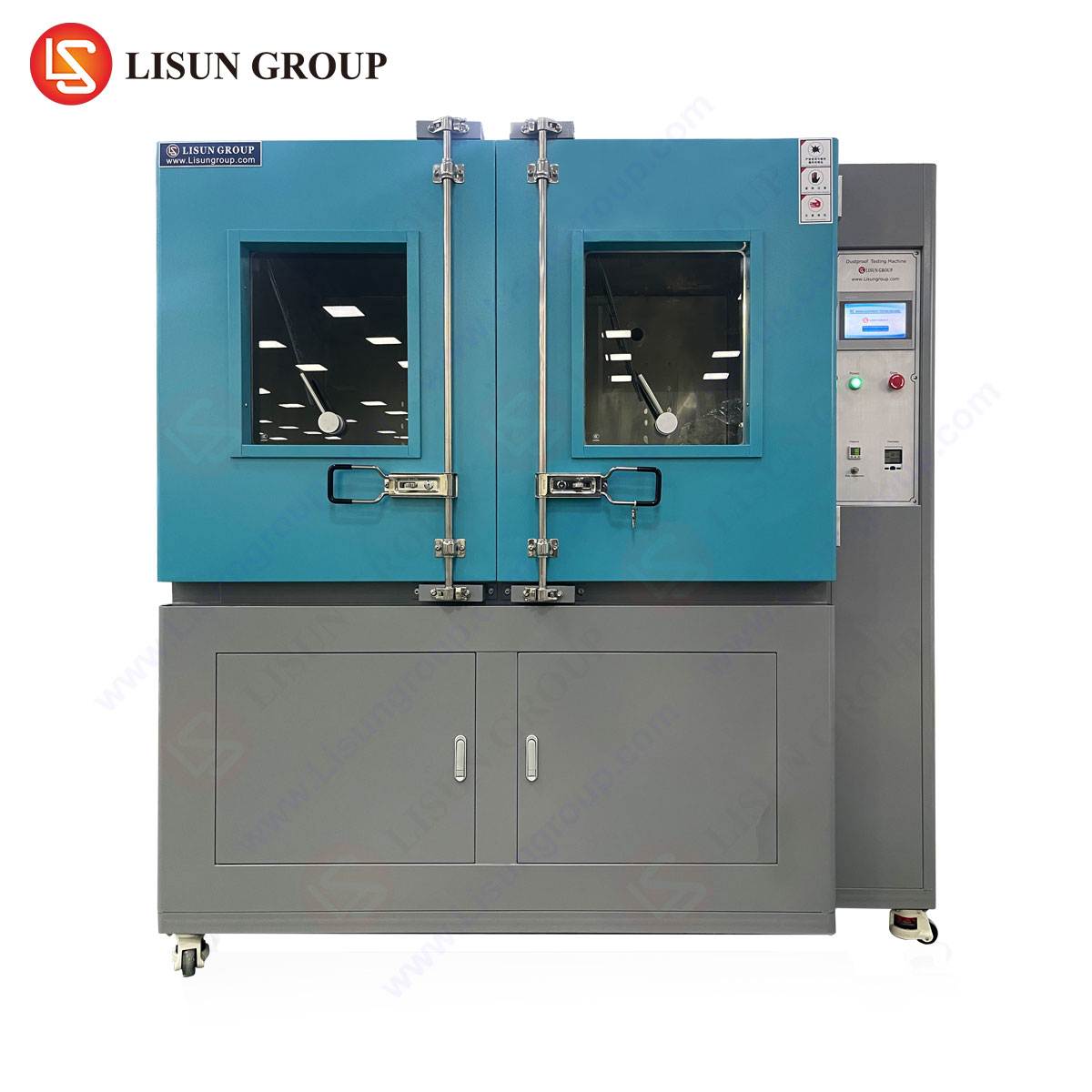
Validation of these ratings necessitates controlled, repeatable, and standardized laboratory testing. The primary instrument for this validation is the sand and dust test chamber, a sophisticated environmental simulation device designed to replicate conditions of concentrated particulate exposure. This article delineates the technical procedures, underlying principles, and practical considerations for performing IP5X and IP6X ingress protection testing, with a specific examination of the methodologies enabled by modern test equipment such as the LISUN SC-015 Sand and Dust Test Chamber.
Fundamental Principles of Particulate Ingress Simulation
The core objective of IP5X and IP6X testing is to assess an enclosure’s ability to prevent the ingress of fine particulate matter, which can lead to catastrophic failures including short circuits, mechanical binding, optical obscuration, and thermal management degradation. The test simulates two distinct failure modes: the accumulation of dust that could impair operation or reduce dielectric strength (IP5X), and the complete prevention of dust entry (IP6X).
The testing principle relies on creating a controlled dust cloud within a sealed chamber. A specified quantity of test dust—typically Arizona Road Dust or equivalent standardized powder with precise particle size distribution (e.g., 75% silicon dioxide, 25% aluminum oxide)—is fluidized and circulated by controlled airflow. The enclosure under test (EUT) is subjected to this cloud under defined conditions of air pressure differential. For IP5X, the test is conducted with the EUT operating under a slight internal vacuum relative to the chamber atmosphere, encouraging dust entry. For IP6X, the test employs either a vacuum (method A) or a pressurized enclosure (method B) to create a more severe pressure differential, testing for absolute sealing integrity.
Deconstructing the IP5X “Dust Protected” Testing Protocol
The IP5X test is defined as a test where dust may enter the enclosure in quantities insufficient to interfere with satisfactory operation or impair safety. The procedure is meticulous and requires strict adherence to parameters.
- Test Dust Specification: The dust must conform to a defined gradation. Over 50% by weight of particles shall be between 1μm and 75μm in size, with a nominal 50% below 20μm. This ensures a challenge from fine, airborne particulates.
- Dust Concentration and Circulation: The chamber must maintain a dust concentration of 2kg/m³ ± 10%. The dust is kept in a suspended state via agitation and/or airflow for the duration of the test. The circulation system must not direct the dust stream forcibly at the EUT.
- Test Duration and Conditions: The standard duration is 8 hours. The EUT is typically placed in a non-operational state, with its internal circuitry powered down but connected to a vacuum pump to maintain a pressure differential equivalent to 20 hPa (20 mbar) below atmospheric pressure inside the enclosure. This negative pressure draws the external dust-laden air towards potential ingress points.
- Post-Test Evaluation: Following exposure, the EUT is carefully extracted and inspected. The acceptance criterion is that no dust shall have entered in a quantity that would interfere with normal operation or compromise safety. A visual inspection for internal dust accumulation is performed, often supplemented by functional testing of the device.
Executing the IP6X “Dust Tight” Validation Procedure
The IP6X test is more stringent, requiring that no dust enters the enclosure. The methodology shares similarities with IP5X but incorporates critical differences in the applied pressure differential.
- Enhanced Pressure Differential: The key differentiator is the magnitude and control of the pressure differential. The standard specifies a vacuum of 20 hPa (as per IP5X) or an overpressure of 20 hPa inside the EUT, maintained for a minimum of 2 hours (or until thermal equilibrium is reached for operating devices). The overpressure method (Method B) is often preferred for actively powered devices like industrial control systems or automotive electronics, as it tests the seals under a “burst” condition.
- Test Duration Under Differential Pressure: The 8-hour dust exposure remains, but the critical pressure differential phase is as defined above. For the vacuum method, the EUT is subjected to the dust cloud while under continuous vacuum.
- Verification of Integrity: Post-test assessment is unequivocal. The enclosure is disassembled in a clean environment, and a meticulous visual examination is conducted. The presence of any dust inside the enclosure constitutes a failure of the IP6X rating. This zero-tolerance criterion is essential for components in aerospace and aviation or medical devices, where particulate contamination is utterly unacceptable.
Instrumentation for Precision: The Role of the Sand and Dust Test Chamber
Accurate and reproducible testing mandates specialized instrumentation. A modern sand and dust chamber integrates several subsystems to achieve the standards-mandated environment.
- Main Test Chamber: A sealed, corrosion-resistant enclosure with observation windows and ports for electrical and vacuum/pressure feedthroughs.
- Dust Fluidization and Circulation System: A blower or compressor agitates the dust powder, passing it through a sieve mechanism to break up clumps and ensure a uniform, suspended cloud. The airflow rate and path are controlled to avoid laminar streams.
- Dust Separation and Recovery: A closed-loop system often includes a cyclone separator or filter to recover dust from the air stream, allowing for reuse and maintaining consistent concentration.
- Pressure Differential Control System: A critical subsystem comprising vacuum pumps, pressure regulators, gauges, and valves to precisely establish and maintain the required 20 hPa differential, with tolerances typically within ±10%.
- Programmable Logic Controller (PLC): Automates the test sequence—controlling dust circulation cycles, managing pressure/vacuum phases, and timing test duration—ensuring operator-independent repeatability.
The LISUN SC-015 Sand and Dust Test Chamber: A Technical Analysis
The LISUN SC-015 represents a contemporary implementation of the sand and dust test chamber, engineered to meet the rigorous demands of IEC 60529, ISO 20653, and other derivative standards. Its design incorporates features that address common testing challenges.
- Specifications and Design: The SC-015 typically features a chamber volume suitable for a range of product sizes, from small electrical components like connectors and switches to larger assemblies such as lighting fixtures or telecommunications equipment enclosures. Its construction utilizes stainless steel for durability and ease of decontamination. The circulation system is designed to generate a turbulent, evenly distributed dust cloud without dead zones.
- Testing Principles in Practice: The chamber’s PLC allows for fully programmable test cycles. An operator can define sequences for pre-test purge, dust circulation periods (with intermittent operation to simulate real-world conditions), sustained pressure differential phases, and post-test settling. This programmability is vital for simulating specific use-case scenarios, such as for household appliances used in arid climates or automotive electronics exposed to off-road conditions.
- Industry Application Examples: The versatility of the SC-015 facilitates testing across sectors. A medical device manufacturer might use it to validate the sealing of a portable diagnostic monitor. An industrial control systems integrator would test programmable logic controller (PLC) enclosures for deployment in cement plants or flour mills. Consumer electronics firms, particularly for outdoor speakers or cameras, rely on such testing to substantiate claims of dust resistance.
- Competitive Advantages: Key differentiators of the SC-015 often include enhanced dust cloud homogeneity via an optimized airflow design, reducing false negatives from uneven exposure. Its control system may offer superior stability in maintaining the critical 20 hPa pressure differential. Furthermore, features like a HEPA-filtered air purge cycle for safe chamber opening and a comprehensive dust recovery system minimize operator exposure and material waste, improving laboratory safety and operational efficiency.
Critical Considerations for Test Execution and Result Integrity
Beyond operating the chamber, several ancillary factors are paramount for valid results.
- Sample Preparation: The EUT must be prepared in its final, usable form. All cable glands, seals, and covers must be installed per manufacturer specification and torqued to recommended values. Openings intended for user access (like USB ports) may be tested in both open and closed configurations if applicable.
- Conditioning: Prior to testing, samples and dust may require conditioning in a standard atmospheric environment (e.g., 23°C, 50% RH) to eliminate moisture-related variables.
- Monitoring and Calibration: Chamber parameters—airflow, dust concentration, pressure differential, and temperature—require regular calibration. The use of calibrated gauges and traceable measurement standards is non-negotiable for accredited laboratory testing.
- Post-Test Analysis Protocol: The inspection process must be documented. This includes photographic evidence of the interior before and after testing, notes on the location and quantity of any dust found, and detailed records of any functional tests performed post-exposure.
Interpreting Results and Implications for Product Design
A passing IP5X or IP6X rating provides a quantifiable benchmark for engineering and marketing. However, test outcomes also serve as a vital feedback mechanism for the design process. Failure modes identified during testing—such as dust ingress through membrane vents, micro-gaps in molded seams, or inadequate gasket compression—directly inform design iterations. For cable and wiring systems, the test validates the ingress protection of gland plates and conduit entries. For office equipment like printers or aerospace components like flight deck avionics, it assures reliability in dusty operational environments.
Conclusion
The procedures for IP5X and IP6X ingress protection testing constitute a rigorous, standardized scientific methodology essential for validating product robustness. The sand and dust test chamber is the cornerstone of this methodology, transforming subjective claims of “dust resistance” into objective, comparable data. As technological convergence pushes devices into increasingly diverse and demanding environments, the role of precise particulate ingress testing, facilitated by advanced equipment like the LISUN SC-015, will continue to grow in importance for ensuring quality, safety, and customer satisfaction across the global industrial landscape.
FAQ Section
Q1: Can the LISUN SC-015 chamber test for both IP5X and IP6X ratings?
A1: Yes, the LISUN SC-015 is designed to perform the full scope of tests for both ratings. Its programmable control system allows operators to configure the specific test sequence—including the management of pressure differential (vacuum for IP5X, vacuum or overpressure for IP6X), dust circulation timing, and total test duration—as required by the relevant clauses of IEC 60529.
Q2: What type of dust is used, and is it included with the chamber?
A2: The test requires standardized Arizona Road Dust (or its equivalent), with a specified particle size distribution as per the standard. Typically, a initial supply of dust is provided with the chamber, but it is a consumable material. Laboratories must source replacement dust from certified chemical suppliers to ensure it meets the exacting compositional and granulometric specifications for valid testing.
Q3: How is the internal pressure differential of 20 hPa accurately maintained on a sealed device?
A3: The chamber system includes a regulated vacuum pump and pressure source. For testing, a tube is connected from this system to a dedicated port on the EUT’s enclosure. For devices not fitted with a port, a small, sealed penetration may be necessary. The chamber’s PLC and pressure transducers continuously monitor and adjust the input to maintain the set point at 20 hPa ±10%, compensating for minor leaks to ensure test condition stability.
Q4: Our product has internal cooling fans that draw in air during operation. How does this affect the test method chosen?
A4: This is a critical design consideration. For IP5X testing of an operating device with intake fans, the internal vacuum created by the fans themselves may be sufficient and must be evaluated against the 20 hPa requirement. For IP6X, the overpressure method (Method B) is often more appropriate, as it tests the seals’ ability to prevent egress (and thus ingress under reverse conditions) despite the fan operation. The test standard and the product’s intended use must be carefully reviewed to select the correct methodology.
Q5: What is the typical lead time to conduct a full IP5X or IP6X test sequence?
A5: The standard defines a minimum exposure time of 8 hours. However, total lead time includes sample preparation, chamber conditioning, the test execution itself (which may involve multiple pressure cycles), a post-test dust settlement period, and detailed inspection/analysis. A complete test cycle from setup to final report typically requires 2 to 3 working days in a competent laboratory setting.