

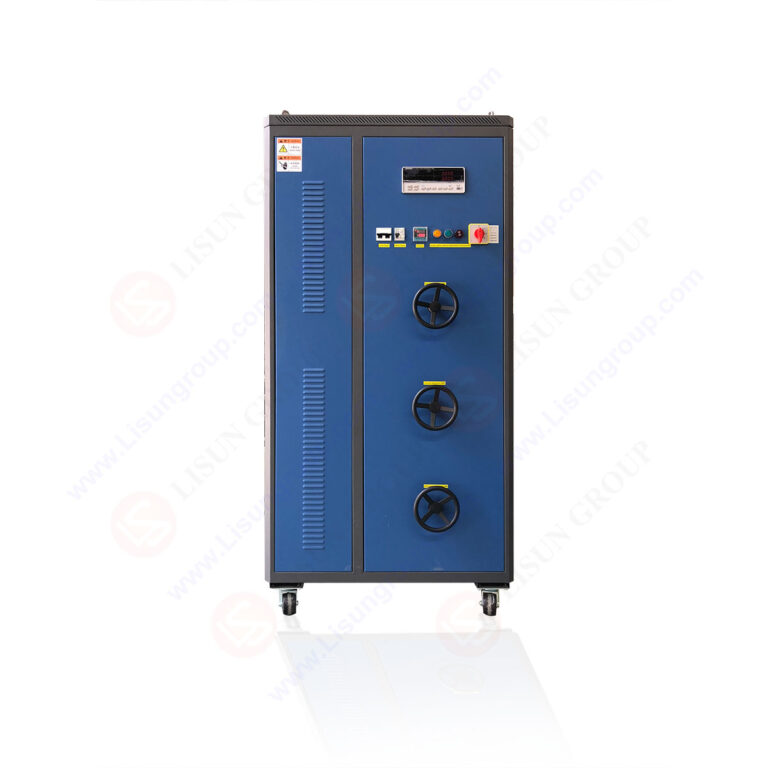



Humidity and Temperature Controlled Chamber: A Comprehensive Technical Guide
Introduction to Climatic Stress Testing
The reliable performance of modern manufactured goods across diverse and often harsh environmental conditions is not a matter of chance but of rigorous, scientifically grounded validation. Humidity and temperature controlled chambers, often termed environmental test chambers, serve as the cornerstone of this validation process. These sophisticated instruments artificially replicate climatic extremes—from tropical humidity to arctic cold and desert heat—within a controlled laboratory setting. The primary objective is to accelerate the aging process, identify design or material weaknesses, and verify compliance with international standards before a product reaches the market. This guide provides a comprehensive technical examination of these systems, focusing on their operational principles, critical specifications, and indispensable role in ensuring product reliability across industries including automotive electronics, aerospace components, medical devices, and telecommunications infrastructure.
Fundamental Operating Principles of Environmental Simulation
At its core, a humidity and temperature controlled chamber operates on the precise management of thermodynamic and psychrometric processes. The temperature system typically employs a refrigeration circuit based on the vapor-compression cycle for cooling and electrical resistance heaters for heating. The chamber’s air is circulated via a centrifugal blower through a ducted plenum, ensuring uniform spatial distribution and minimizing thermal gradients—a parameter known as temperature uniformity.
Humidity generation is achieved through one of two primary methods: a steam generator (boiler) or an atomizing system. The boiler method injects pure, distilled water vapor directly into the airstream, offering rapid humidity rise and precise control. The atomizing method uses ultrasonic or pressure nozzles to create a fine mist, which evaporates into the air. Dehumidification is typically accomplished by cooling the chamber air below its dew point using the refrigeration evaporator coil, causing moisture to condense and be drained away. A sophisticated programmable logic controller (PLC) or touch-screen interface continuously monitors sensor feedback—commonly from platinum resistance thermometers (PT100) and capacitive polymer humidity sensors—and modulates the heating, cooling, and humidification outputs to maintain the user-defined environmental profile.
Critical Performance Specifications and Metrics
Evaluating a chamber’s capability requires scrutiny of key performance metrics beyond basic temperature and humidity ranges. These specifications define the fidelity and repeatability of the testing environment.
- Temperature Range and Ramp Rate: Specified as a span (e.g., -70°C to +150°C), the range must encompass all relevant test conditions. The ramp rate, measured in °C/minute, indicates how quickly the chamber can transition between temperature setpoints, critical for thermal cycling tests.
- Humidity Range: Expressed as a percentage of relative humidity (%RH), typically from 10% or 20% RH up to 98% RH. The achievable range is often constrained at temperature extremes; a specification table will define the operable envelope.
- Uniformity and Stability: Temperature uniformity is the spatial variation across the workspace at a stable setpoint, often within ±0.5°C to ±2.0°C. Humidity uniformity follows a similar principle. Stability (or fluctuation) refers to the temporal variation at a single point over time, which is typically tighter than uniformity.
- Control Resolution and Accuracy: Resolution is the smallest increment the system can display and control (e.g., 0.1°C, 0.1%RH). Accuracy is the maximum permissible deviation between the sensor reading and the actual, calibrated condition.
For illustrative purposes, we can examine the LISUN GDJS-015B Temperature Humidity Test Chamber, which embodies these specifications for benchtop-scale testing.
- Temperature Range: -40°C to +150°C
- Humidity Range: 20% to 98% RH
- Temperature Uniformity: ≤±2.0°C
- Humidity Uniformity: ≤±3.0% RH
- Ramp Rate: Approximately 1.0 to 3.0°C/min (variable based on setpoint)
- Internal Volume: 150 Liters
- Control System: Digital touch-screen controller with programmable profiles, RS-485 interface, and USB data logging.
This chamber utilizes a cascade refrigeration system to achieve its -40°C low temperature and a boiler-based humidification system for responsive humidity control. Its compact design is suited for component-level testing.
Industry-Specific Applications and Test Protocols
The application of climatic chambers is dictated by industry-specific failure modes and international standards. Each sector tailors test profiles to simulate the operational and storage environments its products will encounter.
- Automotive Electronics & Electrical Components: Components like engine control units (ECUs), sensors, and switches must endure under-hood temperatures and humidity-induced corrosion. Tests often follow ISO 16750-4, subjecting parts to cycles between -40°C/+85°C and 85°C/85% RH to evaluate functionality, material degradation, and connector integrity.
- Aerospace and Aviation Components: The extreme pressure and temperature shifts of flight are simulated using rigorous thermal cycling and humidity combined with low pressure, referencing standards like RTCA DO-160. Condensation and frost formation are critical failure points for avionics.
- Medical Devices: Reliability is paramount. Chambers test the stability of diagnostic equipment, implantable device packaging (per ASTM F1980), and the functionality of devices in high-humidity environments like sterilization or storage. IEC 60601-1 general standard includes climatic requirements.
- Telecommunications Equipment & Lighting Fixtures: Outdoor 5G base stations, streetlights, and traffic signals face sun loading, rain, and seasonal swings. Tests combine high-temperature operation (up to 85°C) with damp heat (85% RH) and thermal shock to assess solder joint reliability, lens sealing, and housing degradation.
- Consumer Electronics & Household Appliances: From smartphones to refrigerators, products are tested for performance in global markets. A smartphone may be subjected to repeated condensation cycles to test ingress protection (IP) ratings, while a washing machine’s control board undergoes damp heat tests to prevent mold growth and circuit corrosion.
Integrating Thermal Shock Testing for Accelerated Life Analysis
While steady-state humidity and temperature tests are invaluable, many field failures occur due to rapid transitions—power cycling, movement from a cold car to a warm building, or sudden environmental shifts. Thermal shock testing accelerates these failures by transferring test specimens between extreme hot and cold environments in seconds. This induces mechanical stress from differential thermal expansion in materials, revealing flaws in solder joints, bonded components, encapsulated assemblies, and plastic housings.
The LISUN HLST-500D Thermal Shock Test Chamber is engineered for this specific, demanding application. It employs a three-basket (or three-zone) transfer system to maximize transition speed.
- Testing Principle: The unit consists of a high-temperature chamber (+60°C to +200°C), a low-temperature chamber (-10°C to -65°C), and a transition basket that holds the test samples. An automated lift mechanism rapidly shuttles the basket between chambers, with dwell times and cycle counts fully programmable. The air-to-air method provides rapid heat transfer.
- Key Specifications:
- Temperature Range: High Temp: +60°C to +200°C; Low Temp: -10°C to -65°C.
- Recovery Time: ≤5 minutes (after specimen transfer).
- Transition Time: <10 seconds (mechanical transfer time).
- Internal Volume: 500 Liters (total test space).
- Compliance: Designed to meet IEC 60068-2-14, MIL-STD-883, and other shock test standards.
- Industry Use Cases: This system is critical for testing aerospace circuit boards, automotive semiconductors, high-reliability military communications gear, and any component where rapid temperature change is a known stressor. It is particularly effective in precipitating failures in BGA (Ball Grid Array) solder joints, ceramic chip capacitors, and the interfaces between dissimilar materials.
Design Considerations and Selection Criteria
Selecting the appropriate chamber requires a systematic analysis of test requirements. A key decision is the choice between a single chamber for steady-state or cycling tests (like the GDJS-015B) and a dedicated thermal shock system (like the HLST-500D) for extreme transition testing. Other considerations include workspace size (accounting for product volume and airflow obstruction), electrical load requirements of the unit under test, necessary data logging and monitoring features, and compliance with relevant safety standards. The construction quality—such as the use of stainless steel interiors, redundant safety thermostats, and hermetic compressors—directly impacts longevity and test integrity. Furthermore, the control software must allow for complex, multi-segment programming to replicate real-world environmental profiles accurately.
Standards Compliance and Validation Framework
Testing derives its authority from adherence to established standards. Chambers themselves should be designed and validated per relevant standards, while the tests conducted within them follow product-specific protocols.
- Chamber Standards: Key standards for chamber performance include IEC 60068-3-5 (guidance for temperature chambers) and IEC 60068-3-6 (guidance for humidity chambers), which define methodologies for measuring uniformity and stability.
- Test Standards: Common overarching standards include IEC 60068-2-1 (cold tests), IEC 60068-2-2 (dry heat tests), and IEC 60068-2-30 (damp heat, cyclic). Industry-specific derivatives, such as AEC-Q100 for automotive ICs or Telcordia GR-63 for telecom equipment, build upon these foundations.
- Calibration and Mapping: Regular calibration of sensors is mandatory. Additionally, periodic temperature and humidity mapping (or uniformity surveys) of the entire workspace, often per ASTM E145 or similar guidelines, is essential to ensure the declared performance specifications are maintained and that test samples are exposed to the intended conditions regardless of placement.
Conclusion: The Role of Precision Environmental Testing in Product Development
In an era defined by global supply chains and heightened consumer expectations for durability, the humidity and temperature controlled chamber is an indispensable tool in the product development lifecycle. It transforms subjective assessments of quality into objective, data-driven validation. By enabling engineers to identify and rectify failure modes in the laboratory, these chambers prevent costly field recalls, enhance brand reputation, and ultimately contribute to the safety and satisfaction of the end-user. The strategic implementation of both steady-state climatic testing and accelerated thermal shock testing, as exemplified by complementary systems like the LISUN GDJS-015B and HLST-500D, provides a comprehensive defense against environmental stressors, ensuring that products from microchips to aircraft components perform reliably wherever they are deployed.
Frequently Asked Questions (FAQ)
Q1: What is the primary difference between a temperature humidity test chamber and a thermal shock chamber?
A temperature humidity chamber (like the GDJS-015B) creates a single, controlled environment that can be varied over time according to a programmed profile, combining temperature and humidity stresses. A thermal shock chamber (like the HLST-500D) is specifically designed to induce rapid, extreme temperature transitions by physically moving the test samples between separate hot and cold zones, with minimal transition time, to stress materials and solder joints through rapid thermal expansion and contraction.
Q2: How often should a chamber be calibrated, and what does calibration involve?
It is generally recommended that chamber sensors be calibrated at least annually, or more frequently based on usage intensity and quality system requirements (e.g., ISO 17025). Calibration involves comparing the chamber’s internal temperature and humidity sensors against traceable, higher-accuracy reference standards (like a calibrated platinum RTD and chilled mirror hygrometer) at multiple setpoints across the operational range to verify and adjust for any deviation.
Q3: Can I test products that generate significant heat (like powered electronics) inside these chambers?
Yes, but this is a critical consideration known as “heat load” or “product load.” The chamber’s refrigeration system must have sufficient capacity to remove both its own thermal load and the heat dissipated by the unit under test to maintain the setpoint temperature. Specifications for allowable product wattage should be consulted with the manufacturer prior to testing.
Q4: Why is humidity uniformity often a wider tolerance than temperature uniformity in chamber specifications?
Achieving precise spatial uniformity of relative humidity is inherently more challenging than temperature. RH is a function of both moisture content and temperature; even minor temperature gradients within the workspace (which are unavoidable) directly cause corresponding RH gradients. A well-designed chamber minimizes this through vigorous air circulation and careful placement of the humidification/dehumidification sources.
Q5: What is the purpose of the “ramp rate” specification, and when is it most important?
The ramp rate defines how quickly the chamber can change temperature. It is crucial for tests designed to simulate real-world thermal cycling, such as a car component experiencing daily ambient swings or an electronic device being powered on and off. A faster ramp rate creates more severe thermal stress on the test specimen, which can accelerate failure discovery but must be representative of the actual service environment to avoid over-testing.