




Technical Validation of Ingress Protection: The Role of the IEC 60529 Compliance Chamber in Product Durability Assurance
The long-term operational integrity and safety of electrical and electronic equipment are fundamentally contingent upon their ability to resist the intrusion of foreign bodies and moisture. Ingress Protection (IP) ratings, as codified by the international standard IEC 60529, provide a systematic and globally recognized classification system for this protective capability. The verification of these ratings, however, demands a controlled, repeatable, and scientifically rigorous testing environment. This is the precise function of the IEC 60529 Compliance Chamber, a specialized apparatus designed to simulate specific environmental challenges under laboratory conditions. This technical article examines the architecture, operational principles, and critical application of such chambers, with a detailed focus on the LISUN SC-015 Dust and Sand Test Chamber as a paradigm for modern compliance testing infrastructure.
Architectural Principles of the Compliance Chamber
An IEC 60529 Compliance Chamber is not a singular, monolithic device but rather an integrated system engineered to fulfill distinct testing protocols for both solid particle ingress (First Characteristic Numeral) and water ingress (Second Characteristic Numeral). The chamber’s core architectural philosophy is the creation of a precisely controlled, hermetic test volume that can be subjected to defined particulate or fluidic assaults while monitoring the test specimen (DUT – Device Under Test). Key subsystems include the main test enclosure, particulate generation and distribution mechanisms (for dust tests), fluid delivery and spray nozzle arrays (for water tests), vacuum and pressure control systems (for IP5X and IP6X tests), and comprehensive instrumentation for monitoring conditions such as air flow, dust density, water pressure, and temperature.
Material selection for chamber construction is critical, typically involving corrosion-resistant stainless steel for internal surfaces to prevent contamination and ensure longevity. Viewports with high-intensity internal lighting allow for visual observation of the test in progress without compromising the sealed environment. The interface between the chamber and the DUT is managed via specialized mounting fixtures and cable glands that preserve the integrity of the test conditions. For tests requiring a pressure differential, such as the IP5X (Dust Protected) and IP6X (Dust Tight) classifications, the chamber incorporates a vacuum system to lower the internal pressure relative to the exterior, drawing particulates toward any potential ingress points.
The LISUN SC-015: A System for Validating Solid Particle Ingress Protection
The LISUN SC-015 Dust and Sand Test Chamber exemplifies the application of these architectural principles toward the validation of IP5X and IP6X ratings. This system is explicitly designed to meet the stringent requirements of IEC 60529, as well as related standards such as ISO 20653 (road vehicles) and GB/T 4208. Its primary function is to assess the ability of enclosures to prevent the ingress of fine particulates that could cause abrasion, blockages, or electrical short circuits.
Testing Principle and Methodology: The test operates on the principle of sustained particulate suspension within a controlled airflow. The chamber utilizes a closed-loop circulation system. A specified quantity of test dust (typically Arizona Road Dust or equivalent, with a defined particle size distribution) is introduced into the airflow path. A fan or blower system maintains a turbulent, recirculating cloud of dust within the test enclosure for a duration stipulated by the standard (usually 2, 4, or 8 hours). For IP5X testing, the DUT is placed in the chamber under normal pressure. For IP6X testing, the chamber creates a sustained vacuum inside the DUT (typically 2 kPa below atmospheric pressure), actively attempting to draw dust into any fissure or seal.
Key Specifications of the LISUN SC-015:
- Test Volume: Configurable models accommodate various DUT sizes, ensuring adequate space for dust circulation.
- Dust Concentration: Capable of maintaining a consistent concentration of 2kg/m³ to 4kg/m³, as required by the standard.
- Airflow Velocity: Precisely controlled to ensure the dust is fully suspended and uniformly distributed.
- Vacuum System: Integrated vacuum pump and regulation system for IP6X testing, with digital display and control of pressure differential.
- Control System: Programmable Logic Controller (PLC) with touch-screen HMI (Human-Machine Interface) allows for automated test cycles, parameter setting, and data logging.
- Safety Features: Include over-temperature protection, safety glass viewing windows, and emergency stop functions.
Industry-Specific Applications and Use Cases
The validation provided by chambers like the LISUN SC-015 is indispensable across a broad spectrum of industries where reliability in harsh environments is non-negotiable.
- Automotive Electronics: Components such as Engine Control Units (ECUs), battery management systems for EVs, lighting assemblies, and sensors must withstand road dust and sand. ISO 20653, which mirrors IEC 60529 for vehicles, makes this testing mandatory.
- Electrical Components & Industrial Control Systems: Switches, sockets, contactors, and programmable logic controller (PLC) housings installed in manufacturing plants, wastewater treatment facilities, or agricultural settings require IP5X or IP6X ratings to ensure operational continuity amidst industrial dust and fibers.
- Telecommunications Equipment: Outdoor 5G radio units, fiber optic terminal enclosures, and base station electronics are exposed to wind-blown particulates. Ingress protection prevents signal degradation and hardware failure.
- Aerospace and Aviation Components: Avionics bay components, external lighting, and ground support equipment are tested against fine dust and sand, which can be particularly abrasive and invasive at high velocities or in desert operations.
- Lighting Fixtures: Industrial high-bay lighting, streetlights, and outdoor architectural fixtures must prevent dust accumulation on optical surfaces and internal circuitry to maintain lumen output and safety.
- Medical Devices: Diagnostic imaging equipment, portable monitors, and surgical tools used in field hospitals or non-sterile environments require protection against particulate ingress to ensure accuracy and sterility.
- Consumer Electronics & Household Appliances: Outdoor speakers, robotic lawnmowers, and smart home controllers marketed for garage or patio use benefit from validated dust resistance, enhancing product lifespan and consumer trust.
Competitive Advantages of Integrated Testing Solutions
The LISUN SC-015 demonstrates several advantages that transition compliance testing from a qualitative check to a quantitative, reliable engineering process.
Precision and Repeatability: The closed-loop circulation and precise control over dust concentration, airflow, and (for IP6X) pressure differential ensure that test conditions are exactly replicated across multiple test runs and production batches. This eliminates variables and provides comparable, auditable data.
Automation and User Safety: The programmable PLC automates the entire test cycle—dust agitation, duration, vacuum cycling, and system purge—minimizing operator intervention and exposure to test dust. Automated data logging creates immutable test records for certification audits.
Adaptability and Scalability: The chamber’s design accommodates a wide range of DUT sizes and shapes via customizable mounting tables and interfaces. This scalability makes it suitable for both R&D prototyping, where designs are iterated, and quality assurance labs for final production validation.
Standards Compliance Integrity: By being engineered from the ground up to meet the exacting mechanical and procedural requirements of IEC 60529, the system removes ambiguity from the testing process. This gives design engineers and certification bodies high confidence in the test results, reducing time-to-market and mitigating the risk of field failures due to inadequate sealing.
Interpreting Test Outcomes and Failure Analysis
A post-test examination is as critical as the test itself. Following the dust exposure cycle, the DUT is carefully extracted and inspected. For IP5X, the standard permits a minimal amount of dust ingress provided it does not interfere with normal operation or safety. For IP6X, the requirement is absolute: no dust shall enter the enclosure. Inspection involves internal visual examination, often aided by microscopes or borescopes, and functional testing of the device. The discovery of dust deposits on internal circuitry, connectors, or optical surfaces constitutes a failure for IP6X and necessitates a redesign of gaskets, seals, or enclosure architecture. This failure analysis feedback loop is essential for driving iterative design improvements in product robustness.
Conclusion: A Foundational Tool for Reliability Engineering
The IEC 60529 Compliance Chamber, as embodied by systems like the LISUN SC-015 Dust and Sand Test Chamber, represents a cornerstone of modern reliability engineering. It provides the essential, empirical bridge between theoretical design and proven field-worthiness. By enabling accurate, repeatable simulation of particulate-laden environments, it allows manufacturers across the electrical, electronic, and electromechanical spectrum to validate protective enclosures, reduce warranty claims, enhance brand reputation for durability, and ultimately ensure user safety and product functionality in the demanding conditions of the real world. In an era where electronics permeate every environment, such validation is not merely a compliance exercise but a fundamental component of product integrity and commercial success.
FAQ: IEC 60529 Dust Testing and the LISUN SC-015
Q1: What is the difference between IP5X and IP6X testing in the chamber?
IP5X (Dust Protected) testing is conducted with the device under normal internal pressure; it assesses protection against harmful dust deposits. IP6X (Dust Tight) is a more severe test where a vacuum is drawn inside the device during the test to create a pressure differential, actively attempting to suck dust in through any gap. IP6X requires no ingress of dust whatsoever.
Q2: What type of test dust is used, and why is it standardized?
The standard specifies the use of finely powdered talc or Arizona Road Dust (e.g., ISO 12103-A4). This dust has a tightly controlled particle size distribution (typically ≤ 75µm). Standardization ensures consistency and repeatability of tests globally, allowing results from different laboratories to be directly comparable.
Q3: Can the LISUN SC-015 chamber test for both dust and water ingress?
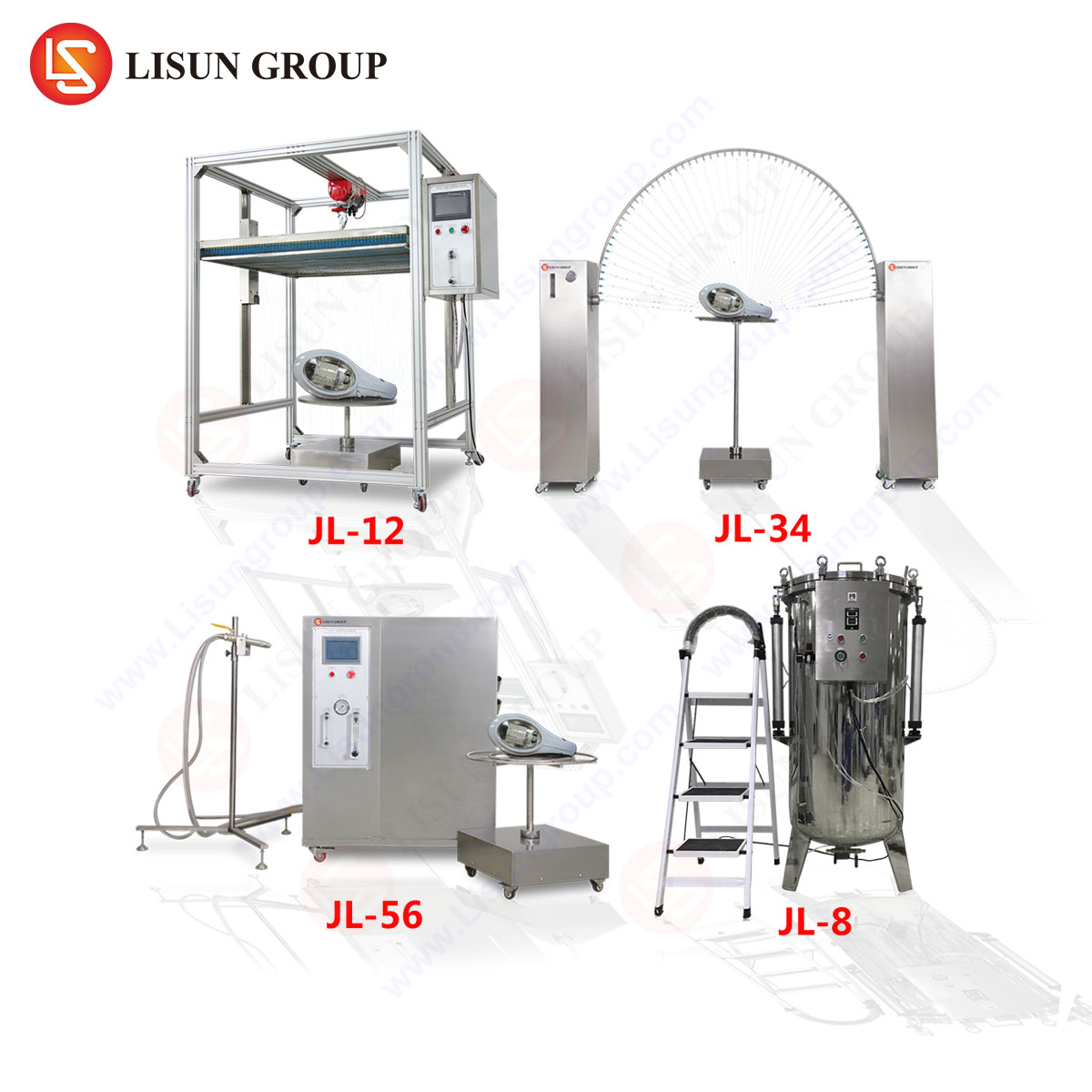
No, the SC-015 is specifically designed for solid particle (dust and sand) ingress testing per IP5X and IP6X. Water ingress testing (IPX1 to IPX9K) requires a separate, dedicated apparatus with different fluid delivery systems, spray nozzles, and water management infrastructure, though both types of chambers are often part of a complete IP testing laboratory.
Q4: How is the dust concentration inside the chamber verified and maintained?
The chamber is designed to circulate a known mass of dust within a known volume of air. The PLC controls the recirculation fan speed and agitation system to maintain a homogeneous mixture. Calibration and verification are performed by measuring the dust concentration using a gravimetric sampling method or via calibrated optical sensors, ensuring it remains within the 2kg/m³ to 4kg/m³ range mandated by the standard.
Q5: For how long must a device typically be tested?
IEC 60529 stipulates a default test duration of 8 hours for both IP5X and IP6X. However, the relevant product committee standard (e.g., for automotive or lighting) may specify a different duration (e.g., 2 or 4 hours) based on the intended use case. The LISUN SC-015’s programmable controller allows for flexible duration settings to accommodate various standard requirements.