




Evaluating Fire Hazard Through Controlled Impingement: A Technical Analysis of IEC 60695-11-5 Compliance
The proliferation of electrical and electronic equipment across domestic, industrial, and critical infrastructure environments has necessitated rigorous evaluation of fire safety. A primary concern is the potential for small, localized ignition sources—such as overheated components, faulty connections, or electrical arcing—to impinge upon adjacent materials and initiate a propagating flame. The international standard IEC 60695-11-5:2016, “Fire hazard testing – Part 11-5: Test flames – Needle-flame test method – Apparatus, confirmatory test arrangement and guidance” provides a standardized, reproducible methodology to assess this specific risk. Compliance with this standard is not merely a regulatory checkbox; it is a fundamental engineering exercise in risk mitigation, material selection, and design validation.
The Underlying Principle of the Needle-Flame Test
The needle-flame test simulates a small, low-energy ignition source that may result from an electrical fault condition within equipment. Unlike larger flame tests that assess bulk material flammability, this procedure is specifically designed to evaluate the ability of a product or sub-assembly to contain a fire initiated by a small, localized thermal insult. The test philosophy is predicated on the concept of “fire containment.” The objective is not necessarily to prove that a material will not ignite, but to demonstrate that any resulting combustion is self-extinguishing within a defined period after the removal of the test flame and does not spread to create a hazardous situation.
The test employs a precisely defined flame generated by a burner with a nozzle orifice of 0.5 mm ± 0.1 mm, using a combustible gas such as propane. The flame has a nominal power output of 45W ± 5W. This specific energy level is chosen as representative of small electrical faults. The test specimen, which can be a complete end-product, a sub-assembly, or a mock-up of a critical configuration, is subjected to the flame for a predetermined application time (typically 30s, 60s, or 120s, as specified by the relevant product safety standard). Critical observations during and after flame application include the duration of any sustained flaming, the extent of flame spread, the behavior of dripping particles (and whether they ignite a surgical cotton indicator placed below), and the degree of material consumption.
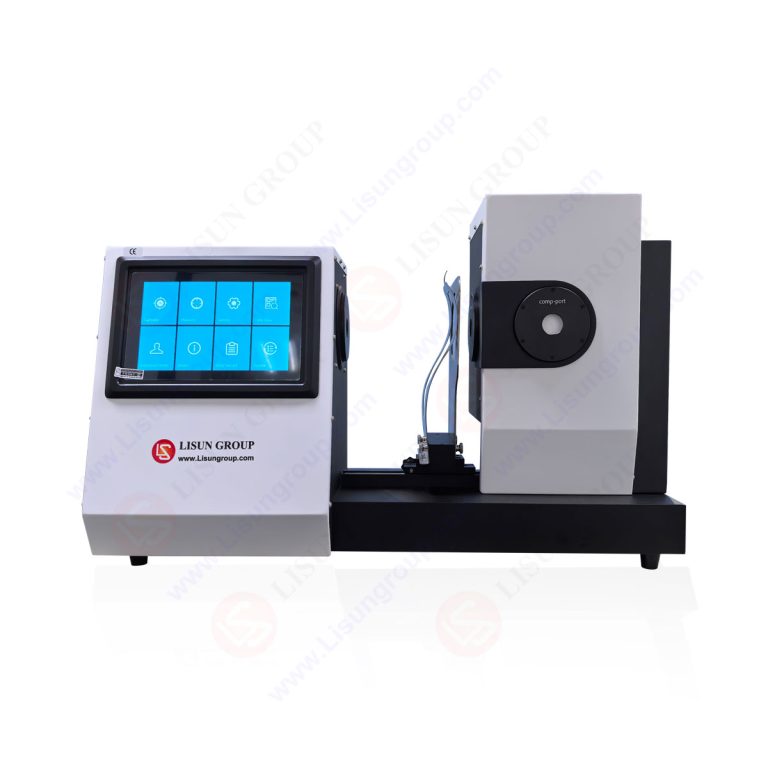
Apparatus Requirements and the Role of the LISUN ZY-3 Needle Flame Tester
The validity of any standardized test is contingent upon the precision and consistency of the apparatus used. The IEC 60695-11-5 standard meticulously details the specifications for the test burner, gas supply, timing instrumentation, and test chamber. Apparatus such as the LISUN ZY-3 Needle Flame Tester is engineered to meet and exceed these stringent requirements, providing laboratories with a reliable platform for generating compliant and repeatable data.
The LISUN ZY-3 system integrates the critical components into a unified, user-oriented design. Its core specifications align with the standard’s mandates:
- Burner Assembly: Features a precision-machined needle nozzle ensuring a consistent 0.5mm orifice for stable flame geometry.
- Flame Regulation: Incorporates fine-adjustment valves and a manometer for precise control of gas flow, maintaining the 45W ± 5W flame power.
- Timing System: Automated electronic timers control the flame application duration (0-999.9s) and post-ignition observation period (0-999.9s) with high accuracy, removing operator timing error.
- Specimen Positioning: Includes an adjustable specimen holder and a calibrated ruler for accurate positioning of the flame impingement point (usually 5mm or 8mm from the specimen surface) and for measuring flame spread dimensions.
- Safety & Extraction: A transparent viewing chamber contains the test, while an integrated fume extraction system removes combustion products, maintaining laboratory air quality.
The competitive advantage of a system like the LISUN ZY-3 lies in its integration of calibration functions. The standard requires a periodic “confirmatory test” using a specified copper block calorimeter to verify the flame’s thermal output. The design of the ZY-3 facilitates this routine calibration, ensuring long-term traceability and data integrity, which is paramount for certified testing laboratories and internal quality assurance departments.
Industry-Specific Applications and Test Rationale
The needle-flame test finds application across a vast spectrum of industries where electrical function and material safety intersect. The test rationale is tailored to the specific failure modes and operational environments of each sector.
- Household Appliances & Consumer Electronics: For devices like food processors, power supplies, or gaming consoles, the test may be applied to internal PCBAs, wire harness connectors, or plastic enclosures adjacent to transformers or switching components. The goal is to ensure a failed capacitor or resistor cannot ignite its housing and lead to a room fire.
- Automotive Electronics: Within the confined, vibration-prone, and thermally challenging environment of a vehicle, connectors, control modules, and sensor housings are evaluated. Compliance demonstrates that a short-circuit in a door control unit, for example, will not propagate flame to interior trim materials.
- Lighting Fixtures: Especially for LED drivers and plastic diffusers/reflectors, the test assesses the risk from a fault in the driver circuitry. It verifies that any burning is confined within the metallic or suitably rated enclosure of the driver.
- Industrial Control Systems & Telecommunications Equipment: In control panels, PLCs, and server components, the high density of wiring and components increases fault risk. Testing bus bars, terminal blocks, and cable management ducts ensures fire containment within the cabinet, protecting critical infrastructure.
- Medical Devices & Aerospace Components: Here, the consequences of failure are severe. Testing battery compartment materials, internal wiring insulation, and non-metallic housings for portable monitors or in-flight entertainment systems is critical for patient and passenger safety, often to more stringent application times or performance criteria.
- Electrical Components: Switches, sockets, and connectors are directly tested. A faulty switch must not allow its internal arcing to ignite the external faceplate, a common point of contact with flammable household materials.
- Cable and Wiring Systems: While cables have their own flammability standards (e.g., IEC 60332), the needle-flame test may be applied to cable glands, markers, or cable management systems where they enter an enclosure, assessing the risk of fire penetration.
Execution of the Test and Data Interpretation
The testing process is methodical. Following apparatus calibration, the specimen is mounted in its intended service orientation or in the position deemed most unfavorable. The needle flame is applied to the selected point for the stipulated duration. Key parameters recorded are:
- tf (Flaming Time): The time from the removal of the test flame to the cessation of all flaming on the specimen.
- tc (Combustion Time): The time from the removal of the test flame to the cessation of all glowing on the specimen.
- Flame Spread: The maximum extent of burning, measured from the point of impingement.
- Ignition by Drippings: Whether any melted or burning material falls and ignites the cotton indicator placed 200mm ± 5mm below the specimen.
Pass/fail criteria are defined by the end-product standard (e.g., IEC 62368-1 for AV/IT equipment, IEC 60335-1 for household appliances). A typical criterion might state: “After two applications of the flame, any flaming or glowing of the specimen shall extinguish within 30 seconds after removal of the test flame. Flames shall not spread to the edges of the specimen, and no dripping shall ignite the cotton.”
Strategic Importance in Product Design and Certification
Integrating IEC 60695-11-5 assessment early in the design phase is a proactive risk management strategy. It informs material selection, guiding engineers toward polymers with appropriate flame-retardant properties. It influences mechanical design, encouraging the use of barriers, shrouds, or strategic air gaps to isolate heat-generating components from combustible materials. Furthermore, it validates the effectiveness of these design choices, providing empirical evidence for safety certification bodies like UL, CSA, TÜV, and Intertek.
The data generated is not merely pass/fail. Detailed observations of burn patterns, drip behavior, and char formation provide invaluable feedback to material scientists and design engineers, enabling iterative improvement. In a litigious and safety-conscious global market, possessing a comprehensive portfolio of compliance data, generated using precise apparatus like the LISUN ZY-3, is a significant competitive and legal safeguard.
Conclusion
The IEC 60695-11-5 needle-flame test represents a critical, simulation-based approach to fire hazard assessment. It addresses a ubiquitous real-world risk scenario with a controlled, quantifiable laboratory method. The reliability of the test results is intrinsically linked to the precision and consistency of the testing apparatus. Employing a fully compliant, robust, and user-calibratable system is therefore a foundational requirement for any organization committed to product safety, regulatory compliance, and responsible engineering. As technology continues to miniaturize and integrate into every facet of modern life, the principles enshrined in this standard will remain a cornerstone of effective fire prevention strategy.
FAQ Section
Q1: What is the primary difference between the needle-flame test (IEC 60695-11-5) and the glow-wire test (IEC 60695-2-10/11/12)?
A1: The tests simulate different ignition sources. The needle-flame test simulates a small, open flame from a fault, assessing fire spread from a localized impingement. The glow-wire test simulates an overheated or glowing element (like a faulty resistor) in contact with or adjacent to a material, assessing ignition susceptibility and burning behavior under a sustained thermal stress without an open flame.
Q2: Can the LISUN ZY-3 Tester be used for tests other than IEC 60695-11-5?
A2: The ZY-3 is specifically designed and calibrated for the IEC 60695-11-5 needle-flame test. Its parameters (flame power, burner geometry) are fixed to that standard. Some product standards may have similar but distinct flame tests; users must verify the apparatus meets all specific requirements of the cited standard before use.
Q3: How often does the needle-flame test apparatus require calibration, and what does it involve?
A3: Calibration should be performed at regular intervals (e.g., annually, per lab accreditation requirements) and whenever the burner nozzle is changed or damage is suspected. The confirmatory test involves replacing the specimen with a standardized copper block calorimeter, applying the flame for a set time, and measuring the temperature rise. This verifies the flame’s thermal output is within the 45W ± 5W range specified by the standard.
Q4: For a complex product, how is the test location selected?
A4: Selection is based on a fault hazard analysis. The most unfavorable locations are chosen, typically where a small internal fault is most likely to occur (e.g., near current-carrying connections, transformers, switching components) and where it could impinge on combustible materials like plastic enclosures, PCB substrates, or wire insulation. Guidance is often provided in the relevant end-product safety standard.
Q5: Is testing on a finished product always required, or can material plaques be used?
A5: While material-level data is useful for initial screening, the standard emphasizes testing the product or a representative sub-assembly in its service configuration. This accounts for real-world factors like wall thickness, geometry, ventilation, assembly gaps, and the presence of other materials (e.g., metal heatsinks, adhesives) that can significantly influence fire behavior. Material tests alone are generally insufficient for final certification.