

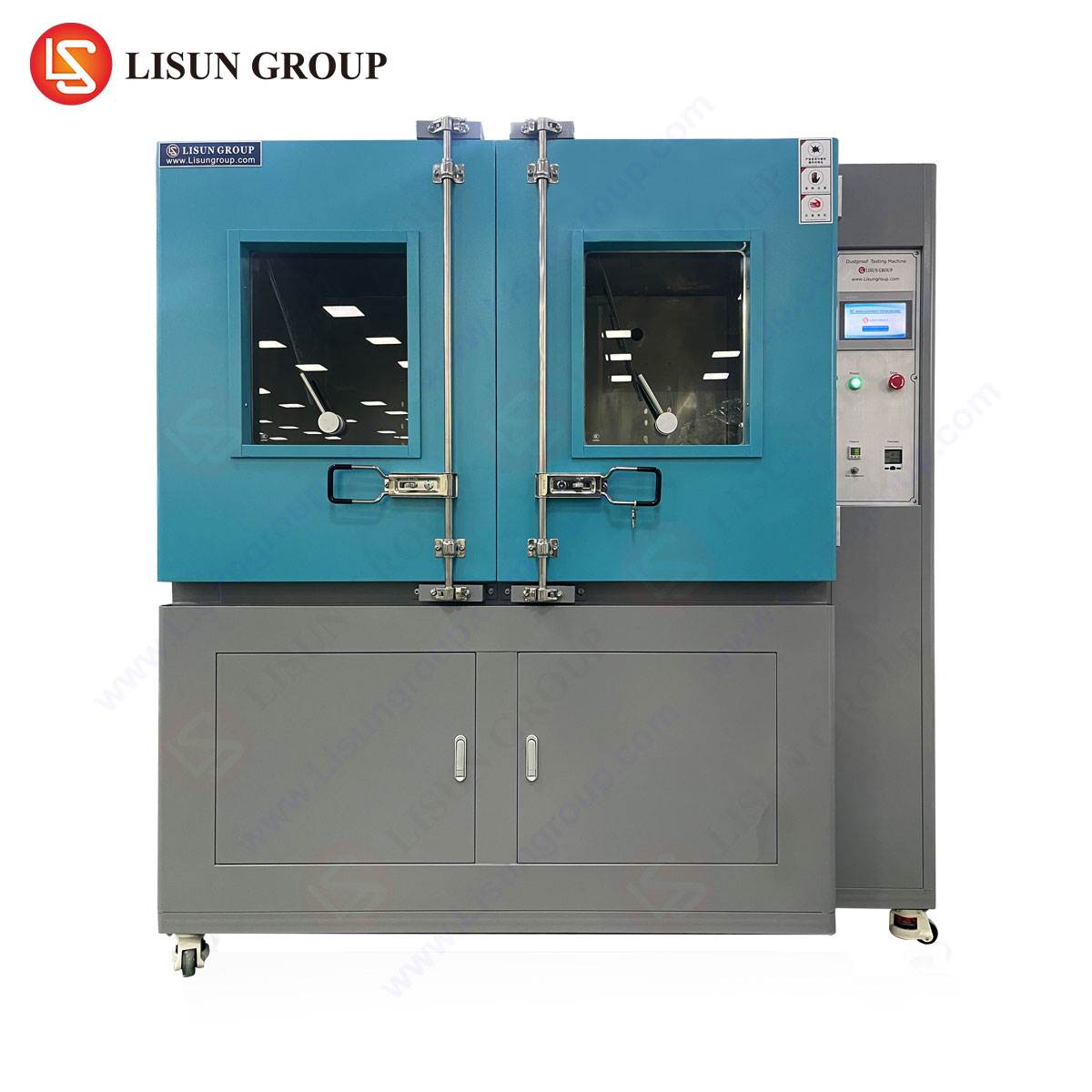



Advanced Environmental Stress Screening: The Role of Industrial Thermal Chambers in Product Validation
The relentless pursuit of product reliability and longevity across manufacturing sectors necessitates rigorous validation under simulated environmental extremes. Industrial thermal chambers, encompassing temperature, humidity, and thermal shock systems, serve as the cornerstone of this validation paradigm. These instruments are not merely quality control checkpoints but are integral to the engineering design cycle, enabling the identification of latent defects, verification of material performance, and assurance of operational safety. This technical analysis examines the principles, applications, and technological considerations of thermal testing, with a specific focus on the implementation of thermal shock testing as exemplified by the LISUN HLST-500D Thermal Shock Test Chamber.
Fundamental Principles of Accelerated Stress Testing
Environmental stress screening (ESS) operates on the premise that subjecting components and assemblies to controlled, accelerated stresses can precipitate failures that would otherwise manifest over extended periods of normal operation. The primary mechanisms leveraged are thermal expansion and contraction, moisture diffusion, and phase change. When materials with dissimilar coefficients of thermal expansion (CTE) are bonded—such as silicon dies to lead frames, solder joints to printed circuit boards (PCBs), or polymer housings to metal inserts—thermal cycling induces mechanical strain. Repetitive strain leads to fatigue, culminating in crack initiation and propagation, interconnect failure, or delamination.
Humidity testing, often combined with temperature, accelerates corrosion processes, promotes dendritic growth, and can induce leakage currents or short circuits in high-impedance circuits. Thermal shock testing represents the most severe form of thermal stress, involving rapid transitions between extreme high and low temperatures. This rapid transition maximizes the thermal gradient across a test specimen, creating intense, non-uniform stresses that are highly effective at revealing workmanship flaws, poor solder joints, and weaknesses in encapsulated components. The rate of temperature change, often exceeding 15°C per minute in transfer systems, is a critical parameter distinguishing thermal shock from conventional temperature cycling.
The HLST-500D Thermal Shock Test Chamber: Architecture and Operational Methodology
The LISUN HLST-500D is a three-zone (high-temperature zone, low-temperature zone, and test zone) vertical lift basket transfer thermal shock test chamber. Its design is optimized for executing test profiles compliant with standards such as MIL-STD-883 Method 1010.9, IEC 60068-2-14, and various automotive specifications. The chamber’s operation is predicated on the rapid, automated transfer of a test basket between independently controlled temperature extremes.
Core Specifications and Functional Parameters:
- Temperature Range: High Temperature Zone: +60°C to +150°C; Low Temperature Zone: -10°C to -55°C.
- Recovery Time: ≤5 minutes after specimen transfer (from +150°C to -55°C or vice-versa, per relevant standards).
- Test Zone Volume: 500 Liters.
- Transfer Time: <10 seconds (mechanical handover from one zone to another).
- Basket Load Capacity: Designed to accommodate standard test loads up to 70kg.
- Control System: Digital programmable controller with data logging and real-time graphical display of temperature profiles.
The testing principle involves pre-conditioning the high and low temperature zones to their target setpoints. Test specimens are loaded onto the basket in the neutral test zone. Upon initiation, the basket is rapidly elevated into the high-temperature zone, where it dwells for a user-defined period, allowing the specimens to thermally saturate. The basket then descends and is swiftly transferred to the low-temperature zone for an equivalent dwell period. This cycle repeats for hundreds or thousands of iterations. The mechanical stress imposed by the rapid CTE mismatch is exacerbated by the swift transition, which does not allow for gradual stress relaxation.
Industry-Specific Applications and Failure Mode Elicitation
The efficacy of the HLST-500D is demonstrated through its deployment across critical industries, each with unique failure modes it helps to uncover.
Automotive Electronics & Electrical Components: Modern vehicles contain over 3,000 microchips and countless solder joints. Components like engine control units (ECUs), LiDAR sensors, and battery management systems (BMS) must operate from -40°C to +125°C. Thermal shock testing validates the integrity of under-hood electronics, ball grid array (BGA) solder attachments on transmission control modules, and the sealing of connectors for switches and sockets. It identifies cracked capacitors, popped solder joints, and compromised conformal coatings.
Aerospace and Aviation Components: Avionics systems experience rapid temperature changes during ascent and descent. Testing communication transponders or flight control actuators from +85°C to -55°C in seconds reveals faults in wire bondings within integrated circuits and the reliability of crimped connections in cable and wiring systems.
Telecommunications Equipment & Industrial Control Systems: Base station power amplifiers and programmable logic controllers (PLCs) in outdoor installations face diurnal temperature swings. Thermal shock accelerates failure in plated-through holes (PTHs) of multi-layer PCBs and in the thermal interface materials between high-power semiconductors and their heat sinks.
Medical Devices and Consumer Electronics: Implantable device housings and smartphone motherboard assemblies undergo thermal shock to ensure hermeticity and joint reliability. A failure in a blood glucose monitor’s display connection or a smartphone’s memory chip solder ball can be catastrophic or severely degrade user experience. The test precipitates these failures in the lab.
Lighting Fixtures and Household Appliances: LED drivers and the control boards of washing machines are subjected to shock testing to assess the longevity of solder connections to large heat-sinking elements and the resilience of potting compounds, preventing field failures due to repeated power cycling heat bursts.
Comparative Advantages in Chamber Design and Control Fidelity
The HLST-500D embodies several design philosophies that translate to testing accuracy and operational reliability. The vertical lift transfer mechanism, as opposed to a horizontal swing basket, minimizes spatial footprint and reduces mechanical wear on transfer systems, enhancing long-term calibration stability. The independent control and pre-stabilization of the high and low temperature zones ensure that the target extremes are precisely maintained before each transfer, guaranteeing that the specified thermal shock severity is consistently applied throughout the test duration.
The chamber’s refrigeration system utilizes a cascade cooling design to achieve the -55°C low-temperature setpoint with stability, a necessity for testing aerospace-grade components. Furthermore, the air circulation within each zone is engineered for high velocity and uniform flow, ensuring a minimal temperature gradient across the test basket. This homogeneity is critical for test repeatability and for complying with stringent standards that specify maximum allowable temperature variations within the workspace.
From a data integrity perspective, the integrated controller provides not only setpoint programming but also continuous monitoring and recording of the actual temperature within the test basket. This creates an auditable trail, proving that the prescribed stress conditions were delivered—a mandatory requirement for documentation in ISO 17025 accredited laboratories and for submissions to regulatory bodies in the medical and automotive fields.
Integration into Broader Quality Assurance and Reliability Growth Programs
Deploying a thermal shock chamber like the HLST-500D is most effective when integrated into a holistic product validation strategy. It typically follows initial design verification via steady-state temperature/humidity testing (e.g., using a chamber like the GDJS-015B) and precedes or accompanies combined environment tests like vibration-with-temperature. The failures induced are analyzed through root cause analysis (RCA) methodologies—such as scanning acoustic microscopy (SAM) to view delaminations or microsectioning to examine solder joint grain structure—feeding directly back into design and process improvements.
This closed-loop process drives reliability growth, where the “find-and-fix” approach during development leads to a steeper reliability bathtub curve and a lower steady-state failure rate in the field. The capital investment in a precise and reliable instrument is thus justified by the prevention of warranty returns, brand reputation damage, and, in safety-critical industries, potential loss of life.
Conclusion
Industrial thermal chambers, particularly specialized systems like thermal shock testers, are indispensable tools in the modern manufacturing ecosystem. They translate the abstract requirement for “robustness” into quantifiable, repeatable, and standards-compliant engineering data. The LISUN HLST-500D Thermal Shock Test Chamber, with its robust three-zone design, rapid transfer capability, and precise control, provides a validated platform for executing these severe but necessary tests. Its application across the electrical, electronic, automotive, and aerospace sectors underscores the universal need to simulate and overcome the environmental extremes that products will inevitably face throughout their service life, thereby ensuring functional integrity and fostering innovation through confident design.
Frequently Asked Questions (FAQ)
Q1: What is the key difference between a thermal shock test and a standard temperature cycling test?
A: The primary differentiator is the rate of temperature transition. Thermal shock testing, as performed in a three-zone chamber like the HLST-500D, mandates an extremely rapid transfer (often in seconds) between pre-conditioned extreme temperature zones, maximizing thermal gradient stress. Standard temperature cycling typically involves a single chamber that ramps temperatures at a slower, controlled rate (e.g., 5°C/min). Thermal shock is more aggressive and is specifically designed to uncover different types of workmanship and material interface flaws.
Q2: How do you determine the appropriate dwell time for specimens during a thermal shock cycle?
A: Dwell time is not arbitrary; it must be sufficient for the test specimen to reach thermal equilibrium throughout its mass. This is often determined by monitoring a dummy specimen equipped with thermocouples at its geometric center or slowest-heating/cooling point. The dwell time is then set to exceed this stabilization time, as prescribed by the relevant test standard (e.g., until the monitoring point reaches within 5°C of the chamber setpoint). Insufficient dwell time invalidates the test severity.
Q3: Can the HLST-500D be used for testing products that generate significant internal heat during operation?
A: Standard thermal shock testing is typically performed on passive, unpowered specimens. Testing actively powered units (where the device itself generates heat) introduces significant complexity, as the self-heating alters the thermal profile and gradient. While possible with specialized fixturing and monitoring, it requires careful test profile development to ensure the applied stress matches the intended specification. The chamber’s control system monitors ambient chamber air temperature, not the device’s junction temperature.
Q4: What maintenance is critical for ensuring the long-term accuracy of a thermal shock chamber?
A: Regular preventive maintenance is paramount. Key activities include: calibration of temperature sensors (per ISO/IEC 17025 schedules), checking and lubricating the basket transfer mechanism, inspecting door seals for integrity, cleaning condensers and filters to maintain refrigeration efficiency, and verifying the proper charge and operation of the cascade refrigeration system. Consistent maintenance prevents drift in recovery times and temperature uniformity.
Q5: How are test results from a thermal shock chamber correlated to real-world product lifetime?
A: Direct chronological correlation is complex. Thermal shock is an accelerated qualitative test, not a precise life predictor. Its goal is to force latent defects to become patent failures in a short laboratory time frame. Correlation is achieved through physics-of-failure analysis: the failure modes (cracked solder, delamination) induced in the chamber are identical to those seen in field returns. By eliminating components susceptible to these failure modes, the demonstrated reliability and mean time between failures (MTBF) of the population are increased, though not expressed as a simple “X cycles equals Y years” equation.