




Advancements in Particulate Contamination Resilience Evaluation: Innovations in Dust Chamber Testing Technology
Introduction
The operational integrity and longevity of modern technological systems are perpetually challenged by environmental stressors, with particulate contamination representing a pervasive and insidious threat. Ingress of dust, sand, and other fine particulates can precipitate catastrophic failures, ranging from electrical short circuits and mechanical binding to optical obscuration and thermal management breakdowns. Consequently, dust chamber testing has evolved from a rudimentary quality check into a sophisticated, data-driven discipline central to product validation across a multitude of industries. This article examines the latest innovations in dust chamber testing technology, focusing on enhanced precision, standardization, and the simulation of real-world environmental dynamics. A central exemplar of this technological progression is the LISUN SC-015 Dust Sand Test Chamber, an instrument that embodies these advancements through its refined engineering and adherence to rigorous international standards.
The Evolution from Qualitative Assessment to Quantitative Analysis
Historically, dust testing often involved subjective, pass/fail criteria based on visual inspection following exposure. Contemporary methodologies, however, demand quantitative data. Modern chambers integrate precise environmental controls—maintaining specific temperature and humidity levels concurrent with particulate injection—to replicate defined climatic conditions. The particulate matter itself is now characterized with greater specificity, including particle size distribution (typically ranging from 1 to 150 microns), material composition (e.g., Arizona Road Dust, talcum powder, carbon black), and concentration metrics (e.g., grams per cubic meter). This shift enables engineers to correlate particulate exposure with measurable performance degradation, facilitating predictive maintenance models and more robust design thresholds. The testing paradigm has moved beyond merely assessing ingress protection (IP codes per IEC 60529) to evaluating functional endurance under sustained particulate load, a critical factor for systems deployed in arid, industrial, or extraterrestrial environments.
Integration of Real-Time Performance Monitoring and Sensor Fusion
A significant innovation lies in the integration of the Device Under Test (DUT) into the chamber’s data acquisition ecosystem. Leading-edge chambers are no longer mere environmental enclosures; they are diagnostic platforms. Ports for electrical feedthroughs allow for the continuous, in-situ monitoring of critical DUT parameters during testing. For Electrical and Electronic Equipment and Automotive Electronics, this may involve tracking insulation resistance, leakage current, or signal integrity on communication buses like CAN or LIN. Lighting Fixtures can be monitored for luminous flux decay or color temperature shift. Industrial Control Systems and Telecommunications Equipment can be assessed for error rates, packet loss, or servo motor torque variance while immersed in a dust cloud.
This sensor fusion approach—where environmental data (particle density, airflow, temperature) is temporally synchronized with DUT performance data—provides unparalleled insight into failure mechanisms. It allows for the identification of the exact environmental condition that precipitates a fault, transforming test outcomes from a simple binary result into a rich dataset for root cause analysis and design iteration.
Dynamic Aerodynamic Profiling and Particulate Dispersion Control
Uniform particulate dispersion within the test volume is a longstanding challenge. Traditional methods relying on simple fans can create laminar flows or dead zones, leading to inconsistent exposure. The latest technological innovations employ computational fluid dynamics (CFD) modeling to design chamber interiors and airflow systems that generate a turbulent, homogenous dust cloud. Multi-axial fan arrays, strategically placed diffusers, and even programmable airflow directionality work in concert to ensure every surface of the DUT is subjected to a statistically consistent particulate flux.
This is particularly vital for complex geometries. An Aerospace and Aviation Component like an inertial measurement unit (IMU) or an exterior antenna has multiple facets and orifices. Non-uniform testing could miss a critical ingress path. Similarly, for Consumer Electronics such as smartphones or wearables, which have numerous ports, speakers, and buttons, guaranteed uniform exposure validates the efficacy of sealing strategies across the entire form factor. Advanced systems feature real-time laser particle counters at multiple points within the workspace to verify dispersion homogeneity, providing immediate feedback for chamber calibration.
The LISUN SC-015 Dust Sand Test Chamber: A Case Study in Integrated Innovation
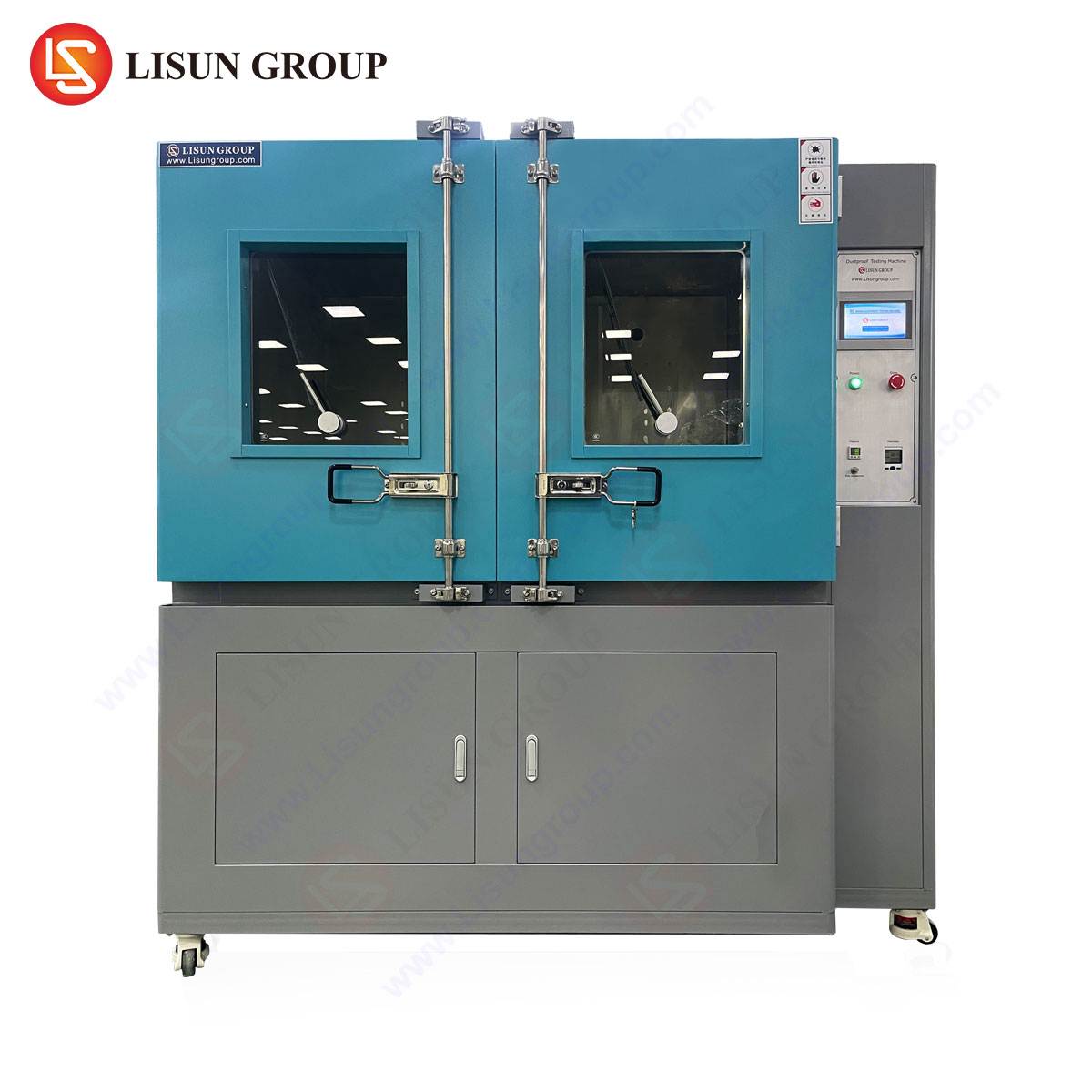
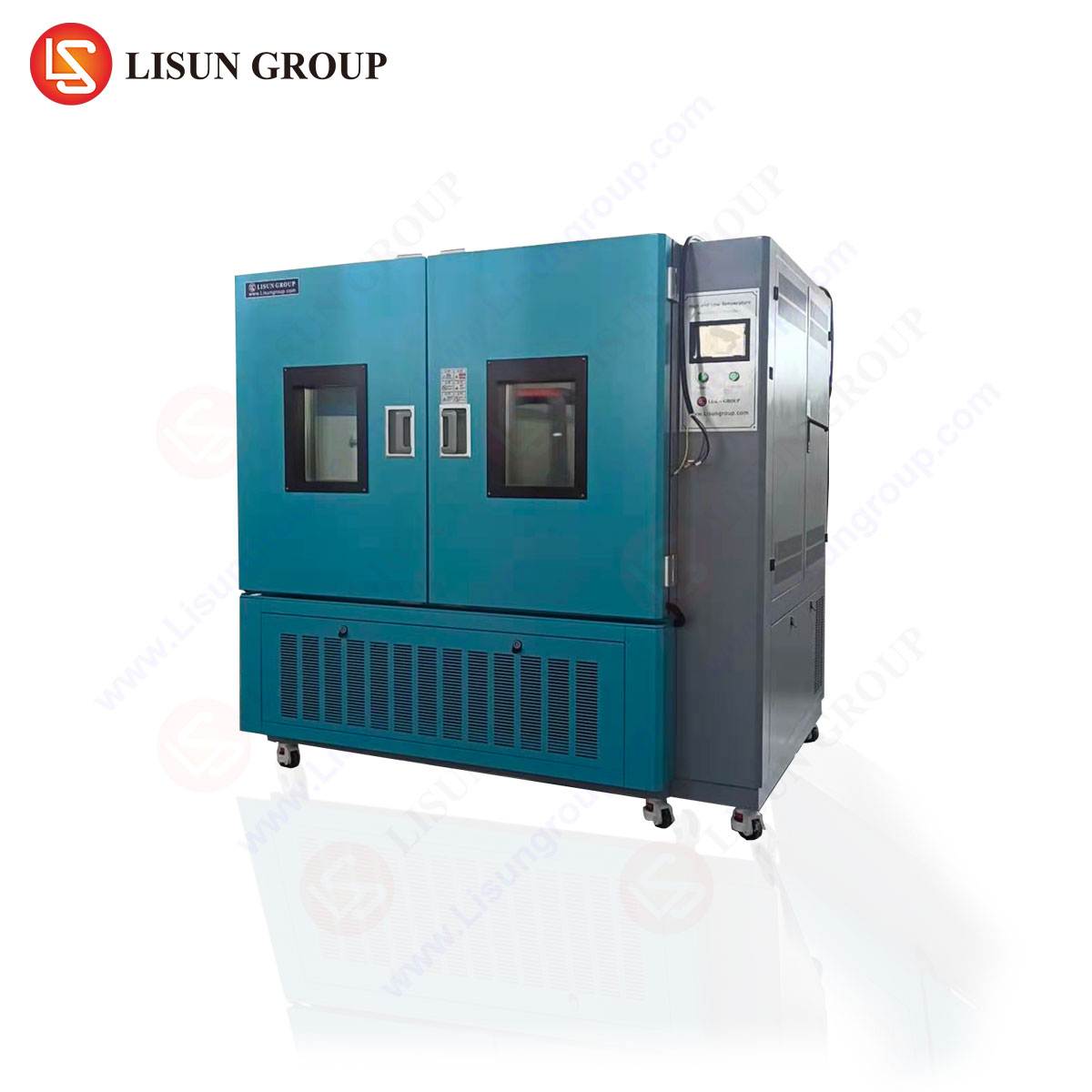
The LISUN SC-015 exemplifies the integration of the aforementioned advancements into a singular, standardized testing apparatus. Designed for rigorous compliance with standards including IEC 60529, IEC 60068-2-68, ISO 20653, and GB/T 4208, it serves as a benchmark for particulate testing across industries.
-
Testing Principle and Chamber Design: The SC-015 operates on a controlled recirculation principle. A precisely measured quantity of test dust is injected into a high-velocity airstream generated by a centrifugal blower. This stream is directed into the main test chamber, which is constructed of 304 stainless steel for corrosion resistance and ease of decontamination. The chamber’s internal geometry and airflow pathways are engineered to minimize particulate settlement and promote a vortex-like, homogeneous distribution around the DUT. After passing through the workspace, the dust-laden air is drawn through a return duct, filtered, and re-circulated, maintaining a constant concentration throughout the test duration.
-
Technical Specifications and Control Fidelity:
- Test Volume: Standard models offer a 1 m³ test workspace, suitable for a wide range of components and assemblies.
- Dust Concentration: Continuously adjustable from 0.5 to 15 g/m³, controllable via a digital mass flow metering system.
- Particulate Media: Compatible with a wide range of standardized dusts, including fine-grade Arizona Road Dust (conforming to ISO 12103-1, A2).
- Airflow Velocity: Programmable from 0 to 10 m/s, allowing simulation of conditions from still air to sandstorm-force winds.
- Environmental Control: Integrated temperature and humidity conditioning systems allow testing at specified climatic conditions (e.g., 40°C, 5% RH for desert simulations).
- Control System: A touch-screen PLC/HMI interface provides for the programming of complex test profiles, including cyclic variations in dust concentration, temperature, and humidity. Data logging capabilities capture all chamber parameters and, via optional feedthrough panels, DUT performance metrics.
-
Industry Use Cases and Application:
- Electrical Components & Automotive Electronics: Validating the sealing integrity of connectors, switches, sockets, and electronic control units (ECUs) against dust ingress that could cause resistive failures or contact corrosion.
- Medical Devices & Office Equipment: Testing the resilience of portable diagnostic devices, printer mechanisms, and scanner optics to particulate accumulation in clinical or office environments.
- Cable and Wiring Systems: Assessing the abrasion resistance of cable jackets and the performance of sealed cable glands under prolonged dust exposure.
- Lighting Fixtures & Industrial Control Systems: Ensuring outdoor luminaires and factory-floor PLC enclosures maintain performance and safety in dusty industrial or outdoor settings.
- Telecommunications Equipment: Proving the reliability of 5G outdoor radio units and fiber optic terminal enclosures in arid, dusty climates.
-
Competitive Advantages: The SC-015’s advantages stem from its synthesis of precision, flexibility, and reliability. Its closed-loop concentration control ensures repeatable test conditions. The robust construction and easy-clean design minimize cross-contamination between tests. The programmability of multi-stress profiles (dust + temperature + humidity) enables accelerated life testing that more accurately mirrors real-world operational environments than single-stress tests. Furthermore, its adherence to multiple international standards makes it a universally acceptable validation tool for global product launches.
Correlation of Laboratory Testing to Field Failure Models
The ultimate value of any laboratory test lies in its predictive correlation to field performance. The next frontier in dust chamber technology involves enhancing this correlation through advanced modeling. By combining the quantitative output from chambers like the SC-015—data on ingress rates, performance decay slopes, and failure thresholds—with field environmental data and reliability physics models, engineers can develop more accurate acceleration factors.
For instance, data from a 48-hour test at 10 g/m³ and 40°C might be correlated to predict a mean time between failures (MTBF) for an automotive sensor in a Middle Eastern market. This allows for the optimization of sealing designs based on cost/performance trade-offs, targeting a specific reliability goal for a target geography. This model-based approach to qualification is becoming essential for Aerospace and Aviation Components, where mission-critical systems must be certified for extreme environments with extremely high confidence levels.
Future Trajectories: Towards Multi-Stress Environmental Simulation
The state of the art is progressing towards fully integrated multi-environmental stress chambers. The future system will seamlessly combine dust ingress with simultaneous exposure to thermal cycling, vibration (simulating transport or operational stress), humidity condensation, and even salt spray or UV radiation. This holistic approach recognizes that failures in the field rarely result from a single stressor. A household appliance like an outdoor air conditioning unit faces diurnal temperature swings, moisture, and airborne dust simultaneously; their synergistic effect can be more severe than the sum of individual tests.
Prototype chambers are already exploring these combinations, with sophisticated sequencing controllers managing the transition between stress phases without requiring manual transfer of the DUT. This not only saves time but also ensures the test specimen is exposed to combined stresses in a realistic sequence and interaction.
Conclusion
Dust chamber testing technology has undergone a profound transformation, driven by the escalating demands for reliability in increasingly harsh and diverse operating environments. The discipline has matured from basic ingress evaluation to a sophisticated engineering science involving quantitative analysis, real-time performance monitoring, and controlled multi-stress simulation. Instruments such as the LISUN SC-015 Dust Sand Test Chamber represent the current vanguard, providing the precision, control, and standardization necessary to generate actionable, correlative data. As the technology continues to evolve towards even more integrated environmental simulation, it will remain an indispensable tool for engineers across the electrical, electronic, automotive, aerospace, and industrial sectors, ensuring that products are not merely protected from dust, but are fundamentally resilient to the challenging realities of their deployment.
FAQ Section
Q1: How does the LISUN SC-015 ensure consistent dust concentration throughout a long-duration test?
A1: The SC-015 employs a closed-loop recirculation system with a high-precision dust injection mechanism. A digital mass flow controller meters the dust into the airstream based on real-time feedback. The particulate-laden air is continuously drawn from the chamber, passed through a recovery system, and re-injected, maintaining a dynamically stable concentration as programmed, whether for a 2-hour or a 200-hour test profile.
Q2: Can the chamber be used to test for compliance with both IP5X and IP6X ingress protection ratings?
A2: Yes, the SC-015 is explicitly designed for this purpose. The test conditions for IP5X (dust protected) and IP6X (dust tight) differ primarily in duration and, in some interpretations, internal vacuum or pressure conditions. The chamber’s programmable controls allow users to set the specific test duration, dust concentration, and to integrate with external pressure differential systems if required for a full IP6X assessment per IEC 60529.
Q3: What types of dust are compatible with the system, and how is chamber decontamination handled between tests?
A3: The chamber is compatible with most standardized test dusts, including Arizona Road Dust (fine and coarse grades), talcum powder, and other ISO 12103-1 specified powders. Decontamination is facilitated by the chamber’s smooth 304 stainless steel interior and a dedicated built-in vacuum cleaning port. After a test, the majority of dust can be recovered via the internal circulation system’s filters, and the remainder can be efficiently vacuumed out through the port, minimizing cross-contamination and preparation time for the next test.
Q4: Is it possible to monitor the electrical performance of a device inside the chamber during the active dust test?
A4: Absolutely. This is a key capability of advanced chambers like the SC-015. It is equipped with electrical feedthrough ports (typically with gland plates) that allow for the passage of power and signal cables into the chamber. This enables continuous, real-time monitoring of parameters such as voltage, current, insulation resistance, communication signals, or sensor outputs from the Device Under Test while it is subjected to the dust environment, allowing for precise failure point analysis.