

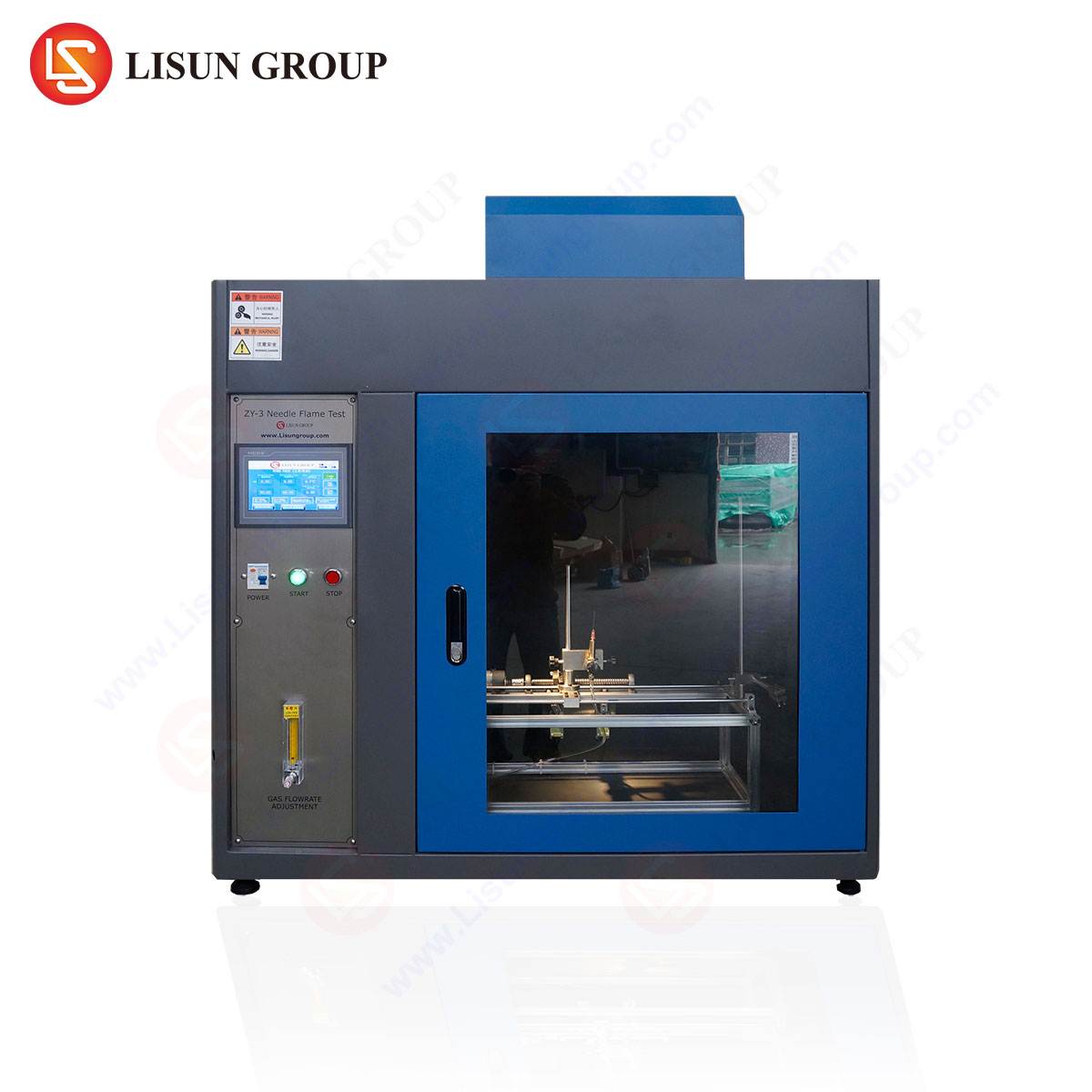



A Comprehensive Analysis of Dust Ingress Testing for Enclosure Protection: Methodologies, Standards, and Instrumentation
Introduction to Solid Particle Ingress and the IP Code Framework
The ingress of solid particulate matter, commonly referred to as dust, represents a persistent and multifaceted threat to the operational integrity and longevity of electrical and electronic equipment across diverse industrial sectors. Uncontrolled dust penetration can precipitate catastrophic failures through mechanisms including short-circuiting, contact obstruction, optical interference, mechanical binding, and accelerated thermal degradation. To quantify and standardize the degree of protection afforded by equipment enclosures against such ingress, the International Electrotechnical Commission (IEC) developed the International Protection (IP) marking system, codified under standard IEC 60529. This system provides a two-digit code where the first digit specifies the level of protection against solid objects, with ratings from IP0X to IP6X. Of particular significance are the ratings IP5X, denoting “dust protected,” and IP6X, signifying “dust tight.” Achieving and validating these ratings necessitates rigorous, repeatable laboratory testing under controlled conditions, a process demanding specialized environmental simulation chambers.
Deconstructing the IP5X and IP6X Test Criteria and Procedures
The testing protocols for IP5X and IP6X, while sharing the common adversary of talcum powder as the test medium, differ fundamentally in their procedural philosophy and acceptance criteria. IP5X testing is designed to assess an enclosure’s ability to prevent the ingress of a sufficient quantity of dust to interfere with satisfactory operation or impair safety. The test specimen is subjected to a controlled dust cloud within a test chamber for a duration of 8 hours, typically under a partial vacuum maintained inside the enclosure (0.2 kPa or 2 mbar below atmospheric pressure for most equipment types). Following exposure, the enclosure is inspected. The test is deemed successful if no visible dust accumulation occurs on critical internal components, or if any accumulated dust does not compromise dielectric strength or creepage distances, nor impede the function of moving parts.
In contrast, IP6X testing imposes a more absolute requirement: complete prevention of dust ingress. The procedural rigor is amplified, often extending the test duration and applying a more severe vacuum (up to 20 kPa or 200 mbar below atmospheric for certain enclosure types, as specified in product-specific standards). The post-test examination for IP6X is unequivocal; no dust whatsoever is permitted inside the enclosure. This binary pass/fail criterion makes the IP6X test the definitive benchmark for equipment destined for environments with conductive or abrasive fine particulates, such as mineral processing plants, desertified regions, or high-vibration automotive under-hood applications.
The Role of Specialized Test Chambers in Validating Enclosure Integrity
Conducting compliant and reproducible IP5X/IP6X testing transcends simple exposure to dust. It requires an apparatus capable of generating, suspending, and maintaining a homogeneous dust cloud of specified density (e.g., 2 kg/m³ for circulating dust chambers as per IEC 60529). The chamber must also facilitate the application and regulation of the internal vacuum, monitor test duration, and ensure the test dust (typically talcum powder with prescribed particle size distribution, such as 75% of particles between 1μm and 75μm) is effectively circulated without settling prematurely. The design of the chamber directly influences test accuracy; poor airflow dynamics can lead to dead zones with insufficient dust concentration or cause abrasive pitting of the specimen from high-velocity particle streams, which is not the intent of the standard.
Technical Specifications and Operational Principles of the LISUN SC-015 Dust Sand Test Chamber
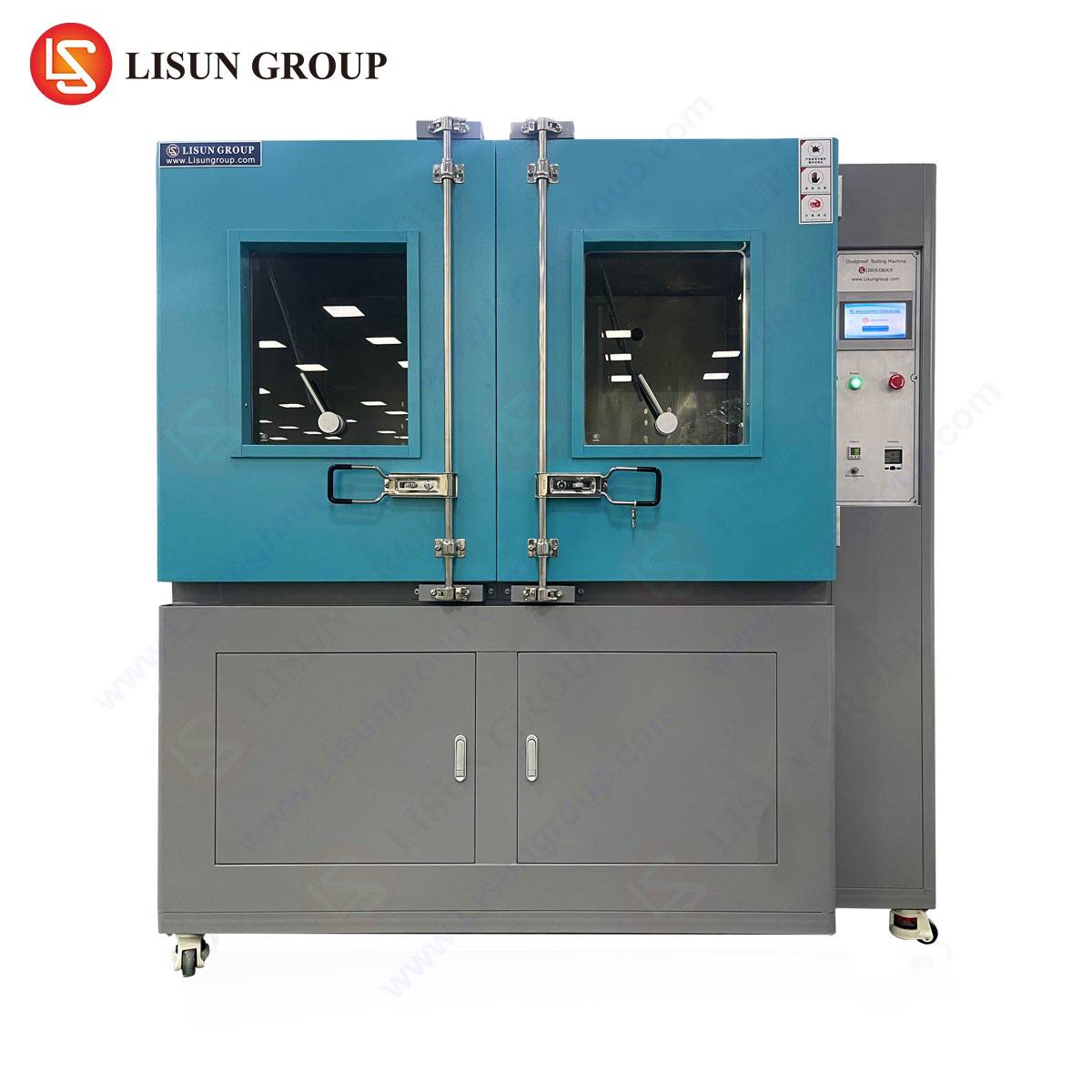
The LISUN SC-015 Dust Sand Test Chamber is engineered as a turnkey solution for performing IP5X and IP6X tests in alignment with IEC 60529, as well as related standards including ISO 20653 (road vehicles) and GB/T 4208. Its design incorporates several critical subsystems to ensure standardized and reliable test execution.
The chamber’s core operational principle involves a closed-loop circulation system. A controlled volume of test dust is introduced into the airstream generated by a centrifugal blower. This air-dust mixture is then uniformly diffused into the main test workspace via a specialized ducting and nozzle system, creating the requisite suspended dust cloud. The chamber interior is constructed from corrosion-resistant 304 stainless steel, and incorporates a large viewing window with internal wipers to maintain visibility throughout the test cycle. For IP5X testing, the integrated vacuum system comprises a vacuum pump, precision regulator, pressure gauge, and solenoid valve, allowing for the automated application and maintenance of the specified under-pressure within the test specimen. The system includes a flowmeter to ensure the suction rate through the specimen is within the standard’s mandated limits (80 times the enclosure volume per hour, or as specified).
Key specifications of the LISUN SC-015 include:
- Test Dust: Talcum powder (Ryzalus powder), conforming to standard particle size distribution.
- Dust Concentration: Continuously maintained within a controllable range.
- Vacuum System Range: 0 to -20 kPa, adjustable.
- Airflow Velocity: ≤ 2 m/s, adjustable via a frequency converter controlling the blower motor.
- Timer Range: 1 second to 999 hours, enabling extended or cyclic testing.
- Safety Features: Over-temperature protection for the blower motor and comprehensive electrical safety isolations.
Industry-Specific Applications for Dust Ingress Validation
The imperative for dust-proof certification spans a broad spectrum of industries, each with unique operational environments and failure consequences.
- Automotive Electronics & Aerospace Components: Components such as engine control units (ECUs), sensors, lighting assemblies, and avionics bay equipment must withstand road dust, sand, and airborne particulates. IP6X validation is often a prerequisite for under-hood applications or components on off-road and agricultural vehicles, as well as for avionics in aircraft operating in desert or unpaved environments.
- Industrial Control Systems & Electrical Components: Programmable logic controllers (PLCs), motor drives, switches, and industrial sockets installed in manufacturing plants, mines, or cement facilities require IP5X or IP6X ratings to ensure reliability amidst conductive metallic or abrasive silicate dusts.
- Lighting Fixtures & Telecommunications Equipment: Outdoor LED luminaires for street lighting or harsh industrial settings, and broadband cabinets or 5G small cells located in dusty rural areas, depend on robust sealing validated by these tests to maintain light output and signal integrity.
- Medical Devices & Household Appliances: Portable diagnostic equipment, ventilators used in field hospitals, and appliances like robotic vacuum cleaners or outdoor air conditioners necessitate protection against household and environmental dust to ensure patient safety and product durability.
- Consumer Electronics & Office Equipment: While not always requiring the highest ratings, protection against everyday dust (IP5X) is critical for the longevity of connectors, cooling fans in gaming consoles, and professional printers in office environments.
Comparative Advantages of Integrated Testing Systems in Quality Assurance
Utilizing a dedicated, integrated chamber like the LISUN SC-015 offers distinct advantages over ad-hoc or modular test setups. First, it guarantees consistency. Automated control over dust concentration, airflow, vacuum, and timing eliminates operator-dependent variables, yielding results that are directly comparable across different product batches and development cycles. Second, it enhances laboratory efficiency. The self-contained nature of the system simplifies setup, contains the test dust completely—a critical housekeeping and safety consideration—and streamlines the post-test cleaning process. Third, it future-proofs testing capabilities. A chamber designed to the full scope of the relevant standards allows a manufacturer to confidently test for both IP5X and IP6X ratings, as well as adapt to evolving internal quality standards or customer-specific requirements that may exceed baseline compliance.
Interpreting Test Results and Correlating Laboratory Data to Field Performance
A successful IP rating test is a necessary but not wholly sufficient indicator of field reliability. Laboratory tests are accelerated and standardized, whereas real-world conditions involve variable dust compositions, combined stresses (temperature cycling, vibration, UV exposure), and long-term aging of sealing materials. Therefore, test results must be interpreted judiciously. For instance, an IP6X pass confirms the integrity of the seal design at the time of test. Correlating this with field data involves understanding the lifecycle of gaskets, the potential for screw fastenings to loosen under vibration, and the chemical compatibility of seals with environmental oils or solvents. Advanced quality assurance programs often sequence dust ingress testing after environmental stress screening (ESS), such as thermal cycling or vibration tests, to uncover latent weaknesses in the sealing system that a standalone dust test might not reveal.
Conclusion
The validation of enclosure protection against dust ingress through IP5X and IP6X testing is a critical discipline in the engineering and qualification of robust electrical and electronic equipment. As technological devices permeate increasingly harsh and demanding environments, the role of precise, standards-compliant testing becomes ever more central to product strategy and risk mitigation. Instrumentation such as the LISUN SC-015 Dust Sand Test Chamber provides the controlled, repeatable, and comprehensive environment required to execute these tests authoritatively. By integrating such testing into the product development lifecycle, manufacturers across sectors from automotive to aerospace can substantiate product claims, reduce warranty liabilities, and ultimately deliver the reliability that modern industrial and consumer applications demand.
Frequently Asked Questions (FAQ)
Q1: What is the typical particle size distribution of the test dust used in IP5X/IP6X testing, and why is it specified?
The standard, as per IEC 60529, recommends the use of talcum powder, often with a specification that a majority of particles (e.g., over 50%) pass through a 75μm mesh sieve, and a significant portion is below 10μm. This distribution is chosen to represent a severe challenge from fine, airborne particulates that are most prone to penetrating small gaps and remaining suspended. The inclusion of very fine particles tests the efficacy of seals against the most penetrating particle size.
Q2: Can the LISUN SC-015 chamber be used for tests other than IP5X and IP6X?
While its primary design is for IEC 60529 IP5X/IP6X tests, the chamber’s ability to generate a controlled dust cloud and apply vacuum makes it suitable for similar ingress tests outlined in other standards, such as ISO 20653 for automotive components or various military standards (MIL-STD). However, any deviation from the standard for which it is explicitly designed should be carefully evaluated to ensure the chamber’s parameters (dust concentration, airflow pattern, etc.) meet the alternative standard’s specific requirements.
Q3: How is the internal vacuum level for testing determined, as it seems to vary?
The required vacuum level is not arbitrary. IEC 60529 provides a default value (0.2 kPa below atmospheric) but explicitly defers to the relevant product standard for the equipment under test. For example, standards for low-voltage switchgear or automotive electronics may prescribe a more severe vacuum (e.g., 20 kPa) to simulate pressure differentials caused by thermal cycling, altitude, or fan operation. The product’s end-use application and governing sectorial standard dictate the test severity.
Q4: What maintenance is required for a dust test chamber to ensure ongoing accuracy?
Regular maintenance is crucial. Key tasks include: thorough internal cleaning after each test to prevent cross-contamination and dust caking; inspection and cleaning of the circulation fan and ductwork to ensure consistent airflow; calibration of the vacuum gauge and flowmeter at periodic intervals; and replacement of the test dust batch if it becomes contaminated or agglomerated due to humidity. The viewing window seals and wiper mechanism also require inspection to maintain integrity and visibility.
Q5: For an IP5X test, if dust is found inside the enclosure but away from electrical components, does the test fail?
Not necessarily. The acceptance criterion for IP5X is that dust ingress does not interfere with normal operation or impair safety. A small accumulation on a non-critical surface, such as the bottom of an enclosure away from any circuitry, contacts, or moving parts, may be acceptable. The assessment requires engineering judgment based on the standard’s directive: does the quantity or location of dust pose a risk? In contrast, for IP6X, any visible dust inside constitutes a failure.