




A Comprehensive Analysis of Ingress Protection (IP) Ratings: Standards, Testing Methodologies, and Industrial Applications
Introduction to Ingress Protection Classifications
The Ingress Protection (IP) rating system, codified under the International Electrotechnical Commission standard IEC 60529, provides a definitive and internationally recognized framework for classifying the degree of protection offered by mechanical casings and electrical enclosures against the intrusion of foreign bodies and moisture. This classification serves as a critical technical specification across myriad industries, enabling engineers, designers, and procurement specialists to specify and verify the environmental resilience of components and finished products. An IP code, typically presented as “IP” followed by two characteristic numerals, conveys specific, test-validated information. The first digit indicates protection against solid particle ingress, while the second digit denotes protection against liquid ingress. A profound understanding of this system is not merely academic; it is foundational to product reliability, safety certification, and operational longevity in demanding environments.
Deciphering the First Characteristic Numeral: Solid Particle Ingress
The first numeral in the IP code, ranging from 0 to 6, specifies the level of protection against access to hazardous parts and the ingress of solid objects. It is a graduated scale where higher numbers denote increased protection.
- IP0X: No special protection.
- IP1X: Protection against solid objects greater than 50mm in diameter (e.g., accidental contact with hands).
- IP2X: Protection against solid objects greater than 12.5mm in diameter (e.g., fingers).
- IP3X: Protection against solid objects greater than 2.5mm in diameter (e.g., tools, thick wires).
- IP4X: Protection against solid objects greater than 1.0mm in diameter (e.g., most wires, slender screws).
- IP5X: Dust-protected. Ingress of dust is not entirely prevented, but dust cannot enter in sufficient quantity to interfere with the satisfactory operation of the equipment or impair safety.
- IP6X: Dust-tight. No ingress of dust under a defined vacuum test condition; complete protection against contact.
The distinction between IP5X and IP6X is particularly significant. IP5X, or “dust protected,” acknowledges that some dust may enter but not in harmful quantities. IP6X, “dust-tight,” represents the highest tier of solid particle protection, a mandatory requirement for components in environments such as aerospace avionics bays, desert-deployed telecommunications equipment, or industrial control systems within cement plants.
Interpreting the Second Characteristic Numeral: Liquid Ingress Protection
The second numeral, ranging from 0 to 9K, defines the enclosure’s protection against harmful effects due to the ingress of water. This scale is not strictly linear, as different test methods simulate distinct environmental challenges.
- IPX0: No protection.
- IPX1 & IPX2: Protection against vertically falling (dripping) water and water dripping when tilted up to 15°.
- IPX3 & IPX4: Protection against spraying water (up to 60° from vertical) and splashing water from any direction.
- IPX5 & IPX6: Protection against water jets (12.5mm nozzle at 30kPa) and powerful water jets (12.5mm nozzle at 100kPa). These are critical for outdoor lighting fixtures, automotive under-hood electronics, and deck equipment on marine vessels.
- IPX7 & IPX8: Protection against temporary (30 minutes at 1m depth) and continuous immersion under specified, more severe conditions agreed upon between manufacturer and user. Common in underwater sensors, diving equipment electronics, and submersible pumps.
- IPX9K: Protection against close-range high-pressure, high-temperature water jets. This rating, often required for automotive and military applications, involves spraying with 80°C water at 8-10 MPa pressure from a specific distance and angle.
It is crucial to note that testing for lower ratings (e.g., IPX4) is not a subset of higher rating tests (e.g., IPX7). An enclosure rated IP67 provides both dust-tightness and protection against temporary immersion, but it is not necessarily validated against high-pressure jets (IPX6). Specifiers must match the IP rating to the actual environmental hazards anticipated.
The Critical Role of Validated Testing Equipment
Achieving a certified IP rating is not a matter of design assertion but of rigorous, standardized verification. The integrity of the entire IP classification system hinges upon the precision, repeatability, and compliance of the testing equipment employed. Inconsistent or non-conforming test apparatus can yield invalid results, leading to product failures in the field, safety hazards, and significant liability. For solid particle testing, particularly for IP5X and IP6X ratings, the test equipment must generate a consistent, standardized cloud of test dust within a controlled chamber and, for IP6X, apply a defined vacuum to the device under test (DUT) to simulate pressure differentials.
The LISUN SC-015 Dust Sand Test Chamber: Principles and Specifications
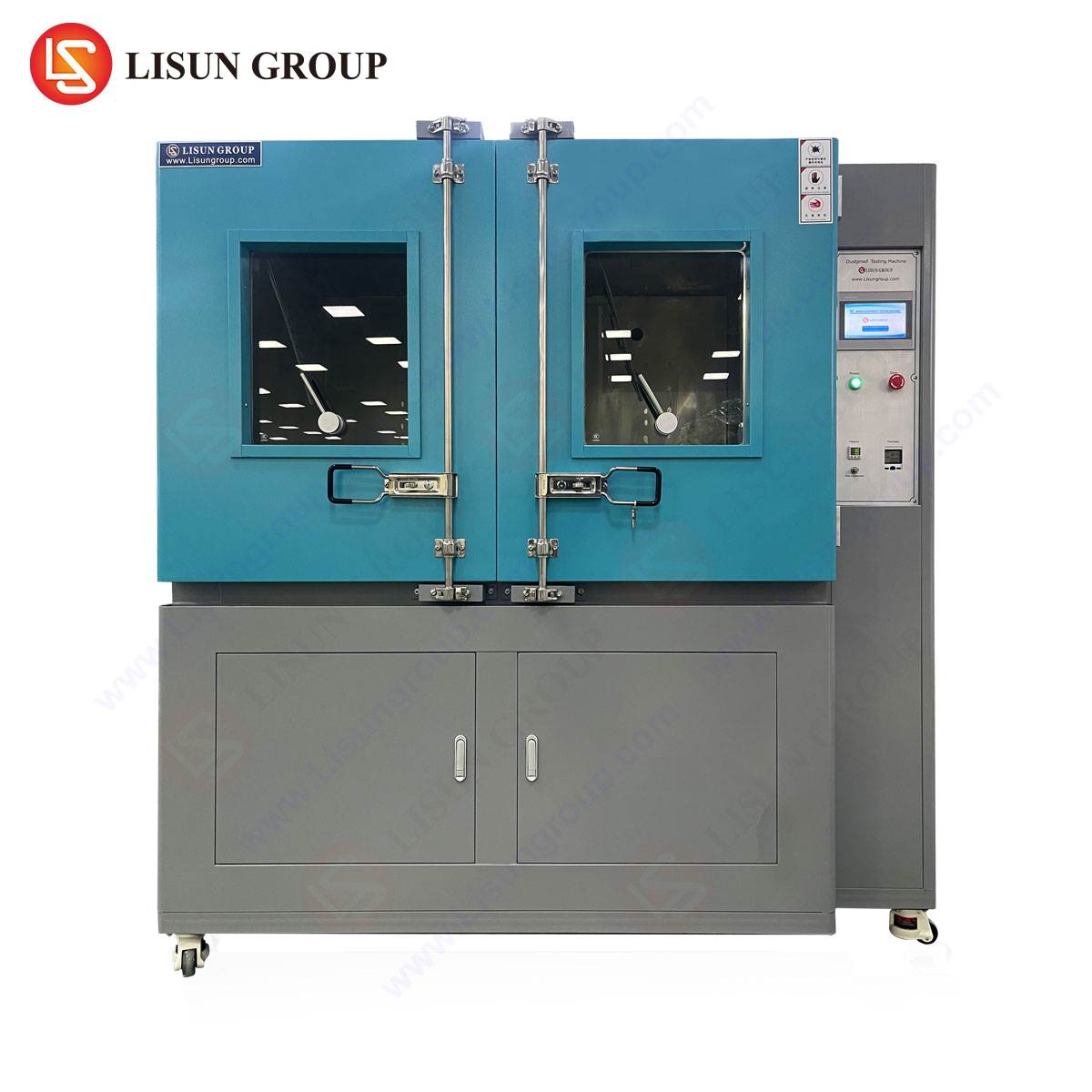
The LISUN SC-015 Dust Sand Test Chamber represents a specialized apparatus engineered explicitly for conducting IP5X and IP6X testing in full compliance with IEC 60529, ISO 20653, and other derivative standards. Its design focuses on creating a highly controlled and reproducible test environment for validating the dust ingress protection of enclosures.
The operational principle of the SC-015 involves the fluidization and circulation of fine talcum powder (as prescribed by the standard) within a sealed test chamber. A controlled blower system agitates the powder, creating a uniform dust cloud of specified density. The device under test is placed inside this chamber for a prescribed duration (typically 2, 4, or 8 hours). For IP6X testing, the chamber integrates a vacuum system that draws air from inside the DUT, creating an internal pressure lower than the chamber’s ambient pressure. This negative pressure differential forces any potential ingress paths to be challenged, providing a pass/fail criterion for “dust-tight” certification.
Key Technical Specifications of the LISUN SC-015:
- Chamber Volume: Designed to accommodate a range of product sizes, with internal dimensions typically specified to ensure proper dust circulation.
- Test Dust: Utilizes 75μm-150μm sieved talcum powder, as mandated by IEC 60529.
- Dust Concentration: Capable of maintaining the standard-required concentration (e.g., 2kg/m³ for certain test modes).
- Vacuum System: Includes a regulated vacuum pump and gauges capable of reducing internal pressure of the DUT by 2 kPa (20 mbar) below ambient, as required for IP6X testing.
- Control System: Features programmable logic controllers (PLC) and human-machine interface (HMI) touchscreens for setting test parameters like duration, vacuum level, and dust agitation cycles.
- Safety & Compliance: Constructed with viewing windows, safety interlocks, and filtration systems to protect operators and ensure environmental safety.
Industrial Applications and Use Case Scenarios
The application of dust ingress testing via equipment like the LISUN SC-015 spans virtually every sector where electronics and mechanical systems encounter particulate environments.
- Automotive Electronics: Components like engine control units (ECUs), sensors, and lighting assemblies must withstand road dust, sand, and brake pad particulate. IP5X or IP6X ratings are often prerequisites for components mounted in wheel wells, underbody, or engine compartments.
- Telecommunications Equipment: Outdoor base station cabinets, fiber optic terminal enclosures, and satellite communication hardware require high dust protection to ensure signal integrity and prevent overheating in desert, rural, or industrial areas.
- Aerospace and Aviation Components: Avionics systems must be dust-tight to prevent malfunction at altitude and in sandy environments during takeoff and landing. The SC-015 can be used to validate enclosures for flight control computers and navigation systems.
- Industrial Control Systems: Programmable logic controllers (PLCs), motor drives, and human-machine interfaces (HMIs) installed on factory floors near machining, woodworking, or textile operations require protection against conductive or abrasive dust.
- Lighting Fixtures: Industrial high-bay lighting, streetlights, and mining lights are exposed to continuous dust accumulation, which can block light output, cause overheating, and lead to premature failure.
- Medical Devices: Portable diagnostic equipment and devices used in field hospitals or ambulances must be protected against environmental contaminants to ensure sterility and reliability.
- Electrical Components: Switches, sockets, and circuit breakers for outdoor or industrial use necessitate dust protection to prevent arcing, contact corrosion, and mechanical seizure.
Competitive Advantages of Precision Testing Systems
Utilizing a calibrated and standards-compliant test chamber such as the LISUN SC-015 provides manufacturers with several strategic advantages. Firstly, it ensures regulatory compliance and certification, enabling products to bear legitimate IP marks recognized by global testing bodies and customers. Secondly, it facilitates design validation and iteration, allowing engineers to identify and rectify sealing weaknesses early in the development cycle, reducing costly post-production fixes. Thirdly, it mitigates field failure risk and associated liabilities by providing empirical evidence of a product’s durability. Finally, it serves as a competitive differentiator in technical proposals, demonstrating a commitment to quality and reliability that is substantiated by verifiable test data, rather than unsubstantiated claims.
Integration of IP Ratings into Product Lifecycle Management
Specifying IP ratings is not an endpoint but a integrated component of a robust product lifecycle management (PLM) strategy. From the initial design for manufacturability (DFM) and design for testing (DFT) phases, engineers must consider gasket selection, sealant application, fastener placement, and venting solutions. Prototyping followed by rigorous testing in chambers like the SC-015 provides critical feedback. During manufacturing, process controls must ensure the consistency of sealing processes. Finally, quality assurance may involve batch testing to guarantee ongoing compliance. This holistic approach, anchored by reliable test data, transforms the IP rating from a simple specification into a verifiable hallmark of product integrity.
Conclusion
The IP rating system is an indispensable engineering lexicon for defining environmental resilience. Its value, however, is wholly dependent on the accuracy and rigor of the testing methodologies employed to validate it. Specialized equipment, such as the LISUN SC-015 Dust Sand Test Chamber, provides the necessary controlled environment to perform conclusive IP5X and IP6X testing. By investing in precise validation, manufacturers across the electrical, electronic, automotive, and industrial sectors can ensure product reliability, achieve regulatory certifications, and build market trust based on demonstrable technical performance. As products continue to proliferate in increasingly harsh and varied environments, the role of definitive ingress protection testing will only grow in significance.
FAQ Section
Q1: Can a product rated IP67 also be considered compliant with IP65 requirements?
A1: Not automatically. While an IP67 product is dust-tight (6) and protected against temporary immersion (7), the test for immersion does not simulate the directed high-pressure jet of water specified for IPX5. To claim a full IP65 rating, the product must successfully pass both the IP6X dust test and the IPX5 water jet test independently. Some test laboratories may perform sequential tests on a single unit, but compliance is not assumed by a higher immersion rating.
Q2: What is the significance of the test dust specification (e.g., talcum powder of 75μm-150μm) in IP5X/IP6X testing?
A2: The standardized dust specification is critical for test repeatability and reproducibility across different laboratories and testing equipment. The specified talcum powder has defined particle size distribution and physical properties. Using an incorrect dust type or size could lead to less challenging test conditions (masking a design flaw) or overly aggressive conditions (unfairly failing a capable design), both of which undermine the universal credibility of the IP rating.
Q3: How does the vacuum test in IP6X (dust-tight) simulation differ from the IP5X (dust-protected) test procedure?
A3: The fundamental difference is the application of a pressure differential. For IP5X, the device under test (DUT) is simply exposed to a circulating dust cloud inside the chamber for a set duration. For IP6X, after or during dust exposure, a vacuum is applied to the interior of the DUT to create an internal pressure approximately 2 kPa lower than the chamber pressure. This differential forces air (and any penetrable dust) to attempt to flow into the enclosure, providing a far more stringent test of its seals and joints. The pass criterion for IP6X is typically zero visible dust ingress inside the DUT.
Q4: For how long must a product be tested in a dust chamber like the LISUN SC-015 to achieve an IP5X or IP6X rating?
A4: The standard test duration prescribed by IEC 60529 is 8 hours for both IP5X and IP6X ratings. However, the standard allows for agreement between manufacturer and tester to use a shorter duration (e.g., 2 hours) if it can be shown by comparison that the shorter test is equally effective. In practice, most certification bodies require the full 8-hour test unless a validated correlation for a specific product type has been established.
Q5: Can the LISUN SC-015 chamber be used for testing beyond electronic enclosures?
A5: Absolutely. While the IEC 60529 standard is written for electrical enclosures, the physical principles of dust ingress apply to any sealed system. The SC-015 is routinely used to test mechanical components, optical devices, protective cases for sensitive instruments, and sub-assemblies from industries such as aerospace, defense, and precision manufacturing, wherever validation of particulate sealing is required.