




Ingress Protection Testing Equipment: A Comprehensive Guide to Standards and Validation Solutions
The relentless drive for miniaturization, increased functionality, and deployment in harsh environments has made the environmental resilience of electrical and electronic equipment a paramount design consideration. Among the most critical validation protocols is Ingress Protection (IP) testing, a standardized methodology for evaluating an enclosure’s ability to resist the intrusion of solid foreign objects and liquids. This article provides a detailed examination of IP standards, testing methodologies, and the specialized equipment required for rigorous compliance verification, with a focus on practical implementation across diverse industrial sectors.
Deciphering the IP Code: A Framework for Environmental Sealing
The IP Code, formalized by the International Electrotechnical Commission standard IEC 60529, provides a concise, alphanumeric classification system. The code structure, IPXY, conveys two distinct protection levels. The first characteristic numeral (X) denotes protection against solid particle ingress, ranging from 0 (no protection) to 6 (dust-tight). The second characteristic numeral (Y) indicates protection against harmful water ingress, scaling from 0 (no protection) to 9K (powerful high-temperature water jets). It is crucial to note that these ratings are sequential but not cumulative; an IP67-rated enclosure is proven dust-tight and capable of withstanding temporary immersion, but it is not necessarily validated against the high-pressure, low-volume spray defined in IPX5 or IPX6 tests. Separate testing for each required rating is often necessary.
Misinterpretation of this nuance is a common source of field failure. For instance, a luminaire rated IP65 for outdoor use is protected against low-pressure water jets from any direction, making it suitable for most weather conditions. However, if the same fixture is to be installed on a vehicle wash tunnel floor, it would require validation against the high-impact, high-volume water jets specified in IPX9K. The selection of appropriate test criteria must be driven by a thorough analysis of the product’s intended operational lifecycle and environmental exposure profile.
The Engineering Principles Behind Water Ingress Simulation
IP testing equipment operates on the principle of accurately replicating defined environmental challenges under controlled laboratory conditions. The apparatus must generate specific water conditions—be it dripping, spraying, jetting, or immersion—with precise control over variables such as water pressure, flow rate, nozzle geometry, sample distance, and test duration. Calibration to the tolerances stipulated in IEC 60529 and related standards (e.g., ISO 20653 for automotive, MIL-STD-810G for military) is non-negotiable for generating auditable, defensible data.
The testing paradigm involves mounting the unit under test (UUT) on a programmable motion system within a sealed test chamber. The UUT is typically operated during the test, often with internal vacuum or pressure monitoring to detect minute ingress. Following exposure, a thorough visual and functional inspection is conducted. For higher protection levels (IPX7-IPX9K), the examination may include disassembly to check for traces of moisture on critical components, dielectric strength testing, or performance verification against original equipment manufacturer (OEM) specifications. The goal is not merely to see if water enters, but to determine if such entry compromises safety or operational integrity.
Sector-Specific Applications and Compliance Imperatives
The application of IP testing spans virtually every industry where electronics interface with the environment.
In Automotive Electronics, components are subjected to a brutal spectrum of conditions. Control units mounted in wheel wells require validation against high-pressure spray (IPX6/9K), while interior sensors may only need protection against condensation (IPX1). Lighting Fixtures for architectural, roadway, or marine use demand ratings from IP65 for general outdoor fixtures to IP68 for submerged applications. Medical Devices, particularly those used in surgical suites or for portable monitoring, require protection against cleaning fluids and accidental spills, typically IPX4 to IPX7.
Industrial Control Systems and Telecommunications Equipment deployed in factories, substations, or outdoor cabinets must be resilient against conductive dust and hose-directed water (IP5X/IP6X and IPX5/IPX6). Aerospace and Aviation Components face unique challenges, including rapid pressure changes and condensation, often tested to DO-160 or Airbus/ Boeing process specifications that incorporate IP principles. Even Consumer Electronics and Office Equipment now commonly feature IP ratings for splash resistance, driven by user demand for durability.
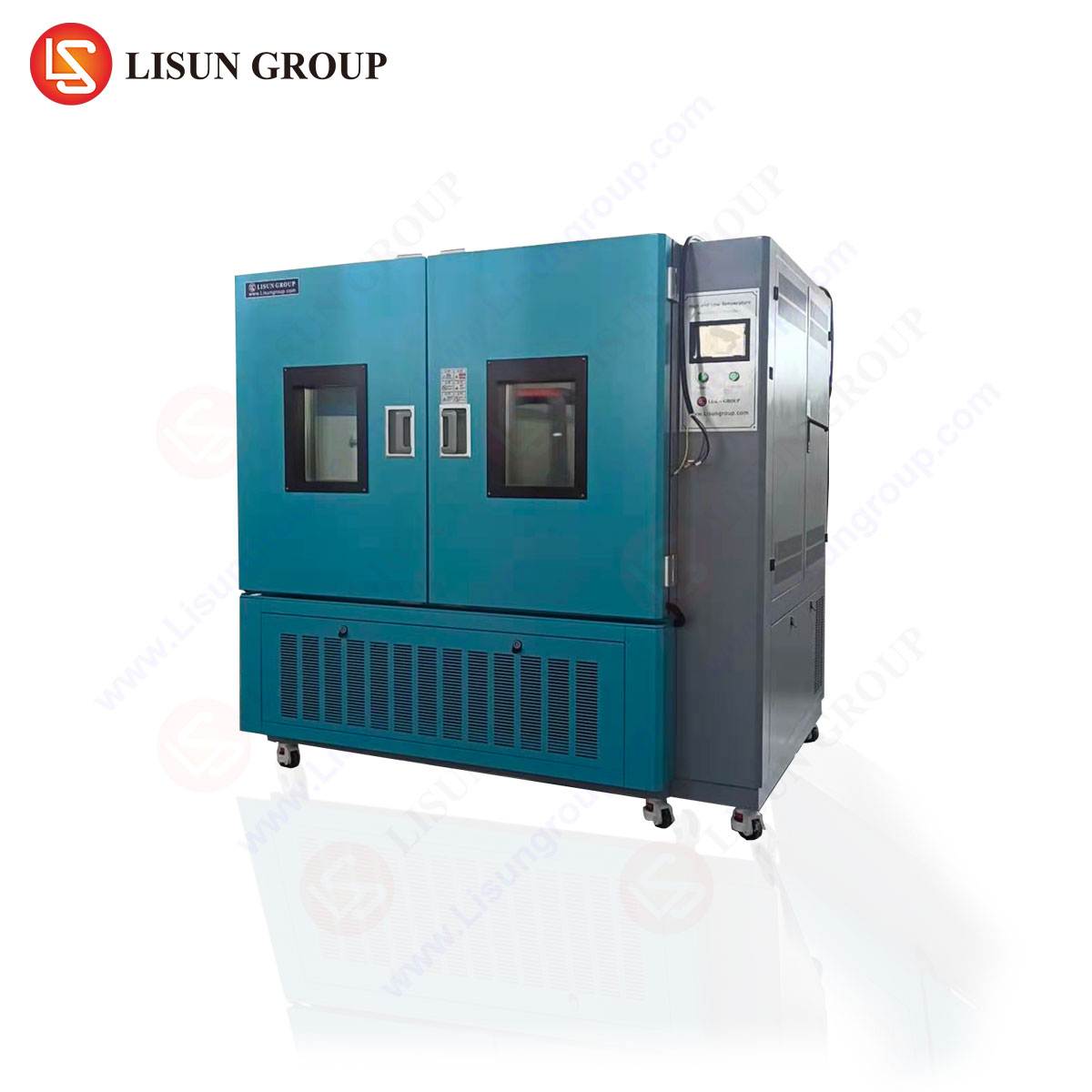
Advanced Testing Solutions: The LISUN JL-XC Series Waterproof Test Chamber
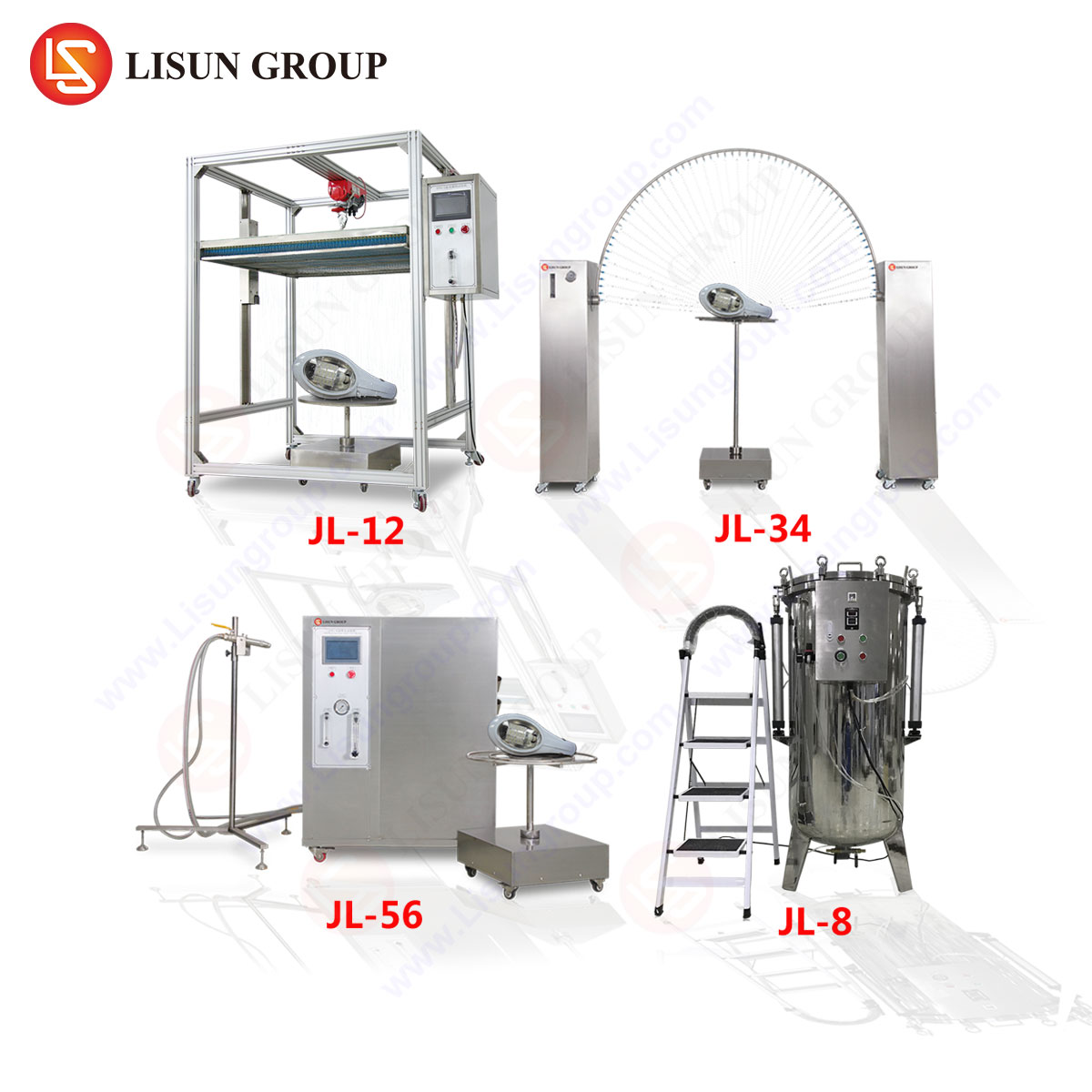
To meet the rigorous demands of modern IP validation, advanced, integrated test systems are essential. The LISUN JL-XC Series waterproof test chamber exemplifies this category, engineered as a fully programmable, multi-purpose apparatus capable of executing tests from IPX1 through IPX9K within a single, unified platform. Its design philosophy centers on precision, repeatability, and operational efficiency, addressing the pain points of traditional, disparate test setups.
The JL-XC Series integrates a high-precision water temperature control system (typically adjustable from 5°C to 80°C±2°C, crucial for IPX9K testing), a multi-stage pressure-regulated water supply, and a suite of IEC/ISO-compliant nozzles. A programmable rotary table, with adjustable speed and tilt, ensures uniform exposure of the UUT to the water spray from all specified angles. The chamber construction utilizes corrosion-resistant stainless steel, with a large tempered glass observation window and integrated lighting. System operation is managed via a touchscreen PLC/HMI interface, allowing for the creation, storage, and automatic execution of complex test profiles that precisely control water pressure, flow, temperature, test distance, spray angle, and duration.
Testing Principle and Workflow: The system automates the entire test sequence. For an IPX5/IPX6 test, the appropriate nozzle is selected, and the UUT is subjected to a 12.5 L/min or 100 L/min water flow at a distance of 2.5-3 meters for a prescribed time. For an IPX9K test, the system elevates water temperature to 80°C±5°C and delivers 14-16 L/min at 8-10 MPa pressure from four specific angles (0°, 30°, 60°, 90°) for 30 seconds each. The integrated rotary table positions the sample accurately for each phase. This automation eliminates operator variance and ensures strict adherence to standard parameters.
Industry Use Cases: The versatility of the JL-XC Series makes it indispensable for R&D and quality assurance laboratories serving multiple verticals. An automotive supplier can use it to validate a new electronic parking brake module (EPB) to IP6K9K per ISO 20653. A manufacturer of industrial connectors can certify a product line to IP68 and IP69K for food and beverage processing equipment. A lighting company can qualify a high-bay fixture for mining operations to IP66 and IP67 in a single test cycle. Its capability to test electrical components like switches and sockets, cable glands, and outdoor telecommunications enclosures provides broad utility.
Competitive Advantages: The primary advantage of the JL-XC Series is its comprehensive, all-in-one capability, which reduces capital expenditure, laboratory footprint, and setup time compared to maintaining multiple single-function testers. Its programmable automation enhances test repeatability and reduces labor costs. The precise temperature and pressure control guarantee compliance with the most stringent clauses of IEC 60529 and ISO 20653. Furthermore, its robust data logging and reporting features simplify audit trails and certification processes with bodies like TÜV, UL, or Intertek.
Calibration, Maintenance, and Ensuring Measurement Traceability
The integrity of IP testing is wholly dependent on the calibrated accuracy of the equipment. Key parameters requiring regular calibration include water flow rate, pressure (both low and high range), nozzle orifice dimensions, water temperature, and test duration. Calibration must be performed by an accredited metrology laboratory using traceable standards, with intervals dictated by usage frequency and quality system requirements (e.g., ISO/IEC 17025).
Routine maintenance is equally critical. This involves pre-test filtration of water to prevent nozzle clogging, post-test draining and drying of the chamber and plumbing to prevent microbial growth or corrosion, and regular inspection of seals, pumps, and sensors. A well-maintained and calibrated system is not a cost center but a risk mitigation asset, preventing the far greater costs of non-compliance, product recalls, or field failures.
Interpreting Results and Navigating Common Testing Pitfalls
A passing IP test report is a snapshot of performance under specific laboratory conditions. It does not constitute a guarantee of infinite field life. Engineers must be wary of several pitfalls: Material Degradation: Long-term exposure to UV, ozone, or thermal cycling can degrade gaskets and seals, compromising an initially valid rating. Installation Effects: Conduit entries, cable glands, and mounting orientation in the field must mirror the test setup. A gasket compressed unevenly during installation will leak. Cyclic Stress: Real-world conditions often involve cyclic temperature and pressure changes, which can “pump” moisture past seals—a phenomenon not captured in a static immersion (IPX7/IPX8) test. Supplementary testing, such as thermal cycling with humidity, may be necessary for critical applications.
Therefore, the IP rating should be viewed as a foundational element of a broader environmental stress screening (ESS) strategy, which may include vibration, thermal shock, and corrosion tests to fully qualify a product for its intended service environment.
Frequently Asked Questions (FAQ)
Q1: Our product is rated IP67. Does this mean it is automatically qualified for IP65 and IP66 conditions?
A1: Not necessarily. While IP67 involves a more severe immersion test, it does not simulate the high-velocity water jets defined in IPX5 and IPX6. The test methodologies are fundamentally different. An enclosure could have a small opening that allows a high-pressure jet to penetrate (failing IPX5/6) yet not allow water ingress during static immersion due to surface tension or air pressure (passing IPX7). Separate testing for each desired rating is required unless explicitly covered by a standard’s scope.
Q2: For IPX7 and IPX8 immersion tests, is it necessary to power and operate the device under test during the procedure?
A2: The IEC 60529 standard does not mandate the UUT to be powered during the immersion test itself. However, it is a critical best practice and is often required by specific product safety standards or OEM specifications. Operating the device (or monitoring internal pressure/vacuum) is the most reliable way to detect subtle ingress that could cause short-circuiting or corrosion over time. Functional testing immediately after the immersion period is mandatory.
Q3: How does the LISUN JL-XC Series handle the transition between different IP tests, such as running an IPX6 test followed immediately by an IPX9K test?
A3: The JL-XC Series is designed for such sequential testing. Its programmable controller allows the creation of a multi-stage test profile. The system can automatically complete an IPX6 cycle, then reconfigure the internal plumbing—switching to the high-pressure pump, activating the heater to raise water temperature to 80°C, and indexing the turntable to the correct distance and angle for the IPX9K nozzle. This transition is performed without removing the sample, ensuring test condition consistency and saving considerable time.
Q4: What is the significance of water temperature control in IPX9K testing, and how is it maintained?
A4: The IPX9K test specifies water at 80°C ± 5°C. This high temperature is critical for simulating the cleaning and sterilizing processes common in automotive, food processing, and pharmaceutical industries. It also stresses seals and materials differently than cold water. The JL-XC Series employs a closed-loop, pressurized heating system with a high-capacity heater and precision PID temperature controller to rapidly achieve and maintain the target temperature within the strict tolerance, ensuring the test’s mechanical and thermal fidelity to the standard.
Q5: Can IP testing equipment be used for standards beyond IEC 60529, such as MIL-STD or automotive OEM specifications?
A5: Yes, advanced systems like the JL-XC Series are designed with this flexibility. While IEC 60529 is the core reference, many automotive OEMs (e.g., Volkswagen, Ford, GM) have their own test specifications (like VW TL 81000, Ford CETP 00.00-L-467) that modify angles, distances, or cycles. The programmability of the pressure, flow, table motion, and spray patterns allows these custom profiles to be replicated. Similarly, the equipment can be configured to perform tests aligned with MIL-STD-810G Method 512.6 for immersion or hose-down, provided the required pressure and flow ranges are within the system’s capability.