




Understanding the IP Code: A Framework for Enclosure Protection
The International Electrotechnical Commission (IEC) standard 60529, often referenced in derivative national standards, establishes the International Protection (IP) Marking code. This classification system provides a standardized methodology for defining the degrees of protection an enclosure offers against the ingress of solid foreign objects and water. The code is structured as “IP” followed by two characteristic numerals. The first numeral, ranging from 0 to 6, specifies protection against solid objects, including dust and accidental contact. The second numeral, from 0 to 9, defines protection against harmful ingress of water. A key aspect of this system is its progressive nature; a higher numeral within a category indicates a greater level of protection, but does not necessarily encompass the protections of lower levels in a cumulative fashion for all test parameters.
The designation “IP5X” specifically addresses the first characteristic numeral, “5,” which pertains to dust protection. The “X” placeholder for the second numeral indicates that the water ingress protection rating is unspecified, undefined, or not tested. This is a critical distinction in technical documentation, as it focuses the certification solely on the enclosure’s performance against particulate matter. Achieving an IP5X rating is a significant engineering milestone, signifying that a product is “dust protected.” This level is essential for devices intended for environments where airborne particulates are prevalent but where complete hermetic sealing (IP6X) may be unnecessary, overly costly, or detrimental to other functional requirements such as thermal management or pressure equalization.
The Specifics of IP5X: Defining “Dust Protected”
According to IEC 60529, an enclosure achieving an IP5X rating must prevent the ingress of dust in a quantity that would interfere with the satisfactory operation of the equipment or impair safety. Crucially, it allows for a limited ingress of dust, provided it does not accumulate in a location or quantity that would hinder the mechanical or electrical functionality of the internal components. This is a performance-based, not an absolute, criterion. The test does not demand a perfect vacuum seal; rather, it simulates a harsh, dusty environment and evaluates the operational integrity post-exposure.
The standard explicitly differentiates IP5X from the highest solid ingress rating, IP6X, which is “dust tight.” An IP6X enclosure must permit no ingress of dust under the prescribed test conditions. The practical implication is that for many industrial and commercial applications where complete exclusion is not mandated for reliability, an IP55X-rated enclosure offers a robust and often more economically viable solution. It balances protection with design flexibility, accommodating needs for venting, moving parts, or connector interfaces that would be challenging to seal to an IP6X level.
Test Methodology and Apparatus for IP5X Certification
The IP5X test is a prescribed, repeatable laboratory procedure designed to simulate prolonged exposure to fine dust. The test dust specified is talcum powder, with a particle size distribution primarily under 75 micrometers, and a nominal diameter of 50 micrometers. This fine powder is capable of penetrating minute gaps and seams. The test apparatus, a dust chamber, must maintain a controlled negative pressure differential inside the enclosure under test. This vacuum, typically between 1.96 kPa and 1.96 kPa (20 mbar), is a critical component, as it actively draws external air—and dust—toward any potential leakage paths, accelerating the test to simulate years of exposure in a matter of hours.
The enclosure is placed inside the test chamber, which is then filled with a suspended cloud of talcum powder. The test duration is standardized at 2, 4, or 8 hours, with 8 hours being common for a definitive assessment. Throughout the test, the internal vacuum is maintained, and the dust is kept in suspension by mechanical means, such as a circulating fan or vibrating sieve mechanism. Following the exposure period, the enclosure is carefully removed and inspected. The assessment involves a detailed examination of the interior for dust deposits and, fundamentally, a verification that all electrical and mechanical systems operate within specified parameters. The presence of dust is permissible; its detrimental effect on operation is not.
The LISUN SC-015 Dust Sand Test Chamber: Engineered for Precision Compliance
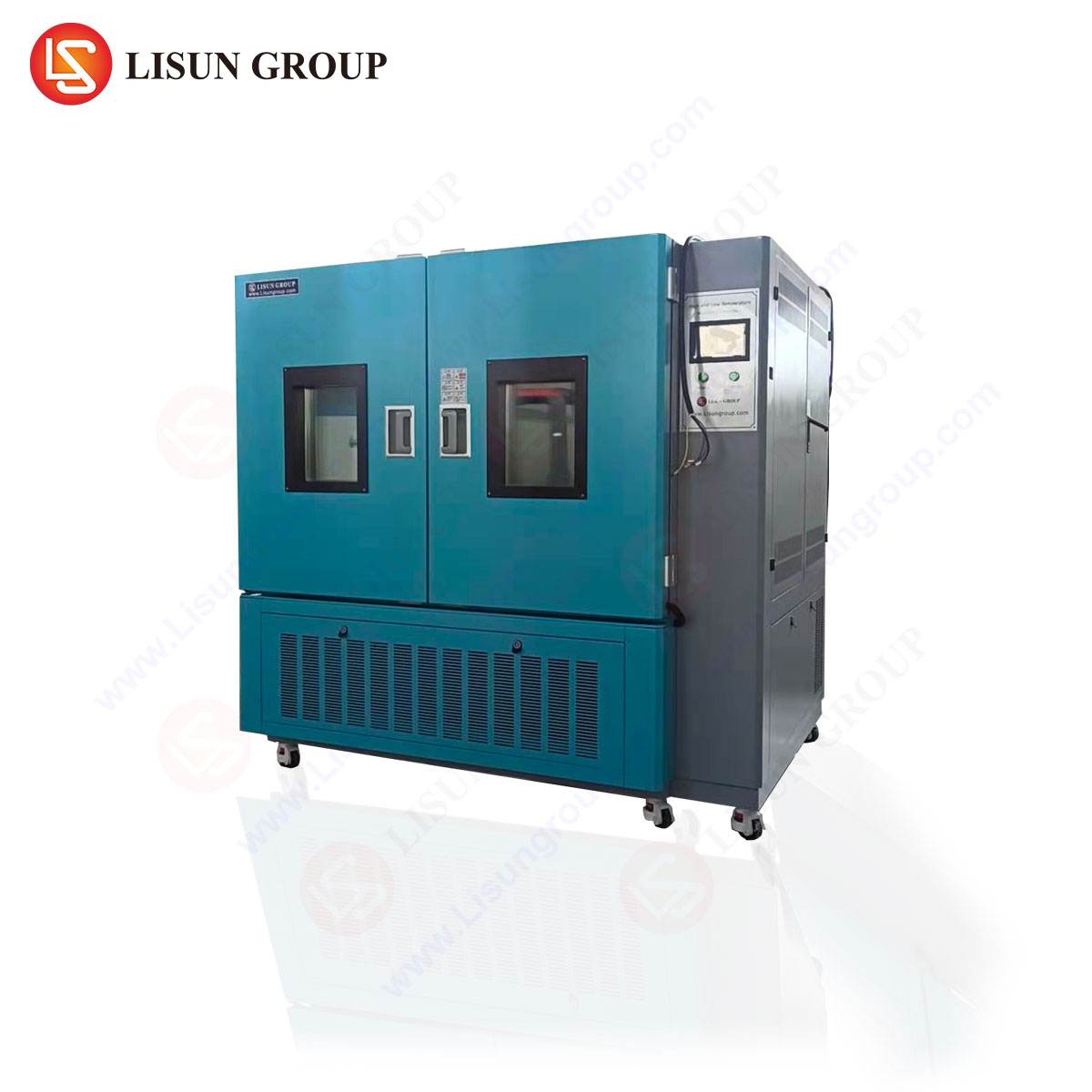
For manufacturers and testing laboratories requiring reliable, standards-compliant IP5X verification, the LISUN SC-015 Dust Sand Test Chamber represents a specialized instrument engineered to meet the exacting requirements of IEC 60529, ISO 20653, and other equivalent standards like GB/T 4208. Its design philosophy centers on repeatable accuracy, user safety, and operational efficiency, making it a cornerstone tool for quality assurance across multiple industries.
The chamber’s core principle involves creating a homogeneous, suspended dust environment. The SC-015 utilizes a controlled blower system to fluidize the talcum powder, ensuring a consistent and uniform dust density throughout the testing volume. A critical feature is its integrated vacuum system, which automatically regulates and maintains the precise pressure differential specified by the standard. This system includes a flow meter (typically a rotameter) to monitor the suction rate, ensuring the test sample is subjected to the correct stress condition. The chamber construction utilizes stainless steel or other non-corrosive materials for durability and to prevent contamination of test samples, while a large viewing window with internal lighting allows for real-time observation without interrupting the test cycle.
Technical Specifications and Operational Parameters of the SC-015
The performance of the LISUN SC-015 is defined by a set of precise technical specifications that directly correlate to test standard mandates. Key parameters include:
- Test Dust: Utilizes 2 kg of dry talcum powder per cubic meter of test chamber volume, conforming to the particle size specification.
- Dust Concentration: Maintains a controlled concentration within the chamber, typically verified by sampling methods.
- Vacuum System: Provides adjustable negative pressure with a range covering the required 0-2 kPa, with precise control to maintain the 1.96 kPa test point. The suction rate is adjustable, commonly up to 60 times the enclosure volume per hour, as per standard guidelines.
- Test Duration: Programmable timer with a wide range, easily set for the standard 2, 4, or 8-hour cycles or custom durations for research purposes.
- Chamber Volume: Available in standardized sizes (e.g., 0.5 m³, 1 m³) to accommodate products ranging from small electronic components to larger assemblies like automotive control units or industrial switchgear.
- Safety and Control: Features include an emergency stop, over-temperature protection for internal motors, and a secure interlock system on the chamber door to prevent exposure during operation.
A functional schematic of the testing process involves: 1) Preparing the sample per standard (e.g., placing in its normal operating orientation, sealing cable entries if not under test). 2) Loading the sample and pre-measured dust into the chamber. 3) Setting the test duration, vacuum level, and initiating the cycle. 4) Allowing the chamber to create the dust cloud and maintain the vacuum for the set period. 5) Depressurizing, safely removing the sample, and conducting the post-test inspection and functional verification.
Industry Applications and Compliance Imperatives
The demand for IP5X testing spans industries where reliability in non-clean environments is a non-negotiable requirement for safety, longevity, and performance.
- Automotive Electronics: Control units for engine management, braking systems (ABS/ESC), and advanced driver-assistance systems (ADAS) are often mounted in the engine bay or underbody. They must be protected from road dust and brake pad particulate without being hermetically sealed, allowing for connectorized harnesses and sometimes pressure-equalization valves. The SC-015 validates these designs.
- Industrial Control Systems: Programmable Logic Controllers (PLCs), motor drives, and human-machine interfaces (HMIs) installed on factory floors are exposed to airborne particulates from machining, material handling, and general industrial activity. IP5X protection ensures these critical control nodes do not fail due to dust accumulation on circuit boards or optical sensors.
- Lighting Fixtures: Outdoor and industrial lighting, especially LED-based fixtures, generate heat that requires thermal management via heatsinks and vents. An IP5X rating for such fixtures confirms that the optical assembly and driver electronics are shielded from dust that could reduce light output, cause overheating, or create electrical leakage paths, while still allowing for necessary airflow.
- Telecommunications Equipment: Outdoor radio units, base station components, and junction boxes for fiber networks are subjected to wind-blown dust. Ensuring IP5X compliance guarantees signal integrity and prevents corrosion initiated by dust-moisture mixtures on connector interfaces.
- Aerospace and Aviation Components: Avionics bay equipment and components used in ground support vehicles face unique particulate challenges. Testing with the SC-015 helps certify that enclosures can withstand these environments without weight penalties associated with over-engineering.
Comparative Advantages in Testing Instrumentation
Selecting a dust test chamber involves evaluating several factors beyond basic compliance. The LISUN SC-015 is positioned with distinct advantages in this competitive landscape. Its precision vacuum control system offers superior stability compared to simpler, less regulated systems, ensuring the applied test stress is accurate and repeatable across multiple test cycles and laboratories—a critical factor for certification bodies and supply chain quality agreements. The chamber’s dust circulation mechanism is engineered for homogeneity, preventing dust from settling unevenly and creating “dead zones” of lower concentration that could lead to false-positive results.
From an operational standpoint, the design emphasizes user safety and maintenance efficiency. The dust handling system minimizes operator exposure during loading and cleaning, and the construction materials resist abrasion from the talcum powder, extending the service life of the chamber. Furthermore, its programmability and data logging capabilities support modern quality management systems, allowing for detailed test reports that include parameters like pressure curves and environmental conditions, providing auditable evidence for compliance.
Interpreting Results and Addressing Design Failures
A failure to meet IP5X criteria typically manifests in two ways: excessive internal dust accumulation in critical areas, or a functional failure of the device post-test. Upon observing a failure, engineers must conduct a forensic analysis. Common ingress paths include mating seams between enclosure halves, actuator shafts for buttons or switches, cable gland interfaces, ventilation louvers, and porous materials like certain gaskets or castings.
Remediation strategies are iterative. For seams, improving gasket geometry, increasing compression, or applying sealants may be required. For moving shafts, labyrinth seals or lip seals can be implemented. Ventilation can be addressed with membrane filters that allow air exchange but block particulates. Each modification must be balanced against other design constraints such as cost, manufacturability, thermal performance, and ergonomics. The SC-015 facilitates this iterative process by providing reliable, comparable data between design iterations, enabling engineers to quantify the improvement from each design change.
Frequently Asked Questions (FAQ)
Q1: Can the LISUN SC-015 test for both IP5X and IP6X ratings?
A1: Yes, the SC-015 is designed to conduct tests for both levels. The key difference in procedure for IP6X (“dust tight”) is the application of a stronger vacuum or a longer test duration, as specified in the standard. The chamber’s adjustable vacuum system and programmable timer allow it to be configured for either test protocol.
Q2: How is the required amount of test dust calculated for a given test?
A2: The standard specifies a dust concentration of 2 kg per cubic meter of the test chamber’s free volume (volume not occupied by the sample). For the SC-015, the chamber’s internal dimensions are known, allowing the operator to calculate the necessary mass of talcum powder. The chamber’s manual provides this calculation based on its model-specific volume.
Q3: Our product has a built-in fan for cooling. Can it be tested in the SC-015 while operating?
A3: This is a complex scenario addressed by the standards. Typically, for an IP5X test, the enclosure is tested under a vacuum condition. If the product’s normal operation includes an internal fan that creates positive pressure, this could theoretically repel dust. However, for certification, the test is usually performed under the standard vacuum condition to simulate a “worst-case” scenario where the fan is not operating or where external air movement creates negative pressure. The specific test conditions should be defined in the product’s relevant specification or agreed upon with the certifying body.
Q4: What is the recommended maintenance cycle for the SC-015 to ensure testing accuracy?
A4: Regular maintenance is crucial. After each test, the chamber should be thoroughly cleaned to prevent cross-contamination. The vacuum pump oil should be checked and changed per the manufacturer’s schedule. The flow meter and pressure sensors should be calibrated annually, or according to the laboratory’s quality control procedures, to ensure the applied test parameters remain within specified tolerances. Seals and gaskets on the chamber door should be inspected for wear to maintain the integrity of the test environment.