




Understanding the IP5X Dust Ingress Protection Rating: A Technical Analysis
In the engineering and design of modern electrical and electronic equipment, the operational environment is a critical determinant of product reliability, safety, and longevity. Among the myriad environmental threats, the ingress of solid particulate matter—dust—poses a significant and often underestimated risk. The International Electrotechnical Commission (IEC) standard 60529, “Degrees of protection provided by enclosures (IP Code),” provides a globally recognized framework for classifying and testing the effectiveness of enclosures against such ingress. This article provides a detailed technical examination of the IP5X dust protection rating, its testing methodology, industrial significance, and the instrumentation required for its validation.
The IP Code Structure and the Significance of the First Characteristic Numeral
The IP Code, as defined by IEC 60529, is a two-digit classification system. The first digit, ranging from 0 to 6, denotes the level of protection against access to hazardous parts and the ingress of solid foreign objects. The second digit, from 0 to 9, indicates protection against harmful ingress of water. It is crucial to note that the digits are independent; an IP5X rating specifically addresses dust protection, with no formal rating for water ingress (denoted by ‘X’). The progression from IP5X to IP6X represents a fundamental shift in the test’s objective. IP5X, “Dust Protected,” does not imply a complete absence of dust ingress. Instead, it specifies that while dust may enter the enclosure, it cannot do so in a quantity that would interfere with the satisfactory operation of the equipment or impair safety. In contrast, IP6X, “Dust Tight,” requires that no dust ingress occurs under test conditions. This distinction is vital for designers: IP5X is often sufficient for environments where dust accumulation is a performance concern, whereas IP6X is mandated for environments where any particulate ingress could be catastrophic, such as in sensitive optical or precision mechanical systems.
The IP5X Test Methodology: Principles and Execution
The IP5X test is a precisely defined laboratory procedure designed to simulate a severe, talcum powder-like dust environment. The test substance specified by the standard is kiln-dried talcum powder, with a particle size distribution where at least 50% by mass comprises particles between 1μm and 75μm, and at least 90% are under 150μm. This fine powder is chosen for its ability to penetrate minute gaps and its propensity to become airborne.
The test is conducted within a sealed test chamber, typically a cube of interior dimensions around 1m³, although the standard allows for other dimensions provided the required dust concentration is maintained. The test sample is placed inside, unpowered, and subjected to a controlled dust cloud. The key operational parameters are:
- Dust Concentration: The chamber must maintain a concentration of 2kg of talcum powder per cubic meter of chamber volume.
- Airflow and Circulation: A vacuum pump is used to draw air through the chamber, creating a slight underpressure (not exceeding 2 kPa or 20 mbar) relative to the ambient pressure outside the enclosure. This pressure differential is the driving force for dust ingress. The test duration is 2 hours for non-rotating samples, or, for rotating samples (like motors), a calculated duration based on the number of revolutions equivalent to 2 hours of operation.
- Post-Test Examination: Following exposure, the enclosure is carefully opened and inspected. The criteria for passing the IP5X test are that no dust has accumulated in a location where it could bridge clearance or creepage distances as defined by relevant safety standards (e.g., IEC 60664-1), and that it has not penetrated in a quantity that would interfere with normal operation, such as fouling contacts, obstructing moving parts, or coating optical sensors.
Industrial Applications and Critical Use Cases for IP5X Protection
The requirement for IP5X protection spans a diverse array of industries where equipment is exposed to particulate-laden atmospheres. Compliance is not merely a marketing feature but a core engineering requirement for functional integrity and regulatory approval.
- Electrical and Electronic Equipment & Industrial Control Systems: Programmable Logic Controller (PLC) housings, variable frequency drive (VFD) enclosures, and human-machine interface (HMI) panels installed on factory floors require IP5X protection to prevent conductive dust from causing short circuits, insulation failures, or contact welding in relays and switches.
- Automotive Electronics: Electronic Control Units (ECUs) for engine management, braking, and infotainment, mounted in the engine bay or underbody, must resist ingress of road dust and brake pad particulate, which can be abrasive and conductive.
- Lighting Fixtures: LED drivers and luminaires for industrial, street, and architectural lighting are exposed to dust accumulation that can degrade thermal management by insulating heat sinks, leading to accelerated lumen depreciation and driver failure.
- Household Appliances and Consumer Electronics: Kitchen appliances with electronic controls (ovens, range hoods), robotic vacuum cleaners, and outdoor audio equipment benefit from IP5X-rated enclosures to ensure reliability despite exposure to flour, pet dander, or garden dust.
- Telecommunications Equipment: Outdoor base station units, fiber optic terminal enclosures, and network switches in industrial settings require protection against dust to maintain signal integrity and prevent connector corrosion.
- Medical Devices: Portable diagnostic equipment and monitors used in field hospitals or ambulances must be protected from environmental dust to ensure operational readiness and patient safety.
- Aerospace and Aviation Components: Avionics bay components and ground support equipment are tested to IP5X (often to more stringent environmental standards like RTCA/DO-160) to guarantee performance despite exposure to fine particulate in various operational environments.
- Electrical Components and Cable Systems: Industrial-grade connectors, switches, sockets, and junction boxes are rated IP5X to prevent dust from compromising electrical contact or insulation resistance.
Instrumentation for Compliance: The LISUN SC-015 Dust Sand Test Chamber
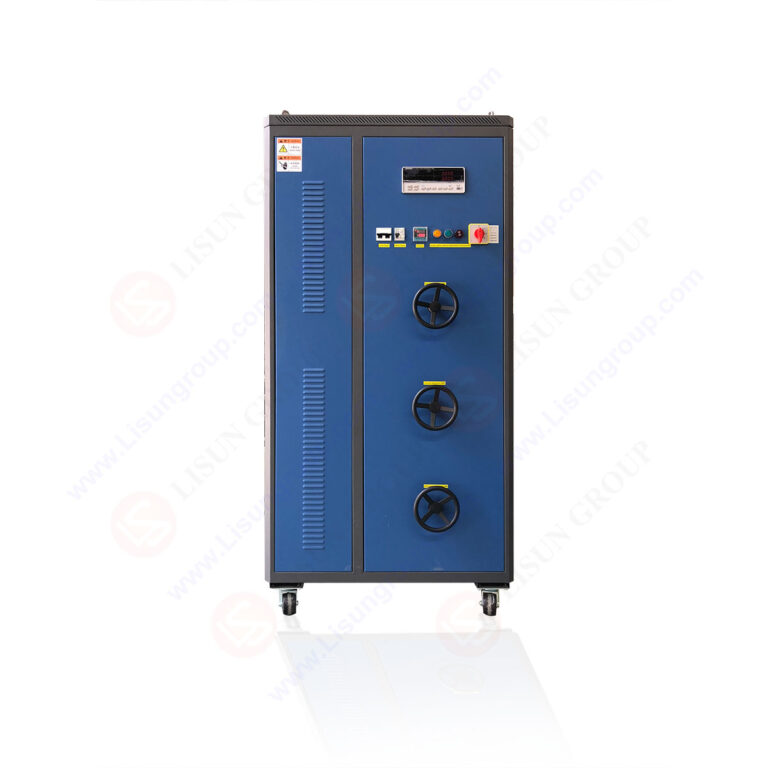
Accurate and repeatable validation of the IP5X rating demands specialized test equipment that adheres strictly to the parameters outlined in IEC 60529. The LISUN SC-015 Dust Sand Test Chamber is engineered to meet these exacting requirements, providing a controlled environment for conducting IP5X and IP6X tests.
Testing Principles and Chamber Design: The SC-015 operates on the principle of negative pressure differential testing. The chamber is constructed as a sealed workspace with observation windows and internal lighting. A sample is placed inside, and the chamber is sealed. A known mass of standard test dust is introduced into the circulation path. A vacuum pump then reduces the pressure inside the test chamber to the required level below atmospheric pressure. This pressure difference forces the external air (and suspended dust) to attempt to enter any available orifice in the test specimen. A blower within the chamber continuously fluidizes and circulates the dust cloud, ensuring a uniform concentration of 2kg/m³ throughout the test duration, which is controlled by a digital timer.
Key Specifications of the LISUN SC-015:
- Chamber Volume: Standard 1m³ interior (1000L), compliant with IEC 60529 recommendations.
- Test Dust: Utilizes standardized talcum powder. A sieve mechanism is integrated to break up agglomerates and ensure a consistent particle cloud.
- Vacuum System: Equipped with a regulated vacuum pump and pressure gauge to achieve and maintain the specified underpressure (adjustable up to 2 kPa or 20 mbar).
- Control System: Features a programmable logic controller (PLC) with touch-screen HMI for setting test duration, monitoring pressure, and controlling the dust circulation system.
- Sample Support: Includes a turntable (typically rotating at 1-3 rpm) for testing rotating devices or to ensure uniform exposure for static samples, as per standard requirements.
- Safety and Compliance: Constructed from stainless steel or powder-coated steel for durability, with safety interlocks, viewing windows, and an extraction system for safe post-test cleanup.
Competitive Advantages in Industrial Testing: The SC-015 distinguishes itself through its precision in maintaining the critical dust concentration and pressure differential—parameters that are often sources of error in less sophisticated chambers. Its robust construction ensures long-term reliability in a quality control laboratory environment, while the automated controls minimize operator influence on test results, enhancing reproducibility. For manufacturers across the industries listed, employing a validated instrument like the SC-015 is essential for generating defensible test reports for certification bodies like UL, TÜV, or Intertek.
Interpreting Test Results and Design Implications
A successful IP5X test report provides critical data for the design validation process. However, engineers must interpret results within the proper context. A “pass” indicates the design is adequate for the test’s simulated conditions. It does not guarantee immunity to all real-world dust types, which may differ in particle size, abrasiveness, or hygroscopicity. Furthermore, the test is conducted on a static, unpowered sample. In real operation, thermal cycling can create “breathing” effects in enclosures, potentially drawing in more particulate over time. Therefore, IP5X validation should be one component of a broader environmental reliability strategy, potentially including thermal cycling tests, vibration tests, and long-term field trials in representative environments. Design strategies to achieve IP5X often focus on gasket selection, labyrinth seal designs for shafts and buttons, and the specification of filtered ventilation where heat dissipation is required.
Frequently Asked Questions (FAQ)
Q1: Can the LISUN SC-015 chamber be used for testing to both IP5X and IP6X standards?
Yes, the SC-015 is designed to conduct tests for both protection levels. The fundamental chamber and dust circulation system are the same. The primary difference lies in the test duration and the pass/fail criterion. The chamber’s controls allow for the programming of the appropriate test cycle as specified in IEC 60529 for each rating.
Q2: Our product includes a fan for active cooling. How is this accommodated during an IP5X test?
According to IEC 60529, the test sample is tested in its “as used” state but is not powered during the dust exposure. If the fan is integral, it remains in place but is inactive. The test evaluates the passive protection of the enclosure. For products that require powered operation in a dusty environment, the IP rating for dust applies to the enclosure’s construction. Separate assessments may be needed for the fan’s own durability and the potential for dust accumulation on heat sinks when the system is operational.
Q3: What is the required maintenance and calibration schedule for the SC-015 to ensure ongoing test accuracy?
Regular maintenance is crucial. Key activities include: thorough cleaning of the chamber interior and dust circulation pathways after each test to prevent cross-contamination; periodic inspection and replacement of seals and gaskets to maintain chamber integrity; verification of the vacuum gauge and pressure sensor calibration annually or as per the laboratory’s quality procedure; and checking the sieve mechanism for wear. The specific talcum powder should be stored in a dry environment and replaced if it becomes damp or agglomerated.
Q4: How does the test account for different sizes of equipment? The standard chamber is 1m³.
IEC 60529 allows for the use of smaller or larger chambers provided the essential condition of a dust concentration of 2kg/m³ is met and the sample occupies an appropriate volume relative to the chamber (to avoid affecting airflow patterns). For very large products that cannot fit into a walk-in chamber, alternative testing methods, such as a dust tunnel or a tailored test setup, may be employed, but these require justification and agreement with the certification body, as they are a departure from the standard test method.