

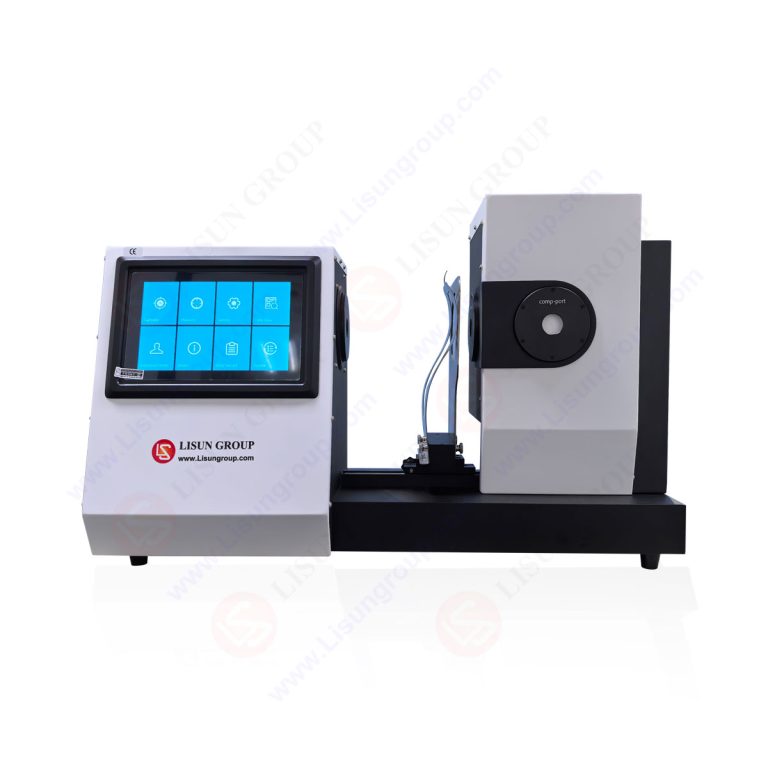



Understanding the IP5X Rating: A Critical Barrier Against Ingress of Dust for Electrical Enclosures
The operational integrity and long-term reliability of electrical and electronic systems are fundamentally contingent upon the environmental protection afforded by their enclosures. Among the various ingress protection (IP) codes defined by international standards such as IEC 60529, the IP5X rating occupies a position of significant technical and practical importance. It denotes a specific and demanding level of protection against the ingress of solid foreign objects, primarily dust, without implying a complete seal against all particulate matter. This article provides a comprehensive analysis of the IP5X rating, its testing methodologies, implications for design and application, and the instrumental role of specialized testing equipment, with a focus on the LISUN SC-015 Dust Sand Test Chamber.
Deciphering the IP Code: The Specific Meaning of “5X”
The IP code is a two-digit classification system. The first digit indicates the level of protection against access to hazardous parts and the ingress of solid foreign objects, while the second digit denotes protection against the ingress of water. In the designation “IP5X,” the “5” is the critical first digit, and the “X” signifies that the protection against water has not been specified or is not relevant for the declared rating.
The numeral “5” carries a precise definition: “Dust Protected.” The enclosure must prevent the ingress of dust in a quantity sufficient to interfere with the satisfactory operation of the equipment or to impair safety. It is crucial to distinguish this from the higher “6” rating, which demands “Dust Tight” protection, a complete seal against dust ingress. An IP5X enclosure is engineered to limit dust penetration to a non-hazardous level, allowing for minor ingress that does not accumulate to a degree that would cause electrical tracking, mechanical obstruction, or thermal insulation leading to overheating. This distinction makes IP5X a pragmatic and widely applicable standard for many industries where absolute hermetic sealing is either unnecessary, cost-prohibitive, or detrimental to other functions like thermal management.
The Engineering Imperative for Dust Protection
The infiltration of dust and other particulate matter into an electrical enclosure is not merely a cosmetic issue; it precipitates a cascade of potential failure modes. Conductive dusts, such as certain metallic or carbon-based particles, can create unintended bridging between circuits of different potential, leading to short circuits, leakage currents, and catastrophic failures. Even non-conductive dust acts as a thermal insulator, coating components and heat sinks, thereby impeding heat dissipation and elevating operating temperatures. This thermal stress accelerates component aging, a phenomenon described by the Arrhenius equation, where a 10°C increase in temperature can halve the operational lifespan of many electronic components.
Furthermore, abrasive particulates can cause mechanical wear on moving parts like fans, relays, or connectors. Hygroscopic dust can absorb atmospheric moisture, creating localized corrosive environments that degrade contacts and PCB traces. For industries such as Automotive Electronics, where control units are exposed to road dust, or Industrial Control Systems operating in manufacturing plants with airborne particulates, specifying an IP5X enclosure is a fundamental risk mitigation strategy. It directly impacts metrics like Mean Time Between Failures (MTBF) and total cost of ownership.
The Rigors of IP5X Compliance Testing: Methodology and Standards
Achieving and verifying an IP5X rating requires adherence to a strictly defined laboratory test procedure outlined in IEC 60529 and its national equivalents (e.g., EN 60529, AS 60529). The test simulates a severe, dust-laden environment to assess the enclosure’s defensive capabilities.
The core apparatus is a dust test chamber. The enclosure under test is placed inside, subjected to a partial vacuum, and exposed to circulating talcum powder—a prescribed test dust with a particle size distribution where 95% of particles by mass are less than 75 microns in diameter. The test parameters are exacting:
- Test Duration: A standard period of 8 hours.
- Dust Concentration: Maintained within a specified range (e.g., 2 kg/m³ ± 10%).
- Airflow and Circulation: Achieved via a recirculating fan to ensure a uniform dust cloud.
- Partial Vacuum: A pressure differential of up to 2 kPa (20 mbar) is maintained inside the enclosure relative to the chamber atmosphere, actively drawing dust towards potential ingress points.
Post-test evaluation is critical. The enclosure is inspected internally for dust accumulation. Compliance with IP5X is judged not on the complete absence of dust, but on its quantity and location. The standard permits dust entry provided it does not deposit in a location where it could impair safety, creepage, and clearance distances, or interfere with mechanical functions. This assessment often involves measuring insulation resistance or performing functional tests after exposure.
The LISUN SC-015 Dust Sand Test Chamber: Engineered for Precision Validation
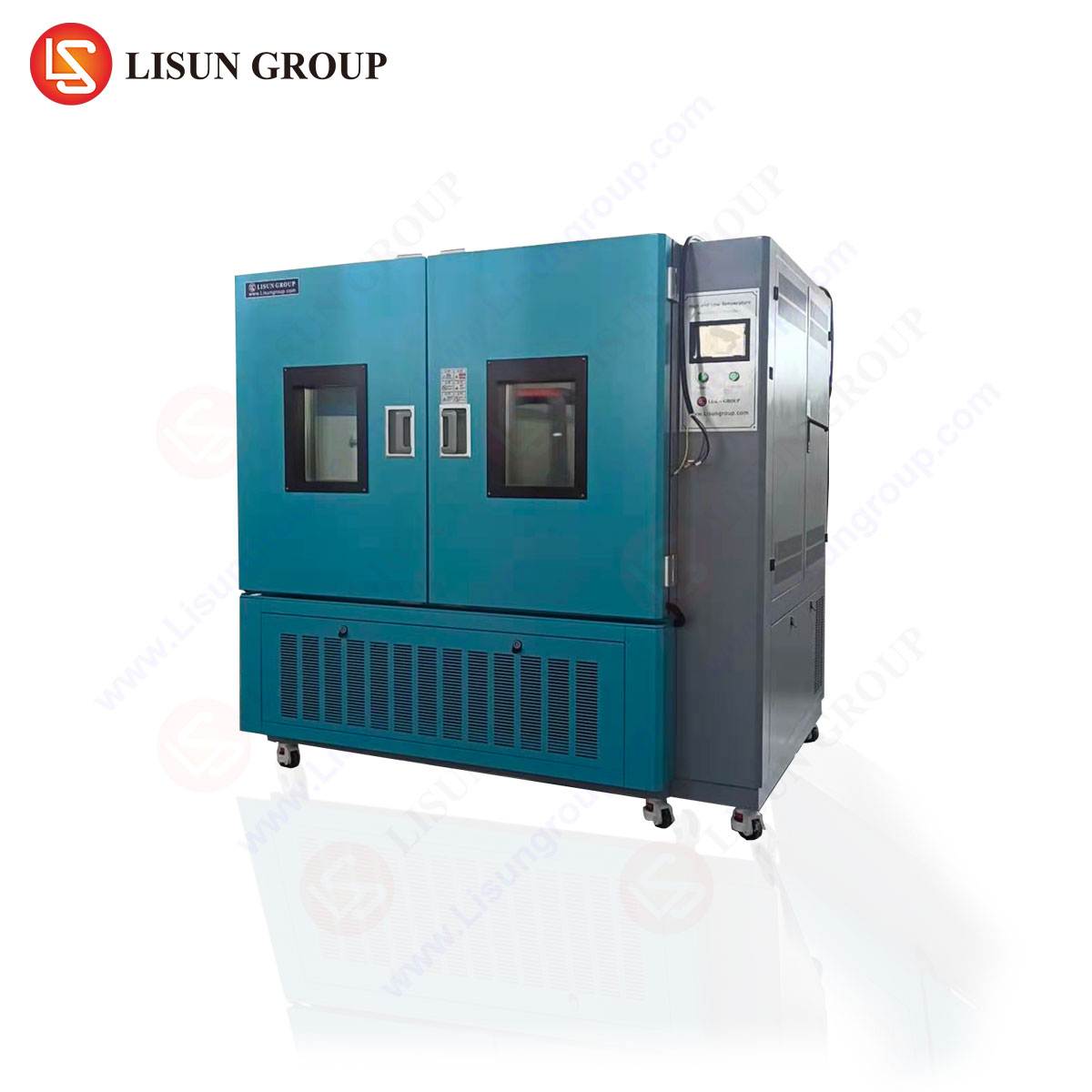
For manufacturers and testing laboratories requiring definitive IP5X validation, the LISUN SC-015 Dust Sand Test Chamber represents a purpose-built solution designed to replicate the standard’s stipulations with high fidelity and repeatability. Its architecture is tailored to generate the controlled, hostile particulate environment mandated by the test protocol.
The chamber’s operational principle centers on a closed-loop system. A specified quantity of standard test dust is introduced into the working volume. A controlled, turbulent airflow, generated by a centrifugal blower, fluidizes and suspends the dust, creating a homogeneous cloud that envelops the test specimen. The chamber integrates a vacuum system to generate the required internal under-pressure within the enclosure under test, a critical factor for assessing the efficacy of seals and gaskets. Visual inspection is facilitated by large, sealed viewing windows and internal lighting, while safety is maintained through filtered exhaust systems to contain the fine particulate matter upon test completion.
Specifications and Competitive Advantages:
- Precision Airflow Management: The system ensures uniform dust density throughout the test volume, eliminating dead zones and guaranteeing consistent exposure—a key differentiator from less sophisticated designs.
- Integrated Vacuum Regulation: Onboard vacuum pump and precise digital controls allow for accurate setting and maintenance of the required pressure differential, a non-negotiable parameter for a valid test.
- Comprehensive Safety and Containment: Features include HEPA filtration on exhaust ports and secure sealing to protect laboratory personnel and prevent cross-contamination.
- Programmable Controller: A user-friendly, programmable logic controller (PLC) interface allows for automated test cycles, including pre-test evacuation, dust circulation timing, and settling periods, enhancing reproducibility and reducing operator error.
- Robust Construction: Designed for durability when handling abrasive test media, ensuring long-term calibration stability and reduced maintenance overhead.
For industries ranging from Aerospace and Aviation Components, where reliability is paramount, to Consumer Electronics, where cost-effective design validation is essential, the SC-015 provides a critical bridge between R&D design confidence and formal certification.
Application-Specific Considerations Across Industries
The implementation of IP5X protection necessitates material science, mechanical design, and application environment considerations.
Sealing Technologies and Material Selection: The primary defense is the gasket or seal. Elastomers like silicone, EPDM, or fluorosilicone are selected based on their compression set, temperature resilience, and compatibility with environmental factors (ozone, UV). The design of the gland (the groove holding the seal) and the clamping force of the enclosure lid are equally critical; insufficient force leads to ingress, while excessive force can cause premature seal failure.
Thermal Management Reconciliation: A significant engineering challenge is balancing ingress protection with heat dissipation. IP5X-rated enclosures for high-power Industrial Control Systems or Telecommunications Equipment often employ passive solutions like external finned heat sinks attached to sealed walls, or active cooling via IP5X-rated fans with filtered intakes. The filters themselves must be maintainable without compromising the seal integrity.
Industry Use Cases:
- Electrical Components (Switches, Sockets): IP5X-rated devices are specified for installation in environments like workshops or agricultural settings where dust is prevalent, preventing internal fouling of contacts.
- Lighting Fixtures: Outdoor and industrial luminaires rated IP5X are protected against the accumulation of dust and insects on reflectors and lenses, maintaining photometric performance.
- Medical Devices: Equipment such as patient monitors or diagnostic instruments used in clinical environments benefit from IP5X to prevent internal contamination that could harbor pathogens or affect sensitive sensors.
- Office Equipment & Household Appliances: Printers in dusty warehouses or kitchen appliances like exhaust hood controllers utilize IP5X to ensure reliable operation despite ambient particulate matter.
- Cable and Wiring Systems: IP5X-rated cable glands and junction boxes are essential for maintaining system integrity at entry points in dusty industrial installations.
Beyond IP5X: Complementary Testing and Lifetime Assurance
Specifying an IP5X rating is often part of a broader validation suite. It may be combined with water ingress tests (e.g., IPX4 for splashing) for a full IP55 rating. Furthermore, the dust test is a snapshot. For products with expected lifetimes exceeding a decade, such as those in Automotive Electronics or Aerospace, accelerated life testing incorporating thermal cycling with dust exposure may be conducted to evaluate seal degradation and long-term performance. The data from standardized tests using equipment like the LISUN SC-015 feed into predictive reliability models, informing design-for-reliability (DfR) practices and warranty assessments.
Conclusion
The IP5X rating is a precisely defined, performance-based standard that addresses a pervasive threat to electronic systems. Its correct interpretation, implementation, and validation are non-negotiable elements of product development in a vast array of sectors. It demands a synergistic approach from design engineering, materials science, and quality assurance. Precision testing equipment, exemplified by the LISUN SC-015 Dust Sand Test Chamber, provides the empirical evidence necessary to substantiate compliance claims, de-risk product deployments, and ultimately, underpin the durability and safety of modern electrical and electronic equipment in an imperfect, particulate-filled world.
FAQ Section
Q1: Can an enclosure be rated IP5X if we find a small amount of dust inside after testing?
Yes, provided the dust accumulation is deemed non-hazardous. The IP5X standard explicitly allows for limited dust ingress. The post-test assessment focuses on whether the dust has settled in a location where it could cause electrical tracking, reduce creepage/clearance below safety limits, impede moving parts, or disrupt thermal management. The presence of dust on non-critical surfaces, like the bottom of an enclosure, does not necessarily constitute a test failure.
Q2: How does the test dust specified for IP5X (talcum powder) correlate to “real-world” dust?
The standardized talcum powder (with controlled particle size) serves as a consistent, repeatable test medium. It is considered a severe challenge for several reasons: its fine particles are adept at penetrating small gaps, and it is often more penetrating than many common industrial dusts. Furthermore, talc can be slightly conductive when compacted, helping to simulate a worst-case scenario. While real-world dust composition varies (e.g., silica, carbon, textile fibers), the test provides a conservative and comparable benchmark for all products.
Q3: What is the purpose of the partial vacuum applied to the enclosure during the IP5X test?
The vacuum, typically up to 2 kPa internal under-pressure, is a critical acceleration factor. It actively draws the dust-laden air towards potential leakage paths—seals, cable glands, mating surfaces, and microscopic pores. This simulates the pressure differentials that can occur in service due to thermal cycling (hot equipment cooling down and creating a low-pressure interior) or altitude changes, providing a more rigorous and realistic assessment of the enclosure’s protective capabilities than a static dust cloud alone.
Q4: For a product like the LISUN SC-015, how often should the test chamber itself be calibrated or verified?
Regular verification is essential for maintaining test integrity. Key parameters requiring periodic checks include: the uniformity of dust concentration within the test volume, the accuracy and stability of the vacuum/pressure gauge, the timer accuracy, and the functionality of the airflow system. While the formal calibration interval depends on usage frequency and accreditation requirements (e.g., ISO/IEC 17025), an annual calibration by a qualified metrology service is a common industry practice, with more frequent user checks of dust concentration and vacuum levels recommended.
Q5: Our product has ventilation grilles for cooling. Can it still achieve an IP5X rating?
It is challenging but possible. The grilles would need to be designed with a labyrinthine or tortuous path that prevents the direct line-of-sight ingress of dust particles while allowing air passage. This often involves baffles, mesh filters with a fine enough weave, or foam filters. Any filter used must be integral to the design and capable of withstanding the test conditions without degradation. The entire assembly, including the filter media and its seal to the enclosure body, is subject to the full IP5X test procedure.