




The IP67 Ingress Protection Rating: A Technical Examination of Dust and Water Immersion Testing
The relentless drive for miniaturization, increased functionality, and deployment in harsh environments has made ingress protection (IP) testing a cornerstone of product validation across numerous industries. Among the various IP codes defined by the International Electrotechnical Commission (IEC) standard 60529, the IP67 rating represents a particularly significant benchmark. It denotes a product’s proven resilience against both particulate ingress and temporary immersion in water, a dual capability that is critical for reliability and safety. This article provides a detailed technical exposition of the IP67 test, its underlying principles, application across sectors, and the instrumentation required for its precise execution, with a specific focus on the LISUN JL-XC Series of waterproof test equipment.
Deciphering the IP Code: A Structural Analysis
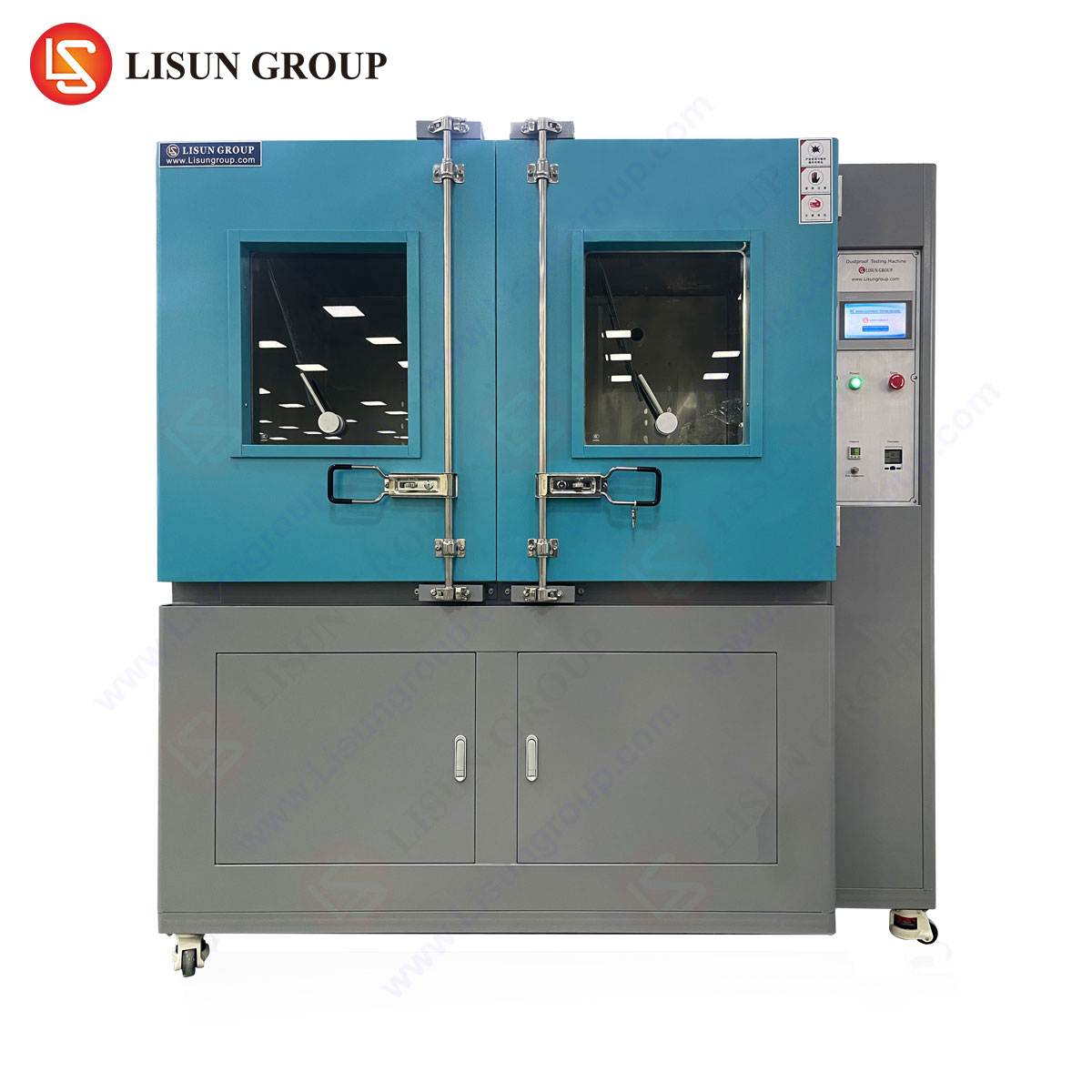
The IP code, or International Protection Marking, is a systematic classification system. The digits following “IP” are not arbitrary; they convey specific, tested characteristics. The first numeral, in this case ‘6’, defines the level of protection against solid foreign objects. A rating of 6 indicates “dust-tight” protection, representing the highest level of particulate ingress prevention. The test involves exposing the enclosure to talcum powder in a vacuum-controlled dust chamber for a duration typically extending to 8 hours. No dust ingress is permitted in a quantity that would interfere with satisfactory operation or impair safety.
The second numeral, ‘7’, specifies protection against the ingress of water with harmful effects. It is crucial to distinguish this from the adjacent ‘8’ rating for continuous submersion under pressure. The IP67 test stipulates that the enclosure must withstand temporary immersion in water under defined conditions. According to IEC 60529, the object is immersed in water to a depth of 1 meter, or 1.5 times the device’s height (whichever is greater), for a period of 30 minutes. The critical performance criterion is that no water ingress occurs in a quantity that causes harmful effects.
The Physics of Ingress: Sealing Integrity and Pressure Differential
The IP67 immersion test is fundamentally an evaluation of sealing integrity under hydrostatic pressure. When a sealed enclosure is submerged, the external water exerts a pressure on its surfaces proportional to the depth (P = ρgh, where ρ is the density of water, g is gravity, and h is the depth). This external pressure tests every potential failure point: gasket interfaces, cable glands, welded seams, button membranes, and housing joints. The test is not merely about keeping water out during immersion; it also simulates scenarios such as a portable device being dropped into a puddle, a sensor installed in a flooded manhole, or automotive electronics exposed to high-pressure washing.
The test’s duration of 30 minutes is designed to ensure that any slow leakage paths or seals that relax under constant load are detected. Post-test inspection involves a meticulous examination for traces of moisture inside the enclosure and functional testing to verify no electrical or mechanical degradation has occurred. For many safety-critical applications, dielectric strength testing is also performed post-immersion to ensure insulation resistance remains within specified limits.
Instrumentation for Validated Compliance: The LISUN JL-XC Series
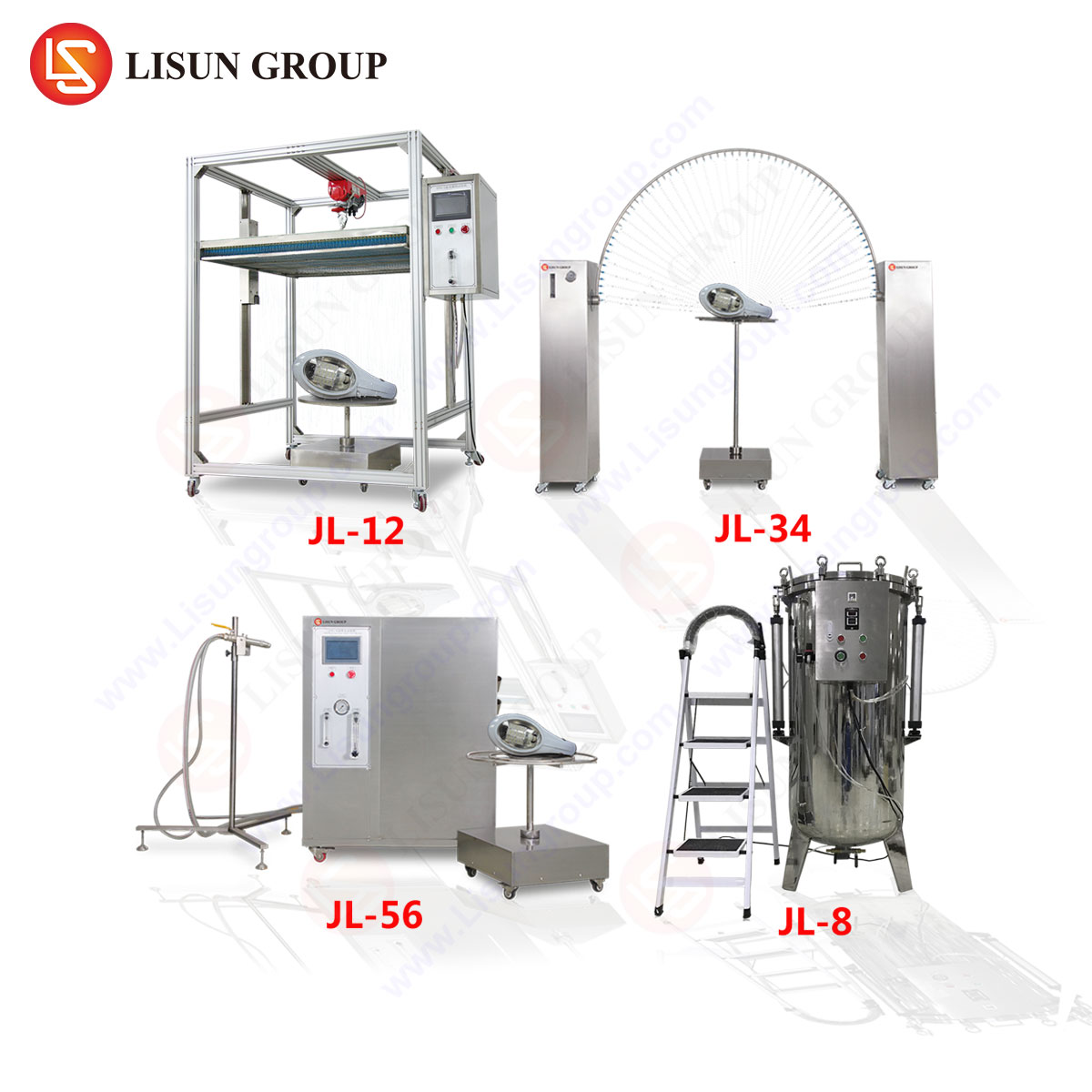
Accurate, repeatable, and standards-compliant IP67 testing requires specialized equipment that provides precise control over test parameters. The LISUN JL-XC Series of waterproof test equipment is engineered specifically for this purpose, facilitating rigorous validation from IPX1 through IPX9K. For IPX7 testing, its design incorporates several critical features.
The core of the system is a robust stainless-steel immersion tank, constructed to resist corrosion and maintain dimensional stability. Precise depth control is paramount, as the test standard specifies immersion of the lowest point of the enclosure at 1m below the water surface, or the highest point at 0.15m below, depending on the device’s height. The JL-XC Series employs calibrated depth scales and adjustable mounting platforms to ensure this requirement is met accurately for varied product sizes.
A key operational principle involves managing the pre-test condition of the device under test (DUT). IEC 60529 specifies that the enclosure should be at a temperature not exceeding that of the water by more than 5°C prior to immersion. This prevents internal vacuum formation due to air contraction, which could draw in water through seals—a failure mode not representative of real-world conditions. The JL-XC system’s design allows for proper thermal stabilization of the DUT.
Technical Specifications of the LISUN JL-XC Series Relevant to IPX7 Testing:
- Test Tank Volume: Configurable capacities (e.g., 600L, 1000L) to accommodate large or multiple DUTs.
- Depth Control: Precision-engineered lifting mechanism with millimeter-scale adjustment for accurate submersion depth.
- Material: 304 or 316-grade stainless steel construction for long-term durability and chemical inertness.
- Control System: Programmable Logic Controller (PLC) with Human-Machine Interface (HMI) for setting and logging immersion time (standard 30-minute cycle, adjustable), with automatic raising/lowering sequences.
- Safety Features: Over-travel limits, emergency stop, and protective covers to ensure operator safety during testing.
Cross-Industry Applications of IP67 Validation
The demand for IP67-rated components and finished products spans virtually every modern technological sector, driven by needs for durability, reliability, and user safety.
- Automotive Electronics: Modern vehicles contain hundreds of electronic control units (ECUs). Sensors for wheel speed, parking assistance, and external lighting, as well as connectors within the engine bay or underbody, must withstand high-pressure jet washing and road spray. IP67 validation ensures these systems remain operational in wet conditions, directly impacting vehicle safety and functionality.
- Consumer Electronics & Telecommunications: Smartphones, wearable devices, and outdoor wireless access points are frequently subjected to rain, spills, or accidental submersion. IP67 rating provides consumers with a tangible assurance of durability, reducing failure rates and enhancing product lifecycle.
- Industrial Control Systems & Electrical Components: In manufacturing environments, control panels, proximity sensors, switches, and industrial connectors are exposed to dust, humidity, and occasional coolant or water splash. An IP67 rating prevents short circuits and corrosion, minimizing downtime in automated production lines.
- Lighting Fixtures: Outdoor luminaires, landscape lighting, and industrial work lights require protection from rain and dust to maintain luminous efficacy and prevent electrical hazards. IP67 is a common specification for fixtures installed in exposed or damp locations.
- Medical Devices: Portable diagnostic equipment, handheld monitors, and certain surgical tools may require cleaning via immersion in disinfectant fluids. IP67 testing validates the sealing of these devices, ensuring they can be sterilized without compromising internal electronics.
- Aerospace and Aviation Components: While subject to more extreme environmental testing suites, components used in ground support equipment, external aircraft sensors, and in-cabin devices may still reference IP67 as a baseline for moisture and particulate resistance.
Competitive Advantages of Automated Testing Systems
Utilizing a dedicated, automated system like the LISUN JL-XC Series for IP67 compliance offers distinct advantages over ad-hoc testing methods. First is repeatability and traceability. Manual immersion tests introduce variables in depth, timing, and angle. Automated systems ensure every test is performed identically, with digital logs of time, date, and test parameters for audit trails and quality documentation. This is indispensable for ISO 17025 accredited laboratories and mass-production quality control.
Second is improved laboratory efficiency. The programmable nature of the JL-XC allows for batch testing with minimal operator intervention. Once the DUT is secured and parameters are set, the cycle runs automatically, freeing technicians for other tasks and increasing throughput.
Third is enhanced safety and reduced risk. Handling heavy or electrically live devices over a water tank poses a risk. Integrated safety interlocks, secure mounting fixtures, and controlled lowering mechanisms mitigate these hazards. Furthermore, by ensuring strict adherence to the standard’s thermal differential requirement, these systems prevent false failures, saving cost and time in product development.
Finally, future-proofing and flexibility are key. The JL-XC Series is not limited to IPX7 testing. Its design accommodates a range of IPX tests (e.g., drip, spray, jet, flooding), making it a capital investment that can support validation for multiple product lines and evolving standards over time.
Conclusion
The IP67 rating is a de facto requirement for products destined to perform reliably in challenging environments. Its validation through standardized immersion testing is a non-negotiable step in the design and manufacturing process for a vast array of industries. Understanding the precise technical requirements of IEC 60529—the physics of pressure differentials, the importance of test conditioning, and the criteria for pass/fail judgment—is essential for engineers and quality professionals. Employing precise, automated, and compliant test equipment, such as the LISUN JL-XC Series, transforms this critical validation step from a qualitative check into a quantitative, repeatable, and efficient pillar of a robust quality assurance program, ultimately contributing to product integrity, user safety, and brand reputation.
Frequently Asked Questions (FAQ)
Q1: Can a product that passes IPX7 testing be considered suitable for prolonged underwater use, such as in a swimming pool?
No. IPX7 is for temporary immersion (30 minutes at 1m depth). It does not account for water pressure at greater depths, chemical effects (like chlorinated water), or long-term exposure. For permanent submersion, an IPX8 rating with manufacturer-specified depth and duration is required, and materials must be evaluated for long-term fluid compatibility.
Q2: How does the size and shape of the device under test affect IPX7 testing procedures on equipment like the JL-XC Series?
The test standard accounts for size. The immersion depth is defined as 1 meter or 1.5 times the device’s height, whichever is greater. For larger or irregularly shaped DUTs, the JL-XC’s adjustable platform and spacious tank allow for proper orientation and submersion according to the standard. The key is ensuring the specified depth is maintained relative to the DUT’s geometry.
Q3: Is pre-conditioning, such as a dust test (IP6X), required before performing the IPX7 immersion test?
IEC 60529 allows IP ratings to be declared independently. A product can be rated IP67, IP66, or IPX7 alone. However, for a full IP67 claim, both tests (dust and immersion) must be passed. The sequence is not strictly mandated by the standard, but it is logically and commonly performed with the dust test first, as any particulate ingress could potentially affect sealing performance during the subsequent water test.
Q4: What is the most common point of failure during IPX7 testing, and how can it be addressed in design?
The most prevalent failure points are cable gland entries, interface seams between housing halves, and membrane-covered buttons or connectors. Addressing these requires careful selection of seal types (e.g., O-rings, gaskets, potting), proper gland installation with correct torque, and validation of seal compression and material compatibility through tools like Finite Element Analysis (FEA) and prototyping prior to formal compliance testing.
Q5: Can the LISUN JL-XC Series accommodate testing of devices that are powered on and functioning during immersion?
Yes, this is a critical capability known as “live testing” or “functional testing under immersion.” Many standards require verifying that a device does not malfunction during or after exposure. The JL-XC system can be integrated with feed-through ports or wireless monitoring systems to supply power and communicate with the DUT during the immersion cycle, allowing for real-time functional validation.