




IP68 Waterproof Test Explained: A Technical Analysis of Ingress Protection for Demanding Environments
Introduction to Ingress Protection and the IP Code
The International Electrotechnical Commission (IEC) standard 60529, commonly known as the Ingress Protection (IP) Code, provides a systematic and internationally recognized classification for the degree of protection offered by enclosures of electrical equipment against the intrusion of solid foreign objects, dust, accidental contact, and water. This classification is not a mere marketing term but a rigorous, standardized benchmark critical for product design, safety certification, and end-user reliability across a multitude of industries. The IP Code is structured as “IP” followed by two characteristic numerals. The first digit (0-6) denotes protection against solids and contact. The second digit (0-9K) specifies protection against liquids, with higher numbers indicating greater resilience.
Among these classifications, IP68 has emerged as a particularly significant and often misunderstood rating. It represents the highest standard of dust ingress protection (6) and a specific, severe level of water ingress protection (8), defined by continuous immersion under conditions specified by the manufacturer. This article provides a detailed technical exposition of the IP68 waterproof test, its implementation, and its critical role in product validation, with a specific examination of advanced testing instrumentation such as the LISUN JL-8 Waterproof Test Chamber.
Deconstructing the IP68 Rating: Beyond the Marketing Hype
The designation “IP68” is frequently used in consumer and industrial contexts, yet its technical requirements are precisely defined. The first numeral, ‘6’, indicates “Dust-tight.” An enclosure must prevent the ingress of dust completely in a controlled test environment where talcum powder is circulated. No dust shall enter in a quantity that would interfere with the satisfactory operation of the equipment or impair safety.
The second numeral, ‘8’, is defined as “Protected against the effects of continuous immersion in water.” Crucially, the test conditions for this rating are more severe than IPX7 (immersion up to 1 meter for 30 minutes) but are not universally fixed. The standard states: “The equipment is suitable for continuous immersion in water under conditions which shall be specified by the manufacturer.” These conditions, which must be more severe than those for numeral 7, typically include greater depth and/or longer duration. Common manufacturer-specified conditions include immersion at 1.5 meters for 30 minutes, 2 meters for 2 hours, or even deeper depths for extended periods for specialized applications. This contractual aspect between manufacturer, testing body, and end-user underscores the necessity for precise, documented test protocols.
The Engineering Imperative for IP68 Validation
The drive for IP68 compliance is not arbitrary; it is a direct response to operational and environmental demands. Ingress of water or conductive dust can lead to catastrophic failures, including short circuits, corrosion, electrochemical migration, and loss of dielectric strength. For safety-critical systems, such failures are unacceptable.
In Automotive Electronics, control units for braking, steering, and battery management in electric vehicles are often housed in IP68-rated enclosures to withstand high-pressure washdowns, road spray, and temporary flooding. Telecommunications Equipment, such as outdoor 5G small cells and fiber optic terminal enclosures, must endure decades of exposure to rain, humidity, and condensation. Medical Devices, including portable monitors and surgical tools requiring sterilization via immersion, rely on IP68 sealing to ensure patient safety and device functionality. Similarly, in Industrial Control Systems, sensors and programmable logic controllers (PLCs) located in washdown areas of food processing plants or offshore oil platforms demand this level of protection to maintain operational integrity in corrosive, wet environments.
Methodology of the IP68 Waterproof Test: A Procedural Breakdown
The IP68 test is a validation procedure conducted under laboratory-controlled conditions to verify the manufacturer’s claimed immersion specifications. The process is methodical and evidence-based.
1. Pre-Test Conditioning and Visual Inspection: The test specimen is visually inspected for any pre-existing defects. It may be conditioned to a specified temperature to simulate thermal cycling stresses that could affect seal integrity.
2. Preparation for Immersion: The device is placed in its normal operating orientation for immersion, unless the test standard specifies multiple orientations. For devices with internal batteries or moving parts, they may be activated or placed in a specific operational mode to simulate internal pressure differentials.
3. The Immersion Phase: The unit is submerged in a tank of water. The key parameters—depth and duration—are strictly controlled according to the manufacturer’s declared specifications, which must exceed the IPX7 baseline. For example, a common test profile is immersion to a depth of 1.5 meters for a period of 30 minutes. The water temperature is typically maintained within 5°C of the specimen’s temperature to minimize thermal shock. The test may involve sequential immersion in different orientations.
4. Post-Immersion Examination and Functional Testing: Following immersion, the specimen is carefully removed and externally examined for any visible ingress of water. This is followed by a comprehensive functional test. For electrical components like switches and sockets, this involves dielectric strength tests (hipot tests) to verify insulation resistance has not been compromised. For complex consumer electronics or lighting fixtures, full operational checks are performed. The pass/fail criterion is unambiguous: no water ingress that could impair normal operation or violate safety standards is permitted.
Instrumentation for Precision: The Role of Specialized Test Chambers
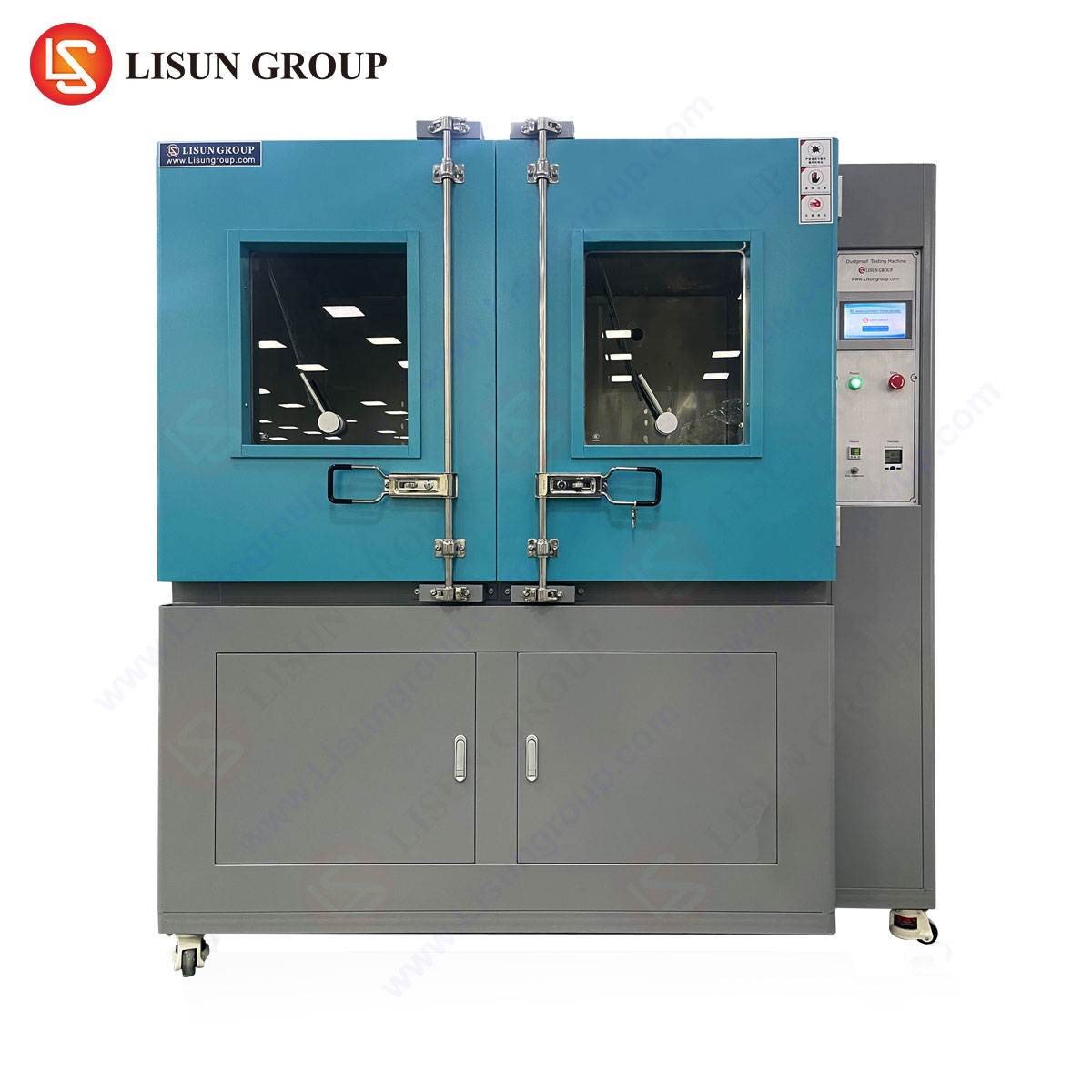
Accurate, repeatable, and compliant IP68 testing necessitates specialized equipment that provides precise control over all environmental variables. Standard water tanks are insufficient for certified testing. Dedicated waterproof test chambers, such as the LISUN JL-8 Waterproof Test Chamber, are engineered to meet the exacting requirements of IEC 60529 and equivalent standards.
The LISUN JL-8 is designed as a turnkey solution for IPX8 and IPX9K testing. Its core principle involves a closed-loop pressure control system. The chamber is a robust stainless-steel pressure vessel equipped with a precision pressure sensor, digital controller, and water circulation/temperature control system.
Testing Principle and Workflow: The specimen is placed inside the chamber, which is then sealed and filled with water. The digital controller allows the operator to program the exact test pressure, corresponding to the equivalent immersion depth (e.g., 1.5 bar for ~15 meters depth), and the dwell time. The system automatically pressurizes the chamber, maintains the pressure with high stability for the set duration, and then safely depressurizes it. This pressurized immersion test is more rigorous and controllable than simple deep-water tank immersion, as it directly simulates the hydrostatic pressure at depth and allows for easy variation of test parameters.
Key Specifications of the LISUN JL-8:
- Test Standards: Compliant with IEC 60529 IPX8, IPX9K, and other industry-specific standards.
- Pressure Range: Typically programmable from 0 to 100 kPa (adjustable for deeper depth simulation) for IPX8, and capable of high-pressure spray for IPX9K testing.
- Control System: Microcomputer-based digital controller with touchscreen interface for setting pressure, time, and temperature parameters.
- Construction: Stainless steel chamber and piping for corrosion resistance.
- Safety Features: Over-pressure protection, safety lock door mechanism, and automatic pressure relief.
Competitive Advantages in Industrial Application: The JL-8’s advantages lie in its precision, versatility, and reliability. Its programmable digital control eliminates manual timing and depth errors, ensuring test repeatability essential for quality assurance audits. The ability to handle both deep immersion (IPX8) and high-pressure/steam cleaning simulation (IPX9K for automotive and food industry applications) in one platform offers significant value. For manufacturers of electrical components or aerospace and aviation components, this precision ensures that sealing technologies—such as gaskets, O-rings, and potting compounds—are validated under consistent, documented conditions that mirror worst-case field scenarios.
Cross-Industry Application Scenarios and Compliance
The application of IP68 testing spans the entire spectrum of modern technology. In Lighting Fixtures, underwater luminaires for pools or architectural floodlights require IP68 validation to ensure long-term reliability and electrical safety. Cable and Wiring Systems, particularly connectors and junction boxes used in underground or submarine applications, are tested to IP68 to prevent insulation breakdown.
For Office Equipment and Household Appliances, such as professional-grade projectors or steam-cleaning kitchen appliances, IP68-rated internal assemblies prevent failure due to humidity or accidental spills. In the rapidly evolving field of Electrical and Electronic Equipment for renewable energy, inverters and monitoring systems located in challenging environments depend on this level of protection.
It is vital to note that while IEC 60529 is the global baseline, many industries impose additional, more stringent standards. Automotive manufacturers often reference ISO 20653 (which aligns with IP but includes additional codes) and perform cyclic corrosion tests alongside immersion. Medical device standards like IEC 60601-1 have specific requirements for equipment that is intended to be cleaned by immersion. Therefore, a comprehensive testing regimen using an instrument like the JL-8 is often just one part of a larger suite of environmental stress screenings.
Limitations and Misconceptions Surrounding IP68
A critical technical understanding requires acknowledging the limitations of the IP68 rating. It is a static, controlled laboratory test. It does not account for:
- Water Jets: IP68 is not equivalent to IPX5 or IPX6 (protection against water jets). A device rated IP68 may not survive a high-pressure washdown unless also rated for jet protection.
- Chemicals: The test uses fresh water. Resistance to saltwater, chlorinated water, oils, or cleaning chemicals is not evaluated and requires separate chemical compatibility testing.
- Long-Term Durability: The test is for a finite period. It does not guarantee longevity over years of cyclic immersion, UV exposure, or mechanical wear on seals.
- Temperature Extremes: While temperature differentials can be simulated, prolonged operation at extreme temperatures can degrade sealing materials, a factor not covered by the basic test.
Therefore, specifying an IP68 rating must be done in conjunction with a clear understanding of the actual operating environment, including fluid type, pressure dynamics, temperature cycles, and expected product lifetime.
Conclusion
The IP68 waterproof test is a fundamental and non-negotiable verification step for products destined for environments where the ingress of water poses a risk to function or safety. Its value lies in the standardization it provides, creating a common language between designers, manufacturers, testing laboratories, and end-users. As technology permeates ever more demanding environments—from the human body in medical applications to the deep sea in subsea engineering—the role of precise, reliable ingress protection testing only grows in importance. Advanced, programmable test equipment, exemplified by the LISUN JL-8 series, provides the necessary technological foundation to execute these tests with the scientific rigor, repeatability, and documentation required for modern manufacturing and certification across the electrical, electronic, and industrial sectors.
FAQ Section
Q1: Can the LISUN JL-8 chamber test for both IPX8 and the common IPX7 rating?
A: Yes, the JL-8 is inherently capable of performing IPX7 tests. The IPX7 test involves immersion at 1 meter depth for 30 minutes, which is a lower pressure/duration condition than typical IPX8 parameters. The chamber’s programmable pressure and timer controls can be easily configured to meet the exact IPX7 test profile, making it a versatile tool for a range of immersion tests.
Q2: How does testing for automotive components (e.g., ISO 20653) differ from standard IEC 60529 IP68 testing when using a chamber like the JL-8?
A: ISO 20653 for road vehicles is largely aligned with IEC 60529 but includes additional designation codes for specific mechanical impacts. The core immersion test requirements are similar. The JL-8 can satisfy the pressure immersion portion of these standards. However, automotive testing often requires sequential or combined environmental stress, such as thermal cycling before or after immersion. The JL-8 performs the defined immersion test; complementary equipment would be needed for the full automotive validation sequence.
Q3: For a telecommunications outdoor enclosure, what is a typical manufacturer-specified condition for IP68, and how would it be programmed on the JL-8?
A: A typical specification might be “immersion at 2 meters depth for 2 hours.” Depth is converted to pressure (approximately 0.2 bar gauge pressure for 2 meters). On the JL-8, the operator would program the test pressure to 20 kPa (or the equivalent setting), set the timer for 120 minutes, and initiate the test. The chamber automatically maintains the pressure for the duration.
Q4: Is it necessary to test every unit off a production line to IP68, or is sample-based testing sufficient?
A: This depends on the product’s safety criticality, production volume, and quality management system. For high-reliability medical devices or aerospace components, 100% testing may be mandated. For high-volume consumer electronics, statistical process control is often employed, where a representative sample from each production batch is subjected to rigorous IP testing, including IP68, to validate that the manufacturing process (e.g., seal assembly, adhesive curing) remains in control.
Q5: What is the most common point of failure during an IP68 test, and how can it be addressed in design?
A: The most frequent failure points are sealing interfaces: gasket joints, cable glands, button membranes, and seams between housings. Failure is often due to improper compression, material incompatibility, or design tolerances that allow for movement under pressure. Addressing this requires a design-for-manufacturing approach: selecting elastomers with appropriate compression set properties, designing adequate gasket grooves, specifying torque values for fasteners, and validating the assembly process through pre-production testing on equipment like the JL-8 to identify and rectify weaknesses.