


IP68 Waterproof Testing Explained: A Technical Analysis of Ingress Protection Validation
The proliferation of electronic and electromechanical systems in demanding environments has elevated ingress protection (IP) testing from a quality assurance checkpoint to a fundamental design imperative. Among the various classifications defined by the International Electrotechnical Commission (IEC) standard 60529, the IP68 rating represents one of the most stringent benchmarks for dust and water resistance. This rating signifies that a device or enclosure is completely protected against dust ingress (6) and can withstand prolonged immersion in water under conditions specified by the manufacturer, typically involving greater depth and duration than the IPX7 test (8). This article provides a detailed technical examination of IP68 waterproof testing methodologies, the underlying physical principles, and the critical role of specialized equipment in achieving reliable, repeatable validation across diverse industrial sectors.
Deconstructing the IP Code: From Specification to Test Condition
A precise understanding of the IP68 rating is prerequisite to discussing its validation. The IP code, as per IEC 60529, is an alphanumeric designation where the first numeral indicates protection against solid foreign objects (0-6) and the second numeral indicates protection against harmful ingress of water (0-9K). The digit ‘6’ for solids denotes “dust-tight,” a condition verified by subjecting the enclosure to a vacuum while it is surrounded by talcum powder in a test chamber; no dust ingress is permitted. The digit ‘8’ for water resistance is defined as “protected against the effects of continuous immersion in water.” Crucially, the exact parameters for this immersion—depth, duration, and any additional pressure—are not universally fixed by IEC 60529 but are instead defined by the manufacturer in agreement with the customer, though they must exceed the requirements for the lower digit 7 (immersion up to 1 meter for 30 minutes). Common industry specifications for IP68 include immersion at depths of 1.5 meters, 2 meters, or deeper, for durations ranging from 30 minutes to several hours, and sometimes with added static pressure to simulate specific use cases like deep-well instrumentation or underwater connectors.
The Physics of Water Ingress: Mechanisms and Failure Modes
Water ingress is not merely a function of liquid presence but a complex interplay of pressure differentials, surface tension, capillary action, and material compatibility. During immersion, hydrostatic pressure exerts a force on all surfaces of the device, increasing linearly with depth (approximately 0.1 bar per meter of freshwater). This pressure can exploit microscopic defects in seals, gaskets, welded joints, or cable glands. Furthermore, the test often involves thermal cycling, where the device may be immersed while its internal air is at a different temperature, creating a pressure differential due to air contraction or expansion. This “breathing” effect can draw water past seals even in the absence of gross defects. Another critical mechanism is capillary action, where water can wick along threads, between laminated surfaces, or through microscopic porosity in materials. Successful IP68 validation, therefore, requires test equipment capable of not only simulating depth but also controlling and monitoring these subtle thermodynamic and mechanical forces to identify latent failure points before field deployment.
Core Methodologies in IP68 Immersion Testing
Standard IP68 testing protocols involve several key phases, each designed to stress different potential ingress pathways. The preconditioning phase often involves placing the device in a temperature-controlled environment to stabilize its internal temperature, sometimes at a variance to the water temperature. The immersion phase sees the device lowered into a water tank to the specified depth for the mandated duration. For tests exceeding simple immersion, a pressure test may be superimposed, where external air pressure is applied to the water column to simulate greater depths without requiring impractically tall tanks. The post-immersion inspection is equally critical; this includes visual examination, functional testing, and often a check for internal moisture via indicators or precise weight measurement. The test is deemed a failure if any water is present inside the enclosure or if the device malfunctions. The reliability of these results is wholly dependent on the precision, calibration, and control capabilities of the testing apparatus.
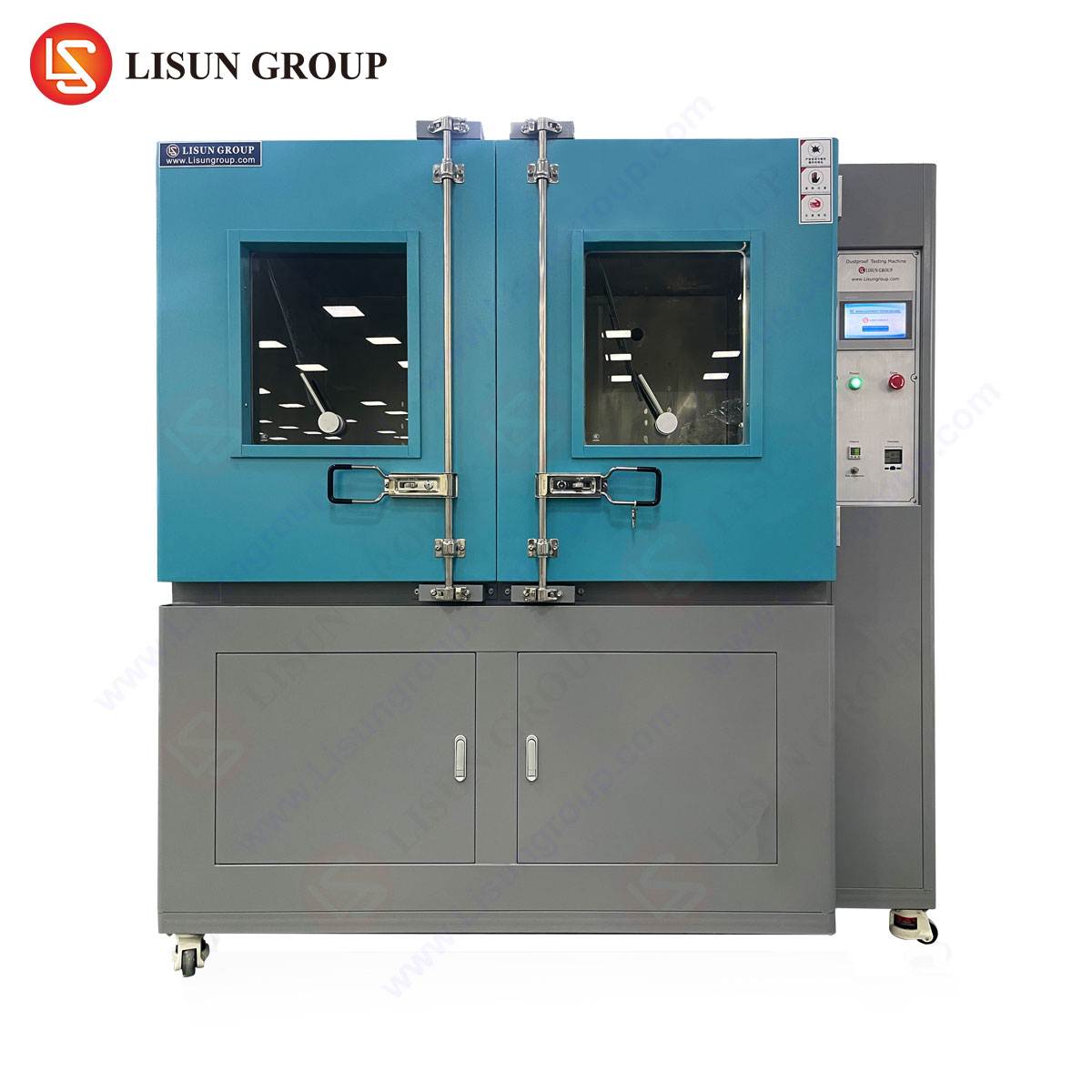
Instrumentation for Validated Compliance: The LISUN JL-XC Series Waterproof Test Chamber
Achieving consistent, auditable, and standards-compliant IP68 test results necessitates instrumentation engineered for rigorous laboratory and production line environments. The LISUN JL-XC Series IPX8 Waterproof Test Chamber exemplifies this category of specialized equipment, designed to execute controlled immersion and pressure testing per IEC 60529, ISO 20653, and other derivative standards.
The operational principle of the JL-XC Series centers on precise pressure regulation within a sealed stainless-steel chamber. The unit under test (UUT) is placed within the chamber, which is then sealed and filled with water. A programmable logic controller (PLC) then regulates a compressed air inlet to increase the internal pressure to a user-defined setpoint, simulating the hydrostatic pressure equivalent to a target immersion depth. The relationship is governed by the formula P = ρgh, where P is the pressure in Pascals, ρ is the density of water, g is acceleration due to gravity, and h is the depth. For instance, to simulate a 2-meter depth, the chamber applies approximately 19.6 kPa of gauge pressure above atmospheric pressure. The system maintains this pressure for the programmed test duration with high stability, typically within ±1% of the set value, before safely depressurizing.
Technical Specifications and Competitive Differentiation of the JL-XC Series
The JL-XC Series is configurable across models with varying chamber volumes and pressure ranges to accommodate products from small sensors to large automotive control units. A representative model, the JL-XC-1000, features a 1000mm diameter cylindrical chamber constructed from 304 stainless steel, a pressure range of 0 to 100 kPa (simulating depths from 0 to ~10 meters), and a digital pressure gauge with 0.25% full-scale accuracy. Its competitive advantages are multi-faceted:
- Advanced Control and Data Integrity: The integrated PLC and touch-screen human-machine interface (HMI) allow for fully programmable test profiles, including multi-stage pressure ramps, soak times, and cycling. All test parameters—pressure, time, temperature—are logged and can be exported for quality records, essential for ISO 17025 accredited labs and automotive PPAP submissions.
- Enhanced Safety and Operational Efficiency: The design incorporates multiple safety interlocks, automatic overpressure protection, and a secure double-door sealing mechanism. This reduces operator intervention, minimizes test cycle times, and mitigates the risks associated with high-pressure testing.
- Material and Component Durability: The use of marine-grade stainless steel and industrial-grade valves and sensors ensures corrosion resistance and long-term calibration stability, even with frequent use involving varied water chemistries (fresh, saline, or with added detergents as specified in some automotive tests).
Industry-Specific Applications and Validation Requirements
The demand for IP68 validation spans a broad industrial spectrum, each with unique application profiles and supplementary test requirements.
- Automotive Electronics: Control units for electric vehicle battery management, onboard chargers, and advanced driver-assistance systems (ADAS) sensors mounted in wheel wells or underbodies require IP68 or IP69K (for high-pressure cleaning) validation. Testing often follows ISO 20653 and includes thermal shock cycles. The JL-XC Series’ programmability supports these complex sequences.
- Telecommunications Equipment: Submarine cable repeaters, waterproof fiber-optic connectors, and outdoor base station electronics mandate long-duration IP68 testing, sometimes at depths exceeding 5 meters. The chamber’s high-pressure capabilities and data logging are critical here.
- Medical Devices: Surgical hand tools, implantable device programmers, and portable diagnostic equipment used in sterile environments must withstand immersion cleaning and autoclaving. IP68 testing validates the integrity of seals prior to biological validation.
- Lighting Fixtures: Underwater luminaires for pools, fountains, and marine applications are subjected to prolonged immersion. Test standards may reference specific depth-duration combinations, such as 1.5 meters for 4 hours, easily configured on the JL-XC HMI.
- Industrial Control Systems: Sensors and actuators in food processing, chemical plants, or offshore platforms face constant moisture and washdown. IP68 validation, potentially with added resistance to cleaning chemicals, is a prerequisite.
- Consumer Electronics: While smartphone IP68 ratings are common, test parameters are manufacturer-specific. Laboratory-grade equipment like the JL-XC provides the reproducible conditions needed for design verification and failure analysis beyond simple pass/fail binning.
Beyond Pass/Fail: The Role of Testing in Product Development
Sophisticated IP68 test systems are not merely compliance tools but integral to the product development lifecycle. During the design phase, they facilitate iterative testing of seal geometries, gasket materials, and potting compounds. In failure analysis, the ability to precisely control pressure and monitor its decay can help engineers pinpoint the exact failure mode—whether a sudden seal rupture or a slow, diffusive leak. In production, sampling tests with such equipment provide statistical process control data, ensuring manufacturing consistency for critical sealing processes like laser welding or adhesive dispensing. The quantitative data from a calibrated chamber like the JL-XC transforms waterproofing from a qualitative attribute into a quantifiable, optimizable engineering parameter.
Conclusion
The IP68 rating represents a critical promise of reliability for devices operating in hostile environments. Validating this promise requires a scientific approach grounded in the physics of ingress and executed with precision instrumentation. Test equipment, such as the LISUN JL-XC Series Waterproof Test Chamber, provides the controlled, repeatable, and documentable conditions necessary to move beyond basic compliance to genuine engineering insight. As technology continues to permeate more extreme applications—from deep-sea exploration to autonomous agricultural machinery—the role of rigorous, standards-based IP testing will only grow in significance, ensuring safety, durability, and performance in an increasingly connected and demanding world.
Frequently Asked Questions (FAQ)
Q1: How does pressure testing in a chamber like the JL-XC correlate to actual water depth immersion?
The correlation is direct via hydrostatic pressure. The chamber applies air pressure over the water surface, which transmits uniformly to the submerged device. A pressure of 19.6 kPa (gauge) is equivalent to the hydrostatic pressure at a 2-meter depth in freshwater (P = ρgh ≈ 1000 kg/m³ 9.81 m/s² 2m). The chamber effectively simulates depth in a compact, controlled laboratory setting.
Q2: For an IP68 test, is it necessary to precondition the sample at a different temperature than the water?
While not always mandated by the base IEC standard, thermal preconditioning is a best practice and is often required by industry-specific standards (e.g., in automotive). Cooling the device internally creates a negative pressure upon immersion, testing the seals’ ability to resist “breathing” ingress. The JL-XC Series can be used in conjunction with environmental preconditioning chambers to execute this rigorous test profile.
Q3: Can the JL-XC Series test for leaks smaller than visible water ingress?
Yes, through indirect methods. A common technique is to monitor the pressure decay over time during the soak period. A very slow drop in chamber pressure, while the device is submerged, can indicate a minute leak where air is escaping from the device and bubbling out, even before a sufficient volume of water enters to be seen. This requires high-resolution pressure sensors and stable temperature control, features inherent to the JL-XC design.
Q4: What maintenance is required for a pressurized waterproof test chamber?
Regular maintenance includes calibrating the pressure transducer annually, checking and replacing door seal O-rings if wear is observed, ensuring the purity and corrosion-inhibiting properties of the water used, and verifying the functionality of all safety relief valves. The stainless-steel construction minimizes but does not eliminate the need for periodic cleaning to prevent mineral buildup.
Q5: How are tests for cable glands or ports with open connectors performed?
For devices with open ports that are intended to be sealed in the field (e.g., by a cable), the test standard typically requires these ports to be sealed using a manufacturer-specified method or a standardized blanking plug during the test. The JL-XC chamber can test the integrity of the gland itself if a sealed cable assembly is passed through it into the chamber, testing the seal between the gland and the enclosure wall.