




A Comprehensive Framework for Selecting IP6X Dust Ingress Protection Test Chambers
The proliferation of electronic and electromechanical systems across diverse, often environmentally challenging, sectors has rendered ingress protection (IP) testing not merely a quality assurance step but a fundamental design and validation imperative. Among the various IP ratings, IP6X—denoting complete protection against dust ingress—stands as a critical benchmark for products intended for prolonged operation in particulate-laden environments. The selection of an appropriate IP6X dust test chamber is therefore a consequential technical decision that directly influences the reliability, safety, and regulatory compliance of the final product. This article delineates a structured set of selection criteria, grounded in international standards and practical engineering requirements, to guide procurement specialists, test laboratory managers, and design engineers in making an informed choice.
Interpreting the IP6X Standard: Beyond the Basic Definition
The IP Code, as defined by IEC 60529 and its regional equivalents (e.g., ISO 20653 for automotive), provides a systematic classification for the degrees of protection offered by enclosures. The first characteristic numeral, “6,” specifies protection against solid foreign objects. It requires that an enclosure must admit no dust under prescribed test conditions. The test’s objective is not merely to observe the absence of visible dust but to verify that dust does not penetrate in a quantity sufficient to interfere with the satisfactory operation of the equipment or to impair safety. The test employs talcum powder, with a prescribed particle size distribution (most particles ≤ 75 µm, 50% ≤ 10 µm, and 25% ≤ 5 µm), circulated within a sealed chamber under a partial vacuum. The chamber creates a pressure differential lower than the atmospheric pressure inside the enclosure under test (EUT), typically 2 kPa (20 mbar) or as specified by the relevant product standard. This differential forces the fine talcum dust to seek any potential ingress paths. Post-test, a meticulous internal inspection is conducted; the presence of any dust constitutes a failure.
Fundamental Chamber Design and Construction Parameters
The primary selection criterion is the chamber’s faithful adherence to the mechanical and control requirements of IEC 60529. This begins with its physical construction. The chamber must be a robust, sealed vessel capable of maintaining the specified vacuum level consistently. Interior surfaces should be smooth, non-porous, and easy to clean to prevent cross-contamination between tests and ensure uniform dust circulation. The method of generating and maintaining the vacuum is critical; a high-quality vacuum pump system with sufficient capacity for the chamber volume is essential. The system must include precise pressure regulation and monitoring, with a digital manometer or pressure transducer providing real-time feedback to a control system capable of maintaining the set pressure differential within a tight tolerance (±5% is typical). The dust circulation mechanism, often a fan or agitator, must be powerful enough to maintain a homogeneous cloud of talcum powder throughout the test duration, preventing settlement and ensuring the EUT is uniformly exposed.
Table 1: Core IP6X Test Parameters per IEC 60529
| Parameter | Specification | Rationale |
| :— | :— | :— |
| Test Dust | Talcum Powder, specific particle size distribution | Simulates fine, airborne dust capable of penetrating minute gaps. |
| Dust Quantity | 2 kg/m³ of chamber volume (minimum) | Ensures sufficient dust density for a valid test. |
| Vacuum Degree | Reduce pressure to 2 kPa (20 mbar) below atmospheric | Creates driving force for dust ingress. |
| Test Duration | 8 hours (standard), or as per product family standard | Allows sufficient time for dust penetration under sustained pressure. |
| Dust Circulation | Continuous agitation to maintain uniform cloud | Prevents stratification and ensures consistent exposure. |
Evaluating Chamber Versatility and Adaptability
While IP6X testing is a standalone requirement, modern test facilities often demand multi-functional equipment. A chamber that can also perform IP5X testing (dust protected, where dust ingress is limited but not entirely prevented) provides significant value. Furthermore, the ability to adapt the chamber for testing a wide variety of EUT sizes and shapes is paramount. This is governed by the internal workspace dimensions and the design of the access port. A large, well-sealed door with a wide opening facilitates the loading of bulky items such as automotive control units, industrial switchgear, or large lighting fixtures. The chamber should include a standardized interface, such as a gland plate or multiple cable ports, for connecting power and signal lines to the EUT during testing without compromising the chamber’s seal. For testing components like connectors, sockets, or small sensors in high volume, the availability of custom fixtures or multi-sample holders can drastically improve testing throughput and repeatability.
Control System Sophistication and Data Integrity
The era of purely manual test chambers is receding. A modern IP6X chamber should feature an automated, programmable control system. This system should allow for the precise setting and maintenance of test parameters: vacuum level, test duration, and agitation cycles. Automated sequences enhance repeatability and reduce operator error. Critical, however, is the system’s capability for data logging and traceability. The chamber should record key parameters (pressure, time, internal status) throughout the test cycle. This data log serves as objective evidence for compliance reports and is indispensable during audit processes for industries like medical devices (governed by ISO 13485 and FDA QSR) and aerospace (AS9100). The interface should be intuitive, possibly featuring a touchscreen HMI, with clear status indicators and alarm functions for conditions like loss of vacuum or agitator failure.
Operational Safety and Maintenance Considerations
Safety is a non-negotiable aspect. The chamber must include safety interlocks that prevent the door from being opened while under vacuum. A pressure relief valve is mandatory to prevent over-pressurization. Given the use of fine talcum powder, which is a respiratory irritant and can be explosive in certain concentrations, effective dust containment is crucial. The chamber design should minimize dust leakage during loading and unloading. An integrated dust filtration system, often a HEPA filter on the vacuum exhaust, is a vital feature to protect the laboratory environment and the vacuum pump. From a maintenance perspective, ease of cleaning is essential. Chambers with removable interior panels, accessible filters, and smooth corners simplify the process of removing spent talcum powder, which must be done regularly to maintain test integrity.
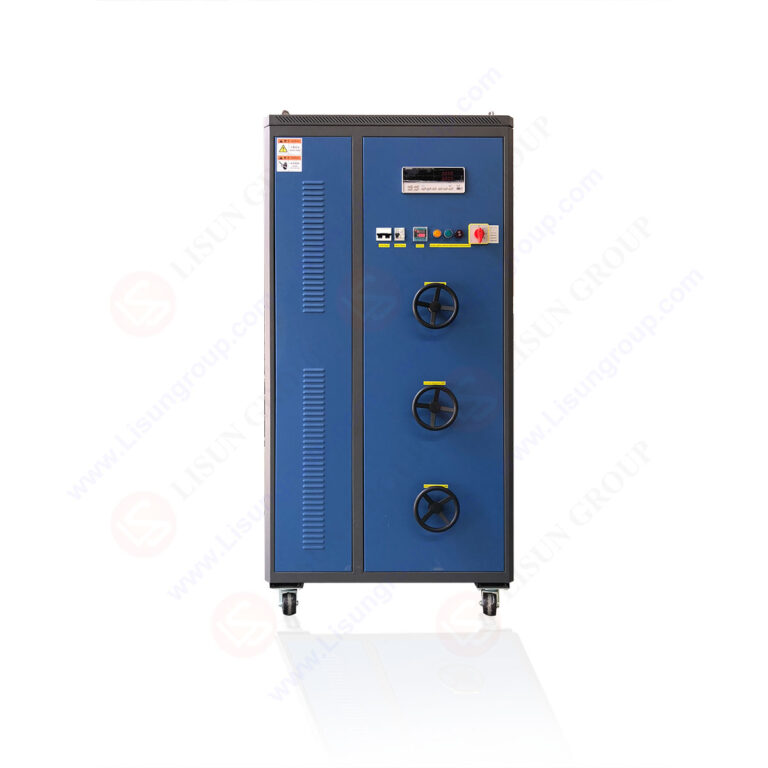
The LISUN SC-015 Dust Sand Test Chamber: A Technical Analysis
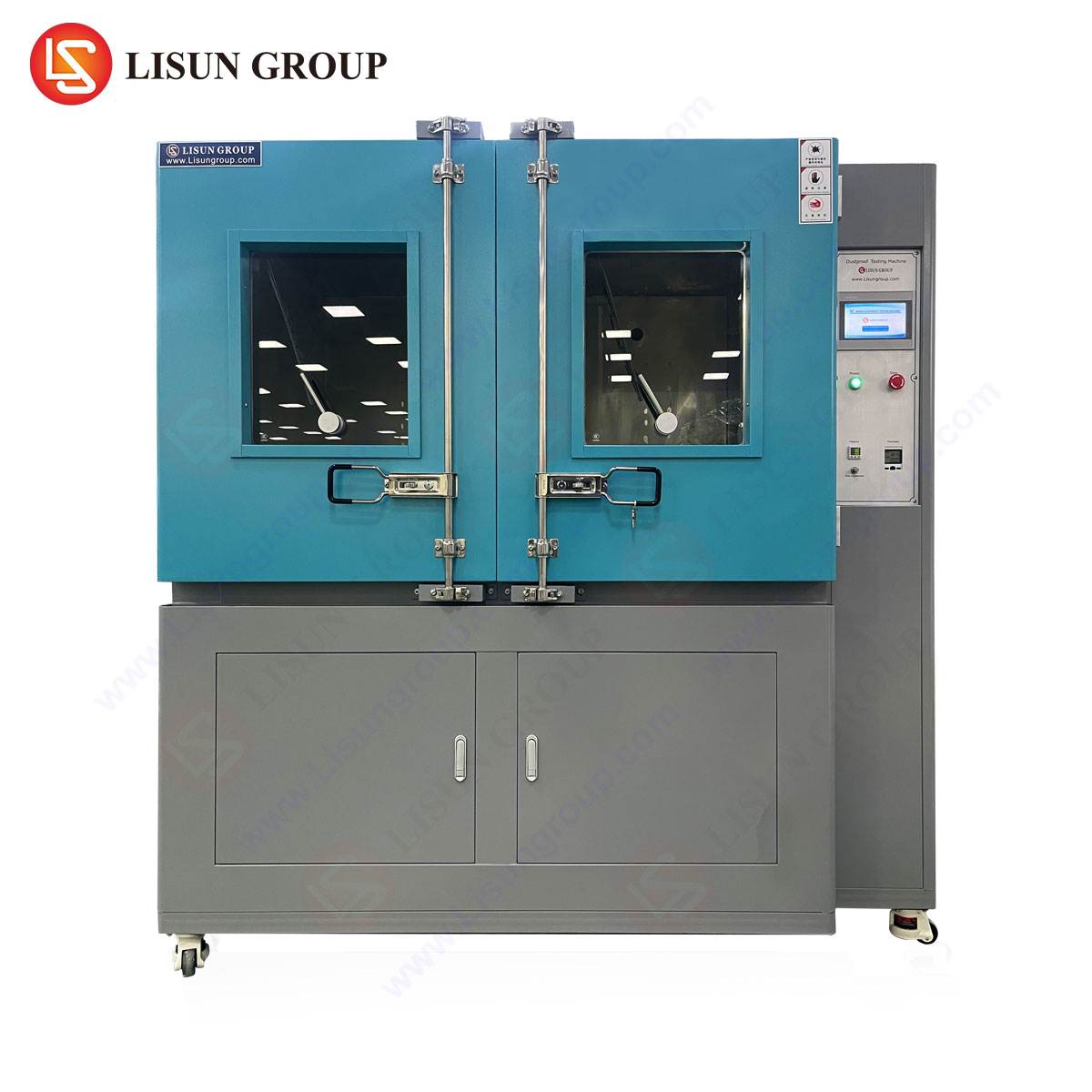
As a representative example of a chamber engineered to meet the rigorous demands outlined above, the LISUN SC-015 Dust Sand Test Chamber provides a pertinent case study in applied selection criteria.
Specifications and Testing Principle: The SC-015 is designed for both IP5X and IP6X testing per IEC 60529, GB 4208, and related standards. Its internal test volume is a practical 0.5 cubic meters, suitable for a wide range of components and small assemblies. The testing principle is faithfully executed: a vacuum pump extracts air to create the required 2 kPa differential, while a dedicated circulation fan agitates the talcum powder into a dense, uniform cloud. The EUT, with its internal vacuum drawn through a dedicated port (or via its own natural breathing if specified), is subjected to this environment for the programmed duration.
Industry Use Cases: The chamber’s design accommodates the specific needs of numerous sectors. For Automotive Electronics and Aerospace Components, testing engine control units (ECUs), sensors, and connectors ensures reliability in dusty under-hood or runway-adjacent environments. Lighting Fixtures for outdoor industrial or roadway applications are validated against lumen depreciation caused by internal dust accumulation. Industrial Control Systems and Telecommunications Equipment (e.g., outdoor routers, base station modules) are tested to prevent failures in manufacturing plants or arid climates. Medical Devices intended for use in field hospitals or ambulances require this validation for both performance and patient safety. Electrical Components like sealed switches and circuit breakers are verified to maintain dielectric integrity.
Competitive Advantages: The SC-015 incorporates several features that align with advanced selection criteria. Its control system is fully programmable via a touchscreen interface, allowing for automated test cycles and precise parameter control. Safety is addressed through door interlock switches and an over-pressure protection device. The chamber construction uses stainless steel for durability and ease of decontamination. A critical advantage is its integrated dust recovery system; after testing, the majority of talcum powder can be collected and reused, reducing material costs and environmental cleanup. The inclusion of a viewing window with internal lighting allows for real-time, though preliminary, observation of the test without interrupting the cycle.
Integration with Product-Specific and Industry Standards
A paramount, yet often overlooked, criterion is the chamber’s suitability for testing not just to IEC 60529, but to the myriad of derivative product family standards. These standards frequently modify the base IP test. For instance:
- Automotive (ISO 20653): May specify different test durations or pressure differentials.
- Household Appliances (IEC 60335): Often requires testing with the appliance in its most adverse orientation and operating mode.
- Information Technology Equipment (IEC 60950-1 / 62368-1): May have specific failure criteria related to clearance and creepage distances.
- Military/Aerospace (MIL-STD-810, RTCA DO-160): Include sand and dust tests with different particulate types and airflow velocities.
The selected chamber must have the flexibility—in terms of programmability, accessory fixtures, and control logic—to accommodate these variations. A vendor with deep expertise in these ancillary standards can provide invaluable support in configuring tests correctly.
Total Cost of Ownership and Vendor Support
The purchase price is a single component of the total cost of ownership. Recurring costs include the procurement of standardized test dust, replacement filters for the vacuum system, and general maintenance. Chambers with efficient dust recovery and filtration systems offer long-term savings. Equally critical is the vendor’s technical support, availability of spare parts, and calibration services. The chamber’s pressure gauges and sensors require periodic calibration to ensure ongoing compliance with testing standards. A vendor capable of providing comprehensive after-sales service, including on-site training for laboratory technicians, minimizes operational downtime and ensures the longevity and accuracy of the investment.
Conclusion
Selecting an IP6X dust test chamber is a multifaceted technical procurement exercise. It requires a balanced evaluation of standards compliance, construction quality, control system capabilities, operational safety, and adaptability to industry-specific requirements. By applying a rigorous framework that scrutinizes these criteria, organizations can procure a testing solution that not only fulfills a compliance checklist but actively contributes to product robustness, reliability, and market success. The objective is to select a chamber that serves as a reliable partner in the design validation process, accurately simulating years of environmental exposure within a controlled laboratory setting, thereby de-risking product deployment in the global marketplace.
Frequently Asked Questions (FAQ)
Q1: Can the LISUN SC-015 chamber test for both IP5X and IP6X ratings, and what is the key difference in the test procedure?
Yes, the SC-015 is designed for both ratings. The key procedural difference lies in the vacuum application. For IP5X (“dust protected”), the test is conducted with the EUT operating normally inside the dust cloud, but without the sustained internal vacuum. For IP6X (“dust tight”), the enclosure interior is subjected to a continuous partial vacuum (2 kPa below atmospheric) for the test duration, creating a more severe driving force for ingress.
Q2: For testing a medical ventilator intended for field use, what additional considerations beyond the basic IP6X test might be necessary?
Medical device testing must align with IEC 60529 but is ultimately governed by risk management standards like ISO 14971. Beyond the standard 8-hour test, you may need to perform an extended duration test to simulate a product’s lifetime exposure. Furthermore, the failure criteria are stricter; any ingress, even if non-conductive talcum powder, could be deemed unacceptable if it compromises the device’s sterile fluid paths or mechanical functions. Post-test functional testing under the medical device’s specific performance standard is mandatory.
Q3: How often should the talcum powder in the chamber be replaced, and does the SC-015 facilitate this process?
Talcum powder should be replaced when it becomes contaminated, clumps due to humidity, or its particle size distribution is altered through degradation or excessive reuse. The frequency depends on usage. The SC-015’s integrated dust recovery system allows for efficient extraction and sieving of used powder, enabling assessment and potential reuse, thereby extending the interval between full replacements and reducing consumable costs.
Q4: When testing an automotive LED headlamp assembly, how is the internal vacuum drawn, given that it is not a sealed unit with a dedicated port?
According to testing standards, if an enclosure has intentional openings for ventilation (like some lamp housings), these are sealed for the test to assess the integrity of the unintended leakage paths. Alternatively, the test can be performed by drawing the vacuum directly through the EUT’s own breathing points if that is the specified condition. The SC-015 provides flexible tubing and sealed connectors to accommodate either scenario, requiring the test specifier to define the appropriate test condition based on the product’s design.