




A Technical Examination of IPX Waterproof Testing: Methodologies, Standards, and Advanced Instrumentation
Introduction to Ingress Protection (IP) Ratings and Their Critical Role
The Ingress Protection (IP) rating system, codified under international standard IEC 60529, provides a definitive classification for the degree of protection offered by mechanical casings and electrical enclosures against the intrusion of solid foreign objects and liquids. This alphanumeric code, particularly its second digit denoting liquid ingress protection, is a fundamental specification across countless industries. IPX waterproof testing, where “X” denotes that protection against solids is not specified, forms a critical component of product validation, reliability assessment, and safety certification. The integrity of this testing directly correlates to product longevity, user safety, and compliance with regulatory frameworks. As electronic systems proliferate into increasingly harsh environments—from automotive underbody components to outdoor telecommunications gear—the precision and repeatability of IPX testing have become paramount. This article provides a detailed technical analysis of IPX testing methodologies, with a specific focus on advanced testing instrumentation as exemplified by the LISUN JL-9K1L IPX9K High Temperature & High Pressure Waterproof Test Chamber.
Deconstructing the IPX Code: From IPX1 to IPX9K
The IPX rating scale is not linear but represents a series of distinct test conditions with increasing severity, though not all are cumulative. Understanding the specific test parameters is essential for correct application.
- IPX1 & IPX2 (Dripping Water): IPX1 simulates vertically falling drops, while IPX2 involves drops falling at a 15° angle from vertical. These tests are foundational for equipment intended for indoor environments where minor condensation or accidental splashing may occur.
- IPX3 & IPX4 (Spraying Water): IPX3 utilizes an oscillating tube or spray nozzle to distribute water spray at angles up to 60° from vertical. IPX4 employs a spray nozzle or oscillating tube to provide splashing water from all directions. These ratings are common for household appliances, outdoor lighting fixtures, and automotive interior electronics.
- IPX5 & IPX6 (Jet & Powerful Jet Water): A significant step in severity, IPX5 subjects the enclosure to a water jet (6.3mm nozzle) from any direction at a flow rate of 12.5 L/min at a distance of 2.5-3 meters. IPX6 involves a more powerful jet (12.5mm nozzle) at 100 L/min at the same distance. These tests are critical for telecommunications base station equipment, industrial control systems exposed to washdown procedures, and vehicle exterior components.
- IPX7 & IPX8 (Temporary & Continuous Immersion): These ratings test for submersion. IPX7 requires the enclosure to withstand immersion in 1 meter of water for 30 minutes. IPX8 is defined by the manufacturer and user but indicates a greater depth and/or longer duration than IPX7. This is vital for underwater connectors, diving equipment electronics, and certain medical devices.
- IPX9K (High-Pressure, High-Temperature Spray): Representing the pinnacle of liquid ingress testing, IPX9K simulates high-pressure washdown or steam-cleaning conditions. As per DIN 40050-9 and ISO 20653, it involves four specific angles (0°, 30°, 60°, and 90°) with a high-velocity, high-temperature water spray. This rating is increasingly demanded in automotive (for engine bay and underbody components), agriculture and construction machinery, and food processing industrial systems.
The JL-9K1L Test Chamber: Architecture and Operational Principles
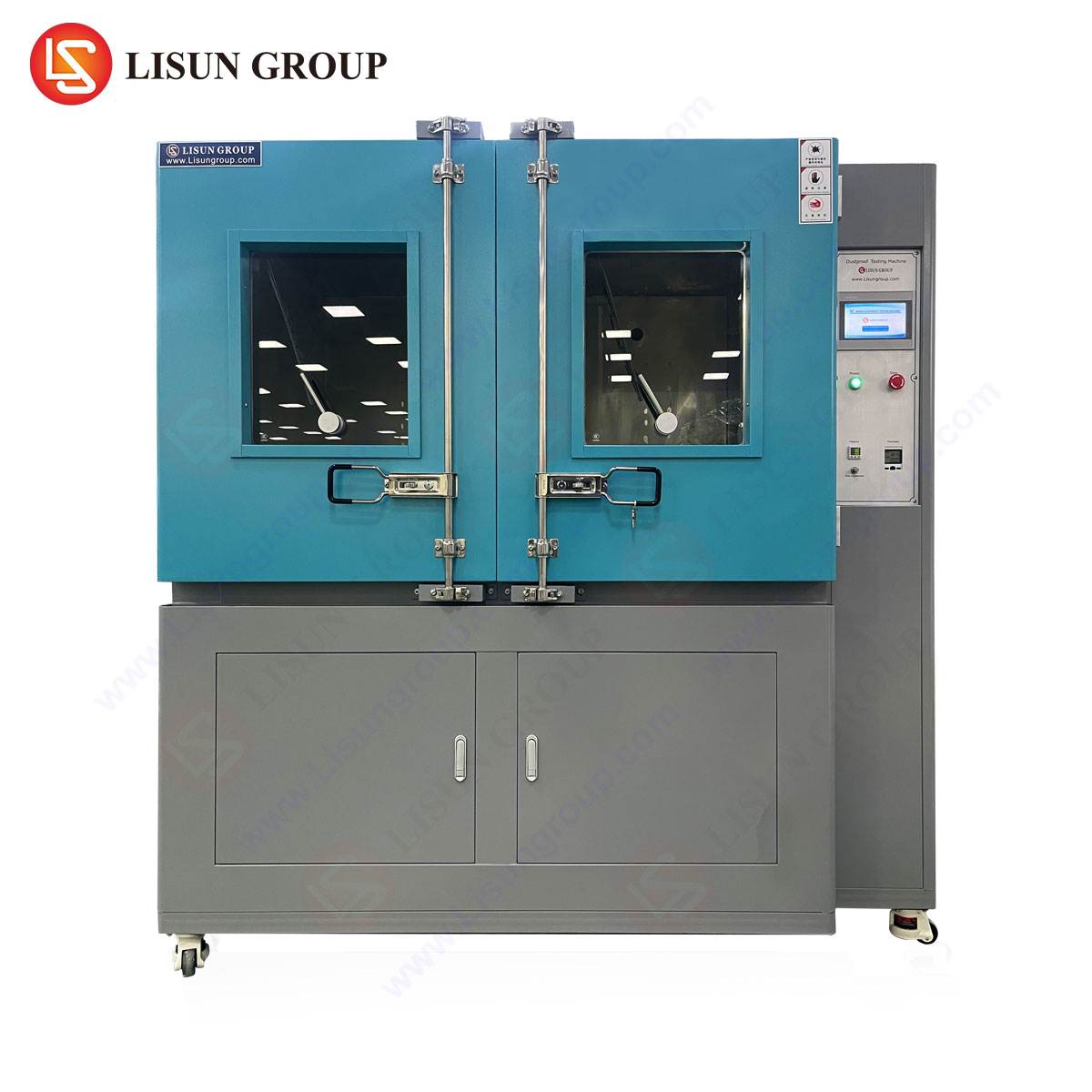
The LISUN JL-9K1L IPX9K High Temperature & High Pressure Waterproof Test Chamber is engineered to meet the exacting requirements of the IPX9K test standard, while often incorporating modularity for lower-level IPX testing. Its design embodies a systems-engineering approach to environmental simulation.
Core Specifications and System Components:
- Water Pressure & Flow Control: The system generates a water jet at 80-100 bar (8-10 MPa) with a precise flow rate of 14-16 L/min, adhering strictly to the standard’s mandate. This is achieved via a high-pressure pump, accumulator, and precision pressure regulators and flow meters.
- Thermal Management System: A key differentiator for IPX9K testing is water temperature. The JL-9K1L integrates a heating unit capable of elevating and maintaining water temperature at 80°C ±5°C. This simulates the thermal shock and cleaning efficacy of real-world high-temperature washdowns.
- Nozzle and Fixturing: The test employs a specialized 0-degree fan nozzle with a defined orifice. The specimen is mounted on a motorized turntable that rotates at approximately 5 rpm to ensure uniform exposure. A robotic or programmable multi-axis spray arm systematically positions the nozzle at the four mandated test angles (0°, 30°, 60°, 90°) relative to the specimen, with a fixed distance of 100-150mm.
- Test Duration and Sequencing: The test is automated, with the spray applied for 30 seconds per square meter of surface area under test, with a minimum of 120 seconds per angle. The control system manages the sequence, duration, pressure, temperature, and turntable rotation.
Testing Principle and Simulation Fidelity:
The principle is one of accelerated life and stress testing. The combination of high-pressure penetration, high-temperature thermal stress, and mechanical impact from the water jet creates a compounded failure mode analysis. It tests not only the static seals (gaskets, O-rings) but also dynamic seals (around buttons, shafts), material integrity under thermal expansion, and the resilience of internal PCB conformal coatings. The chamber’s closed-loop design typically includes water filtration and recirculation systems to maintain water purity and consistent particle size, which can affect impact energy.
Industry Applications and Compliance Imperatives
The JL-9K1L and similar advanced test apparatus serve as critical compliance gateways in numerous sectors.
- Automotive Electronics: The adoption of ISO 20653 has made IPX9K testing mandatory for components in locations subject to high-pressure car wash systems or road spray. This includes electronic control units (ECUs) in engine bays, sensors (LiDAR, radar, cameras) for autonomous driving systems mounted on vehicle exteriors, and charging ports for electric vehicles.
- Industrial Control Systems: In manufacturing environments, especially food & beverage or pharmaceuticals, equipment must withstand regular aggressive cleaning with high-pressure, high-temperature caustic solutions. PLC enclosures, motor drives, and human-machine interfaces (HMIs) require validation to IPX9K to guarantee operational uptime and safety.
- Aerospace and Aviation Components: While having its own stringent standards (e.g., DO-160), the principles of IPX testing apply to components exposed to runway spray, rain, and de-icing fluids. The JL-9K1L’s precision is applicable for testing connectors, antenna housings, and external lighting assemblies.
- Medical Devices: Devices intended for operating rooms or other clinical settings where they undergo rigorous decontamination cycles must demonstrate ingress protection. Surgical tool handles, portable diagnostic equipment housings, and connectors are key candidates for IPX5/6/9K testing.
- Telecommunications Equipment: 5G small cells, outdoor routers, and base station amplifiers are exposed to direct weather. IPX5/6/7 testing is standard, while IPX9K becomes relevant for equipment mounted on agricultural or mining vehicles.
Competitive Advantages of Integrated, High-Fidelity Test Systems
Utilizing a dedicated, precision instrument like the JL-9K1L offers distinct advantages over improvised or lower-fidelity test setups.
- Standards Compliance and Audit Trail: The system is designed from the ground up to comply with IEC 60529, ISO 20653, and DIN 40050-9. It provides traceable calibration of pressure, flow, temperature, and distance parameters—a necessity for certification bodies like TÜV, UL, or Intertek. Automated data logging creates an immutable audit trail for quality assurance.
- Repeatability and Reproducibility (R&R): Manual spray testing introduces significant human variability in angle, distance, and dwell time. An automated chamber eliminates this, ensuring that test results are consistent from one day to the next and between different laboratories, a cornerstone of reliable quality control.
- Enhanced Failure Diagnosis: The controlled and segmented nature of the test (specific angles, timed exposure) allows engineers to correlate specific test phases with observed ingress points. This precise diagnostic capability accelerates root cause analysis and design iteration.
- Operational Efficiency and Safety: Automating a high-pressure, high-temperature test improves laboratory safety by removing personnel from the immediate test area. It also increases throughput by allowing for programmed, unattended test sequences, including pre-conditioning cycles.
The Integration of IPX Testing into Broader Product Validation
IPX waterproof testing is rarely performed in isolation. It is frequently part of a larger validation suite that may include thermal cycling, vibration, UV exposure, and salt spray testing. The sequence of these tests is critical. For instance, performing an IPX test after a thermal shock cycle can reveal seal failures induced by material fatigue. Advanced chambers can sometimes be integrated into larger automated test executive systems, allowing for complex, multi-stress profile testing that more accurately mimics a product’s lifecycle environmental exposure.
Conclusion
IPX waterproof testing is a rigorous, standards-driven discipline essential for ensuring product reliability in a wet world. The progression from basic drip tests to the severe conditions of IPX9K reflects the expanding operational envelopes of modern electrical and electronic equipment. The deployment of sophisticated, automated test instrumentation, such as the LISUN JL-9K1L chamber, is no longer a luxury but a necessity for manufacturers seeking to achieve robust design, secure regulatory compliance, and build market trust. By providing a controlled, repeatable, and diagnostically precise simulation of liquid ingress, these systems form a critical pillar in the product development and qualification lifecycle across the automotive, industrial, telecommunications, and medical sectors.
Frequently Asked Questions (FAQ)
Q1: Can the JL-9K1L test chamber perform lower IPX ratings (e.g., IPX5 or IPX6) in addition to IPX9K?
Yes, many advanced IPX9K test chambers, including modular configurations of the JL-9K1L series, are designed with multi-test capability. This is typically achieved through a changeover system that switches between the high-pressure, high-temperature IPX9K nozzle and a separate manifold with nozzles and pressure regulators configured for IPX5, IPX6, and often IPX3/4. The control software allows the operator to select the pre-programmed test standard.
Q2: What is the significance of using 80°C water in the IPX9K test, as opposed to ambient temperature?
The elevated temperature serves two primary purposes. First, it simulates the real-world condition of industrial or automotive washdowns, which often use hot water for improved cleaning efficacy. Second, and more critically from a materials perspective, it induces thermal stress. The heat can cause seals and gaskets to expand or soften, potentially revealing weaknesses in the sealing design that room-temperature water would not. It also tests the thermal shock resistance of plastics and coatings.
Q3: How is a specimen evaluated for a “pass” or “fail” after an IPX test?
The pass/fail criterion is fundamentally based on the ingress of water. After the test, the specimen is carefully inspected internally for any traces of moisture. This is often supplemented by a functional test during or immediately after exposure. For some tests, the enclosure may be filled with a desiccant or contain a moisture indicator strip. The standard allows for the entry of moisture that does not impair safe operation, but for most commercial electronics, any ingress is considered a failure. The specific acceptance criteria are sometimes defined in the product-specific standard.
Q4: For an IPX7 or IPX8 immersion test, is there a requirement for the water to be moving or static?
The IEC 60529 standard specifies immersion in “quiet” water, meaning static. The test is one of static pressure and seal integrity over time, not hydrodynamic flow. Agitating the water would introduce uncontrolled variables and deviate from the standard. Separate standards exist for testing against flowing or tidal water conditions.
Q5: What maintenance is critical for ensuring the long-term accuracy of a high-pressure test chamber like the JL-9K1L?
Regular preventive maintenance is crucial. Key activities include: calibration of pressure transducers, flow meters, and temperature sensors at periodic intervals (typically annually); inspection and replacement of high-pressure hoses and seals for wear; cleaning and de-scaling of the water heating system and nozzles to prevent clogging; and verification of the water filtration system to ensure purity and consistent jet dynamics.