




The IPX7 Waterproof Rating: A Technical Analysis of Standards, Testing, and Industrial Application
In the contemporary landscape of product design and manufacturing, the ingress protection (IP) code stands as a critical, internationally recognized framework for specifying the environmental resilience of enclosures. Among its classifications, the IPX7 rating represents a specific and demanding benchmark for waterproof performance, often serving as a minimum requirement for consumer electronics and a critical specification for mission-critical industrial components. This article provides a formal, technical examination of the IPX7 standard, its testing methodology, its implications across diverse industries, and the instrumental role of specialized testing equipment, such as LISUN’s JL-8 series of waterproof test chambers, in validating compliance.
Deciphering the IP Code: Contextualizing IPX7
The IP Code, formalized under International Standard IEC 60529, provides a systematic classification of the degrees of protection offered by enclosures against the intrusion of solid foreign objects (first numeral) and water (second numeral). The designation “X” is used when a protection rating for solids is not specified or not required, allowing focus solely on liquid ingress. Therefore, IPX7 explicitly denotes an enclosure’s tested capability against water immersion, independent of its dust protection level.
The numeral ‘7’ carries a precise definition: protection against the effects of immersion in water under specified conditions of pressure and time. The standard mandates that the enclosure, when subjected to immersion in 1 meter of water for a duration of 30 minutes, must not permit ingress of water in a quantity that would cause harmful effects. It is crucial to note that this test is typically conducted under static conditions, with the enclosure placed at its worst-case orientation as determined by its normal use. The test does not simulate dynamic pressure from water jets, flowing water, or prolonged deep-sea pressure, which are covered under other IP classifications such as IPX5, IPX6, or IPX8.
The Physics and Practical Demands of IPX7 Testing
Achieving an IPX7 rating is an exercise in precision engineering, demanding rigorous attention to sealing integrity, material compatibility, and design geometry. The fundamental principle involves creating and maintaining a seal capable of withstanding a hydrostatic pressure of approximately 9.8 kPa (equivalent to the pressure at a 1-meter depth) for the prescribed half-hour period. This pressure, while seemingly modest, is sufficient to exploit the smallest of weaknesses in gasket interfaces, cable glands, welded seams, or adhesive bonds.
Water ingress under these conditions is not merely a cosmetic concern. For electrical and electronic equipment, even minute quantities of water can lead to immediate short-circuit failures, corrosion of contacts over time, degradation of dielectric materials, and the growth of conductive dendritic structures. In safety-critical applications, such as automotive electronics or medical devices, such failures are unacceptable. Consequently, the IPX7 test serves as a binary, pass/fail validation of a product’s fundamental waterproof integrity under a common but severe environmental stress.
Industry-Specific Applications and Imperatives for IPX7 Compliance
The requirement for IPX7 protection permeates a vast array of industrial and consumer sectors, each with unique operational environments and failure consequences.
- Electrical and Electronic Equipment & Industrial Control Systems: Outdoor-rated control panels, sensor housings, and motor drives often require IPX7 to ensure reliable operation in environments where accidental flooding or temporary submersion from washdown procedures is a possibility. A compromised seal in an industrial programmable logic controller (PLC) could lead to catastrophic production line downtime.
- Automotive Electronics: Components such as electronic control units (ECUs), lighting assemblies (particularly taillights and fog lights), and in-cabin infotainment systems for door panels may be specified to IPX7. This protects against water ingress from road spray, flooding during fording, or condensation in high-humidity environments, ensuring vehicle safety and functionality.
- Lighting Fixtures: Landscape lighting, pool lights, and certain industrial work lights are prime candidates for IPX7 certification. The rating guarantees that the fixture will survive direct immersion, a common occurrence in their intended applications, without risking electrical hazard or luminaire failure.
- Telecommunications Equipment: Outdoor broadband units, buried or submerged junction boxes, and emergency communication devices frequently mandate IPX7 or higher. Network reliability depends on these nodes surviving extreme weather events and incidental water exposure.
- Medical Devices: Portable diagnostic equipment, handheld monitors, and certain surgical tool handles may require IPX7 to facilitate thorough cleaning and disinfection via immersion in chemical baths or to ensure functionality if accidentally dropped into fluids during a critical procedure.
- Consumer Electronics: The proliferation of IPX7 in smartphones, wireless earbuds, smartwatches, and portable speakers is a direct response to user demand for durability. It provides a quantifiable assurance against damage from rain, spills, or accidental drops into sinks.
- Aerospace and Aviation Components: While often requiring more extreme specifications, certain avionics components and ground support equipment may utilize IPX7 as a baseline for protection against fluid contamination in hangar or tarmac environments.
Validating Compliance: The Role of Precision Testing Equipment
Reliable and repeatable IP code testing is not an ad-hoc process. It requires calibrated, specialized apparatus that can accurately replicate the conditions stipulated in IEC 60529. Manual testing lacks the control, consistency, and documentation required for certified compliance. This is where dedicated waterproof test chambers become an indispensable tool in the R&D and quality assurance laboratory.
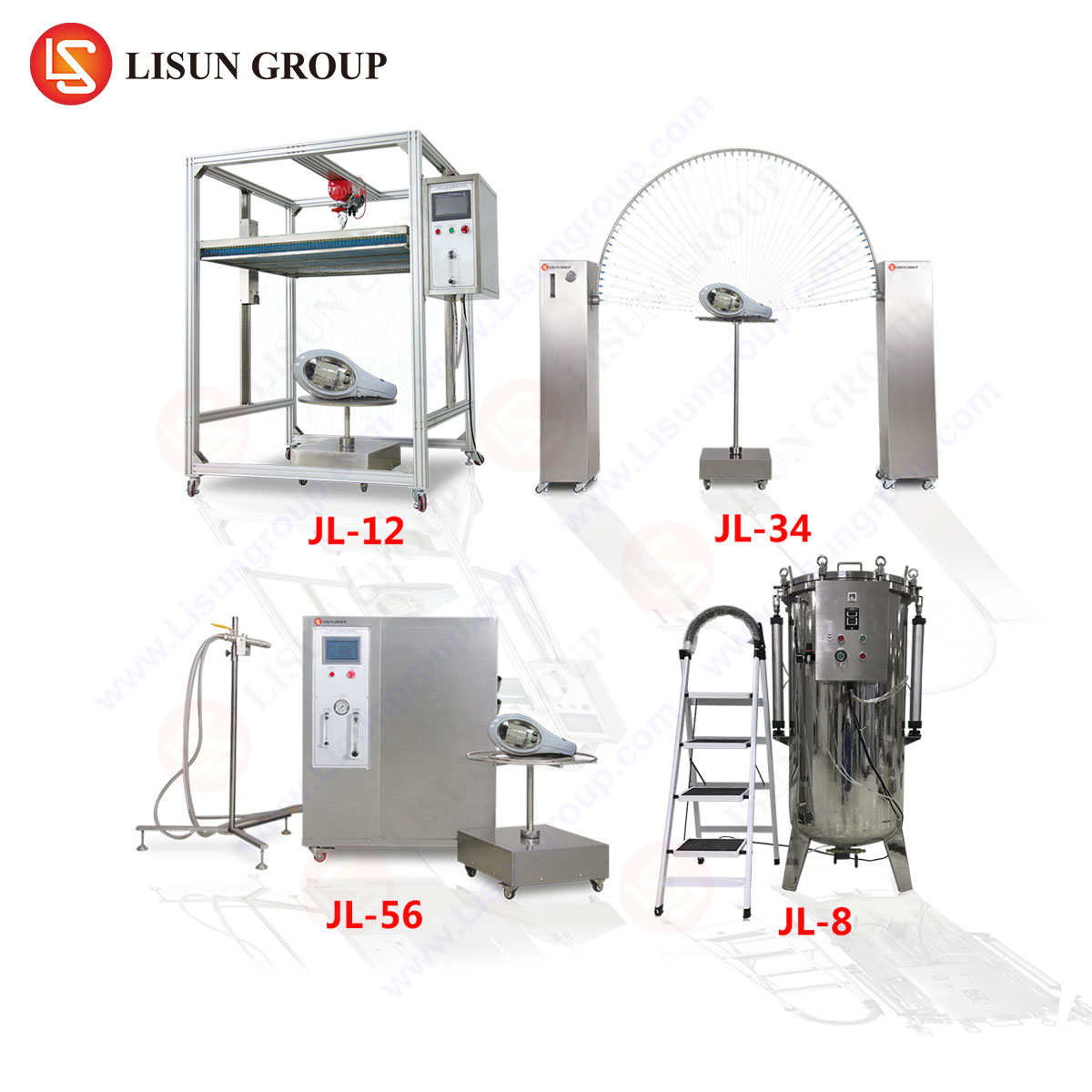
LISUN’s JL-8 Series IPX7 Waterproof Test Chamber exemplifies the engineering required for such validation. This equipment is designed explicitly to automate and standardize the immersion testing process, removing variables and ensuring audit-ready results.
Technical Specifications and Testing Principles of the LISUN JL-8 Chamber:
The JL-8 chamber is engineered as a fully integrated test system. Its core principle is to provide a controlled immersion environment where the unit under test (UUT) can be submerged to the precise depth and for the exact duration mandated by the standard. Key specifications and features include:
- Chamber Construction: Fabricated from high-grade stainless steel (typically SUS304) for corrosion resistance and long-term durability when constantly exposed to water.
- Precision Depth Control: Incorporates a calibrated water level gauge or overflow port system to guarantee the 1-meter immersion depth is maintained consistently for every test cycle.
- Programmable Logic Controller (PLC) & HMI: The system is governed by a programmable controller with a human-machine interface (HMI) touchscreen. This allows operators to set and automate test parameters—immersion time (standard 30 minutes, adjustable), cycle counting, and system diagnostics—ensuring strict adherence to the protocol.
- Test Basket & Fixturing: Includes a corrosion-resistant test basket to hold the UUT. The design allows for the UUT to be positioned in its most vulnerable orientation, as per the standard’s requirement, and facilitates easy loading and unloading.
- Water Filtration and Temperature Consideration: While not explicitly required by the base standard, advanced models may include water circulation and filtration systems to maintain clarity for observing the UUT during testing. Some standards or customer specifications may require testing with water at a specific temperature differential relative to the UUT to induce pressure stress from thermal contraction, a capability the JL-8 can be configured to address.
Competitive Advantages in Industrial Application:
The JL-8 series provides distinct advantages over makeshift testing setups or less sophisticated equipment:
- Standard Compliance Assurance: Its design is intrinsically aligned with IEC 60529, mitigating the risk of non-conformity due to improper test execution.
- Enhanced Repeatability and Reproducibility (R&R): Automated controls eliminate human timing and depth judgment errors, providing statistically valid data for quality control.
- Operational Efficiency: Batch testing capabilities and automated cycles increase laboratory throughput for high-volume production validation.
- Comprehensive Documentation: Integrated systems support data logging of test parameters, which is crucial for traceability in industries like medical devices and automotive, where ISO 13485 and IATF 16949 standards demand rigorous process control.
- Versatility: While optimized for IPX7, the chamber’s robust construction and programmability make it suitable for related immersion tests, including IPX8 preliminary testing or custom validation protocols.
Beyond the Rating: Limitations and Complementary Testing
A critical technical understanding recognizes that IPX7 is a singular, specific test. It does not confer resistance to high-pressure jets (IPX5/IPX6), continuous submersion at greater depths (IPX8), dust ingress (IP5X/IP6X), or mechanical impact (IK code). A product rated IPX7 may be vulnerable in a dusty environment or if subjected to a pressurized washdown. Therefore, a complete environmental protection specification often involves a matrix of tests. For instance, a product might be rated IP67, combining complete dust ingress protection with the IPX7 immersion capability. Engineers must carefully analyze the full lifecycle environmental profile of a product to specify an appropriate and sufficient IP rating matrix.
Conclusion
The IPX7 waterproof rating is a deceptively simple designation underpinned by a rigorous physical test. Its widespread adoption across industries from consumer electronics to aerospace underscores a universal need for quantified water-ingress protection. As product ecosystems become more interconnected and reliability expectations escalate, the role of precise, automated compliance testing grows ever more critical. Equipment such as the LISUN JL-8 series transforms the abstract requirement of IEC 60529 into a controlled, repeatable, and documentable laboratory process, providing manufacturers with the empirical evidence needed to validate design integrity, ensure quality, and mitigate field failure risks in a globally competitive marketplace.
FAQ: LISUN JL-8 Series IPX7 Waterproof Test Chambers
Q1: Can the JL-8 chamber be used for testing other IP ratings besides IPX7?
A1: The JL-8 is specifically optimized for the static immersion test defined for IPX7. For IPX5/IPX6 (water jet) or IPX1-X4 (dripping and spraying) tests, different apparatus such as spray nozzle chambers or oscillating tube/ drip rain testers are required. LISUN offers a complete suite of equipment for the full range of IP classifications.
Q2: How is the 1-meter immersion depth verified and maintained in the JL-8 chamber?
A2: The chamber is manufactured with a precise internal height and incorporates a calibrated water level indicator or a dedicated overflow port positioned exactly 1 meter above the designated submersion platform. The operator fills the chamber until water discharges from the overflow, guaranteeing the correct test depth is achieved consistently.
Q3: Our product specification requires IPX7 testing with a temperature differential between the sample and the water. Can the JL-8 accommodate this?
A3: While the standard JL-8 controls ambient conditions, certain customer-specified protocols require thermal shock from immersion. For such tests, LISUN can provide customized solutions or guide users in pre-conditioning the unit under test in a separate thermal chamber before transfer to the JL-8 for immersion, following a controlled procedure.
Q4: What type of documentation or calibration certificates are provided with the JL-8 to support quality audits?
A4: LISUN supplies the JL-8 with a comprehensive calibration certificate for its critical components (e.g., timer). The machine’s PLC can also log test parameters (time, date, cycle number). For full accreditation, end-users typically arrange for periodic on-site calibration by a certified metrology service to trace measurements back to national standards.
Q5: For testing a high volume of small components (e.g., electrical connectors), can the JL-8 facilitate batch testing?
A5: Yes. The internal test basket can be configured or supplemented with custom fixturing to hold multiple small units under test simultaneously, provided they can be fully submerged and do not interfere with each other. This maximizes throughput for production line quality assurance sampling.