

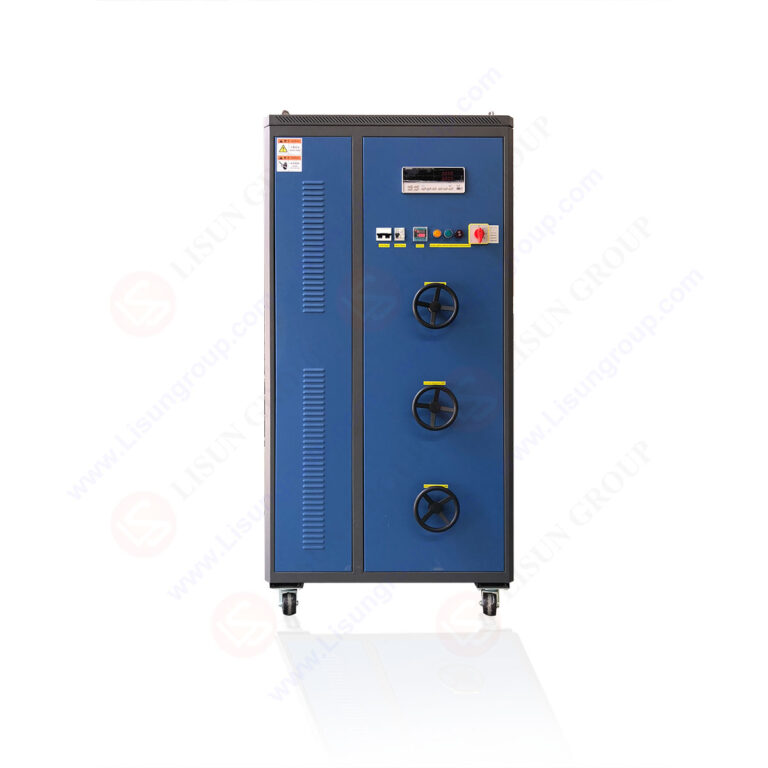



A Technical Examination of IPX8 Waterproof Testing Equipment: Principles, Standards, and Implementation
Introduction to Ingress Protection (IP) Testing and the IPX8 Standard
The proliferation of electronic and electromechanical devices across diverse and demanding environments necessitates rigorous validation of their resilience against environmental ingress. The Ingress Protection (IP) rating system, codified by the International Electrotechnical Commission (IEC) under standard IEC 60529, provides a globally recognized framework for classifying the degree of protection offered by enclosures against intrusion of solid objects and liquids. Within this hierarchy, the IPX8 rating represents a critical benchmark for devices requiring protection against prolonged, pressurized immersion. Unlike the lower-tier IPX7 rating, which specifies immersion at a depth of 1 meter for 30 minutes, IPX8 is defined by a manufacturer-specified agreement between the supplier and the user, typically involving greater depths and extended durations. This necessitates highly controlled, repeatable, and verifiable testing methodologies, which are the sole domain of specialized IPX8 waterproof testing equipment.
The fundamental challenge in IPX8 testing lies in replicating consistent, real-world hydrostatic pressure conditions in a laboratory setting. The test is not merely about submersion; it is a precise engineering evaluation of an enclosure’s seals, gaskets, material integrity, and assembly under sustained pressure. Equipment designed for this purpose must therefore provide exceptional control over pressure variables, maintain stringent safety protocols, and offer the flexibility to accommodate a vast range of product form factors, from miniature automotive sensors to substantial telecommunications housings. This article provides a detailed technical analysis of IPX8 testing apparatus, with a specific focus on the implementation and capabilities of the LISUN JL-XC Series waterproof test chamber as a representative example of modern testing infrastructure.
Architectural Design and Operational Principles of Immersion Test Chambers
The core of IPX8 testing infrastructure is the pressurized immersion test chamber. These systems are engineered to be pressure vessels, capable of safely containing both the test specimen and the water medium under elevated pressure. The primary operational principle involves placing the device under test (DUT) within a sealed chamber, filling the chamber with water, and then using a compressed air or nitrogen source to increase the internal pressure to a pre-set value that correlates to the agreed-upon immersion depth. The relationship between depth and pressure is governed by the hydrostatic pressure formula, P = ρgh, where P is pressure, ρ is the density of water, g is acceleration due to gravity, and h is the depth. For seawater applications, adjustments for density are required.
A sophisticated chamber, such as the LISUN JL-XC Series, integrates several key subsystems. The pressure vessel itself is typically constructed from stainless steel (e.g., SUS304 or SUS316) for corrosion resistance and structural integrity, with a thick, transparent acrylic or polycarbonate viewing window for visual monitoring. A high-precision pressure regulator and transducer provide closed-loop control, allowing the system to achieve and maintain the target pressure with minimal deviation (±1% or better is a common specification). Safety is paramount; these systems incorporate multiple mechanical safety valves, electronic pressure relief circuits, and burst disc assemblies to prevent catastrophic over-pressurization. The control system, often featuring a programmable logic controller (PLC) and touch-screen human-machine interface (HMI), allows for the creation of complex test profiles, including ramp-up, dwell (soak), and ramp-down phases, with automatic data logging of pressure and time parameters.
The Critical Role of the JL-XC Series in Validating High-Pressure Ingress Protection
The LISUN JL-XC Series exemplifies the evolution of IPX8 test equipment towards greater automation, safety, and versatility. This series is designed to address the stringent requirements of testing to standards beyond IEC 60529, including MIL-STD-810G Method 512.6 for military equipment and various automotive OEM specifications that often exceed standard IPX8 parameters. Its design philosophy centers on providing a robust platform for the most demanding immersion validation protocols.
Key specifications of a representative JL-XC model might include a chamber volume of 100 liters, a maximum working pressure of 500 kPa (equivalent to approximately 50 meters depth), and a pressure control accuracy of ±2% of reading. The chamber is constructed from SUS304 stainless steel with a multi-layer safety glass viewing window. The control system offers both manual and fully automatic operation modes, with programmable test parameters for pressure setpoint, soak time (from 0 to 999 hours), and pressure rise/fall rates. An integrated water circulation and filtration system can be specified to maintain water clarity for visual inspection during long-duration tests and to prevent sediment from interfering with seal interfaces. For testing sensitive components like medical device implants or aerospace connectors, an optional water temperature control unit allows testing in accordance with thermal shock-related standards.
Defining Test Parameters: Depth, Duration, and Acceptance Criteria
A pivotal aspect of IPX8 testing is the establishment of the test parameters, which are not fixed by the IEC standard but are subject to agreement. This requires close collaboration between testing laboratories, design engineers, and end-users. The specified depth must translate directly to a test pressure. For instance, a device rated for continuous immersion at 10 meters would be tested at a minimum pressure of 1 bar (100 kPa) gauge pressure. However, safety factors are frequently applied; a common practice is to test at 1.5 times the rated pressure to ensure a margin of safety.
Duration is equally variable. While IPX7 is fixed at 30 minutes, IPX8 durations can range from 1 hour to 168 hours (one week) or more, particularly for permanently installed subsea equipment or automotive components expected to withstand flood conditions. The acceptance criteria are typically binary: after the test, the DUT is inspected for any visible ingress of water. Following this, functional testing is mandatory. For an electrical socket, this would involve dielectric strength testing. For a automotive control unit, it would involve powering it on and verifying all input/output signals. For a medical infusion pump, it would involve a full operational cycle to ensure no moisture has compromised its critical functions.
Industry-Specific Applications and Testing Protocols
The application of IPX8 testing is critical across a broad industrial spectrum, each with unique nuances.
- Automotive Electronics: With the advent of electric vehicles and advanced driver-assistance systems (ADAS), components like battery management systems (BMS), onboard chargers, and sensor housings (e.g., LiDAR, radar) may require IPX8 or IP6K9K (high-pressure, high-temperature jetting) validation. Testing often follows OEM-specific standards that combine immersion with thermal cycling.
- Medical Devices: Portable patient monitors, surgical tools designed for sterilization via immersion, and implantable device housings must be impervious to fluid ingress to prevent electrical failure and bio-contamination. Testing here is performed with purified water or saline solutions and is often part of a broader validation suite per ISO 60601-1.
- Telecommunications & Aerospace: Underwater data transponders, satellite communication housings, and aviation black box locator beacons are subjected to extreme depth simulations. The JL-XC’s high-pressure capability is essential for these applications, where test pressures may reach several bar.
- Lighting Fixtures: Submersible LED lights for pools, marine applications, and underwater construction require IPX8 testing to ensure long-term reliability and electrical safety in permanently wet environments.
- Industrial Control Systems: Sensors and actuators in food processing, chemical plants, or offshore platforms may face washdown or accidental immersion. IPX8 validation ensures operational continuity in harsh industrial settings.
Integrating IPX8 Testing into a Comprehensive Quality Assurance Framework
IPX8 testing should not be an isolated event but a integral component of a product’s Design Verification Plan (DVP). It is typically performed on pre-production validation samples and as part of ongoing production batch auditing. The data generated from tests conducted on equipment like the JL-XC Series—precise pressure logs, time stamps, and correlated post-test inspection reports—becomes part of the product’s technical file, essential for compliance with CE, UL, and other certification marks.
Furthermore, the test results feed directly back into the engineering design process. A failure at the IPX8 stage, detected by a controlled water ingress in the chamber, provides invaluable forensic data. It allows engineers to identify weak points in O-ring grooves, adhesive seals, or welded seams, leading to iterative design improvements before mass production. This closed-loop feedback between testing and design, enabled by reliable and accurate equipment, is crucial for reducing warranty claims and enhancing brand reputation for durability.
Safety Considerations and Operational Best Practices
Operating a pressurized immersion chamber involves significant hazard potential. Rigorous safety protocols are non-negotiable. Equipment must be installed with proper foundation support and in compliance with local pressure vessel regulations. Operators require training on the lock-out/tag-out (LOTO) procedures for the chamber lid, which should feature an interlock system that prevents pressurization when unsecured. Daily checks of pressure relief devices and regular calibration of the pressure transducer (traceable to national standards) are mandatory for maintaining both safety and test integrity.
Best practices also extend to test preparation. The DUT must be clean and at ambient temperature before testing. For devices with breather vents or pressure equalization membranes, the test must be configured in accordance with the manufacturer’s instructions, as these features are designed to allow equalization over long periods, not to withstand sudden pressure differentials. Post-test, devices must be thoroughly dried before functional testing to avoid misattributing a failure to water ingress when the issue may be surface moisture shorting external contacts.
Conclusion
IPX8 waterproof testing represents a definitive evaluation of a product’s ability to withstand one of the most challenging environmental conditions: sustained, pressurized immersion. The technical sophistication required to perform this test accurately and safely is embodied in modern test equipment such as the LISUN JL-XC Series. By providing precise pressure control, robust safety features, and adaptable test profiles, these chambers serve as essential tools for engineers across the electrical, automotive, medical, and industrial sectors. As products continue to evolve for operation in increasingly demanding environments, the role of rigorous, standards-based ingress protection testing, supported by advanced equipment, will remain a cornerstone of product reliability, safety, and market success.
Frequently Asked Questions (FAQ)
Q1: What is the key difference between IPX7 and IPX8 testing?
The fundamental difference is the presence of pressure. IPX7 testing involves immersion at 1 meter depth for 30 minutes, where the pressure on the device is relatively low (approx. 1.1 bar absolute). IPX8 testing is defined by the manufacturer to a greater depth and/or longer duration, and the test equipment must actively pressurize the chamber to simulate the higher hydrostatic pressure corresponding to that specified depth. IPX8 is a more severe test.
Q2: Can we use the JL-XC Series to test for other IP ratings, like IPX5 or IPX6?
No, the JL-XC Series is specifically designed for immersion (IPX7/IPX8) and related pressurized tests. IPX5 (jetting) and IPX6 (powerful jetting) tests require completely different apparatus that generate high-velocity water jets from nozzles at specified distances and flow rates. These are typically performed in a separate spray test chamber.
Q3: How do we determine the appropriate test pressure and duration for our product’s IPX8 rating?
This is a critical design decision. The parameters should be based on the product’s intended use environment. Consider the maximum depth of water it could encounter, the likely duration of exposure, and any applicable industry-specific standards (e.g., automotive, marine). A common approach is to add a safety margin (e.g., 1.5x) to the calculated pressure from the maximum depth. These agreed-upon parameters should be clearly documented in the product specification.
Q4: Our device has a battery compartment with a user-accessible door. How should this be configured for testing?
For the test to be valid for the device’s rated enclosure, all user-accessible covers, doors, and ports must be secured in their normal, closed, and sealed position as intended during use. If the battery door is meant to be closed during potential water exposure, it should be latched normally for the test. The test evaluates the complete assembled product as it would be used.
Q5: After a successful IPX8 test, is any further drying or processing required before final functional testing?
Yes. It is imperative to thoroughly dry the exterior of the device, paying special attention to electrical contacts, connectors, and seams, before applying power or conducting electrical tests. Residual surface water can cause temporary short circuits, leading to a false failure indication. Internal drying may also be necessary if the device has ventilation paths, though a true pass should indicate no internal ingress occurred.