

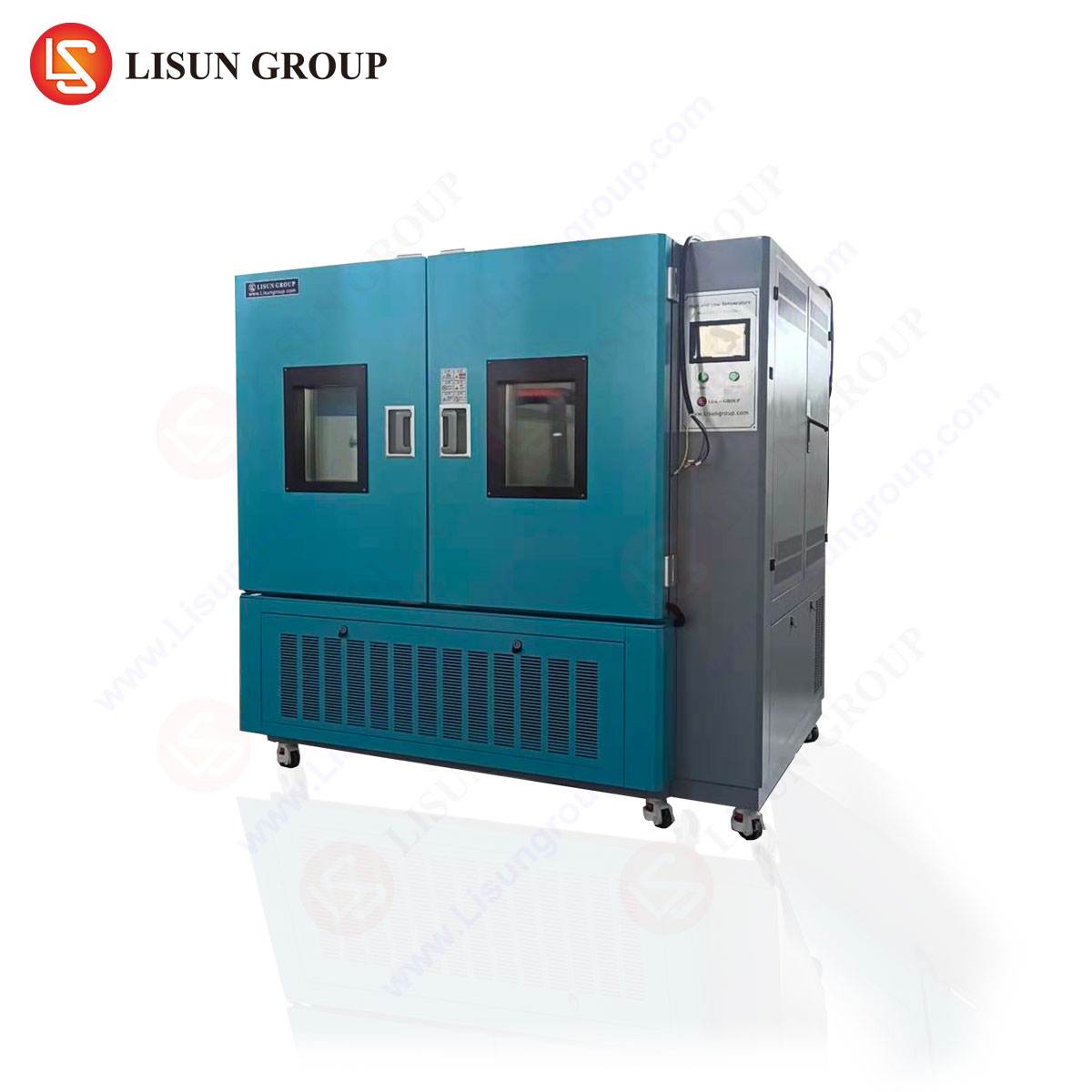



Technical Analysis of Precision Environmental Simulation: Key Features of LISUN Temperature Test Chambers
Environmental stress screening (ESS) and reliability qualification are non-negotiable phases in the development and production of modern industrial and consumer goods. The ability to accurately simulate and accelerate the effects of temperature, humidity, and thermal shock under controlled laboratory conditions is paramount for predicting field performance, identifying latent defects, and ensuring compliance with international standards. LISUN’s suite of temperature test chambers represents a significant engineering investment in this domain, offering calibrated instruments for rigorous product validation. This technical analysis delineates the core architectural and operational features that define these chambers, with a particular focus on the HLST-500D Thermal Shock Test Chamber as a paradigm for advanced two-zone thermal shock testing.
Architectural Philosophy: Modular Integrity and Chamber Construction
The foundational efficacy of any test chamber lies in its structural and material integrity. LISUN chambers are constructed with a dual-shell philosophy. The exterior casing typically employs cold-rolled steel plate with a powder-coated finish, providing robust physical protection and corrosion resistance. The interior workspace, subject to extreme thermal cycling, is fabricated from SUS304 stainless steel. This austenitic steel offers superior resistance to oxidation and corrosion, particularly under high-humidity or rapid temperature transition conditions, ensuring long-term dimensional stability and preventing contamination of test specimens.
Thermal insulation is not merely an accessory but a critical performance component. Chambers utilize high-density polyurethane foam or mineral wool, injected under pressure between the inner and outer shells. This creates a seamless, void-free barrier with low thermal conductivity (k-value typically below 0.022 W/m·K). The effectiveness of this insulation is quantified by the chamber’s thermal stability and temperature recovery rates, directly impacting energy efficiency and the precision of setpoint attainment. Door sealing employs double-lipped silicone rubber gaskets, often reinforced with a magnetic compression system, to ensure an hermetic seal that minimizes thermal leakage and humidity ingress, critical for maintaining gradient integrity during steady-state or transition phases.
Thermodynamic System Design and Refrigeration Topology
The heart of a temperature chamber is its refrigeration and heating system. LISUN employs a cascade refrigeration system for extended temperature ranges, particularly those spanning sub-ambient conditions. A typical cascade system involves two independent refrigeration circuits: a high-temperature stage (often using R404a refrigerant) that cools the condenser of a low-temperature stage (using R23 or R508b). This configuration enables the attainment of temperatures as low as -70°C or lower, which is essential for testing aerospace components destined for high-altitude environments or automotive electronics for arctic climates.
For heating, nickel-chromium alloy resistance heaters are standard, characterized by rapid thermal response and stable resistance over time. Their power density and distribution are carefully calculated to ensure uniform temperature rise without creating localized hot spots. The HLST-500D Thermal Shock Test Chamber exemplifies a specialized application of these principles. It operates on a two-zone (three-zone variants also exist) principle, comprising a high-temperature zone (+150°C to +200°C), a low-temperature zone (-65°C to -10°C), and a movable basket that transfers test specimens between them. Each zone possesses its own fully independent and optimized thermodynamic system. This segregation prevents thermal interference, allowing both zones to maintain their setpoints with high stability (±0.5°C typical) while the basket transitions. The transfer mechanism, whether vertical or horizontal, is actuated by a pneumatic or servo-motor system, with a transition time of less than 10 seconds (as per IEC 60068-2-14, Test N). This rapid transfer is the defining characteristic of a true thermal shock test, inducing mechanical stress through differential contraction and expansion of materials.
Precision in Humidity Generation and Control
For chambers like the GDJS series that offer humidity control, the method of vapor generation is a key differentiator. LISUN typically employs a steam injection system, where distilled or deionized water is heated to produce pure steam, which is then introduced into the air stream. This method avoids the mineral deposition associated with atomizing systems and provides a faster humidity response. The critical sensor for this control loop is the capacitive polymer film hygrometer, which offers accuracy within ±1.0% RH and long-term stability superior to traditional wet-bulb/dry-bulb psychrometers.
Humidity control is intrinsically linked to temperature precision. The dew point is a function of air temperature and water vapor pressure. Therefore, the chamber’s control system must co-regulate both parameters simultaneously. Advanced chambers feature a humidity pre-conditioning chamber within the air circulation duct, allowing for precise adjustment of air dew point before it enters the main workspace, thereby improving response time and reducing overshoot during humidity ramping cycles.
The Control System: Algorithmic Management of Environmental Parameters
The user interface and control logic represent the cerebral cortex of the test chamber. Modern LISUN chambers are governed by programmable logic controllers (PLCs) or dedicated microprocessor-based controllers with color touchscreen interfaces. Beyond simple setpoint entry, these systems enable complex profile programming, where temperature and humidity can be defined as time-variable functions with user-defined ramping rates, dwell times, and loop sequences.
A critical feature is the implementation of advanced control algorithms, such as Proportional-Integral-Derivative (PID) with fuzzy logic or adaptive gain tuning. These algorithms dynamically adjust heating, cooling, and dehumidification outputs to minimize deviation from the setpoint, ensuring compliance with stringent standards like MIL-STD-883 or IEC 60068-2-1/-2. Data logging is integral, with systems capable of recording all parameters at configurable intervals to a USB drive or over Ethernet for subsequent analysis and audit trail creation, a necessity for medical device (ISO 13485) and automotive (IATF 16949) quality systems.
Airflow Dynamics and Spatial Uniformity
Compliance with testing standards is not solely about achieving a setpoint at a single sensor location; it mandates adherence to spatial uniformity and temperature gradient tolerances. This is governed by the chamber’s airflow design. A forced air circulation system, driven by a centrifugal blower, moves air through the workspace. The air is directed over the heating/cooling coils and through specially designed baffles and diffusers to create a consistent, uniform flow pattern.
Spatial uniformity, often specified as ±0.5°C to ±2.0°C depending on the range, is validated via a nine-point or fifteen-point mapping test per ASTM E145 or IEC 60068-3-5. The design of the HLST-500D’s individual zones prioritizes this uniformity, as a gradient within the high-temperature zone could cause uneven expansion in a batch of telecommunications circuit boards, invalidating the comparative stress test. The adjustable louvers and aerodynamic design of the test basket further ensure that all specimens, whether they are automotive sensors or LED lighting drivers, experience an equivalent thermal environment.
Safety Interlocks and Fail-Safe Protections
Operational safety and specimen protection are engineered into the system through multiple redundant layers. Primary safety includes independent overtemperature protection devices, often a mechanical limit thermostat wired in series with the heater supply, which functions even in the event of a main controller failure. For refrigeration systems, high and low-pressure switches protect the compressors from abnormal operating conditions.
Additional safeguards are context-specific. In humidity chambers, low water level sensors prevent heater burnout. The HLST-500D incorporates multiple interlock sequences: the transfer basket cannot move if either zone door is not fully sealed, and the zone heaters are disabled during basket transit to prevent energy waste and hazard. Power failure recovery modes are programmable, allowing the test to either abort, hold, or resume gracefully, protecting sensitive samples like prototype medical implant electronics from uncontrolled thermal excursions.
Focused Application: The HLST-500D Thermal Shock Test Chamber
The HLST-500D model serves as a focused case study in applied thermal stress testing. Its specifications are tailored to induce and identify failures stemming from coefficient of thermal expansion (CTE) mismatches, solder joint fatigue, and material delamination.
Key Specifications:
- Test Volume: 500 Liters (dimensions customizable).
- Temperature Range:
- High Temperature Zone: +60°C to +200°C (or +150°C).
- Low Temperature Zone: -10°C to -65°C (or -55°C).
- Temperature Fluctuation: ≤±0.5°C.
- Temperature Deviation: ≤±2.0°C (spatial uniformity).
- Transition Time: <10 seconds (mechanical transfer).
- Recovery Time: ≤5 minutes to stabilize at target setpoint after basket entry (per standard conditions).
- Control System: Touchscreen programmable controller with RS-485/USB interface.
Testing Principle & Industry Use Cases:
The chamber executes Test N, Change of Temperature, from IEC 60068-2-14. A specimen, such as a populated printed circuit board (PCB) for an industrial control system, is subjected to repeated cycles of extreme high and low temperature dwells, with rapid transfers between zones. This accelerates thermal fatigue. In automotive electronics, this validates engine control units (ECUs) that must function after being exposed to desert heat and then a cold start. For aerospace components, it simulates the rapid temperature drop experienced when a satellite emerges from Earth’s shadow into direct solar radiation. Consumer electronics like smartphones are tested to ensure screen laminates and solder joints withstand daily environmental changes. The rapid transition is key; a slow ramp would allow components to equilibrate stress, failing to provoke the brittle fractures or interfacial failures the test is designed to uncover.
Competitive Advantages:
The HLST-500D’s advantages are systemic. Its independent zone refrigeration prevents thermal crosstalk, ensuring both zones are at precise setpoints when the basket arrives. The use of high-torque pneumatic actuators for basket transfer guarantees consistent sub-10-second transition times over millions of cycles. Furthermore, its insulation and sealing are over-engineered for the task, resulting in lower thermal losses and significantly reduced liquid nitrogen consumption (for LN2-cooled models) or compressor runtime (for mechanical-cooled models), yielding a lower total cost of ownership. The programmability allows for not only standard two-zone shock but also three-zone tests (with an intermediate standby zone) and extended dwell cycles for more specialized stress screening protocols.
Standards Compliance and Validation
A chamber is only as credible as its traceable compliance. LISUN chambers are designed to meet or exceed the environmental test procedures outlined in a multitude of international standards, including:
- IEC 60068-2-1: Test A: Cold
- IEC 60068-2-2: Test B: Dry Heat
- IEC 60068-2-14: Test N: Change of Temperature
- IEC 60068-2-30: Test Db: Damp Heat, Cyclic
- MIL-STD-202G: Test Method 107G, Thermal Shock
- MIL-STD-883K: Method 1010.9, Temperature Cycling
- JESD22-A104: Temperature Cycling
Initial validation is achieved through chamber mapping studies, which create a profile of the workspace under stable conditions. Regular recalibration of sensors against NIST-traceable references is mandatory to maintain the integrity of test data, especially for regulated industries like medical devices and automotive.
Conclusion
The design and manufacturing of LISUN temperature and thermal shock test chambers reflect a deep understanding of materials science, thermodynamics, and control theory applied to the practical needs of reliability engineering. From the selection of SUS304 stainless steel to the implementation of cascade refrigeration and adaptive PID algorithms, each feature is purpose-driven to achieve precise, repeatable, and standards-compliant environmental simulation. The HLST-500D exemplifies this philosophy, providing a robust, efficient, and highly controllable platform for applying the rigorous stresses of thermal shock testing across a vast spectrum of modern industrial components. Its value lies not in mere specification adherence, but in its ability to reliably uncover latent product weaknesses, thereby driving improvements in quality, safety, and long-term reliability in the field.
FAQ Section
Q1: What is the fundamental difference between a temperature cycling test and a thermal shock test?
A: The key distinction lies in the rate of temperature change. Temperature cycling typically involves controlled ramping rates (e.g., 1°C to 10°C per minute) between setpoints, allowing the entire specimen to approach thermal equilibrium during transition. Thermal shock, as performed by chambers like the HLST-500D, features an extremely rapid transfer (often <10 seconds) between two extreme pre-conditioned zones. This creates a severe temperature gradient within the specimen itself, inducing different levels of contraction/expansion in adjacent materials, which is a more aggressive test for mechanical integrity failures like solder joint cracking or ceramic substrate delamination.
Q2: When testing a batch of mixed components (e.g., small PCBs and large cable assemblies), how is load configuration managed in a thermal shock chamber to ensure valid results?
A: Load configuration is critical and governed by the test standard. The chamber workspace must allow for adequate airflow around all specimens. Test specimens should be arranged on the basket shelves to minimize obstruction to the conditioned air. For mixed loads, it is often necessary to perform a preliminary temperature mapping study with a dummy load simulating the actual mass and arrangement. This ensures the specified temperature deviation and recovery time tolerances are met for all specimen locations. Overloading the chamber or creating dense clusters will invalidate the test by creating microclimates with different thermal profiles.
Q3: For the HLST-500D, what are the primary factors in choosing a mechanical refrigeration system versus a liquid nitrogen (LN2) cooling system?
A: The choice involves a trade-off between operational cost, cooling rate, and facility infrastructure. Mechanical refrigeration (compressor-based) has a higher initial cost but a lower ongoing cost, as it uses electricity. It is ideal for high-usage scenarios and facilities without LN2 supply. LN2 systems have a lower initial cost and can achieve faster cooldown rates and potentially lower ultimate temperatures. However, the ongoing cost of consumable LN2 can be significant, and it requires storage Dewars and delivery infrastructure. The decision is based on test volume, required cooling speed, and total cost of ownership calculations.
Q4: How does the control system handle condensation formation during testing, particularly when transitioning from cold to humid or high-temperature conditions?
A: Condensation management is an active process. In humidity-capable chambers, the control algorithm may initiate a dehumidification phase (using a desiccant system or cooling coils to drop the air below its dew point) prior to a low-to-high temperature ramp. In a thermal shock chamber like the HLST-500D, condensation typically forms on specimens when the cold basket enters the high-temperature zone. The chamber design mitigates this by ensuring the high-temperature zone has very low absolute humidity (it is a dry heat zone) and by having a high air circulation rate to quickly evaporate surface moisture. For tests where condensation is expressly prohibited, a third “standby” zone at an intermediate temperature may be used to pre-condition the specimen and bake off moisture before the high-temperature exposure.