




Advancing Product Safety: A Technical Examination of Compliance Testing Methodologies and the Role of the Needle Flame Test
The global marketplace for electrical and electronic equipment is underpinned by a complex framework of safety standards. These standards, developed by international bodies such as the International Electrotechnical Commission (IEC), Underwriters Laboratories (UL), and the European Committee for Electrotechnical Standardization (CENELEC), are not arbitrary hurdles but scientifically-derived protocols designed to mitigate risks of fire, electric shock, and mechanical injury. For manufacturers across a diverse spectrum of industries—from medical devices and aerospace components to household appliances and automotive electronics—demonstrating compliance is a non-negotiable prerequisite for market access and brand integrity. This necessitates a rigorous approach to product safety engineering, where standardized testing provides the empirical evidence of a product’s resilience under fault conditions. Among the suite of tests required for many product categories, resistance to fire hazards holds critical importance, with the needle flame test serving as a fundamental assessment for evaluating the flammability of materials and components.
The Imperative of Fire Hazard Assessment in Product Design
Fire initiation within electrical equipment can originate from multiple sources: overloaded circuits, component failures, poor connections, or external thermal influences. The primary objective of fire hazard assessment is not necessarily to create products that are entirely non-combustible—an often impractical goal—but to ensure that any ignition is limited in duration and spread, does not propagate flame to surrounding materials, and self-extinguishes promptly once the ignition source is removed. This principle of limited fire spread is central to many safety standards. Materials used in electrical components like switches, sockets, and connectors, as well as enclosures for industrial control systems, telecommunications equipment, and office equipment, must be evaluated for their reaction to a small flame. This evaluation simulates a realistic fault condition, such as an overheated or arcing element within the equipment igniting adjacent parts. The consequences of inadequate material selection can be severe, ranging from localized damage that renders a product inoperable to catastrophic failures that pose direct threats to life and property. Therefore, the selection of appropriate testing methodologies and equipment is a cornerstone of responsible product development.
Deconstructing the Needle Flame Test: Principles and Governing Standards
The needle flame test, formally standardized in IEC 60695-11-5, “Fire hazard testing – Part 11-5: Test flames – Needle-flame test method – Apparatus, confirmatory test arrangement and guidance,” is designed to assess the fire hazard presented by a small, precisely defined flame. Unlike larger-scale flame tests, the needle flame test employs a minimal ignition source to evaluate the flammability of components or sub-assemblies that may be exposed to small heating elements or faulty electrical parts in service. The test flame is produced by supplying butane at a controlled rate through a specified orifice, resulting in a flame with a nominal thermal power of approximately 45W. This simulates the energy output of a small, incidental ignition source.
The test procedure involves applying the needle flame to the test specimen for a predetermined period (typically 30 seconds, as per many derivative standards). Following the application of the flame, observations are meticulously recorded: the duration of any sustained flaming, the extent of flame spread, whether burning droplets or particles are ejected, and the condition of any underlying tissue paper used to detect such droplets. Pass/fail criteria, detailed in the end-product standard (e.g., IEC 60950 for IT equipment, IEC 62368 for audio/video and ICT equipment, IEC 60335 for household appliances), generally stipulate maximum allowable flaming times, prohibitions on flame spread to certain boundaries, and limits on the production of flaming debris. The test’s value lies in its ability to provide a reproducible, comparative measure of how a material or component assembly behaves when subjected to a small, localized fire threat.
The LISUN ZY-3 Needle Flame Test Apparatus: A Technical Specification Overview
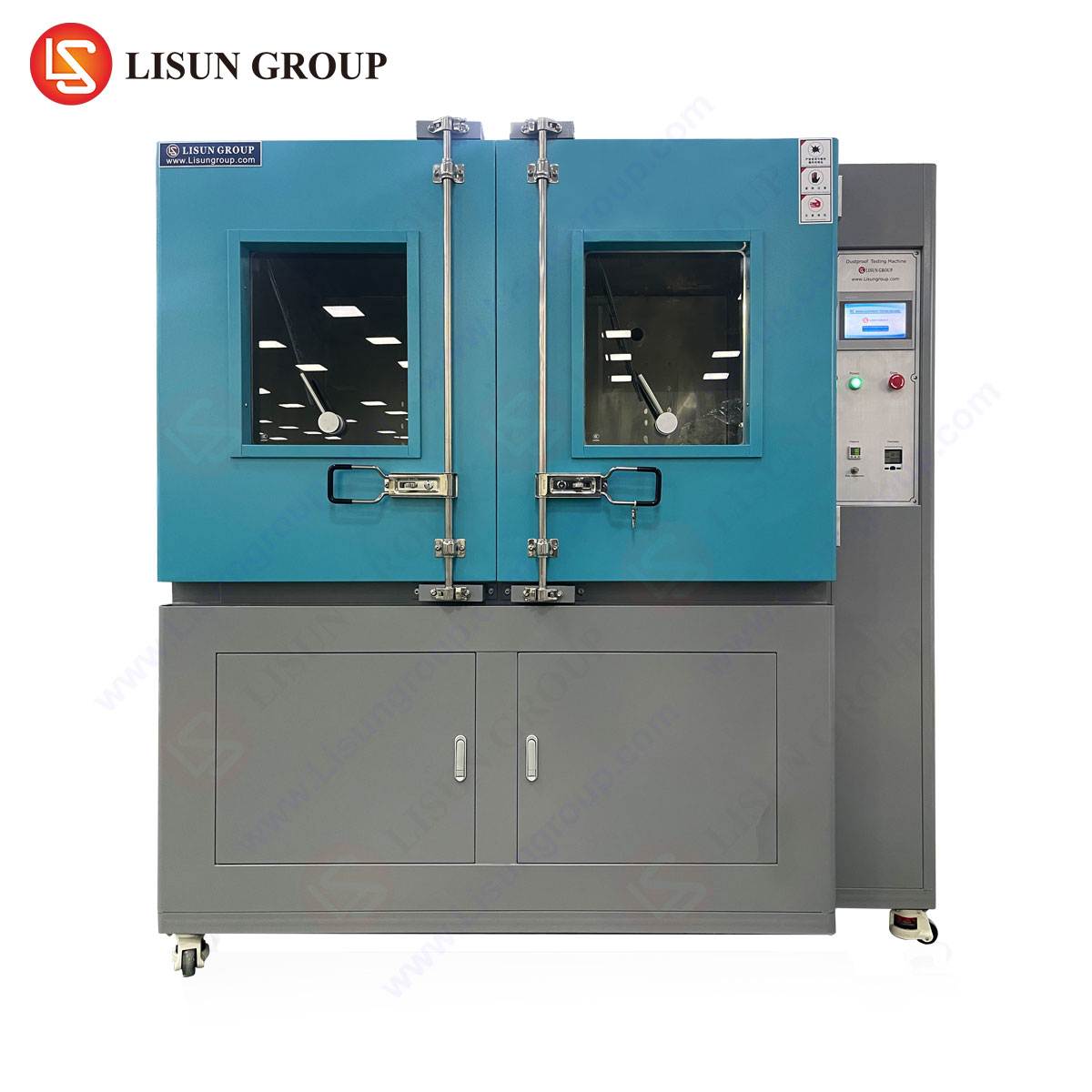
To execute the needle flame test with the precision and repeatability demanded by certification bodies, specialized apparatus is required. The LISUN ZY-3 Needle Flame Test Chamber represents a engineered solution designed to meet the exacting requirements of IEC 60695-11-5 and related standards. Its design philosophy centers on controlled, consistent, and user-safe operation.
Core Specifications and Design Features:
- Flame Source and Control System: The apparatus incorporates a precision needle burner with a standardized orifice diameter. A high-precision flow meter and regulating valve ensure a consistent butane gas flow rate, maintaining the flame’s nominal 45W output. An automatic ignition system enhances operational safety and reliability.
- Timing and Application Mechanism: A digital programmable timer controls the flame application duration with millisecond accuracy, typically programmable from 0 to 999.9 seconds. The burner is mounted on a mechanically or electronically controlled movement mechanism, allowing for precise, repeatable positioning of the flame against the test specimen at the required 45-degree angle.
- Test Chamber and Safety: The constructed chamber is fabricated from stainless steel and painted steel, featuring a large observation window of tempered glass for clear visibility during testing. Integrated safety features include flame-out protection and gas leakage monitoring. An internal black background with graduated scale aids in accurate measurement of flame height (initially calibrated to 12mm ± 1mm) and observation of test effects.
- Dimensions and Compliance: The overall design ensures sufficient workspace to accommodate a range of specimen sizes and the confirmatory test arrangement specified in the standard. The apparatus is engineered to comply fully with the dimensional and procedural mandates of IEC 60695-11-5, GB/T 5169.5, and equivalent UL and other regional standards.
Table 1: Key Technical Parameters of the LISUN ZY-3 Needle Flame Tester
| Parameter | Specification |
| :— | :— |
| Governing Standard | IEC 60695-11-5, GB/T 5169.5 |
| Flame Type | Needle Flame |
| Fuel Gas | Commercial Butane (≥95% purity) |
| Nominal Thermal Power | 45W |
| Timer Range | 0 ~ 999.9 Seconds (Digital) |
| Flame Application Time | Typically 30s (programmable) |
| Burner Angle | Fixed at 45° |
| Chamber Material | Stainless Steel & Tempered Glass |
| Safety Features | Flame-out Protection, Gas Leak Detection |
Application Spectrum: Industry-Specific Use Cases for Needle Flame Testing
The utility of the needle flame test transcends a single industry, finding relevance wherever electrical components or non-metallic materials are used in proximity to potential ignition sources.
- Household Appliances & Consumer Electronics: For products like food processors, power supplies for televisions, or internal boards of gaming consoles, the test evaluates plastic enclosures, internal baffles, and wire harness sleeving to ensure a fault in a motor or transformer does not lead to a cabinet fire.
- Automotive Electronics: Within the vehicle’s harsh environment, components like electronic control units (ECUs), wiring harness connectors, and sensors must resist ignition from short circuits or overheating. Testing these components per automotive derivatives of needle flame standards is critical for functional safety.
- Lighting Fixtures: Especially for LED drivers and plastic housings of luminaires, the test assesses the risk of flame propagation from a failed capacitor or LED module.
- Medical Devices: For patient-connected equipment or devices with internal power supplies, limiting fire hazard is paramount. Needle flame testing on device housings and internal material assemblies is a common requirement.
- Aerospace and Aviation Components: The extreme emphasis on safety and weight reduction (using polymers) makes flammability testing, including small-scale flame tests, a rigorous part of the qualification process for cabin interior components and electronic bay equipment.
- Electrical Components and Cable Systems: Switches, socket outlets, and cable insulation/tie wraps are directly tested to ensure they do not sustain or propagate flame from a poor connection or overload.
Operational Advantages of the LISUN ZY-3 in a Compliance Workflow
Integrating the LISUN ZY-3 into a product validation laboratory offers several tangible advantages that extend beyond mere standard compliance. The apparatus’s design emphasizes measurement consistency, a non-negotiable factor for generating reliable data that can withstand audit scrutiny. The precision gas flow control and automated timing eliminate key variables, ensuring that test results are a function of the specimen’s properties, not apparatus inconsistency.
Furthermore, the enhanced operational safety provided by features like enclosed testing, automatic ignition, and gas monitoring protects technicians and laboratory assets. The configurable test parameters allow the equipment to be adapted for a wide range of product-specific standards that may stipulate different flame application times or specimen orientations. For manufacturers developing products for global markets, this flexibility is crucial. Finally, the robust construction and clear observational window facilitate efficient testing and documentation, streamlining the path from design iteration to final compliance certification.
Integrating Fire Testing into a Holistic Product Safety Strategy
It is vital to contextualize the needle flame test within a broader product safety engineering framework. This test is rarely employed in isolation. It typically forms part of a sequence of evaluations that may include glow-wire tests (IEC 60695-2-10/11/12/13) for simulating overheating components, horizontal/vertical flame tests (UL 94) for material classification, and ball pressure tests for assessing heat resistance. A comprehensive strategy involves:
- Material Selection: Choosing components and insulating materials with known, certified flammability ratings (e.g., UL 94 V-0, HB).
- Design Review: Implementing physical barriers, heat sinks, and adequate creepage/clearance distances to mitigate fault conditions.
- Prototype Validation: Subjecting initial prototypes to the full battery of applicable safety tests, including the needle flame test, to identify weaknesses.
- Corrective Action and Re-test: Modifying designs based on failure modes observed and verifying improvements through re-testing.
- Production Control: Ensuring that production-grade materials and processes do not deviate from the validated prototype specifications.
In this sequence, apparatus like the LISUN ZY-3 provide the critical empirical feedback loop, transforming theoretical safety designs into verified, compliant products.
Conclusion
The relentless innovation in the electrical and electronics industries brings with it an enduring responsibility to ensure product safety. Compliance testing, far from being a bureaucratic checkpoint, is an essential engineering discipline that validates risk mitigation strategies. The needle flame test, as a simulation of a specific but common fire initiation scenario, remains a indispensable tool in this discipline. The deployment of precise, reliable, and standards-compliant apparatus, such as the LISUN ZY-3 Needle Flame Test Chamber, enables manufacturers across sectors—from industrial control systems to telecommunications infrastructure—to obtain consistent, auditable data. This data directly informs design choices, reduces time-to-market by identifying failures early, and ultimately substantiates the claim that a product is safe for its intended use. In the intricate ecosystem of global product compliance, such testing solutions form the foundational infrastructure for trust and safety.
Frequently Asked Questions (FAQ)
Q1: How often does the LISUN ZY-3 apparatus itself require calibration, and what does that process involve?
A1: To maintain testing integrity, periodic calibration is essential. It is recommended to perform a confirmatory test (as per clause 5 of IEC 60695-11-5) at regular intervals, typically every six months or after any maintenance on the gas system. This involves using a standardized copper block calorimeter to verify that the flame delivers the correct thermal output. Additionally, the gas flow meter and timers should be calibrated against traceable standards annually.
Q2: Can the ZY-3 be used to test components that are ultimately intended for compliance with UL standards, not just IEC?
A2: Yes. While the apparatus is constructed to meet IEC 60695-11-5, many UL standards reference similar or identical test methods. For instance, requirements in UL 746A and other standards for polymeric materials may specify a small-scale flame test analogous to the needle flame test. The key is to configure the test parameters (flame application time, positioning, pass/fail criteria) exactly as stipulated in the target end-product standard, whether it is IEC, UL, EN, or GB.
Q3: What are the critical specimen preparation considerations before conducting a needle flame test?
A3: Specimens must be conditioned in a standard atmosphere (e.g., 23°C ± 2°C and 50% ± 5% relative humidity for 48 hours per IEC 60695-11-5) prior to testing to eliminate moisture effects. The specimen should be mounted in a representative manner—if it is normally enclosed, testing may be done on the complete enclosure; if it’s an internal component, it may be tested in isolation. The standard also specifies the use of a layer of tissue paper approximately 200mm below the specimen to detect any burning droplets or particles.
Q4: In a failure scenario, what kind of data is most useful for guiding a redesign?
A4: Simply noting a “fail” is insufficient for corrective action. Detailed observation is crucial. Engineers should document: the exact time after flame removal when self-extinguishment occurred, the precise path and maximum extent of flame spread, the nature and direction of any flaming droplets, and the specific point of ignition and material involved. This forensic data pinpoints the vulnerability, guiding whether a material substitution, a geometric change (adding a barrier), or a change in component layout is required.
Q5: For cable and wiring systems, is the needle flame test applied to a single wire or a bundled harness?
A5: The applicable product standard dictates the specimen configuration. Some standards may require testing a single insulated conductor to evaluate the base material’s properties. Others, particularly those focusing on installation safety, may require testing a bundled harness or a cable tied to a representative surface to assess the potential for flame propagation along multiple wires or ignition of surrounding materials. The test apparatus must accommodate the physical size of these different specimen arrangements.