




A Comprehensive Guide to Environmental Stress Screening: Principles, Applications, and the Role of Thermal Shock Testing
Environmental test chambers are indispensable instruments within the research, development, and quality assurance frameworks of modern manufacturing. These systems simulate a vast spectrum of atmospheric and climatic conditions, enabling engineers to verify product durability, identify failure modes, and ensure compliance with international standards prior to market release. This guide provides a technical examination of environmental testing methodologies, with a focused analysis on thermal shock testing as a critical accelerated stress screening technique.
Fundamental Principles of Accelerated Reliability Testing
The core objective of environmental testing is not merely to observe product function under benign laboratory conditions, but to proactively precipitate latent failures through controlled, accelerated stress application. This practice, known as Highly Accelerated Life Testing (HALT) or Environmental Stress Screening (ESS), operates on the principle that the rate of chemical and physical degradation processes within materials and components follows an Arrhenius-type relationship, where increasing the environmental stress exponentially accelerates failure mechanisms. By subjecting a unit to extremes of temperature, humidity, thermal cycling, or shock, manufacturers can compress years of field exposure into a test lasting days or weeks. This allows for the identification of design flaws, weak solder joints, incompatibilities in coefficient of thermal expansion (CTE), and material imperfections that would otherwise manifest as costly field failures.
The Criticality of Thermal Shock Testing in Electronics Validation
Among various environmental tests, thermal shock testing represents one of the most severe and revealing forms of stress screening. It evaluates a test specimen’s ability to withstand rapid, extreme transitions between high and low temperature extremes. The test does not simulate a realistic field environment; rather, it induces extreme mechanical stresses caused by the rapid expansion and contraction of dissimilar materials. These stresses are particularly revealing for assemblies comprising multiple materials, such as printed circuit board assemblies (PCBAs), encapsulated modules, and welded or bonded joints.
The failure mechanisms precipitated include solder joint fatigue, ceramic capacitor cracking (due to flexure of the PCB), delamination of laminated structures, and loss of hermeticity in sealed components. The transition rate, or dwell time at temperature extremes, is a critical parameter. True thermal shock requires a transfer time of less than one minute, often achieved via a moving basket transferring the product between separate hot and cold zones, as opposed to a single chamber that ramps temperature.
Introducing the HLST-500D Thermal Shock Test Chamber
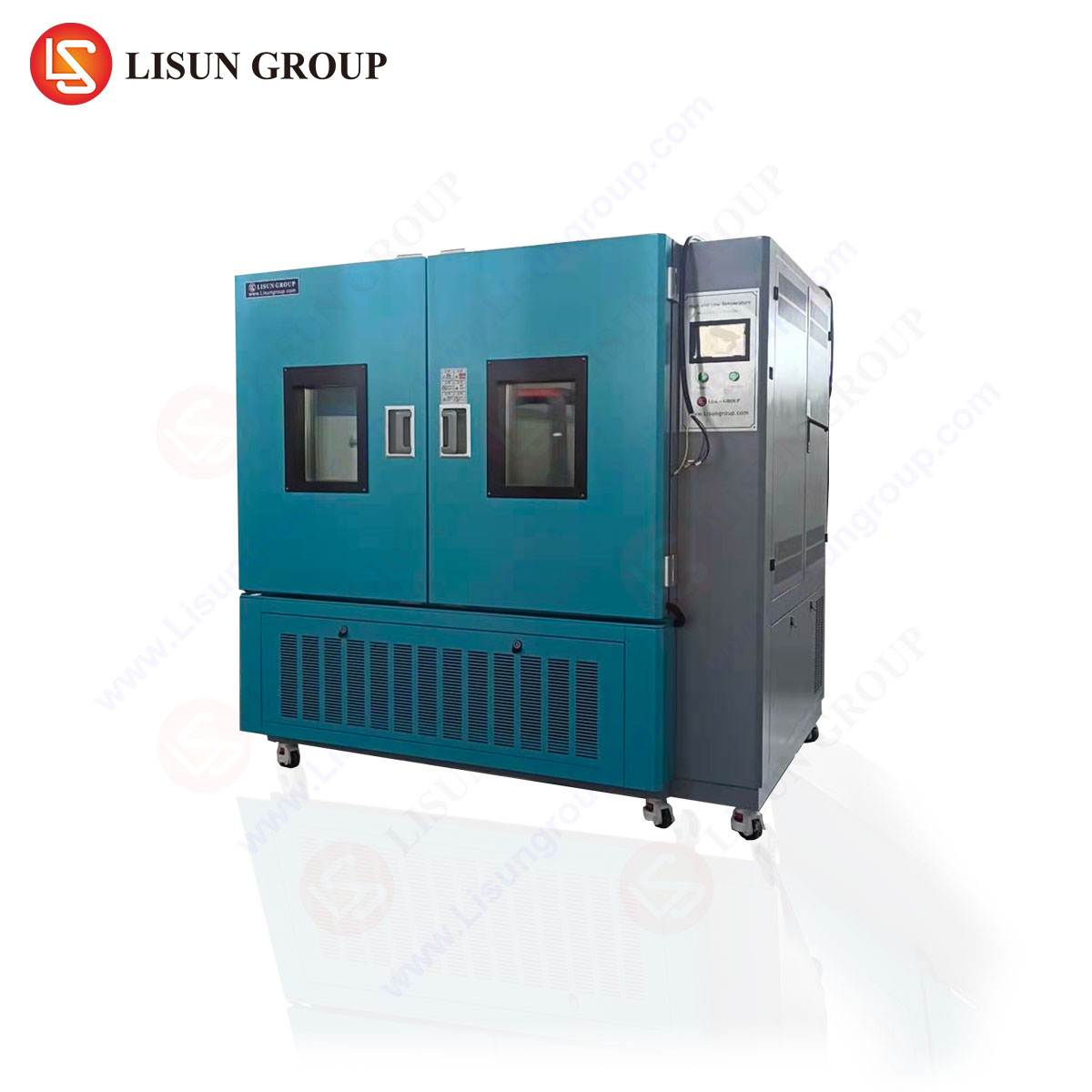
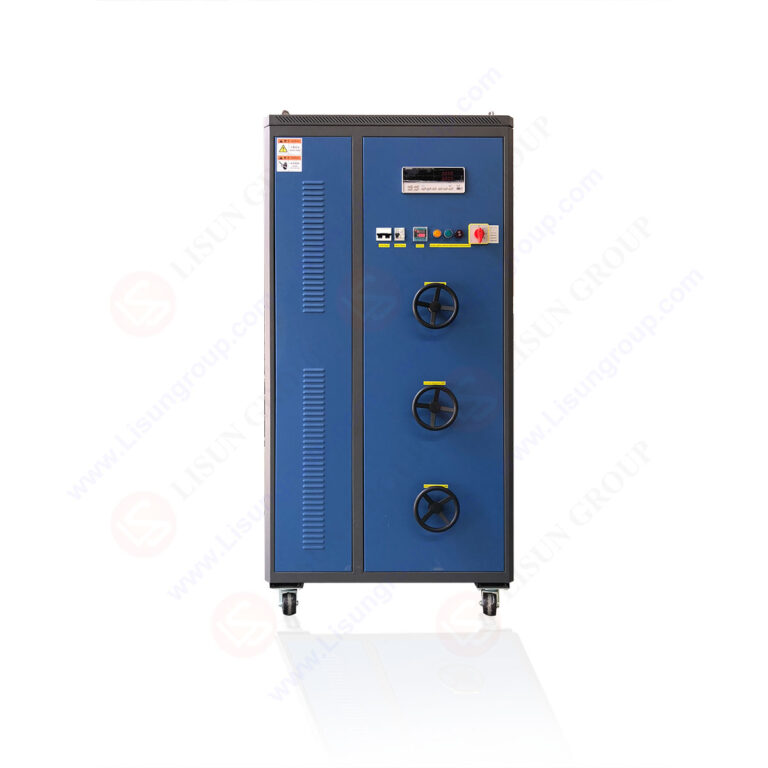
The LISUN HLST-500D is a three-zone thermal shock test chamber engineered to deliver precise and repeatable thermal shock conditioning in compliance with major international test standards, including IEC 60068-2-14, MIL-STD-202G, and JESD22-A104. Its design facilitates the rapid transfer of test specimens between independently controlled high-temperature, low-temperature, and ambient preparation zones.
Key Specifications and Operational Parameters:
- Test Volume: 500 Liters (internal dimensions customizable).
- Temperature Range: High Temperature Chamber: +60°C to +200°C; Low Temperature Chamber: -10°C to -65°C (extendable to -80°C with optional cascade refrigeration).
- Transition Time: < 10 seconds (mechanical transfer from extreme to extreme).
- Recovery Time: High Temperature zone recovers to +150°C from ambient in ≤5 minutes; Low Temperature zone recovers to -55°C from ambient in ≤5 minutes.
- Control System: Digital PID controller with programmable logic for cycles, dwell times (typically 30 minutes to 2 hours), and system diagnostics.
- Construction: Inner chamber constructed of SUS304 stainless steel; insulation utilizes high-density polyurethane foam.
Testing Principle: The HLST-500D operates on a two-basket transfer system. Test specimens are loaded onto a carriage within the ambient zone. Upon test initiation, the carriage swiftly moves the specimens into the high-temperature zone for a programmed dwell period, ensuring thermal saturation. Subsequently, the transfer mechanism rapidly shuttles the specimens directly into the low-temperature zone for an equivalent dwell. This cycle repeats for the programmed number of iterations. The separation of zones prevents thermal interference and enables rapid recovery, maintaining the integrity of the extreme setpoints.
Industry-Specific Applications and Use Cases
The HLST-500D is deployed across industries where electronic and electromechanical component reliability is non-negotiable.
- Automotive Electronics: Validating engine control units (ECUs), sensors, and infotainment systems against the extreme thermal inertia experienced under-hood or in exterior applications. A component may transition from a cold-soak winter night to full operational heat within minutes.
- Aerospace and Aviation Components: Screening avionics, satellite components, and communication modules for reliability in the severe temperature gradients encountered during ascent/descent or orbital operations.
- Telecommunications Equipment: Testing base station electronics, fiber optic transceivers, and outdoor hardening for 5G infrastructure, which must endure daily and seasonal temperature swings.
- Medical Devices: Ensuring the reliability of implantable device electronics, diagnostic imaging components, and portable monitors that may undergo sterilization (heat) and then storage (cold).
- Lighting Fixtures: Qualifying LED drivers and outdoor luminaires, where rapid thermal cycling from diurnal cycles and internal joule heating can cause premature failure.
- Electrical Components & Industrial Control Systems: Stress testing contactors, relays, PLCs, and switches used in industrial environments where machinery generates heat, but facilities may be unheated.
Competitive Advantages in Engineering Design
The HLST-500D incorporates several design features that translate to technical and operational advantages in a quality laboratory setting.
Precision and Uniformity: The use of independent chambers for hot and cold states eliminates thermal cross-talk. Advanced airflow design within each zone ensures temperature uniformity typically within ±2°C, guaranteeing that all specimens on the carriage are subjected to identical conditions, a critical factor for test reproducibility.
System Resilience and Reduced Maintenance: The chamber employs a dual-circuit refrigeration system for the low-temperature zone, enhancing reliability and efficiency. The mechanical transfer system is engineered for millions of cycles with minimal wear, reducing downtime. Diagnostic ports and modular component design facilitate proactive maintenance.
Operational Efficiency and Safety: The inclusion of a third, ambient zone allows for loading/unloading without exposing the test specimens or operator to extreme temperatures, improving workflow and safety. Programmable rest periods at ambient can be integrated into the test profile to simulate real-world conditions more closely, such as a device cooling overnight.
Compliance and Data Integrity: The integrated controller allows for complex multi-segment programming and real-time data logging of chamber temperatures and test status. This provides an auditable trail for compliance with quality management systems like ISO/IEC 17025 and is essential for generating evidence for certification bodies.
Integration into a Broader Quality Assurance Protocol
It is critical to understand that thermal shock testing is typically one phase within a sequential battery of environmental tests. A typical validation flow for an automotive sensor, for example, might involve:
- Temperature Cycling (slower ramps, higher cycle counts) to induce solder fatigue.
- Thermal Shock (rapid transitions) to identify CTE mismatches and brittle fractures.
- Damp Heat or Humidity Testing to evaluate corrosion and electrochemical migration.
- Vibration and Combined Stress Testing to simulate in-transit and operational mechanical stress.
The HLST-500D provides the crucial, high-severity data point in this sequence. Failure analysis following a thermal shock test is particularly valuable, as the failure modes are often clear and attributable to specific material or assembly process weaknesses.
Conclusion: The Role of Rigorous Screening in Product Development
In an era of global supply chains and increasing product complexity, the role of definitive environmental stress screening has never been more pronounced. Equipment like the HLST-500D Thermal Shock Test Chamber provides engineering teams with a controlled, accelerated, and revealing tool to de-risk product launches. By deliberately forcing failures in the laboratory, manufacturers can implement corrective actions in design and manufacturing, ultimately leading to products with demonstrably higher field reliability, enhanced brand reputation, and reduced warranty liabilities. The data derived from such testing is not merely a compliance checkbox; it is a fundamental input into the iterative process of robust engineering design.
Frequently Asked Questions (FAQ)
Q1: What is the fundamental difference between thermal cycling and thermal shock testing?
Thermal cycling involves a relatively slow, controlled rate of temperature change within a single chamber, often used to simulate daily or seasonal changes and induce fatigue. Thermal shock utilizes an ultra-rapid transition (typically <1 minute) between two extreme setpoints in separate chambers, creating sudden mechanical stress to identify gross weaknesses, CTE mismatches, and hermeticity failures. They are complementary tests targeting different failure mechanisms.
Q2: How do we determine the appropriate temperature extremes and dwell times for our product test?
Extremes are typically derived from the product’s operational and storage specifications, with an added margin for safety. Dwell times are set to ensure the entire test specimen, not just its surface, reaches thermal equilibrium. This can be validated using thermocouples attached to the thermal mass of the unit. Common standards like IEC 60068-2-14 provide guidance, but the most relevant profile often comes from the product’s specific environmental requirements document.
Q3: Can the HLST-500D accommodate tests requiring powered operation of the device under test (DUT) during the cycle?
Yes, but this requires careful planning. The chamber can be fitted with electrical feed-through ports to provide power and monitor signals to the DUT during the test. However, the rapid transfer and space constraints within the baskets necessitate the use of flexible, rated cabling and may limit the number of connections. In-situ monitoring is valuable for detecting intermittent failures that occur only at temperature extremes.
Q4: Our product is large and heavy. Is the 500-liter volume suitable, and what are the weight limits?
The 500-liter internal volume refers to the space within the test baskets. The chamber can accommodate large, singular items or multiple smaller ones. The specification sheet details the maximum load capacity of the transfer carriage (e.g., 50kg). It is crucial to ensure the weight and dimensions of the load do not exceed these limits, as overloading can damage the transfer mechanism and invalidate test conditions.
Q5: Following a thermal shock test, some components passed but others exhibited cracks. Does this indicate a chamber uniformity issue?
Not necessarily. Non-uniform failure is a common and informative outcome. It typically points to variances in the components themselves—such as different material batches, solder paste application, or assembly torque—rather than a chamber flaw. This result is highly valuable for pinpointing specific manufacturing process inconsistencies that need tighter control. Chamber uniformity data, logged during the test, can be reviewed to rule out equipment variability.