




Abstract
In the rigorous landscape of product compliance, ensuring immunity to radio frequency disturbances conducted via power and signal cables is paramount. The LISUN RF Conducted Immunity Test System, specifically the RFCI61000-6 series, provides a complete, integrated solution for validating electronic equipment against the stringent requirements of IEC 61000-4-6. This system is engineered to generate and inject controlled RF disturbances, enabling precise assessment of an Equipment Under Test’s (EUT) resilience. Its core capabilities, including dual high-power amplifier options and multi-mode injection, deliver essential value for technical professionals in medical, industrial, automotive, and telecommunications sectors striving for robust EMC compliance and market access.
1.1 The Imperative of Conducted RF Immunity
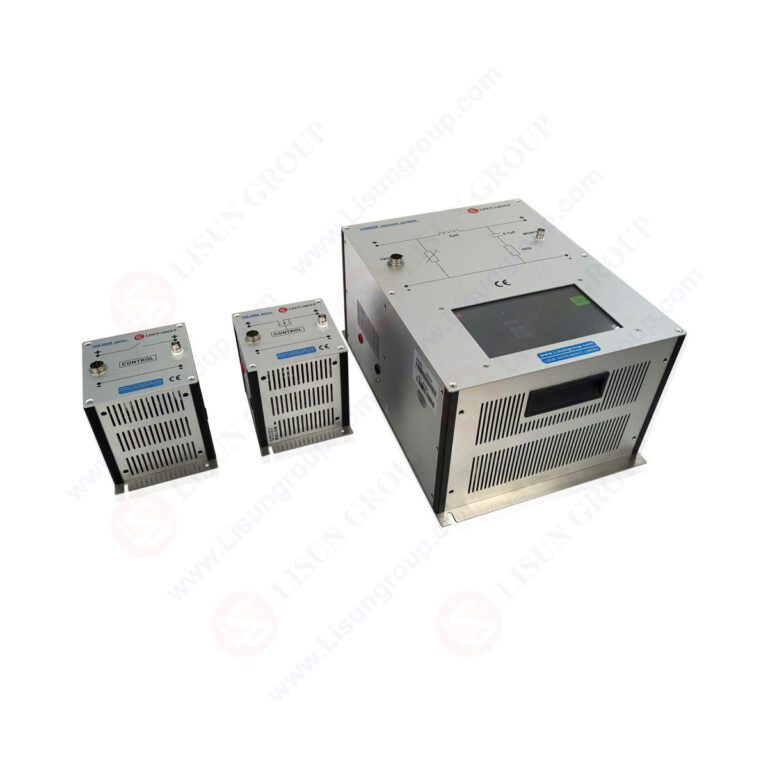
Modern electronic devices are perpetually exposed to a dense electromagnetic environment where radio frequency energy can infiltrate systems not through radiation, but via conduction along connected cables. These conducted disturbances, originating from sources like broadcast transmitters or nearby industrial equipment, can couple onto power leads, data lines, and control ports, leading to malfunctions, data corruption, or complete system failure. RF conducted immunity testing simulates this real-world threat in a controlled laboratory setting. It is a non-negotiable validation step for product safety, reliability, and regulatory approval across global markets, forming a critical pillar of comprehensive EMC immunity assessment.
1.2 Core Principle: Injected Disturbance Simulation
The fundamental principle of this test involves generating a continuous wave (CW) RF signal within a specified frequency range—typically 150 kHz to 230 MHz or 80 MHz as per base standards—and injecting it onto the cables of the EUT. This is accomplished using coupling devices, such as Coupling/Decoupling Networks (CDNs) or electromagnetic clamps, which superimpose the test signal onto the line while preventing it from propagating back into the supporting test infrastructure. The test signal is often amplitude modulated (AM) at 1 kHz with an 80% depth to simulate real-world interference characteristics. The system must precisely control the injected signal level, measured as an open-circuit voltage, to the test severity level defined by the applicable product standard.
2.1 Integrated System Design Philosophy
The LISUN RF Conducted Immunity Test System distinguishes itself through a fully integrated architecture that consolidates the signal source, power amplifier, forward/reverse power meter, and control software into a single, coherent unit. This design eliminates the need for complex interconnections between separate instruments, reducing setup time, minimizing potential for connection errors, and ensuring optimal impedance matching between stages. The integrated power meter allows for real-time monitoring of forward and reflected power, enabling immediate calculation of Voltage Standing Wave Ratio (VSWR) and verification that the required test level is being accurately delivered to the coupling device, a key requirement of clause 6 of IEC 61000-4-6.
2.2 Key Subsystem Components
The system’s performance hinges on its core subsystems. A high-stability synthesized signal generator provides the foundational RF signal with precise frequency control. This signal is fed into a robust, linear power amplifier—available in 35W and 85W configurations—which boosts it to the necessary levels for injection. The integrated directional coupler and dual-channel power meter are critical for closed-loop control, measuring the power delivered to the load and any reflected power due to impedance mismatches. All these elements are governed by an intuitive touchscreen human-machine interface (HMI) and embedded control software, which automates test sequences, manages calibration factors for CDNs, and logs all test parameters and results for compliance documentation.
3.1 Performance Metrics and Standard Compliance
The RFCI61000-6 series is explicitly designed to meet and exceed the test generator performance requirements outlined in IEC 61000-4-6, EN 61000-4-6, and GB/T 17626.6. Its specifications ensure accurate and repeatable testing. The system covers the standard frequency range of 150 kHz to 230 MHz, with the capability to generate the mandated 1 kHz, 80% AM modulation. It provides precise control over the output level, typically adjustable from 0 to 140 V for the 85W model when used with appropriate CDNs. A low system VSWR is maintained to ensure efficient power transfer and minimize standing waves that could distort the test signal.
3.2 Model Variants: RFCI61000-6-35W vs. RFCI61000-6-85W
Selection between the 35W and 85W models is determined by the required test levels and the impedance of the coupling devices used. Higher test severity levels (e.g., 10 Vrms) or the use of injection methods with higher losses, such as the bulk current injection (BCI) probe, demand greater amplifier output power. The following table provides a comparative overview of the two primary models based on key performance parameters.
| Performance Metric | RFCI61000-6-35W Model | RFCI61000-6-85W Model | Industry Relevance |
|---|---|---|---|
| RF Power Amplifier | 35 Watts | 85 Watts | Determines maximum achievable test voltage; 85W is essential for high-level tests or lossy coupling methods. |
| Typical Output Voltage (into 150Ω) | Up to ~70 V | Up to ~140 V | Directly relates to test severity levels per IEC 61000-4-6 (e.g., Level 3: 10 Vrms). |
| Frequency Range | 150 kHz – 230 MHz | 150 kHz – 230 MHz | Fully covers the scope of IEC/EN 61000-4-6 and GB/T 17626.6. |
| Modulation | AM (1 kHz, 80%), Pulse | AM (1 kHz, 80%), Pulse | AM simulates real-world interference; pulse modulation may be required for certain automotive or military standards. |
| VSWR (Typical) | < 1.5:1 | < 1.5:1 | Low VSWR indicates good impedance matching, ensuring accurate power delivery and system protection. |
4.1 Coupling/Decoupling Network (CDN) Method
The CDN method, described as the preferred and most reproducible technique in IEC 61000-4-6 (Clause 7), is directly supported by the LISUN system. CDNs are purpose-built for specific cable types (e.g., power, signal, data). They provide a defined coupling impedance (typically 150Ω) and incorporate decoupling networks on other ports to isolate the auxiliary equipment. The test system’s software includes a library of calibration factors for various CDN models, allowing it to automatically compensate and display the correct open-circuit test voltage at the EUT port, ensuring adherence to the standard’s calibration procedure defined in Annex B.
4.2 Alternative Injection Techniques
For cables that cannot be disconnected for CDN insertion or for pre-compliance testing, the standard outlines alternative methods. The LISUN system is compatible with these through appropriate accessories. The Electromagnetic (EM) Clamp, covered in Clause 8 of the standard, is a non-contact device clamped around the cable bundle, useful for frequency ranges above 10 MHz. Bulk Current Injection (BCI), using a current probe, is another method, particularly prevalent in automotive testing standards like ISO 11452-4. The system’s sufficient power reserve, especially in the 85W model, is crucial to overcome the higher losses associated with these clamping devices and still achieve the required current or field levels.
5.1 Touchscreen Interface and Test Management
The integrated touchscreen interface provides a centralized control point for all test operations. Engineers can configure complete test plans, defining frequency sweep ranges, step sizes, dwell times, and modulation parameters. The software manages the complex process of applying calibration factors for the specific CDN in use, converting the measured forward power into the mandated open-circuit voltage. Real-time graphical displays show the forward power, reflected power, VSWR, and the calculated test voltage, offering immediate visual confirmation of test stability and integrity throughout the sweep.
5.2 Automation for Compliance and Efficiency
Automation is a cornerstone for achieving repeatable and auditable compliance testing. The system software allows for the creation, storage, and recall of standardized test profiles tailored to different product families or specific standards (e.g., IEC 60601-1-2 for medical devices). It can automatically execute the full frequency sweep, monitor for system errors or excessive VSWR, and pause or flag issues. All test parameters, instrument settings, and results are automatically logged into a report file. This not only enhances laboratory throughput but also creates the detailed documentation required for compliance certification audits.
6.1 Medical, Industrial, and Power Equipment
In medical device manufacturing, compliance with IEC 60601-1-2 is critical for patient safety. The RFCI61000-6 system tests devices like patient monitors and infusion pumps for immunity to RF interference from surgical or communication equipment. Industrial control systems (PLCs, drives) and power equipment (inverters, UPS) must operate reliably in electrically noisy environments; testing per IEC 61000-4-6 ensures resilience against disturbances from variable speed drives or power line communication systems. The system’s precision is vital for validating the robustness of these safety-critical applications.
6.2 Automotive, New Energy, and Telecommunications
The automotive supply chain, especially for electric vehicle (EV) components like charging control modules and battery management systems, requires rigorous conducted immunity validation against standards such as ISO 11452-4. The 85W model’s power is often necessary for these tests. New energy charging stations and telecommunications infrastructure equipment (routers, base station units) are exposed to significant ambient RF fields. Using the LISUN system to verify immunity ensures uninterrupted operation and service reliability, facilitating compliance with regional regulations and international standards.
7.1 Alignment with Global Standards
The design and calibration of the LISUN RF Conducted Immunity Test System are intrinsically linked to global EMC standards. Its primary reference is IEC 61000-4-6 (Immunity to conducted disturbances, induced by RF fields), which defines test methods, equipment performance, and calibration procedures. This is harmonized as EN 61000-4-6 in the European Union for CE marking. In China, the equivalent national standard is GB/T 17626.6. Furthermore, it supports testing as mandated by derivative product-family standards, such as IEC 61326-1 for measurement equipment and IEC 61000-6-2 for industrial environments.
7.2 System Verification and Calibration
To maintain traceable accuracy, regular system verification is essential. Best practices involve using a calibrated CDN and a standard 150Ω/50Ω RF power sensor to verify that the system generates the correct open-circuit voltage across the frequency range, as per the verification guide in Annex B of IEC 61000-4-6. The integrated power meter should be periodically calibrated against a known standard. Furthermore, users must ensure that the calibration factors loaded into the software for each CDN are correct and up-to-date, as these factors are critical for translating power meter readings into the actual disturbance voltage applied to the EUT.
The LISUN RFCI61000-6 series RF Conducted Immunity Test System embodies a technically sophisticated yet pragmatically designed solution for a fundamental EMC compliance requirement. By integrating signal generation, amplification, and measurement into a single platform with dual power options, it addresses the precise needs of validation laboratories across diverse industries. Its strict adherence to IEC 61000-4-6, compatibility with multiple injection methods, and advanced automation software empower engineers to execute reliable, repeatable, and fully documented immunity tests. For organizations developing medical devices, industrial controls, automotive electronics, or telecommunications hardware, deploying this system provides a direct pathway to ensuring product robustness, meeting international regulatory mandates, and achieving confident market entry.
Q1: What is the primary difference between the 35W and 85W models, and how do I choose?
A: The core difference is the output power of the integrated RF amplifier. The choice is dictated by the required test level (voltage) and the coupling method’s insertion loss. For standard testing using CDNs at severity levels up to 10 Vrms, the 35W model is often sufficient. The 85W model is necessary for higher test levels, for testing using higher-loss devices like EM clamps or Bulk Current Injection (BCI) probes, or for applications requiring a significant power margin to maintain stability across varying EUT impedances. Always consult the specific product standard for the required test level and the calibration curves of your intended coupling devices to determine the necessary amplifier power.
Q2: How does the system ensure it is applying the correct test voltage as per IEC 61000-4-6?
A: The system ensures accuracy through a closed-loop calibration process. According to IEC 61000-4-6, the test level is defined as the open-circuit voltage at the EUT port of the CDN. Each CDN has a unique calibration factor (insertion loss) across frequency. The LISUN system’s software stores these factors. During a test, the integrated power meter measures the forward power delivered to the CDN. The software then automatically applies the corresponding calibration factor for the active frequency to calculate and control the actual open-circuit voltage at the EUT, ensuring the specified disturbance level is accurately imposed.
Q3: Can the LISUN RFCI61000-6 system be used for automotive component testing per ISO 11452-4?
A: Yes, the system, particularly the RFCI61000-6-85W model, is well-suited for automotive BCI testing as per ISO 11452-4. This standard requires injecting RF currents into wiring harnesses over a frequency range (typically 1-400 MHz) using a current probe. The test requires significant amplifier power to overcome the probe’s transfer impedance and achieve the specified current levels (e.g., up to 200 mA). The 85W amplifier provides the necessary headroom. The system’s software can be configured to execute the specific frequency sweeps, modulation, and dwell times mandated by ISO 11452-4, making it a viable solution for automotive EMC validation.
Q4: What are the key advantages of an integrated system versus a setup with separate instruments?
A: An integrated system like the RFCI61000-6 offers several key advantages: Simplified Setup: Eliminates complex cabling and impedance matching between a separate signal generator, amplifier, and power meter, reducing errors. Optimized Performance: Components are designed to work together, minimizing inter-stage VSWR and ensuring optimal power transfer and linearity. Streamlined Operation: Unified software control automates the entire test sequence, including calibration factor application, from a single interface. Improved Reliability: Fewer external connections reduce points of failure. Space Efficiency: It occupies less bench space than a stack of individual instruments, a practical benefit for many labs.