




Abstract
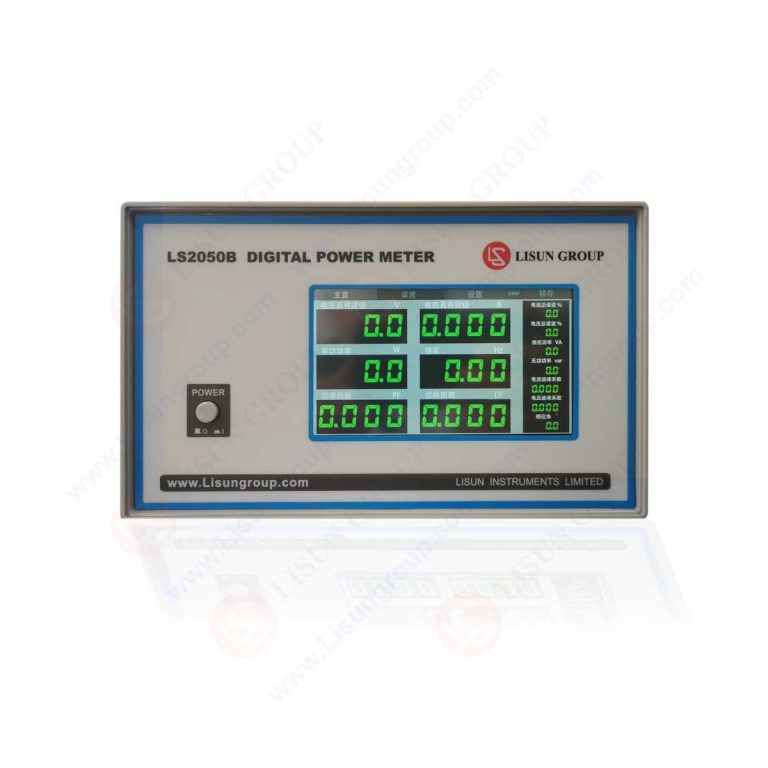
In the demanding fields of LED manufacturing, automotive electronics, and EMC compliance testing, the accuracy and versatility of power measurement directly impact product quality and regulatory approval. The LS2050 High Accuracy AC and DC Power Meter – Configurable Precision & Wide Frequency Range is engineered to meet these critical needs. This advanced digital power analyzer provides configurable precision across a broad spectrum of measurements, from basic power parameters to complex harmonic analysis. Its core value lies in delivering laboratory-grade accuracy for both AC and DC systems, supporting rigorous validation, quality control, and compliance verification for engineers and technicians who cannot compromise on data integrity.
1. Introduction to High-Accuracy Power Measurement Demands
1.1 The Critical Role of Precision in Modern Electronics Validation
Modern electronic devices, particularly LEDs and automotive subsystems, operate with complex power profiles involving high-frequency switching, non-linear loads, and stringent efficiency requirements. Validating these products requires measurement tools that exceed the capabilities of standard multimeters. Precision power meters must accurately capture true power (W), apparent power (VA), power factor, and harmonic distortion to ensure designs meet performance, safety, and energy standards. Inaccurate measurements can lead to failed compliance tests, inefficient products, or unforeseen field failures, making high-accuracy instrumentation a cornerstone of reliable R&D and manufacturing.
1.2 Core Technological Foundation of the LS2050 Series
The LS2050 series is built upon a foundation of digital sampling waveform analysis. This technology involves simultaneously sampling voltage and current waveforms at a high rate, digitally processing the data to calculate a comprehensive suite of parameters. This method is superior to analog techniques as it directly computes values like true power from instantaneous samples, ensuring accuracy even with distorted waveforms. Coupled with automatic range switching, the instrument seamlessly adapts to varying signal levels without manual intervention, preventing range selection errors and enhancing testing efficiency. This combination forms the basis for its configurable precision and wide frequency range from 0.5Hz to 100kHz.
2. Technical Architecture and Measurement Capabilities
2.1 Comprehensive Parameter Measurement Suite
The LS2050 functions as a complete AC/DC energy analyzer, measuring a wide array of electrical parameters essential for comprehensive device characterization. Its capabilities include:
- Fundamental Parameters: AC/DC Voltage (0.5V – 1000V), AC/DC Current (0.5mA – 20A), True Power (W), Apparent Power (VA), Reactive Power (VAR), and Frequency.
- Power Quality Indicators: Power Factor (PF) and Displacement Factor (DPF). Distinguishing between these is crucial for analyzing non-linear loads where harmonic currents distort the power factor.
- Harmonic Analysis: It performs 0-50th order harmonic analysis for both voltage and current, a mandatory requirement for standards like EN/IEC61000-3-2.
- Integration Functions: Measurement of energy consumption (Wh, VAh) over time for efficiency validation.
2.2 Engineered for Robustness and Connectivity
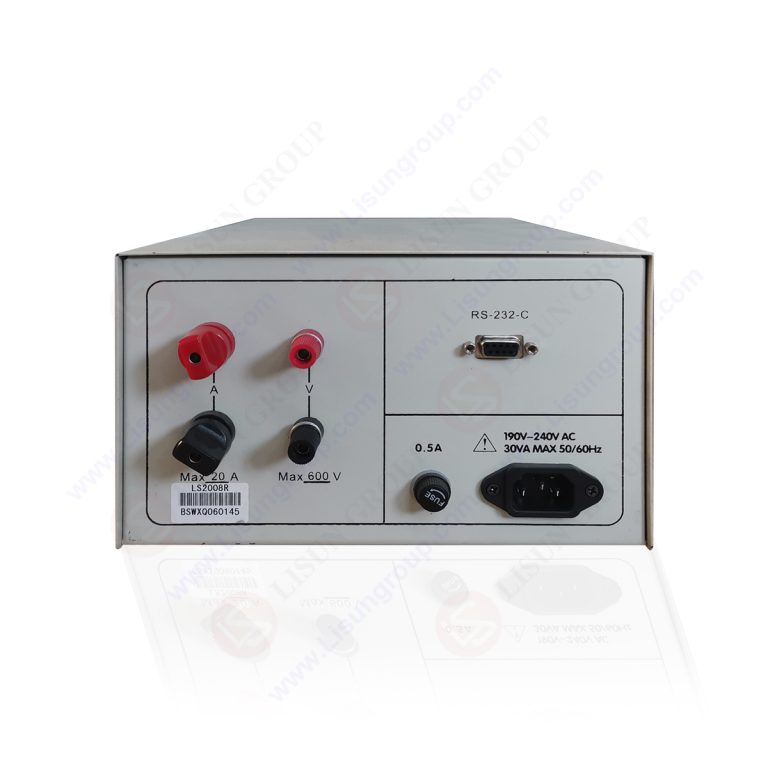
Designed for laboratory and production environments, the LS2050 incorporates robust hardware features. It offers high overload capacity, withstanding instantaneous surges up to 1600V and 50A, protecting the instrument from accidental transients. For seamless integration into automated test systems, it is equipped with both RS232 and RS485 communication ports. This allows for remote control, real-time data logging, and direct interfacing with PC software for deeper analysis and report generation, streamlining workflows in high-throughput testing labs.
3. Model-Specific Configurations for Targeted Applications
3.1 Comparative Analysis of LS2050 Models
The LS2050 series offers tiered models to match specific accuracy requirements and compliance needs. The following table provides a clear comparison of key specifications:
| Feature / Specification | LS2050B (Standard Accuracy) | LS2050C (High Accuracy) | LS2050C-IEC (Harmonic Compliance) |
|---|---|---|---|
| Basic Power Accuracy | ±(0.1% of reading + 0.1% of range) | ±(0.05% of reading + 0.05% of range) | ±(0.05% of reading + 0.05% of range) |
| Harmonic Accuracy | ±(0.3% of reading) | ±(0.3% of reading) | ±(0.1% of reading) |
| Compliance Focus | General-purpose precision measurement | High-accuracy R&D and calibration | EMC harmonic compliance testing (EN/IEC61000-3-2) |
| Key Application | Quality control, production testing | R&D validation, efficiency testing | Standards-based EMC lab testing |
| Certification | Meets safety standards (IEC 61010) | Meets safety standards (IEC 61010) | CIE/IEC certified for harmonic measurement |
3.2 Selecting the Optimal Model for Your Workflow
The choice between models hinges on application depth. The LS2050B is ideal for production lines and QC stations where high reliability and good accuracy are paramount. The LS2050C is tailored for R&D engineers developing power supplies, motor drives, or LED drivers, where marginal gains in measurement certainty impact design decisions. The LS2050C-IEC is specialized equipment for EMC testing laboratories, providing the certified accuracy mandated for official compliance reporting against standards like EN/IEC61000-3-2, ensuring test results are legally defensible.
4. Central Role in Standards Compliance and Testing
4.1 Enabling EMC and Harmonic Compliance Verification
Electromagnetic Compatibility (EMC) standards regulate the harmonic current emissions of electronic equipment. The LS2050C-IEC model is explicitly designed for this task. It applies the precise measurement methodology required by EN/IEC61000-3-2, calculating harmonic components up to the 40th order. Its certified accuracy ensures that measurements of Class A, B, C, and D equipment are within the tolerances accepted by accreditation bodies. This transforms the unit from a general analyzer into a dedicated compliance tool, critical for manufacturers needing to certify products for global markets.
4.2 Supporting Photometric, Safety, and Performance Standards
Beyond EMC, the LS2050 series supports validation against other critical industry benchmarks. In LED and lighting manufacturing, it provides the precise electrical input measurements required by LM-79, the standard for photometric testing of solid-state lighting products, where input power and voltage are essential for calculating efficacy (lumens per watt). Furthermore, the instrument’s design and construction comply with safety standards such as IEC 61010 for electrical equipment for measurement, control, and laboratory use, and it aligns with the performance requirements of standards like UL 1989 for standby power supplies, ensuring user safety and measurement reliability.
5. Application in Target Industries
5.1 LED Manufacturing and Lighting Industry Validation
In LED manufacturing, efficiency and consistency are paramount. The LS2050’s wide frequency range accurately measures the input characteristics of high-frequency LED drivers. Engineers use it to validate power factor correction circuits, measure total harmonic distortion (THD), and precisely quantify input power for efficacy calculations per LM-79. On production lines, its automatic range switching and robust communication ports enable fast, automated testing of driver modules and complete luminaires, ensuring every unit meets specified electrical performance criteria before shipment.
5.2 Automotive Electronics and Power Supply Testing
The automotive electronics sector demands validation under extreme conditions. The LS2050’s AC/DC compatibility is essential for testing both conventional 12V/24V DC systems and emerging 48V or high-voltage AC/DC hybrid architectures. Its ability to measure inrush currents, standby power, and efficiency across a wide frequency range is critical for evaluating components like DC-DC converters, onboard chargers (OBC), and infotainment systems. The high overload capacity protects the instrument during load-dump and surge tests, common in automotive validation cycles.
6. Advanced Features for In-Depth Analysis
6.1 Deep Dive into Harmonic Analysis Functionality
Harmonic analysis is more than a simple THD reading. The LS2050’s 0-50 order analysis, using the IEC/CSA method, provides a detailed spectral breakdown of voltage and current distortion. This allows engineers to identify specific harmonic orders that may cause overheating in neutral conductors, interfere with control systems, or lead to non-compliance. By visualizing individual harmonic magnitudes against the limits of EN/IEC61000-3-2, designers can precisely target filter improvements in switched-mode power supplies and inverters.
6.2 The Advantage of Configurable Precision and Range
The instrument’s configurable precision is not a static specification. Users can leverage different models (B, C, C-IEC) to select the exact accuracy tier their budget and application require, avoiding over-specification or under-performance. The wide frequency range (0.5Hz-100kHz) ensures relevance for both low-frequency power mains (50/60Hz) and high-frequency switching phenomena common in modern electronics, making it a future-proof investment for evolving technologies.
7. Integration and Operational Workflow
7.1 Streamlining Test System Integration
The true power of the LS2050 is realized when integrated into a automated test stand. Its RS232/RS485 ports allow it to be commanded via SCPI (Standard Commands for Programmable Instruments) or proprietary protocols. Test software can sequence through measurements, capture data for statistical process control (SPC), and automatically generate pass/fail reports based on compliance limits. This is indispensable in high-volume manufacturing of LED drivers or power supplies, where manual data recording is a bottleneck and a source of error.
7.2 Best Practices for Optimal Measurement Accuracy
To achieve published accuracy, proper setup is crucial. This includes using calibrated current shunts or transducers matched to the expected current range, ensuring tight connections to minimize contact resistance, and allowing for adequate warm-up time. For harmonic measurements, ensuring the instrument’s voltage and current ranges are appropriately set (often manually fixed for compliance tests) is essential to maintain the specified harmonic accuracy, particularly when using the LS2050C-IEC for formal compliance testing.
Conclusion
The LS2050 High Accuracy AC and DC Power Meter series represents a critical tool for professionals who cannot afford measurement ambiguity. By offering configurable precision and a wide frequency range, it delivers tailored solutions for applications ranging from routine quality control to certified EMC compliance testing. Its technical architecture, centered on digital sampling and automatic ranging, provides reliable, repeatable data for parameters like true power, power factor, and harmonic distortion. For industries governed by strict standards such as EN/IEC61000-3-2, LM-79, and IEC 61010, the specialized LS2050C-IEC model provides a direct path to verifiable compliance. Ultimately, for electrical testing engineers, R&D professionals, and lab managers in the LED and automotive electronics sectors, the LS2050 is more than a meter; it is an assurance of product integrity, efficiency, and market readiness, bridging the gap between design validation and successful certification.
FAQ (Frequently Asked Questions)
Q1: What is the primary difference between the LS2050C and the LS2050C-IEC models, as both are labeled “high accuracy”?
A: The core difference lies in the certified harmonic measurement accuracy and intended application. While both share excellent basic power accuracy (±0.05%), the LS2050C-IEC has a superior and certified harmonic accuracy of ±0.1% of reading, specifically designed and calibrated to meet the stringent requirements of the EN/IEC61000-3-2 standard for EMC testing. The LS2050C-IEC is often CIE/IEC certified, meaning its harmonic measurement methodology is validated for generating legally accepted compliance reports. The standard LS2050C is ideal for R&D harmonic analysis but may not have the formal certification required for official compliance submissions in an accredited lab.
Q2: Why is a wide frequency range (0.5Hz to 100kHz) important for testing modern LED drivers and automotive electronics?
A: Traditional power meters focused solely on line frequency (50/60Hz). Modern switch-mode power supplies, LED drivers, and automotive DC-DC converters operate at switching frequencies from a few kHz to several hundred kHz. These high-frequency components significantly impact efficiency measurements, harmonic distortion analysis, and loss calculations. A meter limited to 1kHz would fail to accurately integrate the true power of these signals, leading to erroneous efficiency (e.g., LM-79) data. The LS2050’s 100kHz bandwidth ensures it captures the full spectral content of the power signal, providing accurate results for today’s high-frequency electronics.
Q3: How does the automatic range switching feature improve testing efficiency and reliability in a manufacturing environment?
A: Automatic range switching eliminates a major source of human error and speeds up the testing process. In a production line testing hundreds of units with varying output, manually selecting voltage and current ranges for each test is slow and prone to mistakes (e.g., selecting too low a range and overloading the meter). The LS2050 automatically selects the optimal measurement range for the connected device, ensuring accuracy is maintained and the instrument is protected via its high overload capacity. This enables untrained operators to perform reliable tests, and when combined with its communication ports, allows for fully automated, high-throughput test sequences without manual intervention.