




Abstract
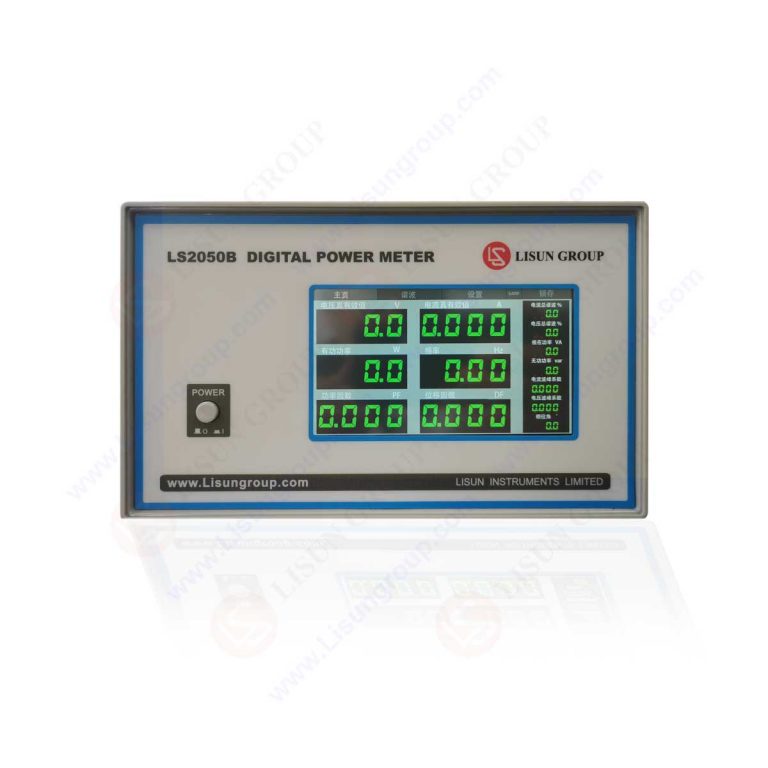
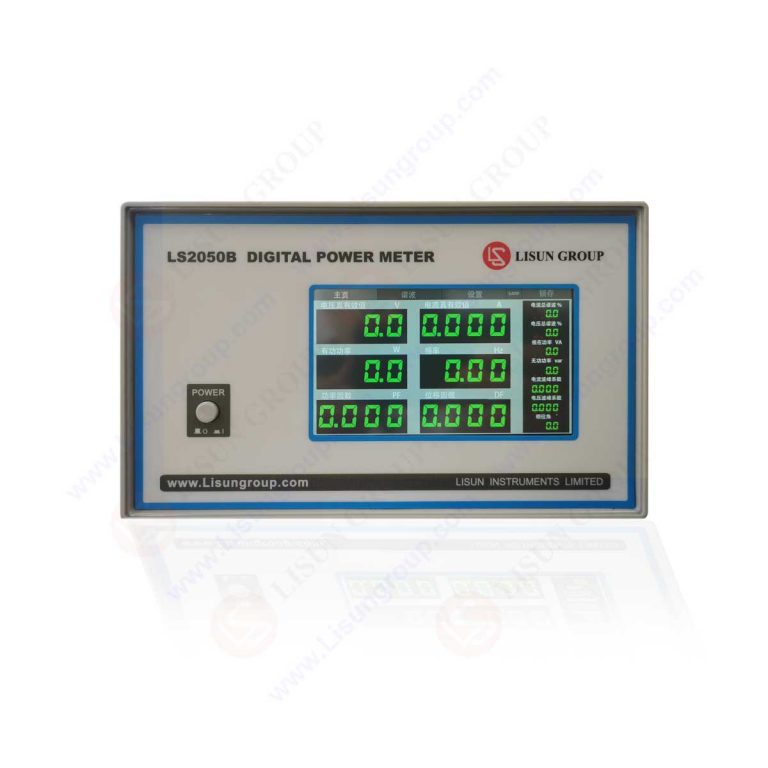
In the demanding fields of EMC compliance, photometric testing, and power electronics validation, the accuracy and reliability of power measurement are non-negotiable. The LS2050 High Accuracy AC and DC Power Meter for EMC Compliance & LM-79-19 Testing represents a critical tool for engineers requiring laboratory-grade precision in both R&D and production environments. This advanced digital power meter provides comprehensive analysis of electrical parameters, including harmonics, power factor, and energy consumption, directly supporting compliance with stringent international standards. Its core value lies in enabling precise validation for industries such as LED manufacturing and automotive electronics, where accurate power data underpins product performance, regulatory approval, and quality control.
1.1 Bridging R&D Validation and Regulatory Testing
The development cycle for electrical products, from LED drivers to automotive control units, culminates in rigorous compliance testing. The transition from internal R&D validation to formal certification lab testing is fraught with risk if measurement tools are inconsistent. A power meter like the LS2050 serves as a bridge, providing traceable, high-accuracy measurements in both phases. By using identical measurement methodologies and accuracy thresholds in development, engineers can pre-validate designs against standards such as EN/IEC61000-3-2 for harmonics or LM-79-19 for LED product testing, significantly reducing costly failures and redesign loops during formal compliance audits.
1.2 The Convergence of AC/DC and Power Quality Analysis
Modern power supplies, particularly switch-mode power supplies (SMPS) and LED drivers, present complex loads that draw non-sinusoidal current. Characterizing these devices requires an instrument capable of measuring true power, apparent power, and power factor accurately for both AC and DC inputs and outputs. The LS2050’s AC/DC compatibility and wide frequency measurement range (0.5Hz to 100kHz) are essential for this analysis. It captures not only fundamental power but also distortion elements, providing a complete picture of efficiency and load characteristics that simpler meters miss, which is fundamental for both performance optimization and standards like IEC 61010 safety requirements.
2.1 Digital Sampling and Waveform Analysis
At the heart of the LS2050’s capability is advanced digital sampling technology. Unlike traditional averaging meters, it continuously samples voltage and current waveforms at a high rate, performing real-time digital signal processing (DSP). This method allows for the true calculation of RMS values, even for highly distorted waveforms common in modern electronics. The direct waveform analysis enables the derivation of critical parameters:
- True Power (W): Actual energy consumed per unit time.
- Apparent Power (VA): The product of RMS voltage and current.
- Power Factor (PF) & Displacement Factor (DPF): Distinguishing between total power factor and the fundamental frequency phase shift.
2.2 Comprehensive Harmonic Analysis for EMC Pre-Compliance
Harmonic current emissions are a primary concern for EMC compliance under standards like EN/IEC61000-3-2. The LS2050 performs detailed harmonic analysis up to the 50th order, using methodologies aligned with IEC/CSA guidelines. This feature allows engineers to:
- Identify specific harmonic frequencies where emissions exceed limits.
- Evaluate the Total Harmonic Distortion (THD) for current and voltage.
- Conduct pre-compliance testing in-house, enabling design corrections before submitting to an accredited lab. The LS2050C-IEC model is particularly optimized for this application, with dedicated measurement modes for harmonic compliance testing.
2.3 Automatic Range Switching and Robust Hardware Design
To maintain accuracy across a wide dynamic range of signals—from low-power standby modes to full-load operation—the LS2050 incorporates automatic range switching for both voltage and current channels. This ensures optimal resolution and precision without manual intervention. The hardware is built for resilience in a test bench environment, featuring high overload capacity (1600V instantaneous voltage, 50A instantaneous current) to withstand accidental transients. Communication via RS232/RS485 ports facilitates seamless integration into automated test systems and data logging software.
3.1 Choosing the Right Model: LS2050B, LS2050C, and LS2050C-IEC
LISUN offers the LS2050 in three primary configurations to suit different accuracy budgets and application focuses. The selection depends on the required measurement certainty and specific compliance needs.
Table: LS2050 Series Model Comparison for Key Parameters
| Feature / Specification | LS2050B (Standard Accuracy) | LS2050C (High Accuracy) | LS2050C-IEC (EMC Harmonic Compliance) |
| :— | :— | :— | :— |
| Basic Power Accuracy | ±(0.4% reading + 0.1% range) | ±(0.1% reading + 0.1% range) | ±(0.1% reading + 0.1% range) |
| Harmonic Analysis | Up to 50th order | Up to 50th order | Up to 50th order (IEC/CSA method) |
| Voltage Range | 15V / 30V / 60V / 100V / 300V / 600V | 15V / 30V / 60V / 100V / 300V / 600V | 15V / 30V / 60V / 100V / 300V / 600V |
| Current Range | 0.5A / 1A / 2.5A / 5A / 10A / 20A | 0.5A / 1A / 2.5A / 5A / 10A / 20A | 0.5A / 1A / 2.5A / 5A / 10A / 20A |
| Primary Application Focus | General power measurement, QC testing | High-precision R&D, efficiency validation | EMC pre-compliance, harmonic testing to EN/IEC61000-3-2 |
| Key Standard Alignment | LM-79, IEC 61010 | LM-79, IEC 61010, UL 1989 | EN/IEC61000-3-2, LM-79, IEC 61010 |
3.2 Interpreting Accuracy Ratings and Measurement Ranges
The accuracy expression ±(0.1% reading + 0.1% range) for the LS2050C model is critical for engineers to understand. For example, measuring 50W on the 100W range yields an uncertainty of ±(0.05W + 0.1W) = ±0.15W. This high accuracy is paramount for calculating product efficiency, where small errors in input power measurement can lead to significant percentage errors in efficiency calculations, especially for high-efficiency products like LEDs. The wide selection of voltage and current ranges ensures that the meter operates in its optimal accuracy zone for both low-power and high-power devices.
4.1 Ensuring Accuracy for Photometric and Electrical Measurements
The IESNA LM-79-19 standard prescribes the methods for testing solid-state lighting products, requiring simultaneous measurement of optical and electrical characteristics. The electrical measurement component mandates high-accuracy input power, voltage, current, and power factor data. The LS2050, particularly the high-accuracy LS2050C model, is engineered to meet these requirements. Its precision ensures that the reported efficacy (lumens per watt) of an LED luminaire is based on reliable electrical input data, which is crucial for performance claims, ENERGY STAR® qualification, and DLC listing.
4.2 Testing Across Dimming and Operating Conditions
LED drivers often exhibit varying electrical characteristics across dimming levels and input voltages. Comprehensive testing requires capturing inrush currents, stable-state power at multiple dimming setpoints, and standby power. The LS2050’s fast sampling and automatic ranging capture transient events and provide stable readings at low current levels, which is essential for measuring compliance with low-power standby regulations. This capability allows quality control managers to verify product performance across its entire operating envelope in a production test setting.
5.1 Testing for Harsh Electrical Environments
Automotive electronic control units (ECUs), infotainment systems, and LED lighting modules must operate reliably in an electrically noisy environment with wide voltage fluctuations. Validation testing involves subjecting these devices to standards like ISO 16750-2, which defines voltage ranges and transient pulses. The LS2050 supports this validation by accurately measuring a device’s power consumption and current draw under these dynamic conditions. Its high overload capacity protects the instrument during load dump and jump-start simulations, ensuring continuous and reliable data acquisition.
5.2 Analyzing DC-DC Converter Efficiency
Modern vehicles utilize numerous DC-DC converters to step voltages up or down for different subsystems. The efficiency of these converters directly impacts fuel economy in internal combustion vehicles and range in electric vehicles. The LS2050’s ability to measure DC power with high accuracy on both the input and output of a converter is vital for calculating true efficiency, including at light loads. This data is critical for R&D engineers optimizing converter topology and component selection.
6.1 Pre-Compliance to EN/IEC61000-3-2
The EN/IEC61000-3-2 standard limits the harmonic currents injected into the public supply system by electrical equipment. Formal testing requires expensive equipment in accredited labs. The LS2050C-IEC model acts as a powerful pre-compliance tool, enabling design and validation engineers to assess their products’ harmonic profile during development. By identifying harmonic violations early, teams can modify power factor correction circuits or filtering components proactively, avoiding the substantial cost and delay of a failed formal test.
6.2 Class-Specific Limits and Measurement Protocols
The LS2050C-IEC is designed with an understanding of the different equipment classes (A, B, C, D) defined in EN/IEC61000-3-2, each with unique harmonic current limits. Its analysis software can present measured harmonic data against these specific limits, providing a clear pass/fail assessment for the relevant class. This targeted functionality transforms the meter from a general analyzer into a dedicated compliance aid, streamlining the workflow for EMC lab technicians and product validation engineers.
7.1 Leveraging Communication Ports for Automation
The inclusion of RS232 and RS485 communication interfaces on the LS2050 is a key feature for high-volume manufacturing and advanced R&D labs. These ports allow the power meter to be integrated into automated test executives (ATE). Test sequences can be programmed to control the meter, capture measurements at various load points, and log data directly to a database or spreadsheet. This automation eliminates manual recording errors, increases test throughput, and ensures consistent application of test protocols for quality control managers.
7.2 Software for Advanced Analysis and Reporting
Complementary software packages enable deep data analysis and professional reporting. Engineers can trend parameters over time, generate harmonic spectrum bar charts for direct comparison to standard limits, and export data for inclusion in formal test reports. This software capability enhances the value of the raw measurement data, turning the LS2050 system into a complete power analysis solution that supports decision-making and documentation for compliance audits.
The LS2050 High Accuracy AC and DC Power Meter series stands as an indispensable instrument for professionals navigating the complex landscape of product compliance and validation. By delivering laboratory-grade precision in power, harmonic, and power factor measurements, it addresses the core needs of electrical testing engineers and R&D teams across critical industries. Its specific alignment with standards such as LM-79-19 for LED efficacy testing and EN/IEC61000-3-2 for harmonic emissions provides targeted value, transforming subjective assessment into objective, data-driven verification. For quality control managers in manufacturing and technicians in EMC test labs, the robust design, automated capabilities, and clear model differentiation—from standard accuracy to dedicated EMC pre-compliance—offer a scalable solution. Ultimately, the LS2050 empowers organizations to build quality and compliance into their products from the earliest design stages, mitigating risk, accelerating time-to-market, and ensuring reliable performance in the field.
Q1: What is the key difference between the LS2050C and the LS2050C-IEC model for harmonic testing?
A: While both the LS2050C and LS2050C-IEC share the same high-accuracy base specifications for fundamental power measurements (0.1% reading accuracy), the LS2050C-IEC model includes dedicated firmware and software functionalities optimized for EMC harmonic compliance testing. It is specifically configured to implement the measurement methodologies, observation windows, and classification rules outlined in the EN/IEC61000-3-2 standard. This includes ready-made limit comparisons for different equipment classes (A, B, C, D), making it a turn-key solution for pre-compliance screening. The standard LS2050C provides excellent harmonic analysis capabilities but may require more manual setup and interpretation to align directly with the specific procedural requirements of the EMC standard.
Q2: Can the LS2050 power meter be used to measure the standby power of devices for regulations like ENERGY STAR or the EU Ecodesign Directive?
A: Yes, the LS2050 is well-suited for low-power standby and off-mode measurements required by ENERGY STAR and EU Ecodesign regulations. Its automatic range switching capability is crucial here, as it maintains high accuracy even at very low current draws (down to the mA level on appropriate ranges). The meter can accurately measure power, power factor, and current in these low-power states, which often fall below 0.5W. The data can be used to verify compliance with the strict limits set by these energy efficiency programs. For automated production testing, its communication ports allow for rapid sequential testing of normal, standby, and off modes.
Q3: How does the LS2050 assist in testing products to the IEC 61010 safety standard for electrical equipment?
A: IEC 61010-1 is a fundamental safety standard for laboratory electrical equipment. The LS2050 itself is designed and certified to meet relevant parts of this standard, ensuring its own safety. More importantly, it is used as a measurement tool during the validation of other products against IEC 61010 requirements. For instance, it can precisely measure input current under normal and fault conditions to verify that current-carrying parts are adequately rated. It can also monitor power consumption to check for abnormal heating risks. Its accurate RMS measurement is essential for these tests, as it correctly assesses the heating effect of non-sinusoidal currents, which average-responding meters would underestimate, leading to potential safety issues.