

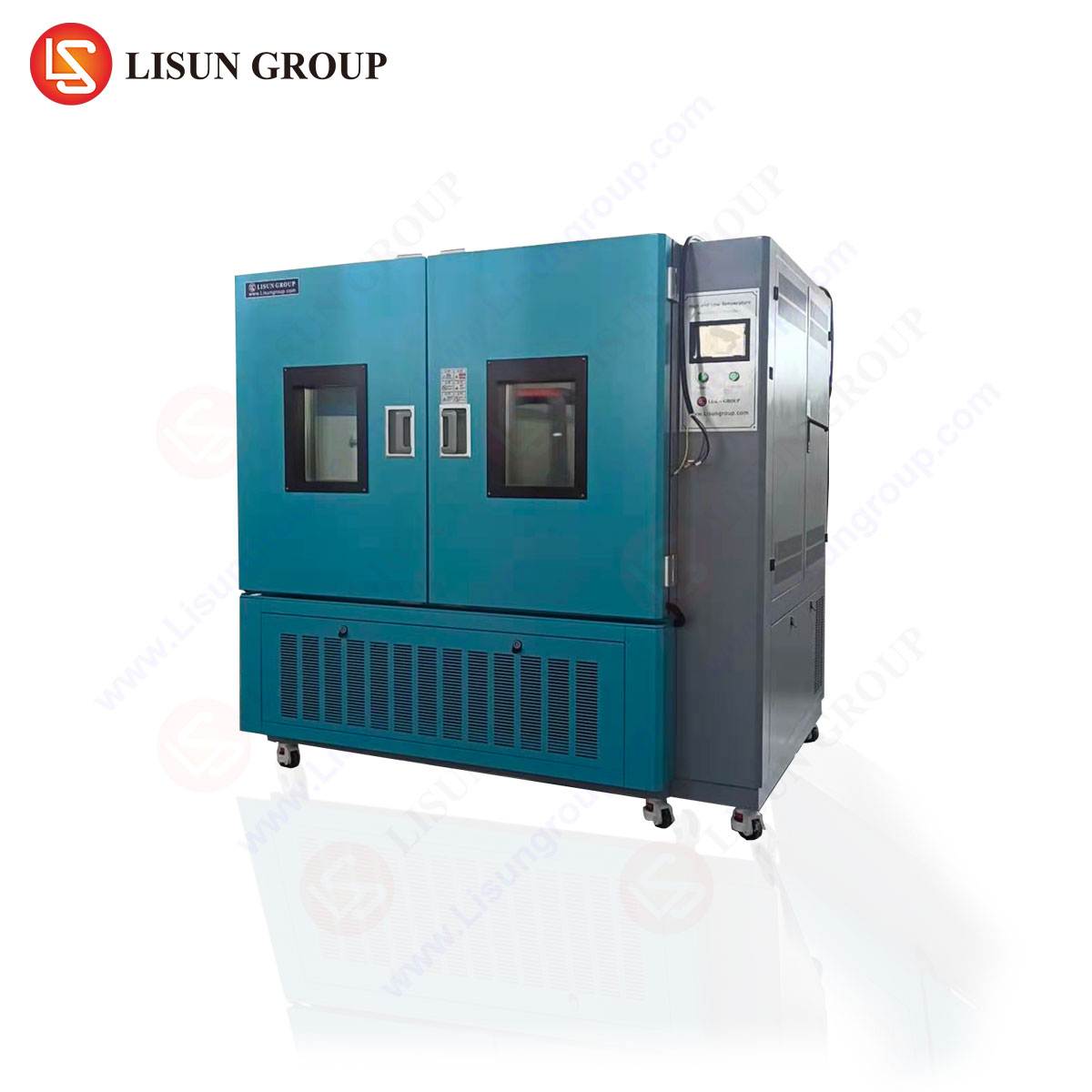



The Role of Needle Flame Testing in Modern Product Safety Validation
In the global marketplace, the safety and reliability of manufactured goods are non-negotiable prerequisites. For products incorporating electrical and electronic components, the risk of fire due to internal faults, component failure, or external ignition sources represents a critical hazard. Regulatory frameworks and international standards, most notably those from the International Electrotechnical Commission (IEC), mandate rigorous testing to evaluate and mitigate these risks. Among the suite of fire hazard assessment protocols, the needle flame test stands as a specialized, yet indispensable, method for simulating the effect of small flames that may result from malfunctioning conditions. This article provides a comprehensive examination of needle flame test equipment, its governing standards, application across diverse industries, and the technical specifications of a representative instrument: the LISUN ZY-3 Needle Flame Test Apparatus.
Fundamental Principles and Governing Standards: IEC 60695-11-5
The needle flame test is formally defined within the IEC 60695-11-5 standard, titled “Fire hazard testing – Part 11-5: Test flames – Needle-flame test method – Apparatus, confirmatory test arrangement and guidance.” Its primary objective is to assess the fire hazard presented by a product or material by subjecting it to a small, defined flame, simulating a fault condition such as an overheated or burning component. Unlike larger-scale flame tests, the needle flame test is particularly suited for evaluating the flammability of small parts, the potential for flame spread from a localized ignition source, and the ability of surrounding materials to self-extinguish.
The test principle involves a standardized burner producing a nominal 1mm diameter flame with a specified heat output of approximately 1W, applied for a predetermined duration (typically 30 ± 1 seconds) to the test specimen. Critical observations during and after flame application include: the duration of any combustion, the extent of flame spread, whether burning droplets or particles are ejected, and the degree of damage to the specimen. The apparatus must maintain precise control over flame geometry, application time, and positioning to ensure reproducible and standardized results, which are essential for compliance certification.
Anatomy of a Precision Testing Instrument: The LISUN ZY-3 Apparatus
To execute the IEC 60695-11-5 test with the required fidelity, specialized equipment is necessary. The LISUN ZY-3 Needle Flame Test Apparatus embodies the technical requirements for such testing. Its design integrates the key components mandated by the standard into a reliable and user-configurable system.
The core of the apparatus is the needle burner assembly, which utilizes high-purity butane (≥95%) as fuel. A precision needle valve and flow meter system regulate gas flow to maintain a stable flame height of 12 ± 1 mm, calibrated using a proprietary verification template. This consistent flame geometry is paramount for test repeatability. The burner is mounted on a fully adjustable mechanism, allowing for precise positioning in three-dimensional space relative to the test specimen. This is crucial for applying the flame at specific points or angles as dictated by product safety standards or end-use simulation scenarios.
The specimen stage is equally critical. It is constructed from non-combustible material and is fully adjustable in height and rotation. For testing the effect of potentially dripping materials, a layer of surgical cotton is placed 200 ± 5 mm below the test specimen to capture and assess ignited particles. The entire apparatus is housed within a ventilated test chamber with a transparent viewing window, allowing for safe observation and recording of the test process. An integrated digital timer with 0.1-second resolution automatically controls the flame application duration, while safety features such as gas leak detection and automatic shut-off are typically incorporated.
Key Specifications of the LISUN ZY-3:
- Test Flame: Needle flame per IEC 60695-11-5, 1W nominal power.
- Flame Height: Adjustable and verifiable to 12 ± 1 mm.
- Fuel: High-purity butane (≥95% purity).
- Timer Range: 0 ~ 99.9 seconds, digital display.
- Application Time Setting: 0 ~ 99.9 seconds (standard test: 30s).
- Positioning: Micrometer-adjustable burner in X, Y, Z axes; rotatable specimen stage.
- Chamber Dimensions: Sufficient volume to prevent oxygen starvation during tests.
- Compliance: Designed to meet IEC 60695-11-5, GB/T 5169.5, and related national derivatives.
Cross-Industry Application Scenarios and Risk Mitigation
The utility of needle flame testing spans a vast array of sectors where electrical components are present. Its application is not merely a compliance exercise but a fundamental engineering evaluation of a product’s inherent fire safety.
- Electrical and Electronic Equipment & Components: This is the primary domain. Test subjects include PCB assemblies, insulating sleeves, connectors, and miniature transformers. The test evaluates if a fault in a single component, like a smoldering resistor, will ignite its housing or adjacent wiring.
- Household Appliances: For devices like food processors, coffee makers, and HVAC control units, the test is applied to internal switches, motor windings, and terminal blocks to ensure a minor electrical fault does not escalate into a cabinet fire.
- Automotive Electronics: Within the confined and vibration-prone environment of a vehicle, connectors, sensor housings, and infotainment system components are tested. The goal is to prevent fire initiation from short circuits that may arise due to chafing wires or connector corrosion.
- Lighting Fixtures: Especially for LED drivers, plastic diffusers, and socket assemblies in luminaires. The test assesses whether overheating in the driver circuitry could ignite the plastic light guide or housing material.
- Industrial Control Systems: Components such as relay banks, communication module casings, and push-button interfaces are validated to withstand ignition from control circuit faults.
- Medical Devices: For patient-connected or internally powered devices, the flammability of external casings, cable insulation, and internal battery compartment materials is critically assessed to ensure safety in oxygen-enriched environments.
- Aerospace and Aviation Components: Every gram counts, making lightweight polymers ubiquitous. Needle flame testing validates that materials used in cabin entertainment systems, overhead panel components, and wiring conduits have minimal flame propagation characteristics.
- Office Equipment and Consumer Electronics: From printer fuser units and power adapters to the plastic casings of routers and gaming consoles, the test ensures user safety against potential internal electrical fires.
Operational Protocol and Data Interpretation
A standardized test procedure is vital. The specimen is conditioned at 23 ± 2°C and 50 ± 5% relative humidity for at least 24 hours. It is then mounted on the stage in its intended end-use orientation. The flame is calibrated for height, and the burner is positioned so the flame tip contacts the predetermined application point. Upon ignition, the digital timer is started. After the set application period (e.g., 30s), the flame is withdrawn automatically.
Observations are meticulously recorded:
- tf: Flame application time.
- te: The time from flame removal until cessation of flaming combustion on the specimen.
- ti: The total time of combustion (tf + te).
- Flame Spread: Measurement of damaged or charred area.
- Particle Ignition: Whether falling debris ignites the surgical cotton below.
Pass/fail criteria are typically defined in the end-product standard (e.g., IEC 60950 for IT equipment, IEC 60335 for household appliances). Common criteria may stipulate that flames self-extinguish within a specified time after flame removal (e.g., 30 seconds), that flame spread does not exceed defined boundaries, or that no ignited droplets fall. The resulting data provides engineers with actionable insights to reformulate materials, redesign component spacing, or add flame-retardant barriers.
Comparative Advantages in Modern Testing Laboratories
In a landscape of compliance testing equipment, instruments like the LISUN ZY-3 offer distinct advantages that translate to laboratory efficiency and data integrity. Its design emphasizes precision and reproducibility. The micrometer-driven positioning system allows for exact, repeatable flame placement, a factor that directly impacts the coefficient of variation in test results. The integration of a digital timer with automatic flame retraction eliminates human timing error, a significant source of test deviation.
Furthermore, the apparatus’s construction from durable, non-corrosive materials ensures long-term stability of calibration. Its compliance with both international (IEC) and common national standards (like GB/T) makes it a versatile tool for manufacturers targeting global markets. The enclosed chamber with forced ventilation protects operators and ensures consistent test conditions by rapidly removing combustion products after each test, preventing contamination of subsequent samples. For laboratories handling diverse product categories, this flexibility and reliability are paramount for maintaining accreditation and delivering certifiable test reports.
Integration into a Comprehensive Fire Safety Strategy
It is crucial to position the needle flame test within a broader product safety ecosystem. It is one tool in a hierarchy of flammability assessments. It often serves as a pre-qualification or material screening test before more severe assessments, such as the glow-wire test (IEC 60695-2-10/11/12/13) or the horizontal/vertical flame test (IEC 60695-11-10). The results inform failure mode and effects analysis (FMEA) and contribute to the overall fire risk assessment required by many safety standards.
For product designers, understanding the needle flame test outcomes can guide material selection, influence mechanical design to isolate heat-generating components, and dictate the use of flame-retardant compounds or coatings. In essence, this test transforms an abstract fire risk into a quantifiable, manageable engineering parameter.
Conclusion
The needle flame test, as codified in IEC 60695-11-5, remains a critical, pragmatic method for evaluating the ignition resistance and flame propagation characteristics of materials and components under fault conditions. The reliability of this assessment is intrinsically linked to the precision and capabilities of the test equipment employed. Apparatuses such as the LISUN ZY-3 Needle Flame Test Instrument provide the necessary controlled environment, precise flame generation, and accurate measurement systems to generate compliant, repeatable, and scientifically valid data. As technology continues to miniaturize and permeate every aspect of modern life, from medical implants to automotive control systems, the role of such targeted safety validation will only grow in importance, ensuring that product innovation proceeds hand-in-hand with unwavering commitment to user safety and international regulatory compliance.
FAQ Section
Q1: What is the primary difference between the needle flame test and the glow-wire test?
A1: The needle flame test uses a small, open flame (approx. 1W) to simulate ignition from a burning component. The glow-wire test uses an electrically heated element at a set temperature (e.g., 550°C to 960°C) to simulate thermal stress from an overheated or glowing element. They address different, though related, fault scenarios.
Q2: Can the LISUN ZY-3 be used for testing according to UL standards?
A2: The LISUN ZY-3 is designed primarily for IEC and GB standards. While the fundamental physics are similar, UL standards (e.g., UL 94 for plastics) often specify different test methods, apparatus geometry, and pass/fail criteria. Always verify the specific apparatus requirements of the standard you are testing against.
Q3: How often does the needle flame apparatus require calibration, and what does it involve?
A3: Regular calibration, typically annually or per laboratory quality procedures, is essential. Calibration involves verifying the flame height and temperature profile using the supplied gauge, checking the accuracy of the digital timer, and ensuring the gas flow system delivers a consistent flame. A confirmatory test using a standardized reference material may also be performed.
Q4: For a complex assembly, how is the test application point determined?
A4: The application point is not arbitrary. It is determined based on a fault condition analysis as required by the relevant end-product safety standard. This often targets the most vulnerable points: near current-carrying parts, on thin-walled sections of enclosures, or on materials closest to known heat-generating components. The product standard or a risk assessment defines the precise location.
Q5: What are the critical safety precautions when operating the needle flame tester?
A5: Key precautions include: operating in a well-ventilated laboratory with fire extinguishers present; ensuring the gas supply is leak-free and turned off at the source when not in use; wearing appropriate personal protective equipment (PPE) such as heat-resistant gloves and safety glasses; never leaving the apparatus unattended during testing; and allowing the chamber to fully clear of combustion gases between tests.