




Evaluating Fire Hazard Resistance: The Role and Methodology of Needle Flame Testing
The proliferation of electrical and electronic equipment across domestic, industrial, and critical infrastructure environments has necessitated the development of robust safety standards to mitigate fire risks. A primary concern is the potential for small, localized ignition sources—such as overheated components, faulty connections, or electrical arcs—to ignite adjacent materials, leading to flame propagation. Traditional large-scale flame tests, while valuable for assessing final product performance, may not adequately simulate these realistic, low-energy ignition scenarios. Consequently, the needle flame test has emerged as a fundamental, precision-based evaluation method within international safety frameworks. This technical analysis examines the principles, applications, and procedural execution of needle flame testing, with a detailed focus on the implementation afforded by modern instrumentation such as the LISUN ZY-3 Needle Flame Tester.
Principles of the Needle Flame Simulation
The core objective of the needle flame test is to assess the flammability of solid insulating materials and other non-metallic parts under a simulated small flame condition. The test philosophy centers on the concept of a “low-pressure, small-volume” ignition source, replicating faults like a failing capacitor, a short-circuiting semiconductor, or an overheated winding that may produce a minimal but persistent flame. The standardized flame is generated by a specific burner utilizing butane gas, producing a nominal thermal power output of approximately 1W. This flame is applied to a predetermined test specimen for a defined period, typically 30 seconds, though durations may vary per specific standard requirements.
Following flame application, the test apparatus measures several critical parameters: the duration of any sustained flaming or smoldering of the specimen itself, the duration of flaming of any drips or particles that may fall from the specimen, and the extent of any damage (char length) propagated across the material. The pass/fail criteria, detailed in standards such as IEC 60695-11-5, are stringent, often requiring self-extinguishment within a specified time after flame removal and limiting the propagation of damage to prevent a minor fault from escalating into a full fire. This methodology provides a quantifiable measure of a material’s or component’s resistance to ignition and its propensity to sustain combustion from a small-scale thermal insult.
Instrumentation for Precision Compliance: The LISUN ZY-3 System
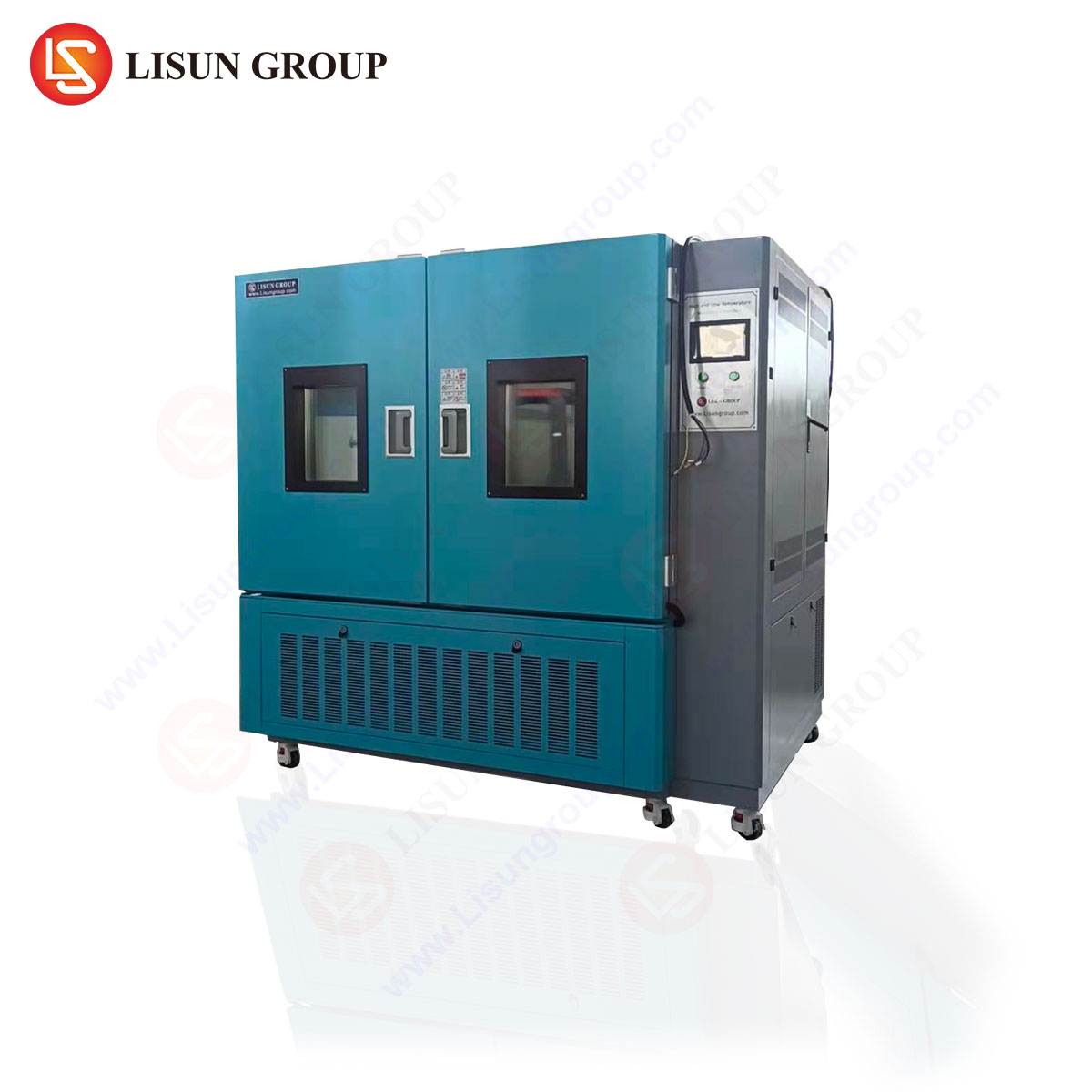
Accurate and repeatable needle flame testing demands instrumentation that offers precise control over all test variables. The LISUN ZY-3 Needle Flame Tester represents a engineered solution designed to facilitate compliance with major international standards, including IEC 60695-11-5, GB/T 5169.5, and the analogous clauses within end-product standards like IEC 60335 (household appliances) and IEC 60950 (IT equipment). Its design integrates the critical functionalities required for standardized testing while enhancing operational safety and data integrity.
The system’s construction centers on a stainless steel main body and a borosilicate glass observation chamber, providing both durability and clear visibility of the test in progress. A key feature is the microprocessor-controlled timing system, which automates the precise application of the test flame (e.g., 30.0 ± 0.1 seconds) and subsequently records the after-flame and after-glow times with an accuracy of 0.1 seconds. This automation minimizes operator influence on test results. The integrated butane supply system includes a precision pressure regulator and flow meter, ensuring a consistent flame height of 12 ± 1 mm as mandated by the standards. The specimen holder is fully adjustable, allowing for the accurate positioning of the test flame at the required angle and point of impingement on components of varying geometries. An integrated scale behind the test chamber allows for the direct measurement of char length or flame propagation distance post-test.
Specifications of the LISUN ZY-3 Needle Flame Tester:
| Parameter | Specification |
| :— | :— |
| Flame Application Time | 0 ~ 99.9 seconds (digital setting, accuracy ±0.1s) |
| After-flame/glow Timer | 0 ~ 99.9 seconds (automatic recording, accuracy ±0.1s) |
| Flame Height | 12 ± 1 mm (adjustable via flow meter) |
| Burner Angle | 0° (vertical) or 45° (standard test position) |
| Test Chamber Dimensions | Approx. 0.5 m³, constructed of stainless steel and glass |
| Ignition Source | Butane gas (commercial purity, ≥95%) |
| Compliance Standards | IEC 60695-11-5, GB/T 5169.5, UL 746A, etc. |
| Power Supply | 220V AC, 50Hz (or configured to local standards) |
Cross-Industry Application Scenarios and Material Assessment
The utility of needle flame testing spans industries where the failure of an electrical component could act as a nascent ignition source. In each case, the test is applied to the non-metallic materials that constitute enclosures, structural parts, insulation, or printed circuit boards.
- Electrical and Electronic Equipment & Industrial Control Systems: Programmable logic controllers (PLCs), motor drives, and power supplies are evaluated for the flammability of their plastic housings, terminal blocks, and internal insulating barriers. A test may involve applying the needle flame to the corner of a relay housing to ensure a fault within does not cause the enclosure to sustain combustion.
- Household Appliances and Consumer Electronics: Materials used in food processors, washing machine control panels, television rear covers, and power adapters are subjected to testing. For instance, the test might target the polymer bezel surrounding a switch on a coffee maker to simulate an internal electrical fault.
- Automotive Electronics and Aerospace Components: Under-hood electronic control units (ECUs), sensor housings, and cabin entertainment system components must resist ignition in harsh environments. Testing here is critical due to the presence of fuels and limited access for fire suppression.
- Lighting Fixtures and Electrical Components: LED driver housings, switchgear casings, socket faces, and the insulating bodies of connectors are common test subjects. The test evaluates whether overheating at a terminal could ignite the surrounding material.
- Telecommunications and Medical Devices: Router casings, server fan shrouds, and the external plastics of patient monitoring equipment are tested to ensure fire containment within critical infrastructure and life-support environments.
- Cable and Wiring Systems: While cables undergo other flame tests, needle flame testing may be applied to cable management accessories like plastic clips, conduits, or gland plates to assess their contribution to fire spread.
Procedural Execution and Data Interpretation
A standardized test procedure begins with the conditioning of specimens in a controlled atmosphere (typically 23°C ± 2°C and 50% ± 5% relative humidity) for a minimum of 24 hours. The specimen is then securely mounted in the adjustable holder within the LISUN ZY-3’s chamber. A layer of surgical cotton is positioned 200 ± 5 mm below the specimen to capture and assess the ignitability of any burning drips—a critical failure mode.
The operator ignites the burner, adjusts the gas flow to achieve the calibrated 12mm flame, and initiates the automated test sequence. The burner advances, applies the flame to the specified point on the specimen for the set duration, and retracts. The timers automatically record the after-flame time (t₁) and after-glow time (t₂). After the specimen cools, the char length—the distance from the point of flame application to the farthest visible edge of damage—is measured using the internal scale.
Interpretation is against the criteria of the invoked standard. For many material tests, a common pass requirement is that after-flame time t₁ ≤ 30 seconds, the sum (t₁ + t₂) ≤ 60 seconds, and that burning drips do not ignite the indicator cotton. For end-product tests, criteria may be stricter, often requiring t₁ ≤ 15 seconds and no ignition of the cotton. Exceeding these limits, or a char length that indicates excessive flame spread, constitutes a test failure, necessitating material reformulation or design modification.
Comparative Advantages in Modern Testing Regimes
The implementation of a system like the LISUN ZY-3 confers several advantages within a quality assurance or certification laboratory environment. Its primary benefit is procedural fidelity; the automated timing and calibrated gas delivery remove key sources of human error, ensuring that test results are attributable to material performance rather than procedural drift. This enhances inter-laboratory reproducibility, a cornerstone of credible safety certification.
Furthermore, the integrated design promotes operator safety. The enclosed test chamber contains flames and combustion products, while the automated sequence minimizes direct handler interaction with the flame. The robustness of the construction ensures long-term measurement stability, reducing calibration drift and maintenance demands. Finally, its direct alignment with IEC and GB standards streamlines the certification pathway for manufacturers aiming to access global markets, providing auditable evidence of compliance testing performed to the letter of the standard.
Integration within a Broader Fire Safety Strategy
It is imperative to contextualize needle flame testing as one element within a hierarchical fire safety engineering strategy. It addresses the specific hazard of small ignition sources. Materials that pass may still require evaluation under more severe conditions, such as glow-wire tests (simulating overheated components) or horizontal/vertical flame tests (assessing general flammability). The needle flame test is often a first-tier screening tool, identifying materials grossly unsuitable for use near potential electrical ignition sources. Its results inform design choices, material selection, and the need for additional protective measures, such as the inclusion of flame-retardant compounds, the use of metallic shields, or the redesign of airflow paths to cool critical components. In this capacity, the test is not merely a compliance checkpoint but a fundamental tool for proactive risk reduction at the component and sub-assembly level.
Frequently Asked Questions (FAQ)
Q1: What is the primary difference between a needle flame test and a glow-wire test?
A1: Both simulate fault conditions but through different mechanisms. The needle flame test applies a small, open flame (simulating a fire ignited by an electrical arc or spilled fuel). The glow-wire test uses an electrically heated element at a specified temperature (e.g., 550°C to 960°C) that is pressed against the specimen, simulating an overheated or glowing component. They address related but distinct ignition scenarios.
Q2: Can the LISUN ZY-3 be used for testing finished products, or only material plaques?
A2: It is designed for both. The standard includes procedures for testing finished products or parts thereof. The adjustable specimen holder in the ZY-3 allows for the secure mounting of irregularly shaped components, such as switch housings, connector bodies, or sections of an appliance enclosure, to evaluate their performance in their end-use form.
Q3: How critical is the butane gas purity to the test outcome?
A3: Extremely critical. The standard specifies commercial butane gas with a minimum purity of 95%. Impurities can alter the flame temperature, color, and stability, leading to non-compliant flame geometry and heat output. This would invalidate the test results, as the applied ignition source would not match the calibrated source defined in the standard.
Q4: Our product complies with UL standards. Is the needle flame test relevant?
A4: Yes. While UL standards for plastics (e.g., UL 94) are prominent, specific end-product standards or material specifications may invoke small flame test requirements analogous to IEC 60695-11-5. The needle flame test is recognized in UL 746A and other specifications. Always consult the specific UL end-product standard applicable to your device to determine the exact required flammability tests.
Q5: What is the significance of the surgical cotton indicator placed beneath the specimen?
A5: The cotton layer is a sensitive indicator for a critical failure mode: burning droplets or particles. If molten or burning material falls from the specimen and ignites the cotton, it demonstrates that the initial fault can propagate fire to other, potentially more flammable materials below (like dust, wiring, or other components). This typically constitutes a test failure, regardless of the after-flame time of the specimen itself.