


Optimizing Constant Temperature Chamber Performance for Advanced Reliability Testing
The relentless drive for product reliability across technologically intensive sectors necessitates rigorous environmental simulation during the research, development, and validation phases. Among the suite of tools employed for this purpose, the constant temperature chamber stands as a fundamental instrument. Its primary function—to maintain a precise, uniform, and stable thermal environment over extended durations—is deceptively simple in concept but complex in execution. Optimal performance of these chambers is not merely a matter of specification compliance; it is a critical determinant of test validity, repeatability, and, ultimately, the fidelity of the reliability data generated. This article examines the key technical parameters influencing constant temperature chamber performance, outlines methodologies for optimization, and explores the application of advanced systems in meeting the stringent demands of modern industry standards.
Fundamental Principles of Thermal Stability and Uniformity
At its core, a constant temperature chamber operates on the principle of closed-loop control. A thermal conditioning system—comprising a heater, a refrigeration unit, or both—modifies the chamber’s internal air temperature. Sensors, typically high-accuracy platinum resistance thermometers (PRTs) or thermocouples, provide feedback to a programmable controller. This controller compares the sensed temperature to the user-defined setpoint and adjusts the output to the conditioning system accordingly using a Proportional-Integral-Derivative (PID) algorithm. The sophistication of this control loop directly impacts settling time, overshoot minimization, and long-term stability.
However, control of the air temperature at a single point is insufficient. Thermal uniformity, defined as the spatial variation of temperature across the defined workspace under stable conditions, is equally paramount. Poor uniformity can lead to scenario where test specimens located in different zones of the chamber experience disparate thermal stresses, invalidating comparative results. Uniformity is a function of airflow design, fan performance, internal baffling, and the thermal mass and layout of the load. Achieving high uniformity requires a carefully engineered air circulation system that ensures consistent velocity and direction across the entire workspace, minimizing dead zones and stratification.
Critical Performance Metrics and Their Interdependence
Optimization efforts must focus on a set of interdependent metrics, each governed by distinct physical and control principles.
Temperature Range and Ramp Rate: The operational span of the chamber, often expressed as extremes (e.g., -70°C to +150°C), defines its applicability. The rate at which the chamber can transition between temperatures (ramp rate, typically in °C/min) is crucial for tests simulating rapid environmental changes. It is limited by the power of the heating and cooling systems, the efficiency of heat exchange, and the thermal mass of the chamber structure and load. Aggressive ramp rates can sometimes compromise uniformity and stability if the system is not properly balanced.
Stability and Fluctuation: Once at setpoint, temperature stability refers to the chamber’s ability to maintain that value over time. Fluctuation (or variation) is the peak-to-peak deviation observed at the controller sensor. High-performance chambers exhibit fluctuations of ≤±0.5°C. Stability is a direct measure of the control algorithm’s efficacy and the system’s immunity to external disturbances or cyclical compressor operation.
Uniformity and Gradient: As previously noted, uniformity is the spatial differential. It is measured by a multi-sensor array placed at the corners and center of the empty workspace under stabilized conditions. Standards such as IEC 60068-2-1 and -2 specify measurement methods. A typical high-specification chamber may guarantee uniformity within ±2.0°C across its range. The temperature gradient, or the maximum difference between any two points, is a related critical value.
Load Considerations: The introduction of a test specimen, particularly one with high thermal mass or active power dissipation (e.g., a powered electronic control unit), represents a significant disturbance. An optimized chamber must compensate for the thermal load, maintaining both setpoint and uniformity. This requires a system with sufficient conditioning capacity and a control system that can dynamically adjust to the changing heat load.
System Architecture and Component-Level Optimization
Performance optimization is rooted in the design and integration of core subsystems.
Refrigeration System: For sub-ambient testing, the refrigeration circuit is vital. Cascade refrigeration systems, employing two separate refrigerant circuits, are standard for achieving temperatures below -40°C. The use of environmentally compliant refrigerants with high thermodynamic efficiency, paired with precisely matched compressors, condensers, and evaporators, reduces thermal cycling amplitude and improves stability. Advanced systems may incorporate liquid-injection cooling or other techniques to manage compressor head pressure and enhance low-temperature performance.
Airflow Management: The pattern of airflow—whether vertical (top-down), horizontal (left-to-right), or a customized pattern—must be engineered for the typical load configuration. Adjustable baffles, variable-speed centrifugal fans, and strategically placed ducts are employed to direct air uniformly. Computational Fluid Dynamics (CFD) modeling is often used in the design phase to simulate and optimize airflow patterns before physical prototyping, identifying and eliminating potential stagnation points.
Control System and Sensor Technology: The intelligence of the chamber resides in its controller. Modern digital controllers with auto-tuning PID functionality can learn the system’s thermal response characteristics and adjust control parameters in real-time to accommodate different setpoints and load conditions. The placement, accuracy, and response time of the sensors are equally critical. Sensors must be shielded from direct radiant effects from heaters or the load and positioned within the actively circulating airflow to provide representative feedback.
Insulation and Sealing: High-density mineral wool or polyurethane foam insulation with low thermal conductivity minimizes parasitic heat transfer between the workspace and the ambient environment, reducing energy consumption and improving the system’s ability to maintain extreme temperatures. Robust door seals, typically silicone-based with a magnetic or pneumatic compression mechanism, are essential to prevent ingress of ambient air and moisture, which can cause frost formation at low temperatures and destabilize the internal environment.
Application in Industry: The Role of the LISUN GDJS-015B Temperature Humidity Test Chamber
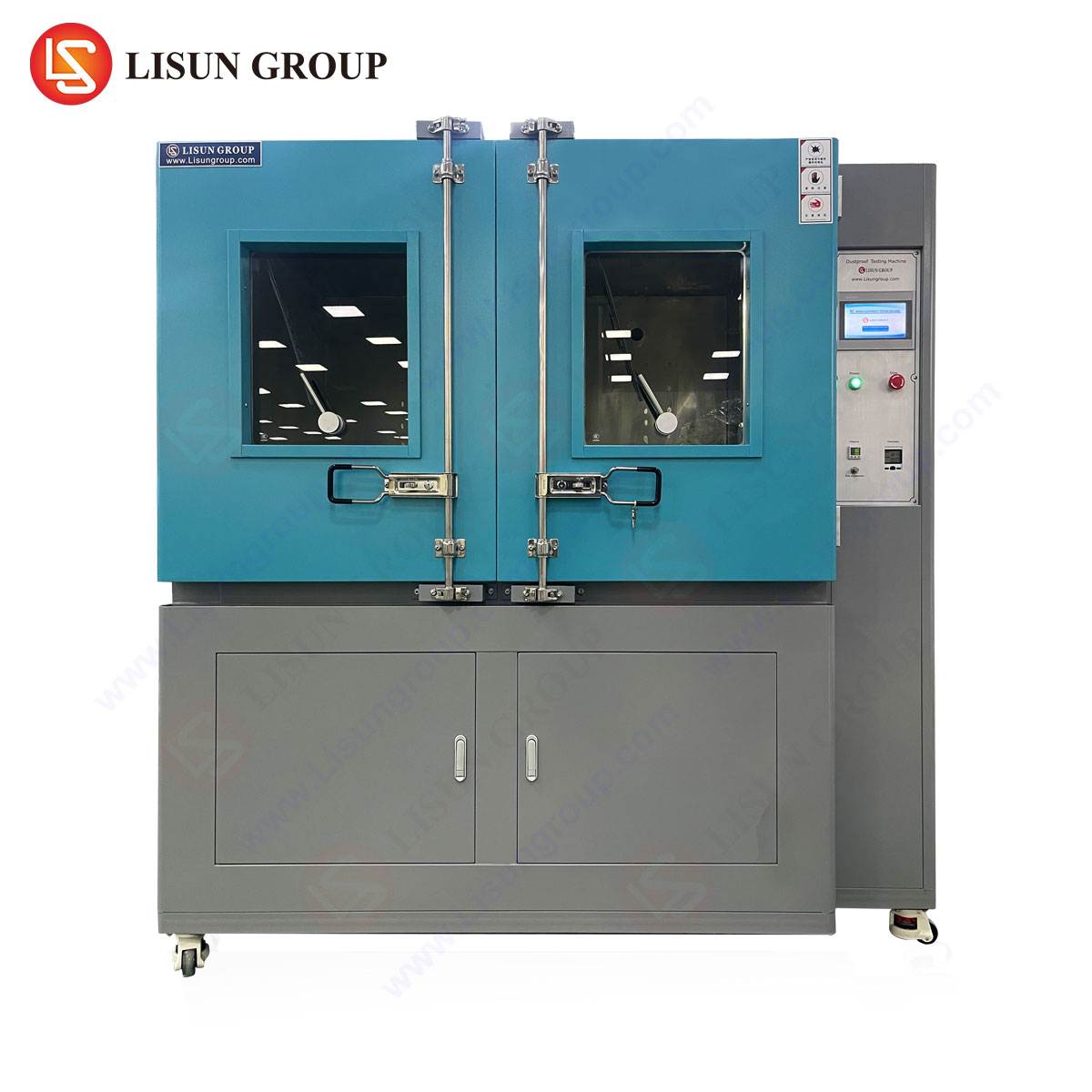
To contextualize these optimization principles, consider their implementation in a specific industrial solution, such as the LISUN GDJS-015B Temperature Humidity Test Chamber. This chamber integrates constant temperature and humidity functionality, a common requirement for testing material degradation, chemical stability, and electrical performance under combined climatic stress.
Specifications and Design Philosophy: The GDJS-015B typically offers a temperature range of -70°C to +150°C and a humidity range of 20% to 98% RH. Its design emphasizes the optimization metrics discussed. A cascade refrigeration system ensures reliable attainment of low temperatures. A balanced airflow system, engineered for combined thermal and humidity uniformity, circulates conditioned air. The chamber utilizes a digital touch-screen controller with programmable PID and fuzzy logic capabilities, allowing for complex multi-segment test profiles. Key specifications often include a temperature fluctuation of ≤±0.5°C, a uniformity of ≤±2.0°C, and a humidity tolerance of ±2.5% RH under stable conditions.
Testing Principles and Industry Use Cases: The chamber operates by using a heated water reservoir or a boiler to generate steam for humidity and a dehumidification system involving the refrigeration evaporator coil to condense moisture. Precise control of the saturation vapor pressure relative to the air temperature at a given point enables accurate humidity setting. This capability is indispensable across numerous sectors:
- Automotive Electronics: Testing engine control units (ECUs), sensors, and infotainment systems for operation and longevity across the climatic conditions experienced globally, from desert heat to arctic cold, often with cyclic condensation.
- Medical Devices: Validating the storage stability of diagnostic reagents, the functionality of implantable device components, and the reliability of portable monitors in varying hospital and transport environments as per standards like ISO 13485.
- Telecommunications Equipment: Assessing base station electronics, fiber optic components, and consumer routers for performance under high-humidity, tropical conditions that can lead to conformal coating breakdown and electrochemical migration.
- Electrical Components & Wiring Systems: Evaluating switches, connectors, and cable insulation for plasticizer loss, embrittlement at low temperatures, or insulation resistance degradation under damp heat, referencing test standards such as IEC 60512 and UL 2556.
Competitive Advantages: The optimized performance of such a chamber translates into tangible advantages. High uniformity ensures that all specimens in a batch test are subjected to identical conditions, improving the statistical confidence of failure analysis. Rapid ramp rates with minimal overshoot reduce total test cycle time, accelerating time-to-market. Robust construction and reliable compressor systems minimize downtime and total cost of ownership. The programmability and data logging features support compliance with stringent quality documentation requirements in aerospace (e.g., DO-160), automotive (e.g., AEC-Q100), and medical industries.
Validation, Calibration, and Procedural Best Practices
Optimization is not a set-and-forget attribute; it requires ongoing verification. Regular calibration against NIST-traceable standards is mandatory to ensure measurement integrity. This involves not just the controller sensor, but also the mapping of the workspace for uniformity using a calibrated multi-sensor array. The frequency of calibration is dictated by quality system requirements (e.g., ISO/IEC 17025) and usage intensity.
Procedural factors significantly impact realized performance. Proper loading is essential; specimens should be arranged to avoid obstructing airflow channels. The use of thermally neutral racks is recommended. For powered loads, the chamber’s rated heat dissipation capacity must not be exceeded. Pre-conditioning specimens to a known thermal state before test initiation can reduce chamber recovery time. Furthermore, developing and adhering to standardized operating procedures for test initiation, monitoring, and data collection reduces operator-induced variability.
Conclusion: The Strategic Imperative of Performance Optimization
In conclusion, optimizing constant temperature chamber performance is a multi-disciplinary endeavor spanning thermodynamics, fluid dynamics, and control theory. It moves beyond basic functionality to address the nuances of stability, uniformity, and real-world load dynamics that define test credibility. As products from automotive electronics to aerospace components face increasingly harsh and variable operational environments, the environmental test equipment used to validate them must exhibit commensurate precision and reliability. Implementing chambers designed with these optimization principles at their core, supported by rigorous calibration and operational discipline, provides engineering and quality assurance teams with the high-fidelity data necessary to drive design improvements, ensure compliance, and mitigate the profound costs of field failure. The resultant enhancement in product reliability is not merely a technical achievement but a fundamental component of brand integrity and market success.
Frequently Asked Questions (FAQ)
Q1: How does the introduction of a large, thermally massive test load affect the chamber’s ability to maintain setpoint and uniformity?
A large thermal mass acts as a heat sink or source, disturbing the chamber’s equilibrium. A high-performance chamber with sufficient conditioning capacity (kW of heating/cooling) and a responsive, well-tuned control system will compensate. However, the initial stabilization period will be longer, and the verified uniformity specification may shift. It is often necessary to perform a loaded uniformity mapping to understand the actual test environment. The load’s arrangement is critical; it must not block airflow ducts or create isolated pockets of stagnant air.
Q2: What is the significance of “ramp rate” in constant temperature testing, and when is a fast ramp rate essential?
Ramp rate defines the speed of temperature transition. While some tests, like long-term stability baking, require only a slow change, others critically depend on fast ramps. Examples include thermal cycling tests for solder joint reliability (e.g., JEDEC JESD22-A104), where rapid transitions between extremes induce mechanical stress, and tests simulating the sudden environmental changes a device may experience when powered on in a cold state or transported. A faster ramp rate reduces total test duration but requires a more powerful and efficiently balanced chamber system.
Q3: For testing automotive electronics, why is combined temperature and humidity control often required, as seen in chambers like the GDJS-015B?
Automotive components must endure a vast spectrum of conditions—from the high-temperature, dry environment of an engine bay to the cold, humid conditions of a winter climate with interior condensation. Combined tests, such as damp heat (85°C/85% RH) or thermal humidity cycling, accelerate failure mechanisms like corrosion, delamination, and dendritic growth. These tests are prescribed by standards like ISO 16750-4 and are essential for validating component lifetime and reliability.
Q4: How often should a constant temperature chamber be calibrated, and what does the process entail?
Calibration frequency is typically annual, but it can be more frequent based on usage, criticality of tests, or quality system mandates (e.g., every 6 months). The process involves using external, NIST-traceable reference sensors, usually a high-accuracy PRT and a calibrated hygrometer for humidity chambers. A technician places these sensors at multiple locations within the workspace (empty, per the standard’s definition) and compares their readings to the chamber’s display and controller setpoints over a range of temperatures. This verifies accuracy, fluctuation, and uniformity. A formal report documents any deviations and adjustments made.
Q5: What are common causes of poor temperature uniformity, and how can they be diagnosed?
Poor uniformity often stems from airflow issues: a failing fan, blocked air intake or exhaust vents, improper loading that obstructs circulation, or deteriorated door seals allowing ambient air infiltration. It can also be caused by a malfunctioning heater element or an uncalibrated sensor giving false feedback to the controller. Diagnosis begins with an empty-chamber uniformity mapping using independent sensors. If the issue is present when empty, inspect filters, fans, and seals. If it only appears under load, reevaluate the load’s size, power dissipation, and arrangement relative to the chamber’s airflow pattern.