

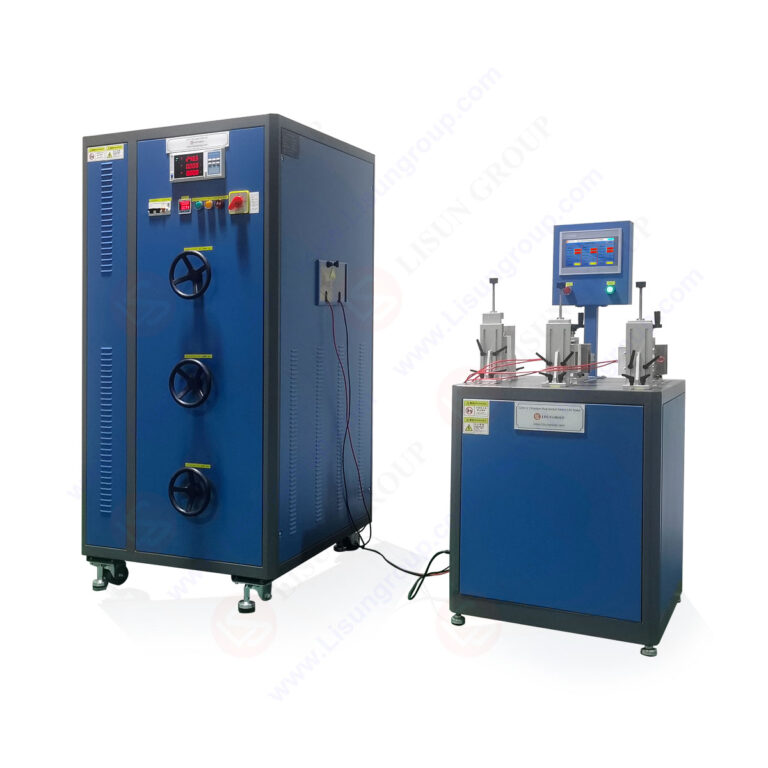



Optimizing Product Reliability with Advanced Dust Test Chambers
The Imperative of Particulate Ingress Protection in Modern Engineering
The operational lifespan and functional integrity of virtually all manufactured goods are intrinsically linked to their resilience against environmental stressors. Among these, particulate matter—encompassing dust, sand, and other fine solids—represents a pervasive and insidious threat. Its ingress can precipitate catastrophic failures across a diverse spectrum of industries, from the subtle degradation of electrical contacts in a medical sensor to the sudden seizure of a critical actuator in an aerospace component. Consequently, the validation of a product’s sealing efficacy is not merely a quality check but a fundamental engineering requirement. Advanced dust test chambers have thus evolved from simple validation tools into sophisticated instruments essential for predictive reliability engineering, enabling designers to quantify and enhance a product’s defensive capabilities against particulate contamination.
Deconstructing the Dust Ingress Testing Paradigm
Dust testing is governed by a framework of international standards, most notably IEC 60529 (Ingress Protection or IP Code) and its derivations such as ISO 20653 for road vehicles. These standards define the methodologies for verifying the degrees of protection provided by enclosures against the intrusion of solid foreign objects. The IP5X and IP6X ratings are specifically germane to dust testing, with IP5X denoting “dust protected” (limited ingress permitted without harmful effects) and IP6X signifying “dust tight” (no ingress permitted). The testing paradigm involves exposing the device under test (DUT) to a controlled, high-density cloud of standardized test dust within a sealed chamber. The test dust, typically talcum powder for fine dust or Arizona Road Dust for more abrasive simulations, is fluidized and circulated by controlled air currents or vacuum-induced flow. The post-test examination involves meticulous inspection for any ingress, often coupled with functional testing to ascertain if any particulate that breached the seals has impaired operation.
Operational Mechanics of the LISUN SC-015 Dust Sand Test Chamber
The LISUN SC-015 exemplifies the integration of precise control systems with robust mechanical design to execute reproducible and standards-compliant dust ingress tests. Its operational principle is centered on creating a uniform, turbulent dust cloud within its test volume. A negative pressure differential is established between the chamber interior and the DUT’s interior (if the DUT is powered and has internal air movement, such as a fan) or via a dedicated vacuum pump connected to the DUT’s sealing points. This pressure differential, adjustable and precisely monitored, simulates the real-world conditions where external pressure changes or internal cooling mechanisms draw particulates towards potential breach points.
A key component is the dust circulation system. The specified test dust is placed in a reservoir and is injected into the airstream via a controlled feed mechanism. The air, driven by a centrifugal blower, carries the dust into the main chamber where baffles and diffusers ensure an even distribution, preventing “dead zones” where the DUT might be inadequately exposed. The chamber’s construction, typically of stainless steel with a sealed viewing window, maintains integrity while allowing for observation. The test duration, dust concentration, air velocity, and pressure differential are all programmable parameters, allowing the SC-015 to be configured for everything from a brief IP5X validation to an extended, severe IP6X proof test or custom stress sequences beyond standard requirements.
Technical Specifications and Configurative Flexibility
The LISUN SC-015 is engineered to accommodate a wide range of product sizes and testing protocols. Its core specifications provide the necessary framework for rigorous evaluation.
Table 1: Representative Specifications of the LISUN SC-015 Dust Sand Test Chamber
| Parameter | Specification |
| :— | :— |
| Internal Test Volume | Customizable, commonly 1 m³ to 2 m³ configurations |
| Test Dust | Talcum powder (fine dust per IEC 60529), Arizona Road Dust (coarse), or user-specified |
| Dust Concentration | Programmatically adjustable, capable of maintaining ≥ 2 kg/m³ for IP6X testing |
| Airflow Velocity | Variable, typically up to 5 m/s within the test zone |
| Vacuum System | Integrated pump with adjustable range (0-5 kPa typical differential) |
| Control System | Digital PID controller with touchscreen HMI for parameter setting and logging |
| Safety Features | Over-temperature protection, safety glass viewing window, emergency stop |
| Standards Compliance | IEC 60529, ISO 20653, GB/T 4208, and other relevant national/international standards |
This configurability is critical. For instance, testing a sealed automotive electronic control unit (ECU) may require a specific pressure cycle mimicking under-hood conditions, while testing a passively cooled outdoor telecommunications router may focus on prolonged exposure to a high-concentration dust cloud without significant internal vacuum.
Cross-Industry Applications and Failure Mode Mitigation
The application of dust chamber testing is ubiquitous, directly correlating to field reliability in demanding environments.
- Electrical & Electronic Equipment & Industrial Control Systems: Programmable logic controllers (PLCs), motor drives, and remote terminal units (RTUs) deployed in manufacturing plants, mines, or agricultural settings are subjected to conductive metallic or abrasive organic dust. Ingress can cause short circuits, relay welding, or optical sensor obstruction. The SC-015’s ability to maintain a dense cloud validates gasket integrity and PCB conformal coating efficacy.
- Automotive Electronics & Electrical Components: Beyond ECUs, components like steering column switches, charging sockets, and LED headlight assemblies must withstand road dust and salt. Testing here often uses Arizona Road Dust to simulate abrasive wear on seals over repeated vibration and thermal cycles, which can be sequenced in a combined environmental test.
- Lighting Fixtures & Outdoor Telecommunications Equipment: Streetlights, stadium luminaires, and 5G small-cell enclosures must remain “dust tight” to prevent lumen depreciation, LED driver failure, and connector corrosion. The chamber’s vacuum system tests the integrity of cable glands and housing seams under simulated wind-loading conditions.
- Medical Devices & Aerospace Components: Portable ventilators and patient monitors used in field hospitals, or avionics cooling systems, cannot risk particulate fouling. Even minute ingress in an oxygen sensor or a flight data connector can have severe consequences. Testing in the SC-015 provides quantifiable evidence of reliability for regulatory submissions (e.g., FDA, EASA).
- Consumer Electronics & Office Equipment: From ruggedized tablets and smartphones to printers and copiers in dusty environments, resistance to dust preserves functionality and user experience. Testing verifies that cooling vents, button membranes, and speaker grilles are designed to exclude particulates without overheating.
- Cable and Wiring Systems: Connectors and junction boxes, especially in renewable energy (solar farms) or transportation, are tested for dust ingress that could increase contact resistance, leading to overheating and potential fire hazards.
Analytical Advantages in Reliability Engineering
The competitive advantage of an instrument like the LISUN SC-015 lies not just in its ability to pass/fail a product, but in its role as a diagnostic and development tool. Its precise control and monitoring allow for failure mode root-cause analysis. By varying a single parameter—such as gradually increasing the vacuum level while holding dust concentration constant—engineers can identify the exact pressure at which a specific seal fails. This data feeds directly into finite element analysis (FEA) models of gasket compression and housing stiffness, closing the loop between simulation and physical validation.
Furthermore, the move towards “test-to-failure” methodologies, where products are subjected to conditions far exceeding their rated specification to uncover marginal design flaws, is facilitated by the chamber’s robust construction and flexible programming. This proactive approach to reliability, identifying weaknesses before mass production, offers a significant return on investment by reducing warranty claims and protecting brand reputation.
Integration with Comprehensive Environmental Stress Screening
For maximum predictive value, dust testing is rarely performed in isolation. The most revealing reliability data emerges from combined environmental testing. A product may be sealed effectively at 25°C but fail when its elastomeric gaskets harden at -40°C or become pliable at 85°C. Similarly, vibration can fatigue seals and create ingress paths. Advanced testing protocols therefore sequence exposure in a climate chamber, followed by vibration on a shaker table, and then immediate evaluation in the dust chamber like the SC-015. This sequential stress screening uncovers synergistic failure modes that single-factor testing would miss, providing a far more accurate assessment of real-world durability for products in automotive, aerospace, and industrial applications where temperature, vibration, and contamination act concurrently.
Conclusion: From Compliance to Predictive Assurance
The evolution of dust test chambers from basic compliance tools to advanced analytical instruments mirrors the broader shift in quality assurance towards predictive reliability engineering. Equipment such as the LISUN SC-015 Dust Sand Test Chamber provides the controlled, repeatable, and data-rich environment necessary not only to verify an IP rating but to fundamentally understand a product’s vulnerabilities to particulate ingress. By enabling precise simulation of harsh environments across electrical, automotive, telecommunications, medical, and consumer industries, it empowers engineers to design more robust products, mitigate field failures, and ultimately deliver the reliability that modern markets demand. The data derived from its use transforms dust ingress protection from a qualitative claim into a quantitatively assured characteristic.
Frequently Asked Questions (FAQ)
Q1: What is the critical difference between IP5X and IP6X testing in a chamber like the SC-015, and how is it achieved?
The fundamental difference is the allowable ingress. IP5X (“dust protected”) permits some dust entry provided it does not interfere with operation or safety. IP6X (“dust tight”) requires zero ingress. In practice, the SC-015 achieves this distinction primarily through test duration and dust concentration. IP6X testing typically mandates a longer exposure time (often 8 hours vs. 2-4 hours for IP5X) and requires the maintenance of a higher, more consistent dust concentration (≥ 2 kg/m³) within the chamber to present a more severe challenge to the enclosure’s seals.
Q2: Can the SC-015 accommodate testing of products with internal fans or moving parts that generate their own airflow?
Yes, this is a critical capability. The chamber’s vacuum system can be configured to connect to the DUT’s internal volume. For a product with an internal fan, the test standard often requires the fan to be operational. The chamber’s controlled vacuum then works in concert with the fan’s induced airflow, creating a realistic pressure scenario that tests the intake and exhaust paths under active cooling conditions. This is essential for accurate testing of servers, power supplies, and industrial electronics.
Q3: How is the test dust recovered and managed between tests to ensure consistency and prevent contamination?
The SC-015 is designed with a dust recovery system. After a test cycle, the air circulation system can be run with filters in place to remove suspended dust from the chamber atmosphere. The settled dust is then collected from the chamber floor, often via a dedicated port or removable tray. The dust can be sieved and reused if it meets the particle size distribution requirements of the standard. Proper handling procedures are necessary to maintain consistency and prevent cross-contamination between different dust types (e.g., talc vs. Arizona Dust).
Q4: For a product with multiple cable entries, how is the vacuum applied during testing to simulate real-world conditions?
The standards provide guidance for this scenario. If the product has multiple cable entry points or conduits, they are typically sealed during the test except for one, which is connected to the chamber’s vacuum pump. This creates a pressure differential across all the seals of the enclosure. In some cases, a manifold may be used to apply a controlled vacuum to several ports simultaneously. The test configuration must be documented to ensure the pressure differential is applied across the sealing surfaces being evaluated.
Q5: Beyond IEC 60529, what other industry-specific standards can the SC-015 be configured to meet?
The chamber’s flexible control system allows it to be programmed for a wide array of standards. These include ISO 20653 for road vehicles, MIL-STD-810G Method 510.5 for military equipment, GB/T 4208 (Chinese national standard), and various automotive OEM specifications that may prescribe unique dust types, temperature-humidity-dust cycles, or vibration-dust combined profiles. Its programmability makes it suitable for both generic compliance testing and bespoke, mission-profile-specific reliability validation.