

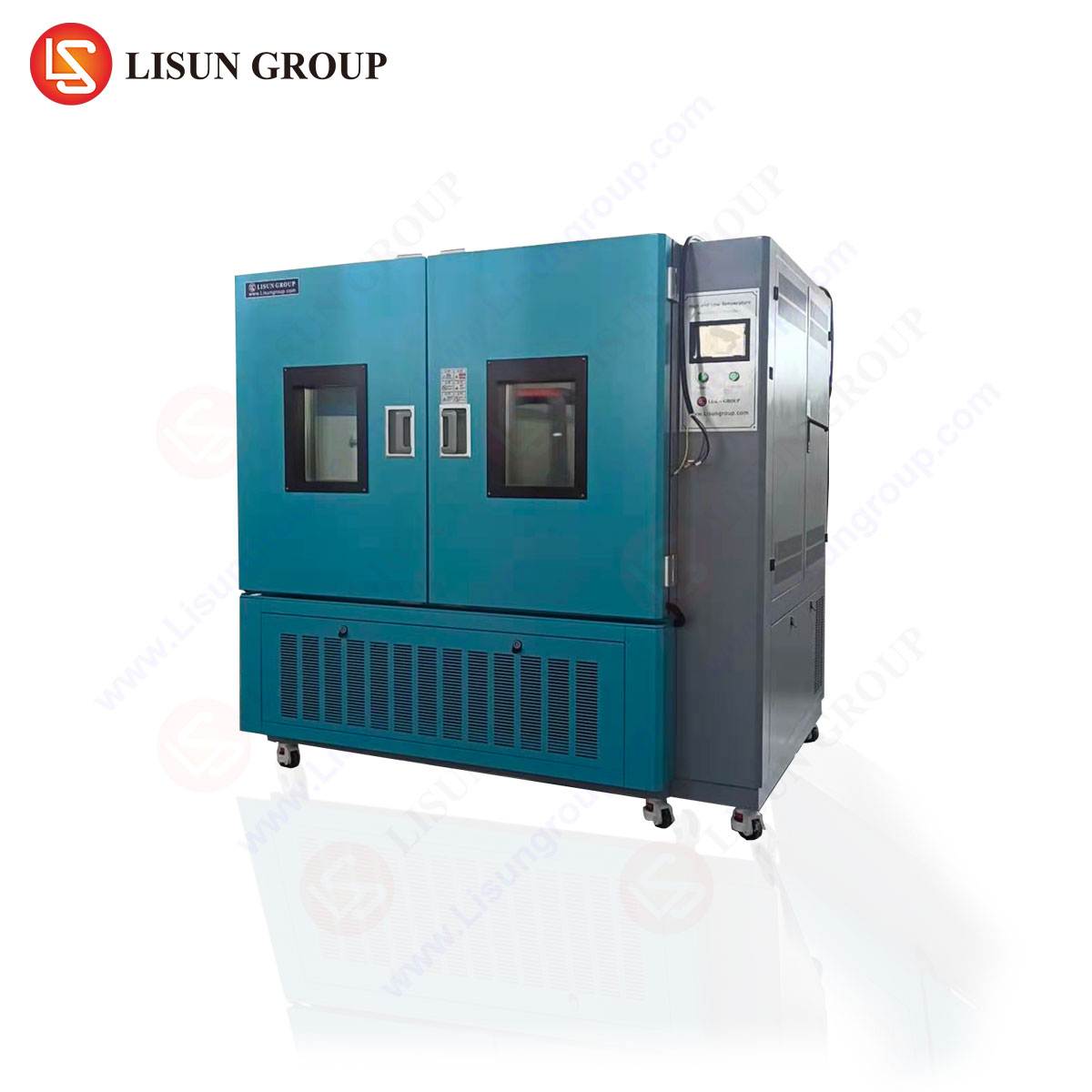



Optimizing Reliability with Temperature Shock Test Chambers
Introduction to Accelerated Stress Screening
The relentless pursuit of product reliability across modern manufacturing sectors necessitates rigorous validation methodologies that simulate years of environmental stress within compressed laboratory timeframes. Among these methodologies, temperature shock testing stands as a cornerstone of accelerated life testing and environmental stress screening (ESS). This process subjects components and assemblies to rapid, extreme transitions between high and low temperature extremes, uncovering latent defects and material weaknesses that gradual thermal cycling might not precipitate. The fundamental objective is not to replicate a typical use environment, but to apply a controlled, exaggerated thermodynamic insult to identify failure modes related to coefficient of thermal expansion (CTE) mismatches, solder joint integrity, PCB delamination, and component parametric drift. By forcing these failures early in the product lifecycle, manufacturers mitigate field failure rates, reduce warranty costs, and substantiate compliance with international reliability standards.
Thermodynamic Principles Governing Shock Testing
The efficacy of temperature shock testing is rooted in non-equilibrium thermodynamics and the physics of thermal stress. When a test specimen is transferred between hot and cold environments, its constituent materials attempt to expand or contract at rates dictated by their individual CTEs. This differential movement induces shear and tensile stresses at material interfaces—between integrated circuits and substrates, solder balls and pads, or encapsulated resins and lead frames. The rate of temperature change, or thermal ramp rate, is a critical parameter. While traditional temperature cycling chambers may achieve rates of 1°C to 5°C per minute, true shock testing demands transitions measured in seconds, creating a steep thermal gradient through the specimen’s cross-section. This gradient is the primary driver of the mechanical stress that precipitates failure. The test’s severity is quantified by the temperature delta (ΔT), dwell times at extremes, and transfer time. Standards such as MIL-STD-883 (Method 1010.9), IEC 60068-2-14, and JESD22-A104 provide prescribed test conditions, but tailored profiles based on failure mode and effects analysis (FMEA) are often more revealing.
Architectural Configurations of Shock Test Equipment
Two primary architectural paradigms exist for temperature shock testing: two-zone (or transfer) systems and three-zone systems. In the classic two-zone configuration, separate hot and cold chambers are maintained at constant setpoints. A mechanical lift or shuttle system rapidly transfers the test basket between these zones. This design excels at achieving maximum thermal transfer speed and is ideal for testing smaller components or boards where thermal mass is low. The three-zone system incorporates a third, neutral zone or an elevator mechanism that transitions the specimen between separate hot and cold compartments. This can minimize thermal leakage between zones and improve energy efficiency. A critical subsystem in all configurations is the air circulation design. High-velocity, vertically or horizontally directed airflow ensures uniform temperature distribution and maximizes heat transfer coefficients, guaranteeing that all specimens on the basket experience the same thermal transient. The choice between architectures depends on test standards, specimen thermal mass, and required throughput.
The HLST-500D Thermal Shock Test Chamber: A Technical Examination
The LISUN HLST-500D Thermal Shock Test Chamber embodies a sophisticated three-zone architecture engineered for high-performance reliability screening. This system is designed to deliver precise, repeatable shock conditions for a wide range of electronic and electromechanical specimens.
Core Specifications and Operational Parameters:
- Test Volume: 500 Liters (interior dimensions customizable).
- Temperature Range: High Temperature Chamber: +60°C to +200°C; Low Temperature Chamber: -10°C to -65°C (extendable to -80°C with optional cascade refrigeration).
- Recovery Time: ≤5 minutes for both chambers after specimen transfer, ensuring setpoint stability is maintained.
- Transfer Time: ≤10 seconds (mechanical handover from high to low zone or vice versa). This rapid transition is critical for generating the requisite thermal gradient.
- Temperature Fluctuation: ≤±0.5°C.
- Temperature Uniformity: ≤±2.0°C.
- Control System: A programmable touch-screen controller manages complex test profiles, including dwell times (1-9999 minutes), cycle counts, and pre-conditioning steps. Data logging and real-time curve display are standard.
Testing Principle: The HLST-500D operates on the three-zone principle. The test basket resides in a neutral transition area. Upon cycle initiation, the basket moves into the pre-stabilized high-temperature chamber for the programmed dwell period. It then returns to the neutral zone before rapidly descending into the low-temperature chamber. This sequence minimizes thermal cross-talk. The forced-air circulation system in each zone utilizes specially designed ducting and high-output heaters or refrigeration coils to achieve rapid recovery after the thermal mass of the basket is introduced.
Industry-Specific Applications and Failure Mode Elicitation
The HLST-500D and similar chambers are deployed to validate product integrity in numerous high-stakes industries.
- Automotive Electronics: Components like engine control units (ECUs), sensors, and infotainment systems must endure under-hood temperatures and cold starts. Shock testing reveals cracked ceramic capacitors, solder fatigue in ball grid array (BGA) packages, and seal failures in connectors.
- Aerospace and Aviation Components: Avionics and satellite components face extreme stratospheric temperatures. Testing validates the integrity of conformal coatings, the stability of crystal oscillators, and the performance of RF connectors under repeated thermal stress.
- Medical Devices: Implantable electronics and diagnostic equipment require absolute reliability. Shock screening identifies delamination in multilayer flexible circuits, adhesive failures in battery packs, and fluid ingress points in housings.
- Telecommunications Equipment: Base station electronics and optical transceivers are subject to diurnal temperature swings. Testing accelerates failure in laser diode mounts, fiber alignment mechanisms, and underfilled semiconductor dies.
- Lighting Fixtures (e.g., LED): High-brightness LED assemblies suffer from CTE mismatch between the semiconductor die, solder, and heat sink. Thermal shock accelerates phosphor degradation, bond wire fracture, and lens yellowing.
- Industrial Control Systems & Electrical Components: Contactors, relays, and PLCs are tested for contact welding tendencies, insulation cracking, and spring constant changes induced by repeated thermal stress.
Competitive Advantages in Precision and Control
The value proposition of a chamber like the HLST-500D lies in its ability to translate standardized test parameters into consistent, real-world stress conditions. Key advantages include:
- Superior Temperature Stability and Uniformity: The ±0.5°C fluctuation and ±2.0°C uniformity specifications exceed many basic industry requirements, ensuring that the stress applied is precisely as defined in the test profile, eliminating a source of experimental noise.
- Optimized Airflow Dynamics: The custom-designed air circulation system ensures that no “dead zones” exist within the workspace. Every specimen, regardless of its position on the basket, experiences an identical thermal environment, which is crucial for achieving statistically valid test results.
- Rapid Transfer and Recovery: The ≤10-second transfer and ≤5-minute recovery times maintain the integrity of the shock profile. Slow recovery dilutes the thermal gradient, effectively turning a shock test into a less severe cycle test. This system preserves the test’s aggressiveness.
- Structural Integrity and Insulation: Robust construction with high-density insulation minimizes thermal bleed between zones and ensures long-term chamber stability, reducing energy consumption and maintenance intervals over the product’s lifespan.
- Advanced Diagnostics and Connectivity: Modern controllers offer not just programming, but diagnostic monitoring of compressor health, heater status, and safety interlocks. Connectivity options enable integration into factory-level data acquisition and laboratory information management systems (LIMS).
Integrating Shock Testing into a Broader Reliability Program
Temperature shock testing is most effective when it is not employed in isolation. It should be a defined phase within a comprehensive reliability growth and validation program. Typically, it follows highly accelerated life testing (HALT) in the development phase, which is used to find design limits and weaknesses. Once design improvements are made, thermal shock serves as a pass/fail screening tool in qualification testing, often performed according to a specific standard like Telcordia GR-468-CORE for optoelectronics. In production, it can be used as an ESS audit tool on sampled lots. Data from shock testing should feed directly into failure analysis, utilizing techniques like scanning acoustic microscopy (SAM) to detect internal delamination or X-ray inspection for solder joint cracks. This closed-loop process turns test failures into actionable engineering intelligence, driving continuous improvement in material selection, design rules, and manufacturing processes.
Standards Compliance and Test Profile Development
Adherence to recognized standards provides a common language for reliability claims. The HLST-500D is designed to facilitate testing per:
- IEC 60068-2-14: Environmental testing – Part 2-14: Tests – Test N: Change of temperature.
- MIL-STD-202G: Test Method Standard for Electronic and Electrical Component Parts.
- MIL-STD-883K: Test Method Standard for Microcircuits.
- JESD22-A104: Temperature Cycling.
- GB/T 2423.22: Chinese national standard for environmental testing.
However, a critical engineering task is the development of the specific test profile. This involves defining the temperature extremes (often based on product specification limits plus a margin), dwell times (sufficient for the specimen to reach thermal saturation), number of cycles, and transfer rate. A profile for a automotive under-hood sensor may be -40°C to +125°C with 15-minute dwells, while a consumer smartphone board may be tested at 0°C to +70°C with shorter dwells. The profile must be severe enough to accelerate failure without introducing failure modes that would never occur in the field—a concept known as “overstress.”
Conclusion: The Indispensable Role of Controlled Thermodynamic Stress
In an era where product complexity increases while development cycles shrink, the role of predictive, accelerated reliability testing has never been more vital. Temperature shock test chambers, such as the three-zone HLST-500D, provide a controlled, repeatable, and scientifically grounded means of precipitating latent failures before products reach the end user. By understanding the underlying thermodynamic principles, integrating shock testing into a broader reliability strategy, and utilizing equipment capable of precise and aggressive thermal transitions, manufacturers across the electronics spectrum can achieve demonstrable gains in product quality, safety, and market reputation. The data derived from these chambers is not merely a compliance checkbox; it is a fundamental input for robust design and a predictor of long-term field performance.
Frequently Asked Questions (FAQ)
Q1: What is the primary difference between temperature cycling and thermal shock testing?
A1: The key difference lies in the rate of temperature change. Temperature cycling typically involves gradual ramp rates (e.g., 1-5°C/min) between extremes, focusing on cumulative fatigue damage. Thermal shock features near-instantaneous transfers (seconds) between two pre-conditioned extreme chambers, creating severe thermal gradients that induce different, often more acute, mechanical stresses. They are complementary tests targeting different failure mechanisms.
Q2: How do I determine the appropriate temperature extremes and dwell times for my product?
A2: Extremes are typically derived from the product’s operational and storage specification limits, often with an added safety margin (e.g., 10-20°C beyond). Dwell times must be sufficient for the entire specimen, especially its highest thermal mass element, to stabilize at the target temperature. This can be determined experimentally by placing thermocouples on the specimen during a trial run. Reference to relevant industry standards provides a common starting point.
Q3: Can the HLST-500D chamber accommodate testing with powered devices (bias testing)?
A3: Yes, but it requires specific customization. Feed-through ports must be integrated into the chamber design to allow electrical cables to pass from the test specimens inside to external power supplies and monitoring equipment outside the chamber. This must be specified at the time of order to ensure proper sealing and minimal thermal loss at the port.
Q4: What maintenance is critical for ensuring the long-term accuracy of a thermal shock chamber?
A4: Regular preventive maintenance is essential. Key tasks include: checking and calibrating temperature sensors (RTDs/thermocouples) annually, cleaning or replacing air filters to maintain proper airflow, inspecting door seals for integrity, verifying refrigerant gas pressure and compressor operation, and ensuring the mechanical transfer mechanism is lubricated and aligned. A log of all recovery time tests is recommended to track performance drift.
Q5: Is it acceptable to test multiple different product types simultaneously in the same basket?
A5: It is technically possible but generally not recommended for quantitative reliability assessment. Different products have different thermal masses and geometries, meaning they will experience slightly different temperature profiles and gradients. This introduces variability into the test stress, making results less comparable and statistically noisy. For rigorous testing, a single product type per run is ideal. If mixed loads are unavoidable, they should be of very similar mass and layout, and their positions should be carefully documented.