




Optimizing Salt Spray Test Results with LISUN Chamber Technology
Introduction to Accelerated Corrosion Testing
The evaluation of material and component resistance to corrosive environments remains a cornerstone of product reliability engineering across numerous industries. Among the various accelerated test methods, the salt spray (fog) test, standardized under protocols such as ASTM B117, ISO 9227, and JIS Z 2371, serves as a critical, if sometimes misconstrued, benchmark. Its primary function is not to precisely replicate real-world service life but to provide a controlled, aggressive, and reproducible environment for comparative analysis. The integrity of the data derived from this test is intrinsically linked to the precision and stability of the test chamber itself. Variations in chamber performance—fluctuations in temperature, salinity, pH, or spray dispersion—can introduce significant confounding variables, rendering results non-comparable and potentially leading to costly design or material selection errors. This technical analysis examines the methodologies for optimizing salt spray test outcomes, with a specific focus on the engineering principles embodied in advanced chamber technology, as exemplified by the LISUN YWX/Q-010 series.
Foundational Principles of the Salt Spray Test Method
The salt spray test operates on the principle of creating a continuous, standardized corrosive mist within an enclosed chamber. A prepared 5% sodium chloride solution is atomized using compressed air, generating a fine, settling fog that uniformly deposits on test specimens mounted within the workspace. The test accelerates corrosion by maintaining a constant elevated temperature, typically 35°C ± 2°C, and a saturated humidity environment, which prevents the salt solution from evaporating on the specimen surface. This constant wetness promotes electrochemical corrosion processes, including galvanic reactions, pitting, and crevice corrosion. The key to test validity lies in the chamber’s ability to maintain these parameters—temperature homogeneity, solution chemistry consistency, and spray uniformity—within the narrow tolerances prescribed by international standards. Deviations, such as “dry-out” periods or localized concentration gradients, can alter corrosion mechanisms, leading to false positives or negatives regarding a material’s protective coating efficacy or inherent corrosion resistance.
Critical Chamber Parameters Influencing Test Reproducibility
Optimization begins with rigorous control of the chamber’s internal environment. Temperature stability is paramount; even minor fluctuations can affect the rate of chemical reactions and the solubility of corrosive products. Modern chambers employ PID (Proportional-Integral-Derivative) controlled heating systems with strategically placed sensors and baffles to ensure spatial temperature uniformity of ≤2°C. The salt solution reservoir must be constructed from inert materials, such as high-grade polymers or titanium, to prevent contamination that could alter pH, which is strictly maintained between 6.5 and 7.2 for neutral salt spray (NSS) tests. The atomization system is equally critical. The design of the nozzle, the pressure and purity of the compressed air (filtered to remove oil and particulates), and the geometry of the spray tower directly influence droplet size, distribution, and settlement rate. A poorly designed system may produce droplets too large (leading to runoff) or too fine (leading to insufficient deposition), or create “dead zones” with inadequate fog density.
The LISUN YWX/Q-010X: Engineering for Parameter Precision
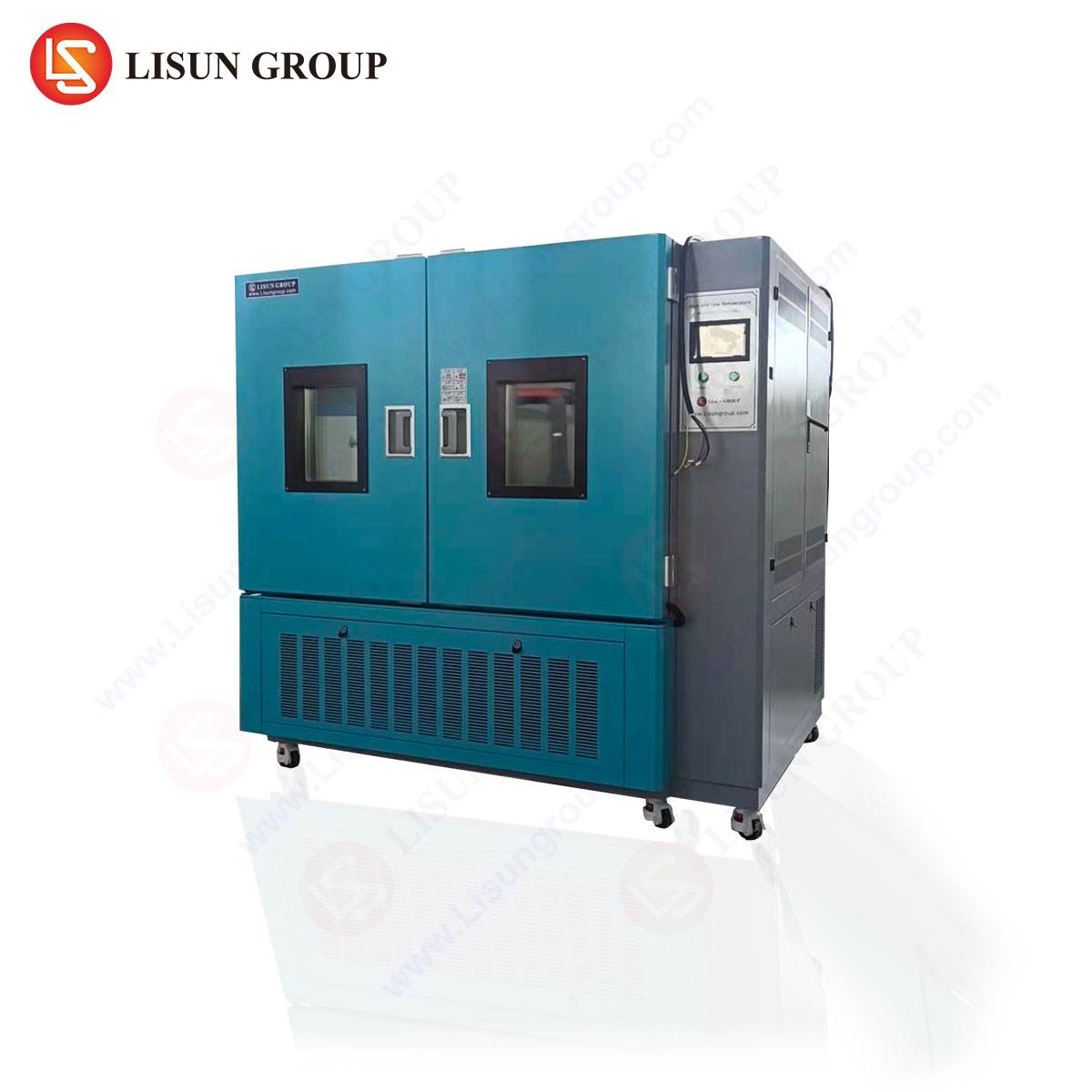
The LISUN YWX/Q-010X salt spray test chamber incorporates a suite of design features aimed at eliminating common sources of variability. Its construction utilizes imported corrosion-resistant PVC plastic for the main chamber liner and cover, with a secondary outer shell of fiber-reinforced polypropylene, ensuring long-term structural integrity against the aggressive internal environment. The chamber’s operational specifications are engineered for strict adherence to standardized protocols.
Key Specifications of the YWX/Q-010X:
- Test Chamber Temperature Range: Ambient to +55°C.
- Temperature Uniformity: ≤2°C (per ASTM B117 requirements).
- Saturation Barrel Temperature Range: +47°C ± 2°C (critical for humidifying compressed air).
- Spray Volume Collection: 1.0 to 2.0 ml/80cm²/h (adjustable and verifiable).
- Chamber Dimensions: Customizable, with a standard workspace of approximately 600L.
- Controller: Digital PID microprocessor controller with LED display for precise setpoint and real-time monitoring of chamber and saturation barrel temperatures.
The testing principle of the YWX/Q-010X hinges on its integrated air saturator system. Compressed air is pre-heated and humidified in a separate saturation barrel maintained at a higher temperature than the chamber. This process prevents a drop in chamber humidity when the air expands upon entering the nozzle, a common flaw that can cause solution evaporation on specimens. The chamber employs a tower-type nozzle with a precision bore, fed by a constant-level solution supply, ensuring consistent droplet generation and an even fog distribution pattern. This design minimizes directional bias and promotes uniform specimen exposure, a prerequisite for meaningful comparative testing.
Industry-Specific Applications and Use Cases
The utility of precise salt spray testing spans industries where functional integrity and safety are compromised by corrosion.
- Automotive Electronics & Electrical Components: Testing electronic control units (ECUs), sensor housings, connector terminals, and switch assemblies. Corrosion on these components can lead to intermittent signals, short circuits, or complete failure, impacting vehicle safety systems.
- Aerospace and Aviation Components: Evaluating coatings and materials for avionics boxes, cabin electronics, and electrical harness connectors. The test provides a baseline for material performance in coastal or de-icing fluid-affected environments.
- Telecommunications Equipment & Cable Systems: Assessing the protective finishes on outdoor enclosures, antenna components, coaxial connectors, and buried cable sheathing. Corrosion-induced signal degradation or water ingress can cripple network reliability.
- Medical Devices and Industrial Control Systems: Validating the corrosion resistance of stainless-steel instrument housings, control panel facades, and internal conductive traces. Failures in these settings can have direct implications for patient safety or manufacturing process stability.
- Lighting Fixtures and Household Appliances: Testing the finish on outdoor luminaire housings, appliance control panels, and internal motor components exposed to humid or coastal indoor environments.
- Consumer Electronics and Office Equipment: Qualifying the durability of metallic finishes on external casings, internal shielding, and connector ports (e.g., USB, HDMI) against handling-induced corrosion from salts in perspiration.
In each case, the YWX/Q-010X provides a controlled, repeatable environment. For instance, a connector manufacturer can compare the performance of different nickel-plating thicknesses under identical, standardized conditions, generating data that directly informs design-for-reliability decisions.
Competitive Advantages in Data Integrity and Operational Efficiency
The YWX/Q-010X differentiates itself through features that enhance both the quality of test data and the practicality of laboratory operation. Its digital PID controller offers superior temperature stability compared to simpler on/off thermostats, reducing cyclical fluctuations. The transparent chamber cover, made of impact-resistant plastic, allows for visual inspection without disturbing the test environment. The chamber includes built-in fog collection funnels, facilitating the mandatory periodic verification of spray settlement rate as per ISO 9227—a task often cumbersome in less integrated designs.
From an operational standpoint, the chamber’s corrosion-resistant construction minimizes maintenance downtime. The large-capacity solution reservoir reduces the frequency of refills during long-duration tests. The intuitive controller interface simplifies parameter setting and reduces operator error. Furthermore, the chamber’s compliance with multiple international standards (ASTM, ISO, JIS) ensures that test data is recognized and valid across global supply chains, a critical factor for component suppliers serving multinational OEMs.
Methodological Best Practices for Test Optimization
Optimization extends beyond chamber selection to encompass specimen preparation, chamber maintenance, and data interpretation. Specimens must be thoroughly cleaned to remove oils or contaminants that could act as unintended corrosion inhibitors. Mounting orientation is critical; most standards specify that test surfaces should be oriented at 15° to 30° from vertical to allow spray to settle uniformly while minimizing direct runoff from upper to lower specimens. The chamber must be calibrated regularly, with particular attention to verifying spray collection rates, pH of the collected solution, and temperature mapping across the workspace.
Strategic placement of control specimens—panels of known performance—alongside test articles provides an internal validation of the chamber’s operation for each test run. For the YWX/Q-010X, leveraging its programmability to conduct cyclic tests (e.g., incorporating humidity or drying steps) can provide more correlative data for certain applications, though such tests require careful programming and validation beyond the standard NSS procedure.
Interpreting Results Within a Broader Corrosion Assessment Framework
A fundamental tenet of optimization is understanding the limitations of the salt spray test. A passing result does not guarantee 30-year service life in a marine environment, nor does a failing result necessarily condemn a material. The test is a qualitative, comparative tool. Results are most powerful when used as part of a larger test suite, including humidity testing, cyclic corrosion tests (CCT), and real-world field exposures. The data from a well-controlled YWX/Q-010X test provides a high-confidence, accelerated comparison between Material A and Material B, or between different surface treatment processes, under a specific, standardized set of aggressive conditions. This allows engineers to screen options efficiently before committing to more expensive and time-consuming correlative testing.
Conclusion
Achieving reliable, reproducible, and actionable salt spray test results is a function of disciplined methodology supported by precision-engineered chamber technology. By maintaining stringent control over temperature, humidity, solution chemistry, and spray dynamics, chambers like the LISUN YWX/Q-010X minimize intrinsic variability, allowing the performance differences between test specimens to be isolated and accurately measured. This capability is indispensable for industries ranging from automotive to aerospace, where material and component reliability are non-negotiable. Investing in chamber technology that prioritizes parameter stability and adherence to international standards is not merely a capital expenditure but a foundational investment in product quality, safety, and long-term brand integrity.
Frequently Asked Questions (FAQ)
Q1: How often should the spray nozzle and saturation tower in the YWX/Q-010X be cleaned or maintained?
A: Maintenance frequency depends on usage and solution purity. As a general guideline, a visual inspection and potential cleaning should be performed weekly under continuous operation. The nozzle, being a precision component, should be checked for crystallization or clogging. Using deionized or distilled water for the salt solution, as mandated by standards, significantly reduces maintenance intervals by minimizing mineral scale buildup.
Q2: Can the YWX/Q-010X chamber be used for tests other than the standard Neutral Salt Spray (NSS), such as Acetic Acid Salt Spray (AASS)?
A: Yes, the chamber is constructed from materials resistant to a range of test solutions. However, switching test types requires a thorough and meticulous cleaning of the entire solution system—reservoir, tubing, and nozzle—to prevent cross-contamination. The chamber’s design facilitates this cleaning process. Users must also ensure they have the appropriate safety protocols for handling different corrosive solutions.
Q3: What is the purpose of the separate saturation barrel, and why must its temperature be higher than the chamber temperature?
A: The saturation barrel humidifies and heats the compressed air to 100% relative humidity at a temperature above the chamber setpoint (typically +47°C for a +35°C test). When this saturated air expands and cools upon entering the chamber through the nozzle, it remains fully saturated, preventing the evaporation of the atomized salt droplets. This ensures a consistent, wet salt layer forms on the specimens, which is a fundamental requirement of the test standard.
Q4: Our company tests a wide variety of component sizes, from small electrical terminals to large panel sections. How do we ensure uniform exposure for all specimens?
A: Proper racking and placement are essential. Smaller components should be mounted on non-conductive racks to avoid galvanic coupling and arranged to avoid shielding each other from the fog. Larger panels should occupy a representative position. It is considered best practice to periodically rotate the positions of specimens during very long tests if the standard allows, though this is not a substitute for a chamber with proven spatial uniformity like the YWX/Q-010X. Utilizing the entire workspace and avoiding overcrowding are key principles.
Q5: How does the digital PID controller in the YWX/Q-010X improve test accuracy compared to a simpler controller?
A: A basic on/off thermostat allows the temperature to oscillate around the setpoint, creating cycles of heating and cooling. A PID controller continuously calculates and applies a proportional, integral, and derivative correction to the heating element’s output. This results in significantly tighter temperature control, faster recovery after chamber opening, and minimal overshoot or undershoot, leading to a more stable and consistent corrosive environment throughout the test duration.