

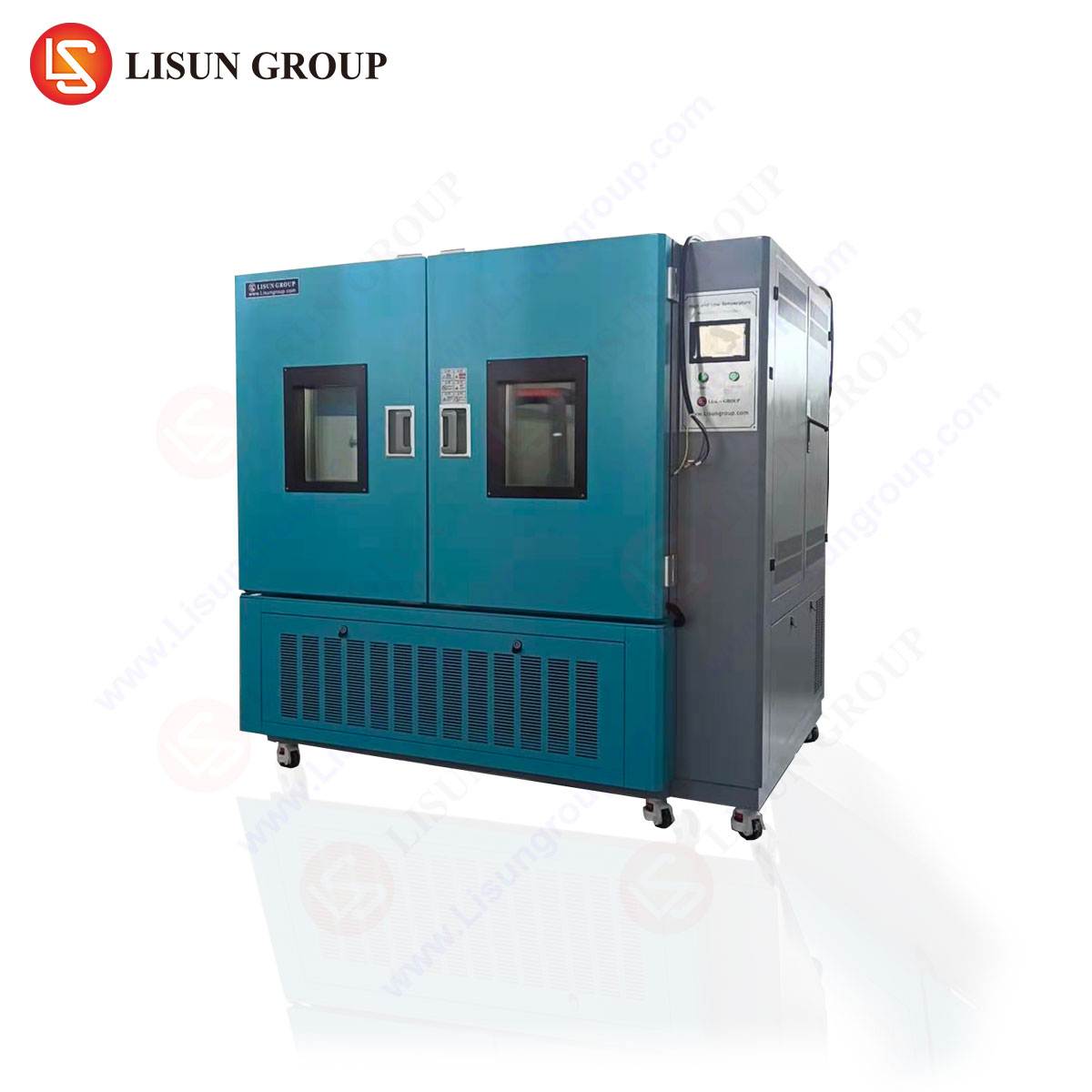



Optimizing Temperature Shock Chamber Performance: A Technical Analysis of Principles, Practices, and the HLST-500D Thermal Shock Test Chamber
The relentless drive for product reliability across a spectrum of high-technology industries necessitates rigorous environmental stress screening. Among the most demanding of these tests is thermal shock testing, a process designed to accelerate and reveal latent defects induced by rapid temperature transitions. The performance of the thermal shock test chamber itself is therefore a critical variable in the validity, repeatability, and efficiency of this essential quality assurance procedure. This article provides a detailed technical examination of the factors governing chamber performance optimization, with a specific analysis of the operational principles and advantages inherent in the LISUN HLST-500D three-zone thermal shock test chamber.
Fundamental Principles of Thermal Shock Stress and Failure Mechanisms
Thermal shock testing operates on the principle of inducing physical stress through the differential expansion and contraction of materials within a test specimen. When subjected to a rapid temperature change, dissimilar materials with varying coefficients of thermal expansion (CTE) experience mismatched dimensional changes. This generates shear and tensile stresses at material interfaces, such as solder joints, bonded connections, wire bonds, and within composite structures. Cyclic application of this stress can lead to fatigue cracking, delamination, interconnect failure, and changes in electrical parameters.
The primary failure mechanisms accelerated by thermal shock include solder joint fatigue in printed circuit board assemblies (PCBAs), cracking of ceramic substrates or encapsulated components, separation of plated-through holes, and seal failures in hermetically packaged devices. The test’s efficacy lies in its ability to compress years of field temperature cycling into a short laboratory duration, identifying design weaknesses, manufacturing flaws, and workmanship defects that would otherwise manifest as premature field failures.
Architectural Design Considerations for High-Performance Shock Chambers
The core architectural decision in thermal shock chamber design lies in the transfer system. The HLST-500D employs a three-zone, basket transfer (also known as a moving specimen system) architecture, comprising a high-temperature zone, a low-temperature zone, and an ambient recovery or dwell zone. This design offers distinct advantages for performance optimization.
The separation of temperature zones eliminates cross-contamination of thermal masses and media. The high-temperature zone typically utilizes electric heating elements with forced air circulation, while the low-temperature zone employs a mechanical refrigeration system, often using environmentally compliant refrigerants like R404A or R507A. The HLST-500D’s independent zonal control allows for extreme temperature extremes to be maintained with stability, as the chambers are not constantly working against each other. The transfer mechanism—a vertically moving basket driven by a servo or pneumatic system—must provide swift, reliable, and vibration-minimized movement to ensure the specified transition time is consistently met. Optimized airflow design within each zone is paramount to ensure uniform temperature distribution across the test volume, a critical parameter defined by standards such as IEC 60068-2-14.
Critical Performance Metrics and Calibration Protocols
Chamber performance is quantified by several key metrics, each requiring meticulous control and regular verification.
Transition Time: This is arguably the most critical specification. Defined as the time taken for the chamber air temperature to transition from the high-temperature set point to the low-temperature set point (or vice versa) after the specimen is transferred. The HLST-500D, for instance, achieves a transition time of ≤5 seconds, a benchmark that ensures the specimen experiences the full thermal gradient rapidly. Prolonged transition times can invalidate the test by allowing the specimen to thermally equilibrate during transfer, reducing the effective stress.
Temperature Recovery and Stability: Following specimen introduction, the chamber must rapidly recover to its set point temperature. Performance is measured by the recovery time and the subsequent stability, typically expressed as a deviation (e.g., ±0.5°C) over time. Advanced PID control algorithms with adaptive tuning are essential for managing the significant thermal load introduced by a batch of test specimens.
Spatial Uniformity: Temperature variation across the working volume must be minimized. Standards often require uniformity within ±2.0°C. This is achieved through sophisticated airflow engineering—using strategically placed baffles, diffusers, and high-capacity fans to create a consistent, turbulent flow around all specimens.
Calibration against NIST-traceable standards is non-negotiable. This involves mapping the entire working volume with a multi-sensor array to validate uniformity and verifying transition and recovery times with appropriately sized and characterized thermal mass dummy loads that simulate real product testing conditions.
Integration of the HLST-500D in Industry-Specific Testing Regimens
The HLST-500D’s specifications, including its temperature range (e.g., -65°C to +150°C), transition speed, and chamber volume, make it suitable for a diverse array of industry applications. Its performance directly impacts test correlation and reliability outcomes.
- Automotive Electronics: Components like engine control units (ECUs), sensors, and infotainment systems must withstand extreme under-hood temperatures and cold starts. The HLST-500D executes tests per AEC-Q100, subjecting components to thousands of cycles between -55°C and +125°C to validate solder integrity and material compatibility.
- Aerospace and Aviation Components: Avionics and satellite components are tested to stringent standards like DO-160 and MIL-STD-883. The chamber’s ability to perform rapid transitions between extreme temperatures (-65°C to +150°C+) is crucial for simulating high-altitude and re-entry thermal profiles, testing the resilience of conformal coatings, connectors, and RF assemblies.
- Medical Devices: Implantable devices and diagnostic equipment require absolute reliability. Thermal shock testing per ISO 14708 and other guidelines checks for seal integrity of encapsulated electronics, battery connection reliability, and the performance of flexible circuits used in wearable monitors.
- Telecommunications Equipment: 5G base station components, optical transceivers, and network switches undergo thermal shock to ensure signal integrity and mechanical stability across global deployments. The test reveals issues like PCB warpage and connector pin misalignment.
- Consumer Electronics & Household Appliances: From smartphones to smart refrigerator controllers, the test accelerates failure in BGA solder balls and laminated display connections, correlating to drops in performance after exposure to environments like a cold car interior to a warm living room.
Advanced Control Systems and Data Integrity Management
Optimization extends beyond mechanical performance to encompass control and documentation. A modern chamber like the HLST-500D is governed by a programmable touch-screen controller. Optimization involves utilizing its features to create complex test profiles with multiple cycles, adjustable dwell times at extremes, and controlled ramp rates between transfers if needed for specific standards.
Data integrity is paramount for audit trails and failure analysis. The system should provide detailed, time-stamped logging of all set points, actual temperatures (preferably from multiple sensors), transfer events, and any alarm conditions (door open, over-temperature, compressor fault). This data is essential for proving test compliance, troubleshooting anomalous results, and performing predictive maintenance on the chamber itself. Integration with factory Network Management Systems (NMS) or Manufacturing Execution Systems (MES) via Ethernet or RS-485 interfaces allows for centralized monitoring and test synchronization.
Preventive Maintenance and Sustained Performance Optimization
Peak chamber performance is not a static achievement but a sustained state requiring a disciplined preventive maintenance (PM) regimen. Key activities include:
- Refrigeration System: Regular inspection of refrigerant levels, compressor oil, condenser cleanliness, and filter-driers to maintain cooling capacity and efficiency.
- Heating System: Inspection and resistance checking of heating elements and associated contactors/SSRs.
- Airflow Systems: Cleaning or replacement of air filters, checking fan motors and bearings, and verifying that airflow paths are unobstructed.
- Transfer Mechanism: Lubrication of guide rails, inspection of drive belts or chains, and verification of limit switch and position sensor alignment.
- Seals and Insulation: Inspection of chamber door gaskets and zone separation seals to prevent thermal leakage and moisture ingress, which can cause icing.
A comprehensive PM schedule, based on operational hours rather than calendar time, is the most effective strategy for preventing unscheduled downtime, ensuring energy efficiency, and guaranteeing that the chamber consistently meets its published specifications throughout its service life.
Frequently Asked Questions (FAQ)
Q1: What is the significance of the ≤5-second transition time specified for the HLST-500D, and how is it measured?
A1: The ≤5-second transition time is critical because it defines the rate at which the test specimen is subjected to the extreme thermal stress. A slower transition allows components to partially equilibrate, reducing test severity and potentially masking defects. It is measured using specialized thermocouples embedded in a defined thermal mass (often an aluminum cube) placed in the specimen basket. The time recorded for the mass’s temperature to move from the high-temperature set point tolerance band to the low-temperature tolerance band after transfer constitutes the validated transition time.
Q2: Can the HLST-500D be used for combined environmental testing, such as thermal shock with humidity?
A2: The standard HLST-500D is designed for dry thermal shock between a high-temperature dry zone and a low-temperature dry zone. It does not introduce humidity as a controlled variable. For tests requiring rapid transitions between temperature and humidity extremes (often termed “temperature humidity shock” or “dual stress”), a different chamber architecture, such as a two-zone chamber with湿热 (shī rè) capabilities, is required. The GDJS-015B temperature humidity test chamber, for example, is designed for steady-state or cyclic temperature and humidity testing, not for ultra-rapid transfers between separate environments.
Q3: How do I determine the appropriate dwell time at each temperature extreme for my product test?
A3: Dwell time is not arbitrary; it must be sufficient for the entire test specimen, not just its surface, to reach thermal stabilization at the target temperature. This is often specified in the relevant product or component testing standard (e.g., JESD22-A104, IEC 60068-2-14). In the absence of a standard, it should be empirically determined by placing thermocouples at the slowest-to-heat/cool points of a representative product and measuring the time to stabilization. Insufficient dwell time invalidates the test’s depth of stress.
Q4: What are the primary competitive advantages of a three-zone basket transfer system compared to a two-zone lift system?
A4: The three-zone system, as used in the HLST-500D, incorporates a separate ambient dwell zone. This allows the high and low-temperature chambers to remain closed and stable at all times, except during the brief transfer. This significantly improves temperature recovery and stability, reduces thermal stress on the chamber insulation and components, and minimizes compressor cycling in the low-temperature zone, leading to greater energy efficiency and longer system life compared to traditional two-zone systems where chambers are alternately exposed to ambient conditions.
Q5: What safety features are critical in a thermal shock chamber for testing battery-powered devices or volatile components?
A5: Essential safety features include robust, independent over-temperature protection (often a separate, hard-wired limit controller), flammable refrigerant detection systems if applicable, chamber exhaust vents, and secure, interlocked doors. For battery testing, additional safeguards such as explosion-proof construction, fire suppression system interfaces, and battery monitoring systems to detect thermal runaway are critical considerations that may require chamber customization or ancillary safety enclosures.