

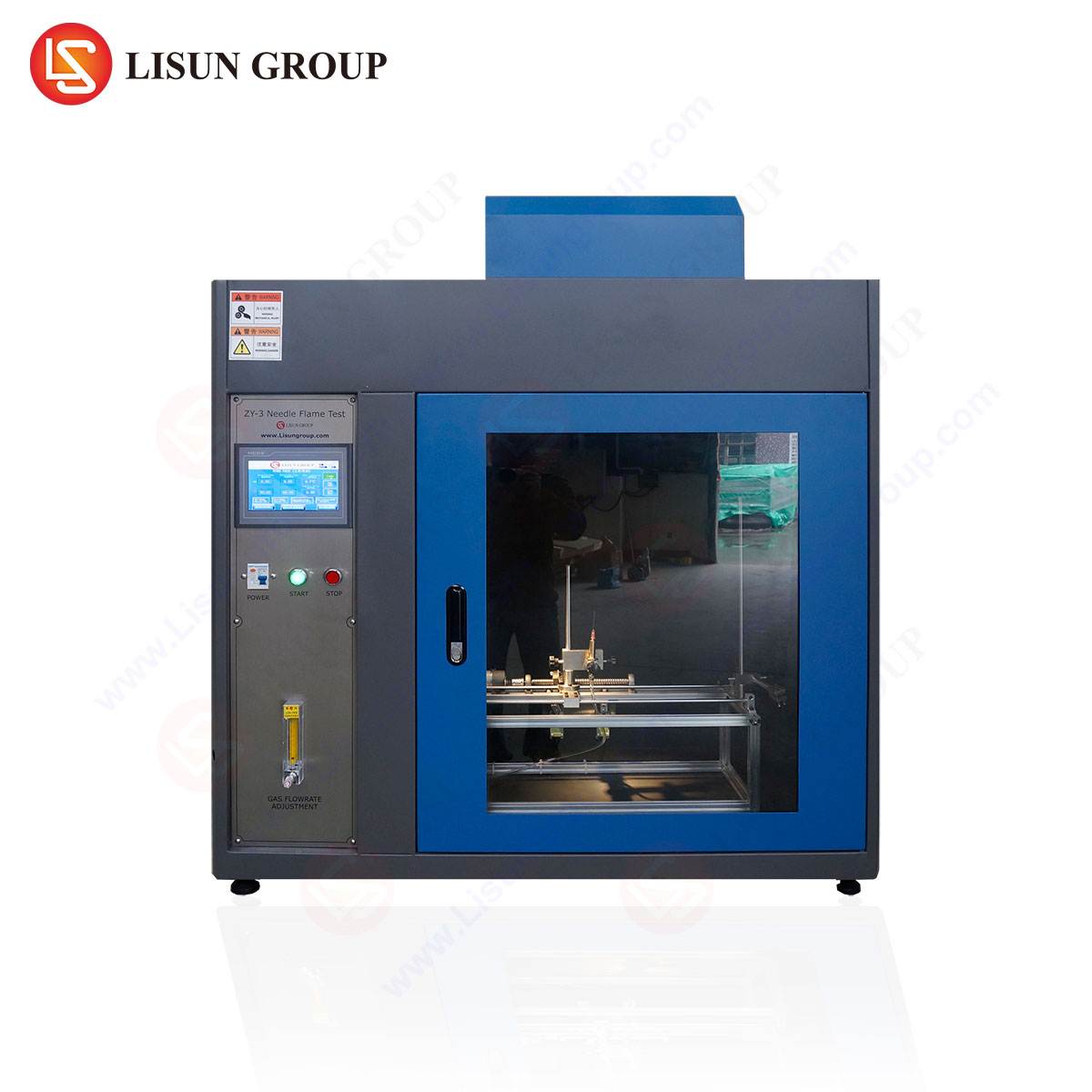



Advancements in Environmental Stress Screening: The Role of Precision Thermal Shock Testing in Modern Industrial Validation
The relentless drive for miniaturization, increased functional density, and global supply chain deployment in modern industrial manufacturing has irrevocably elevated the criticality of reliability engineering. Products are expected to perform flawlessly across a vast spectrum of environmental conditions, from the frigid extremes of aerospace applications to the humid, thermally volatile interiors of automotive engine compartments. Consequently, Precision Testing has evolved from a final quality checkpoint to a fundamental, integrated pillar of the product development lifecycle. Among the most severe and revealing of these validation protocols is thermal shock testing, a controlled, accelerated stress methodology designed to uncover latent material and assembly defects that would otherwise manifest as premature field failures.
The Thermodynamic Principles of Accelerated Life Testing
Thermal shock testing operates on well-established principles of physics and materials science, primarily leveraging differential thermal expansion and contraction. When an assembly composed of disparate materials—such as printed circuit boards (PCBs), solder joints, encapsulated semiconductors, polymer housings, and metallic connectors—is subjected to a rapid temperature transition, each component expands or contracts at a unique rate dictated by its coefficient of thermal expansion (CTE). This CTE mismatch induces significant mechanical stresses at the interfaces and within the materials themselves. These stresses can initiate and propagate cracks in solder joints (a primary cause of failure in electronics), delaminate layered structures, fracture brittle components, and compromise hermetic seals.
The test’s acceleration factor derives from both the magnitude of the temperature delta (ΔT) and the rapidity of the transition. A transition that might occur gradually over seasons in real-world use is compressed into minutes within a test chamber, effectively simulating years of thermal cycling. This process does not simulate a typical operating environment; rather, it acts as a high-stress filter, identifying weak products or design flaws that would be susceptible to failure under normal thermal cycling conditions. The efficacy of the test is therefore directly contingent upon the precision, repeatability, and controllability of the test equipment.
Architectural Evolution in Thermal Shock Testing Apparatus
Traditional two-zone thermal shock chambers utilize a moving basket to transfer specimens between independently controlled hot and cold zones. While effective, this mechanism can introduce variables such as transfer time inconsistency and mechanical vibration. A more advanced paradigm is embodied by the three-zone (or three-chamber) design, which eliminates specimen movement, thereby enhancing test consistency and reducing mechanical wear on the test system itself.
The LISUN HLST-500D Thermal Shock Test Chamber exemplifies this three-zone architecture. The unit features stationary upper (high-temperature) and lower (low-temperature) test chambers, with a central, insulated test zone where the specimens remain fixed. Temperature transition is achieved not by moving the product, but by dynamically switching the flow of conditioned air—either hot or cold—into the static test zone. This design offers several foundational advantages: it eliminates transfer mechanism-induced stress on test samples, ensures perfectly consistent transition times, and significantly improves temperature recovery rates post-transition.
Key Specifications of the HLST-500D:
- Test Volume: 500 Liters (Internal dimensions customizable per fixture needs)
- Temperature Range: High Temp Zone: +60°C to +200°C; Low Temp Zone: -10°C to -65°C (extendable with optional LN2/CO2 cooling)
- Transition Time: < 10 seconds (from exposure start to exposure start, per IEC 60068-2-14)
- Temperature Recovery: ≤ 5 minutes to stabilize at target temperature after transition
- Control System: Digital programmable controller with multi-segment profile editing, real-time graphing, and data logging
- Compliance: Designed to meet or exceed test conditions specified in IEC 60068-2-14, MIL-STD-883, JESD22-A104, and other industry-specific standards.
Methodological Implementation and Standards-Based Validation
Deploying a precision instrument like the HLST-500D requires a methodical approach rooted in relevant international standards. The test profile is defined by several critical parameters: the high and low exposure temperatures, the dwell time at each extreme (typically until the specimen reaches thermal equilibrium), the number of cycles, and the transition rate. Standards such as IEC 60068-2-14: Environmental testing – Part 2-14: Tests – Test N: Change of temperature provide rigorous frameworks for these parameters.
A typical test sequence for automotive electronics might involve cycling between +125°C (simulating under-hood heat soak) and -40°C (simulating cold start in arctic conditions), with 30-minute dwells and air-to-air transitions achieved in under 15 seconds. The chamber’s controller allows for the programming of complex, multi-step profiles that can include intermediate stabilization steps or ramp rates, accommodating even the most stringent customer-specific validation plans.
Table 1: Exemplary Test Profiles for Industry Segments
| Industry Application | High Temp (°C) | Low Temp (°C) | Dwell Time | Key Standard | Failure Mode Targeted |
| :— | :— | :— | :— | :— | :— |
| Automotive Electronics (ECU) | +125 | -40 | 30 min | AEC-Q100, ISO 16750 | Solder joint fatigue, conformal coating cracking |
| Aerospace Avionics | +85 | -55 | 60 min | DO-160, MIL-STD-810 | CTE mismatch in multi-chip modules, connector integrity |
| Telecommunications (5G Outdoor) | +85 | -40 | 45 min | GR-63-CORE, ETSI 300 019 | PCB delamination, RF component drift |
| Medical Implant Electronics | +55 | -10 | 120 min | ISO 14708-1 | Hermetic seal failure, battery connection reliability |
| Consumer Electronics (Portable) | +70 | -20 | 15 min | IEC 60529 (supplemental) | Screen bonding failure, micro-BGA solder cracks |
Cross-Industry Applications of Precision Thermal Shock
The HLST-500D’s capability profile makes it indispensable across a diverse industrial landscape.
In Automotive Electronics, it validates Engine Control Units (ECUs), LiDAR sensors, and battery management systems (BMS) against the extreme thermal swings experienced from desert operation to winter climates. For Aerospace and Aviation Components, testing ensures the reliability of flight control systems, satellite communication modules, and black box recorders in near-vacuum temperature extremes.
Telecommunications Equipment, particularly 5G massive MIMO antennas and outdoor optical network terminals (ONTs), must withstand diurnal temperature cycles without signal degradation. The test chamber exposes weaknesses in solder joints under RF components and plastic housing seals. Medical Devices, especially those for in-vitro diagnostics or portable monitors, require assurance that thermal shocks during transport or storage will not affect calibration or critical electrical connections.
The Lighting Fixtures industry, particularly for automotive LED headlights or outdoor high-bay industrial lighting, uses thermal shock to test the integrity of lens bonding, LED chip attachment, and driver electronics. Similarly, for Electrical Components like contactors, relays, and switches, the test verifies that repeated thermal cycling does not cause contact welding, spring relaxation, or insulating material creep.
Analytical Advantages of a Static Three-Zone Architecture
The competitive advantages of employing a chamber with the HLST-500D’s architecture are substantial and directly impact the integrity of test data and total cost of ownership.
- Elimination of Transfer-Induced Artifacts: Mechanical transfer systems can subject specimens to jolts, vibrations, and orientation shifts. A static test zone removes this variable entirely, ensuring that any failures observed are solely attributable to the intended thermal stress, not test equipment artifact.
- Enhanced Precision and Repeatability: With no moving basket, transition time is governed solely by valve actuation and airflow, parameters that can be controlled with extreme precision. This leads to exceptional test-to-test and lab-to-lab repeatability, a cornerstone of reliable quality data.
- Improved Operational Efficiency and Uptime: The reduction of large, moving mechanical parts decreases maintenance requirements and increases system longevity. The rapid temperature recovery (<5 minutes) minimizes cycle time, allowing more test cycles to be completed within a given validation schedule.
- Optimized Energy Consumption: The three-zone design allows the hot and cold chambers to maintain their setpoints in a standby mode, reducing the energy required to re-stabilize temperatures compared to single-zone systems that must over-compensate after a basket transfer.
Integrating Thermal Shock into a Comprehensive Reliability Program
Thermal shock testing is rarely performed in isolation. It is most powerful when integrated into a HALT/HASS (Highly Accelerated Life Test/Stress Screening) regimen or as a sequel to other environmental tests. For instance, a product might first undergo damp heat testing (e.g., in a chamber like the GDJS-015B) to assess moisture resistance, followed by thermal shock to evaluate the robustness of any seals or coatings applied. Conversely, components that pass thermal shock may then be subjected to vibration testing to simulate combined environmental stresses. Data loggers placed within the test zone or on representative monitor samples provide crucial thermal mapping data, ensuring the specified profile is accurately delivered to the product’s critical internal locations.
Conclusion
The demand for absolute reliability in industrial and consumer products continues to intensify. Precision testing, particularly the severe but revealing discipline of thermal shock, is a non-negotiable element of modern design validation and quality assurance. The technological shift from moving-basket to static three-zone chambers, as implemented in the LISUN HLST-500D, represents a significant advancement in test fidelity, repeatability, and operational efficiency. By applying such precise and controlled thermodynamic stress, engineers can proactively identify and rectify latent weaknesses, driving improvements in product design, material selection, and manufacturing processes. This ultimately results in products that deliver enhanced durability, safety, and customer satisfaction across the globe’s varied and demanding climates.
FAQ: Precision Thermal Shock Testing
Q1: What is the fundamental difference between thermal shock testing and temperature cycling?
Thermal shock testing is characterized by extremely rapid temperature transitions (often in seconds) between two extreme setpoints, with the primary goal of inducing high mechanical stress due to CTE mismatch. Temperature cycling typically involves slower ramp rates (e.g., 5°C/min) and may include dwells at intermediate temperatures, simulating more gradual operational environments and focusing on fatigue life rather than defect precipitation.
Q2: Why is transition time so critical in a thermal shock test, and how is it measured?
Transition time is a key acceleration factor. A slower transition allows components to equilibrate during the move, reducing the thermal gradient and resultant stress. Standards define it rigorously; for example, IEC 60068-2-14 specifies measuring the time from the moment the test sample leaves the first chamber until it reaches the specified tolerance band of the second chamber. In a three-zone chamber like the HLST-500D, this is measured from the start of the airflow switch to the point where the test zone air temperature reaches the new setpoint tolerance.
Q3: Can the HLST-500D chamber accommodate products that generate heat during testing (live testing)?
While primarily designed for passive component testing, many units can be configured for live testing. This requires careful engineering to manage the additional thermal load from the device under test (DUT), potentially involving modified airflow, increased cooling capacity, and specialized fixturing to provide power and signal monitoring without compromising chamber integrity or temperature uniformity.
Q4: How do I determine the appropriate high and low temperature setpoints for my product?
Setpoints are derived from a combination of sources: the product’s operational specification limits, its storage and transport requirements, relevant industry standards (e.g., AEC-Q100 for automotive), and a margin of safety beyond these limits. Often, a failure mode effects analysis (FMEA) guides the selection of extremes that will stress known or suspected weak points in the assembly.
Q5: What is the importance of pre-conditioning samples before a thermal shock test?
Pre-conditioning, such as baking to remove moisture, is often essential. Trapped moisture can vaporize rapidly during the high-temperature phase, causing “popcorning” in plastic-encapsulated microcircuits or internal corrosion. Following standards like JEDEC J-STD-033 for moisture-sensitive devices ensures that failures observed are due to thermal-mechanical stress and not an artifact of improper sample handling.