




Methodologies for Validating Ingress Protection in Modern Electronic Assemblies
The proliferation of electronics across every industrial and consumer sector has precipitated an unprecedented demand for reliability under diverse environmental conditions. Among the most critical threats to operational integrity is the ingress of solid particulates and liquids. The International Electrotechnical Commission’s (IEC) 60529 standard, commonly referenced as the Ingress Protection (IP) Code, provides a globally recognized framework for classifying the degrees of protection offered by enclosures. Validating compliance with this standard necessitates precise, repeatable, and standardized laboratory procedures. This article delineates the technical methodologies, operational principles, and industrial applications of pressurized spray nozzle testing, with a specific examination of the LISUN JL-XC Series waterproof test equipment as a paradigm for contemporary testing solutions.
Fundamental Principles of Pressurized Water Ingress Testing
The core objective of waterproof testing, as defined by the second numeral of the IP Code (e.g., IPX4 through IPX9K), is to simulate exposure to water under controlled laboratory conditions that correlate to real-world phenomena. The testing principle is not merely to spray water onto a device but to apply hydrodynamic force, specific droplet size distributions, and defined trajectories that replicate rain, splashing, or high-pressure cleaning. The test apparatus must generate a consistent water curtain or jet with calibrated pressure, flow rate, and nozzle geometry. The device under test (DUT) is subjected to this environment from prescribed angles and for specified durations while being manipulated on a rotary table to ensure comprehensive coverage. Post-test evaluation involves a thorough internal inspection for moisture presence, coupled with functional verification to ascertain any performance degradation or safety compromise.
Architectural Overview of the JL-XC Series Testing System
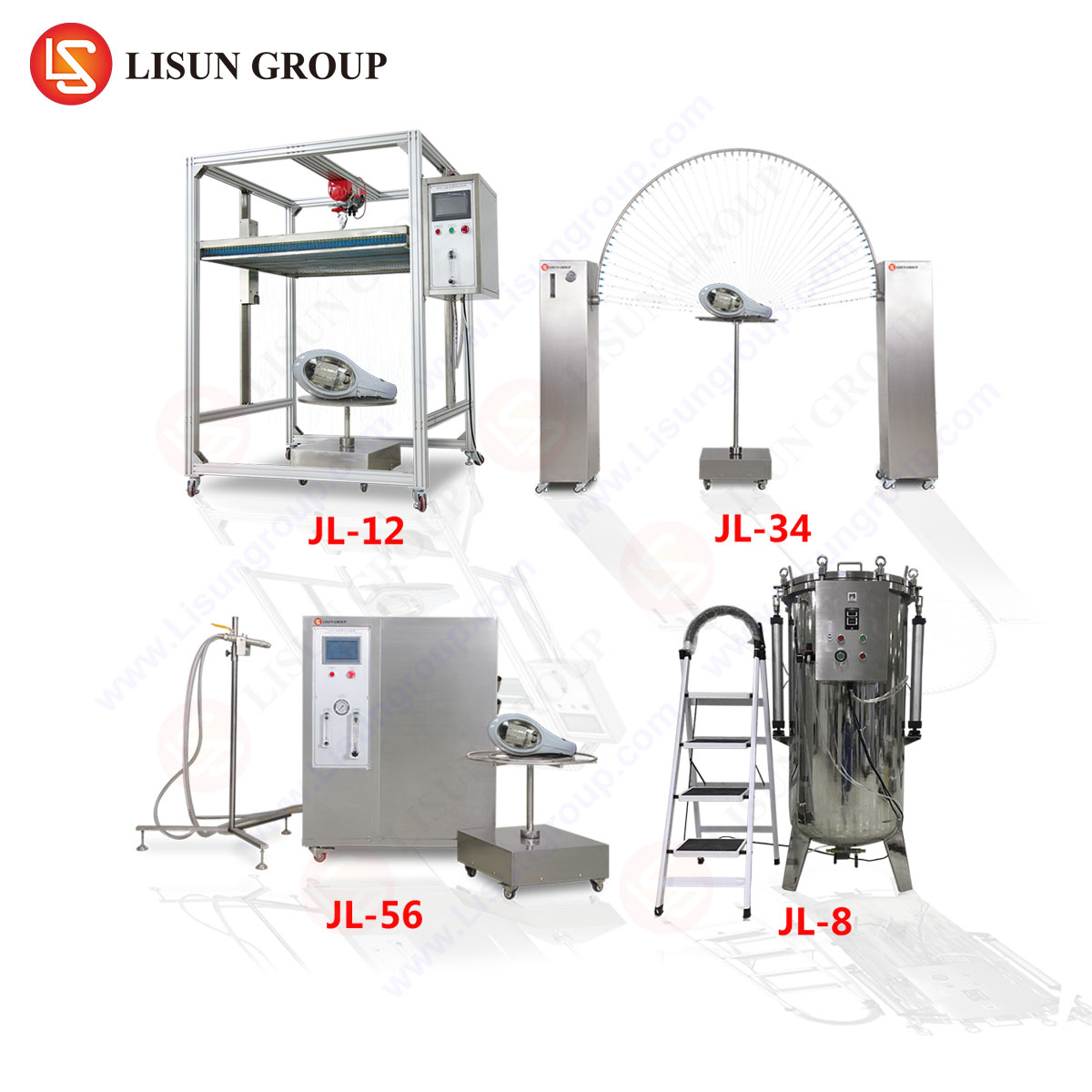
The LISUN JL-XC Series embodies a modular, programmable test system engineered to execute a comprehensive range of IPX4 to IPX9K tests as per IEC 60529, ISO 20653, and other derivative standards. Its architecture is predicated on precision control, operational flexibility, and stringent safety protocols.
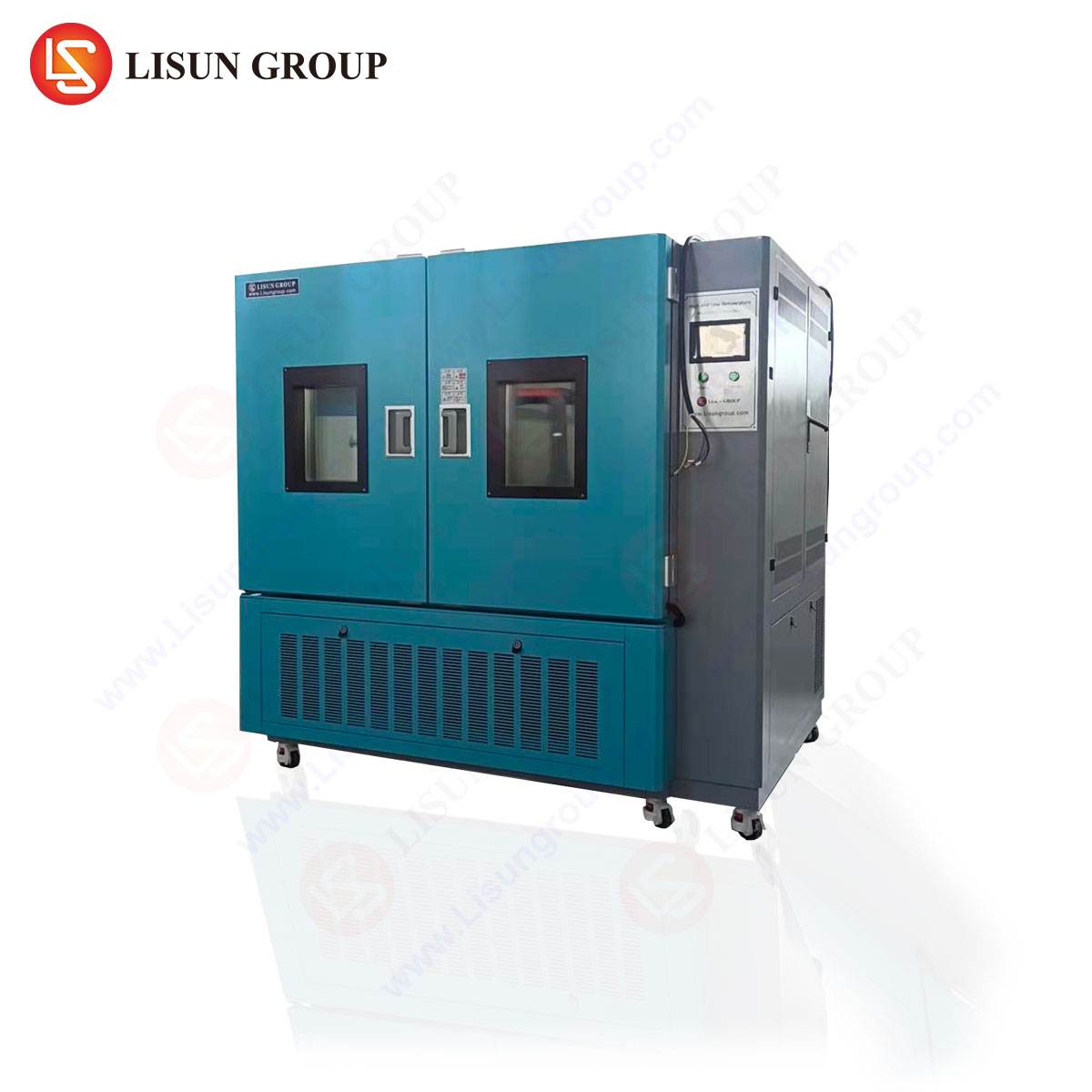
The system integrates several key subsystems: a high-pressure pumping unit with precision regulators and flow meters; a suite of IEC-standardized nozzles (e.g., for IPX4, IPX5, IPX6, and IPX9K); a stainless-steel test chamber with tempered glass observation windows; a programmable rotary table with adjustable speed and tilt; and a centralized industrial-grade programmable logic controller (PLC) with a human-machine interface (HMI). The chamber is constructed from 304-grade stainless steel, ensuring corrosion resistance and long-term structural integrity. A water recovery and filtration system is incorporated to facilitate continuous operation and water conservation.
Table 1: Key Technical Specifications of the JL-XC Series
| Parameter | Specification Range / Detail |
| :— | :— |
| Applicable Standards | IEC 60529, ISO 20653, GB/T 4208, etc. |
| Test Grades | IPX4, IPX5, IPX6, IPX9K (IPX7/8 via separate accessory) |
| Water Pressure Range | 30 – 10,000 kPa (adjustable, IPX9K: 8,000 – 10,000 kPa) |
| Flow Rate Control | 0 – 150 L/min (digitally displayed and calibrated) |
| Rotary Table | Diameter: 500mm standard; Speed: 1 – 5 rpm programmable |
| Nozzle Distance | Adjustable from 100mm to 3000mm via motorized rail |
| Control System | 7-inch Touchscreen HMI, PLC-based, with recipe storage |
| Chamber Dimensions | Customizable; typical 1500mm (W) x 1500mm (D) x 2000mm (H) |
Procedural Execution for Specific IP Classifications
The testing procedure is a sequence of calibrated steps, varying significantly between IP grades. The following outlines the methodology for two distinct classifications.
Procedure for IPX5/IPX6 (Low/High Pressure Water Jet Testing): The DUT, such as an automotive electronic control unit (ECU) housing or an industrial sensor, is mounted on the rotary table at its standard operating position. The appropriate nozzle (6.3mm for IPX5, 12.5mm for IPX6) is selected and positioned 2.5 to 3 meters from the DUT. Water pressure is set to 100 kPa (±5%) for IPX5 and 1000 kPa (±5%) for IPX6, with corresponding flow rates verified. The test commences with the rotary table in motion. The nozzle traverses across the DUT vertically and horizontally, or the jet is directed from all plausible angles (typically every 30° around the vertical axis and from the top), for a minimum of 1 minute per square meter of surface area, with a 3-minute minimum total. The DUT is subsequently disassembled for internal inspection per IEC 60529 clause 13.
Procedure for IPX9K (High-Temperature, High-Pressure Water Jet Testing): This test simulates the extreme conditions of high-pressure, high-temperature wash-down in industrial or agricultural settings. The DUT, which could be a connector for agricultural machinery or a heavy-duty industrial switchgear, is mounted. The specific IPX9K fan spray nozzle is installed. The system heats the water to 80°C ±5°C. The nozzle is positioned 0.10 – 0.15 meters from the DUT. Four critical angles are tested: 0°, 30°, 60°, and 90° from the vertical. At each angle, the DUT is sprayed for 30 seconds, with a rotational speed of approximately 5 rpm, under a pressure of 8,000 – 10,000 kPa. The entire 120-second cycle subjects the enclosure to approximately 14 – 16 L/min of near-boiling water under extreme pressure.
Industrial Applications and Compliance Imperatives
The application of waterproof testing is ubiquitous across sectors where electronic or electromechanical systems interface with the environment.
In Automotive Electronics, components like battery management systems (BMS), LED headlamps (lighting fixtures), and onboard telematics units must withstand IPX5/6 road spray and IPX9K for underbody components subjected to high-pressure cleaning. Household Appliances, such as outdoor air conditioning units, garden lighting, and splash-proof kitchen appliances, routinely require IPX4 (splash protection) or IPX5 validation. Telecommunications Equipment, including 5G small cell radios and outdoor fiber optic terminal enclosures, mandate IP55 or IP65 ratings to ensure network resilience in all weather.
For Medical Devices, portable monitors or handheld diagnostic tools used in clinical environments necessitate IPX4 or higher to resist cleaning fluids and accidental spills, directly impacting patient safety and equipment longevity. Aerospace and Aviation Components, such as external sensors and cockpit avionics cooling vents, undergo rigorous fluid ingress testing per standards like DO-160, which aligns closely with IEC 60529 methodologies.
Analytical Advantages of Automated, Programmable Test Systems
Transitioning from manual, fixture-based spraying to an integrated system like the JL-XC Series confers multiple technical and operational advantages. First, it eliminates tester-dependent variability. The precision control of pressure, flow, angle, distance, and exposure time ensures that test results are reproducible and directly comparable across different laboratories and production batches—a cornerstone of quality assurance audits.
Second, the programmability of test recipes allows for rapid changeover between different product lines and IP ratings. A single system can validate an IPX4-rated consumer electronics speaker in the morning and an IPX9K-rated hydraulic valve solenoid in the afternoon, simply by loading a different program. This flexibility maximizes capital equipment utilization.
Third, integrated safety features—such as chamber interlocks, water leakage detection, and emergency stop circuits—protect both the operator and the DUT. The closed-loop water system with filtration prevents nozzle clogging from particulates, a common failure point in less sophisticated setups that can invalidate test results by altering spray patterns.
Finally, data logging capabilities provide an immutable audit trail. Parameters for each test run are recorded, which is indispensable for compliance documentation, failure analysis, and continuous process improvement initiatives within a manufacturing quality management system (QMS).
Integration within Broader Quality Assurance and Reliability Engineering Frameworks
Waterproof testing is not an isolated activity but a critical node within a product’s reliability engineering lifecycle. Data derived from these tests feed into Failure Modes, Effects, and Criticality Analysis (FMECA). For instance, if an IPX6 test reveals water ingress via a seal, the root cause analysis may point to material degradation, tolerance stack-up, or assembly process drift.
Furthermore, the conditions simulated in IP testing often correlate with accelerated life testing (ALT) profiles. Repeated thermal cycling combined with moisture ingress, even at sub-failure levels, can accelerate corrosion and electrochemical migration on printed circuit boards (PCBs). Therefore, the JL-XC Series can be part of a sequential stress test regimen, where a DUT undergoes thermal cycling before being subjected to IP testing to evaluate the robustness of seals under material fatigue.
In sectors like Electrical Components (switches, sockets) and Cable and Wiring Systems, waterproof testing validates the integrity of gaskets, potting compounds, and overmolding processes. The quantitative data on pressure and flow provides engineers with empirical feedback to refine designs, moving beyond theoretical gasket compression calculations to validated performance.
Frequently Asked Questions (FAQ)
Q1: Can the JL-XC Series test for IPX7 (temporary immersion) and IPX8 (continuous immersion) ratings?
While the core JL-XC system is optimized for pressurized spray tests (IPX4-6, 9K), it can be integrated with optional immersion tanks and pressure vessels to perform IPX7 and IPX8 testing. This creates a comprehensive IP testing workstation, though the immersion tests are functionally distinct procedures governed by different clauses of IEC 60529.
Q2: How is the water quality managed for tests like IPX9K where nozzle clogging could skew results?
The system incorporates a multi-stage filtration unit, typically including sediment filters and fine mesh screens, within its closed-loop water circulation path. For IPX9K, where high temperature and pressure can exacerbate scaling, water treatment or the use of deionized water is recommended and facilitated by the system’s design, which can be connected to a purified water source.
Q3: What is the typical calibration interval for the pressure and flow sensors, and how is traceability maintained?
Critical metrological components—the pressure transducer and flow meter—require annual calibration by an accredited laboratory to maintain traceability to national standards (e.g., NIST). The system software includes prompts for calibration due dates, and calibration certificates should be retained as part of the laboratory’s ISO/IEC 17025 quality system records.
Q4: For a product with multiple potential mounting orientations, how is the “normal use” position determined for testing?
IEC 60529 stipulates testing in the “most unfavorable” position intended by the manufacturer. This is a product-specific determination based on the installation instructions. The test laboratory must work from the manufacturer’s defined operational guidelines. The adjustable rotary table of the JL-XC allows for precise orientation to any specified angle to accommodate this requirement.
Q5: How does the system ensure even coverage on a complex, asymmetrical DUT?
The combination of the programmable rotary table and the ability to program specific nozzle traversal patterns is key. For highly irregular shapes, the test procedure may involve multiple fixed-angle tests rather than relying solely on rotation. The standard mandates that all accessible surfaces are sprayed; the system’s flexibility allows the operator to design a test recipe that meets this mandate for virtually any geometry.