




Advancing Product Reliability Through Precision Environmental Simulation
The relentless drive for miniaturization, increased functionality, and extended operational lifespans across modern industries has placed unprecedented demands on product reliability. Failures in the field are not merely inconveniences; they represent significant financial loss, brand erosion, and, in sectors like automotive or medical devices, profound safety risks. Consequently, the phase of product validation conducted within controlled laboratory environments has become a critical gatekeeper to market success. At the heart of this validation lies environmental stress screening (ESS) and reliability testing, processes fundamentally dependent on the precision and repeatability of environmental test chambers. This article examines the technical imperatives for reliable environmental test chamber solutions, detailing their operational principles, industry-specific applications, and the engineering considerations that differentiate capable systems from exceptional ones.
The Foundational Role of Climatic and Thermal Stress Testing
Product reliability is not an inherent property but a designed-in characteristic, verified through systematic stress application. Environmental test chambers artificially accelerate the aging process and uncover latent defects by subjecting test specimens to controlled extremes and cycles of temperature, humidity, and thermal shock. The underlying principle is derived from the Arrhenius equation and related models, which describe the exponential relationship between reaction rates (including failure mechanisms) and thermal energy. By elevating temperature, the kinetics of failure processes such as intermetallic growth, dielectric breakdown, chemical migration, and lubricant drying are accelerated. Humidity introduces synergistic effects, enabling electrochemical corrosion, conductive anodic filament (CAF) growth, and hygroscopic swelling. Thermal shock, characterized by rapid transitions between extreme temperatures, induces mechanical stress due to coefficient of thermal expansion (CTE) mismatches between bonded materials, leading to solder joint fatigue, delamination, and crack propagation.
The efficacy of this testing is wholly contingent upon the test apparatus’s ability to generate and maintain specified environmental conditions with high fidelity. Inconsistencies in gradient rates, spatial uniformity, or setpoint accuracy introduce uncontrolled variables, rendering test results non-comparative and potentially non-representative of real-world performance. Therefore, the selection of a test chamber is not a procurement exercise but a strategic technical decision impacting the entire validation paradigm.
Architectural Principles of High-Fidelity Test Chambers
A reliable environmental test chamber is an integrated system where mechanical, electrical, and software components must operate in precise harmony. The primary subsystems include the conditioning unit, the workspace, the control system, and the instrumentation.
The conditioning unit, comprising compressors, heaters, humidifiers, and dehumidifiers, must possess sufficient capacity and responsiveness to achieve desired ramp rates without overshoot or excessive stabilization time. Modern cascade refrigeration systems are often employed for low-temperature applications below -40°C, ensuring stable performance and energy efficiency. Humidity generation typically utilizes a boiler system for clean steam or an ultrasonic atomizer, with careful attention to water purity to prevent chamber contamination or sensor fouling.
The workspace design prioritizes spatial uniformity. This is achieved through advanced airflow engineering—often employing a dual-duct system or strategically placed baffles—to minimize dead zones and ensure that all test specimens, regardless of placement, experience identical conditions. Chamber insulation, utilizing materials such as high-density mineral wool or polyurethane foam, is critical for thermal stability and energy conservation.
The control system represents the chamber’s intelligence. Proportional-Integral-Derivative (PID) algorithms, often with adaptive or fuzzy logic capabilities, are standard for managing nonlinear system dynamics. The interface must allow for complex profile programming, including multi-segment ramps, soaks, and loops, in compliance with standards like IEC 60068-2-1 (cold), IEC 60068-2-2 (dry heat), and IEC 60068-2-78 (damp heat). Data logging resolution and the ability to interface with external data acquisition systems are mandatory for audit trails and failure analysis.
Precision in Steady-State Conditioning: The GDJS-015B Temperature Humidity Test Chamber
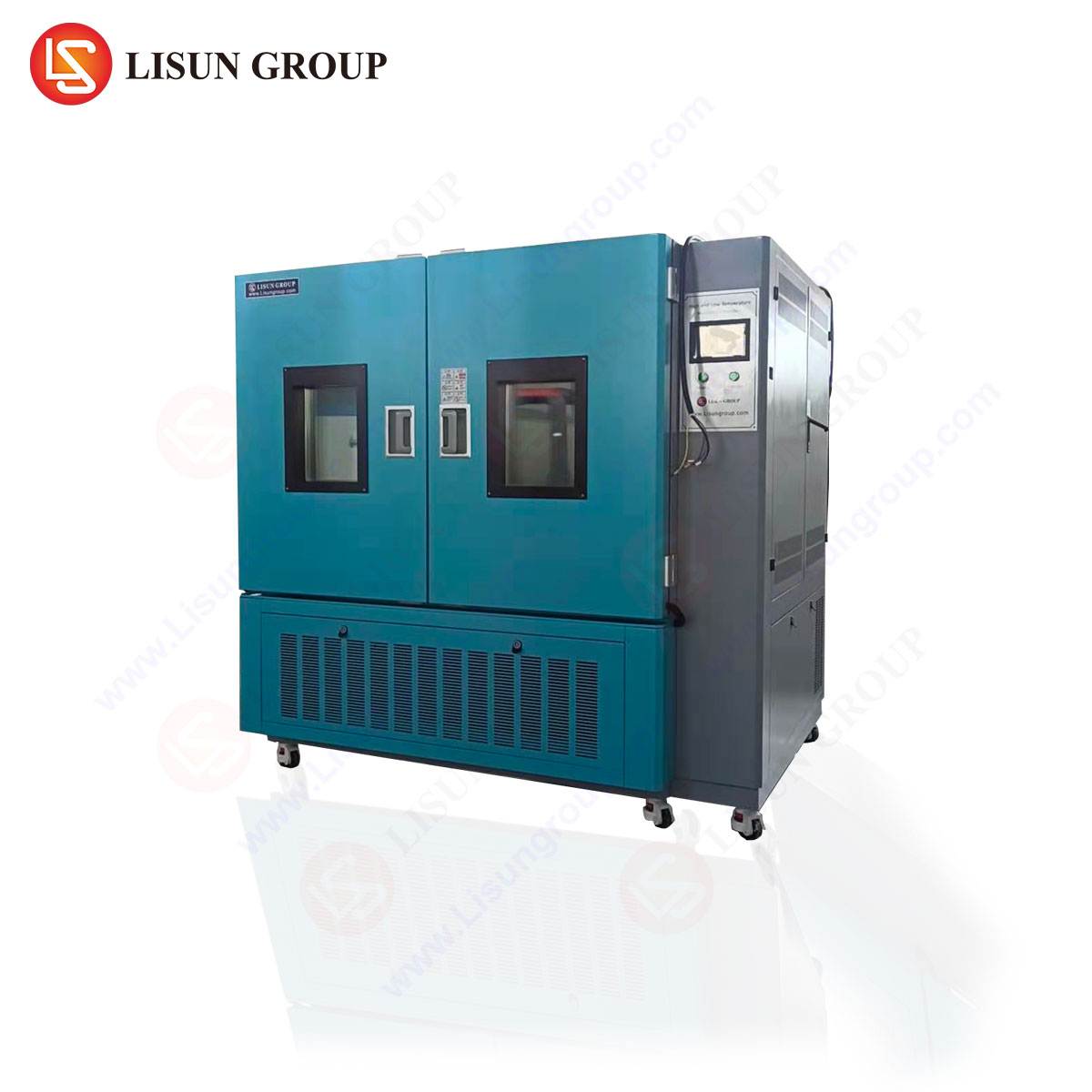
For applications requiring prolonged exposure to combined temperature and humidity, a precision climatic chamber is indispensable. The LISUN GDJS-015B model serves as a pertinent example of a solution engineered for such steady-state and cyclic conditioning tasks.
Testing Principles and Specifications:
The GDJS-015B operates on a closed-loop control principle for both temperature and relative humidity (RH). Its temperature range spans -70°C to +150°C, with a humidity range of 20% to 98% RH. The critical performance metrics are its uniformity and stability. The chamber maintains a temperature uniformity of ≤±2.0°C and a humidity uniformity of ≤±3.0% RH. The deviation from setpoint is controlled to within ±0.5°C for temperature and ±2.5% for humidity. These tolerances are essential for tests where slight variations could significantly alter corrosion rates or material properties.
The chamber utilizes a cascade refrigeration system for low-temperature attainment and a stainless-steel boiler for hygienic steam generation. Airflow is engineered through a centrifugal fan and a uniquely shaped air duct to ensure homogeneous circulation within the 150-liter workspace.
Industry Use Cases and Applications:
- Electrical & Electronic Components & Automotive Electronics: Testing conformal coating integrity, PCB hygroscopic performance, and the long-term stability of microcontrollers and sensors under damp heat (e.g., 85°C/85% RH per IEC 60068-2-67). This uncovers failure modes like popcorn cracking in IC packages or leakage currents.
- Medical Devices & Telecommunications Equipment: Validating shelf life and operational reliability per standards such as ICH Q1A (stability testing) or Telcordia GR-63-CORE. Devices are subjected to cyclic humidity to test seal integrity and internal condensation resistance.
- Lighting Fixtures & Household Appliances: Evaluating ingress protection (IP rating) against humid environments, material degradation of lenses and housings, and the performance of internal drivers and power supplies in tropical climates.
- Cable and Wiring Systems: Assessing insulation resistance degradation and the growth of conductive pathways under damp heat stress.
Competitive Advantages:
The GDJS-015B’s design emphasizes control fidelity and user-centric operation. Its competitive edge lies in the precision of its humidity control, achieved through a high-resolution capacitive polymer humidity sensor paired with the clean-steam boiler, eliminating mineral dust contamination. The chamber’s software allows for real-time display of PV (process value), SV (set value), and a trend graph of all parameters, with a historical fault log for diagnostics. Furthermore, its construction with 304 stainless steel interior and exterior ensures corrosion resistance and longevity, even under constant high-humidity operation, reducing total cost of ownership.
Validating Robustness Against Extreme Thermal Transitions
While steady-state testing reveals material and chemical vulnerabilities, many field failures occur during power cycles, geographic relocation, or sudden environmental changes. Thermal shock testing specifically addresses these transient conditions. Unlike a gradual ramp, a thermal shock test transfers specimens between two extreme temperature zones in less than one minute, maximizing the thermal stress.
Testing Principles and Chamber Design:
Thermal shock chambers are bifurcated into two main types: two-zone (basket transfer) and three-zone (elevator or shuttle). The two-zone system, exemplified by the LISUN HLST-500D, features separate high-temperature and low-temperature chambers with a mechanically actuated basket that transfers the test items between them. The transfer time is a critical specification, typically mandated to be ≤10 seconds. The HLST-500D achieves this with a vertical basket lift system, minimizing horizontal movement and potential vibration.
The chamber’s high-temperature zone may reach +200°C, and the low-temperature zone may descend to -65°C or lower. The stability and uniformity within each zone must be exceptionally tight (e.g., ≤±2.0°C) to ensure the applied stress is purely thermal, not a function of gradient uncertainty. The basket material must have low thermal mass and high structural integrity to withstand thousands of transfer cycles.
Industry Use Cases for Thermal Shock:
- Aerospace and Aviation Components: Simulating the extreme temperature differentials between ground operation and high-altitude flight for avionics, connectors, and black boxes, often per MIL-STD-883, Method 1010.9.
- Automotive Electronics: Validating engine control units (ECUs), LiDAR sensors, and battery management systems for reliability against the thermal inertia experienced under hood or in exterior applications, referencing standards like ISO 16750-4.
- Consumer Electronics & Office Equipment: Testing solder joint reliability on motherboards, BGA packages, and connector interfaces for devices that may be moved from a cold car interior to a warm building.
- Industrial Control Systems & Electrical Components: Qualifying relays, switches, and power modules for use in outdoor or industrial environments subject to wide daily temperature swings.
Competitive Advantages of the HLST-500D:
The HLST-500D thermal shock test chamber distinguishes itself through operational efficiency and sample protection. Its vertical transfer mechanism reduces mechanical complexity compared to horizontal shuttle systems, enhancing long-term reliability. The chamber incorporates a unique air-cooled refrigeration circuit for the low-temperature zone, which can be more maintenance-friendly than complex liquid nitrogen-assisted systems in certain contexts. Most notably, it features independent over-temperature protection and a specimen protection function; if the basket fails to transfer completely, the system can automatically move it to a neutral safe zone to prevent sample destruction, a critical feature for high-value prototypes.
Integration into a Comprehensive Quality Assurance Regimen
Deploying a high-performance test chamber is only one element of a valid reliability program. The chamber must be integrated into a framework that includes proper fixturing, representative sampling, and data integrity protocols. Test specimens should be mounted on low-thermal-conductivity fixtures that do not act as heat sinks or sources. Wiring for in-situ monitoring must exit the chamber through sealed ports to avoid altering the internal environment.
Calibration and compliance with standards are non-negotiable. Chambers should undergo regular annual calibration, traceable to national standards (e.g., NIST, NPL), for all sensors. Performance verification surveys, mapping temperature and humidity uniformity across the workspace per guidelines like ASTM E145 or IEC 60068-3-5, are essential to confirm the chamber’s stated specifications are met in practice.
Furthermore, testing should not be conducted in isolation. Results from environmental tests must be correlated with other analyses, such as vibration testing (combined environments), electrical performance monitoring, and post-test physical failure analysis using microscopy or X-ray. This holistic approach transforms raw test data into actionable engineering intelligence.
Conclusion: Reliability as a Consequence of Precision
In the competitive landscape of modern manufacturing, product reliability is a key differentiator. Achieving it requires a validation process that is both rigorous and predictable. Reliable environmental test chamber solutions form the cornerstone of this process. As demonstrated by the technical profiles of chambers like the GDJS-015B for climatic stress and the HLST-500D for thermal shock, the requisite attributes extend beyond basic ranges to encompass precision, uniformity, stability, and robust control. By investing in test equipment that provides uncompromised fidelity in environmental simulation, organizations across the electrical, electronic, automotive, aerospace, and medical sectors can confidently accelerate development cycles, mitigate field failure risks, and deliver products capable of enduring the demanding conditions of real-world application. The chamber is not merely a test box; it is a fundamental instrument for engineering confidence.
Frequently Asked Questions (FAQ)
Q1: What is the critical difference between a thermal shock test and a temperature cycling test?
The defining difference is the transition rate between temperature extremes. A thermal shock test, as performed in a two-zone chamber like the HLST-500D, mandates an extremely rapid transfer (typically ≤10 seconds) to maximize the mechanical stress induced by CTE mismatch. A temperature cycling test, usually conducted in a single chamber, employs controlled ramp rates (e.g., 5°C/min to 15°C/min) and focuses more on the cumulative fatigue effects of slower, repeated expansions and contractions.
Q2: Why is humidity uniformity often a stricter specification than temperature uniformity in a climatic chamber?
Achieving spatial homogeneity of water vapor is inherently more challenging than homogeneous air temperature. Humidity is influenced by local temperature variations (as RH is temperature-dependent), condensation on cooler surfaces, and airflow patterns. A specification of ≤±3.0% RH uniformity, as seen in the GDJS-015B, indicates advanced airflow design and sensor placement, ensuring all test specimens experience the same corrosive or conditioning environment.
Q3: For testing automotive electronics, would the GDJS-015B or the HLST-500D be more appropriate?
The choice is dictated by the failure mode being investigated. The GDJS-015B is essential for testing long-term reliability against environmental exposure (e.g., humidity resistance of an ECU in a car door). The HLST-500D is critical for validating robustness against sudden thermal stress (e.g., an infotainment system warming up rapidly from a cold start). A comprehensive validation program typically requires both types of testing.
Q4: How does the boiler-based humidification system in a chamber like the GDJS-015B prevent mineral contamination?
The system uses deionized or distilled water, which is heated in a stainless-steel boiler to create pure steam. This process leaves dissolved minerals behind in the boiler, which are periodically purged. The injected steam is therefore free of particulates that could settle on test specimens, interfere with sensors, or create conductive paths on sensitive electronics, unlike some atomizing systems that aerosolize all contents of the water reservoir.
Q5: What is meant by “cascade refrigeration” and why is it necessary for temperatures below -40°C?
A cascade system uses two independent refrigeration circuits. The first stage cools the condenser of the second stage, which in turn cools the chamber. This allows the low-temperature circuit to operate at a much higher efficiency and achieve lower temperatures than a single-stage system, which would struggle with compression ratios and oil return below approximately -40°C. It is essential for reaching and stabilizing temperatures like -65°C reliably.