




Methodologies for Environmental Stress Screening: A Technical Analysis of Chamber Selection and Performance
The validation of product reliability across diverse industrial sectors necessitates the precise simulation of environmental stressors. Temperature and humidity test chambers serve as the cornerstone of this validation process, enabling engineers to accelerate failure modes, verify design robustness, and ensure compliance with international standards. The selection of a reliable chamber manufacturer is therefore a critical technical decision with direct implications for product quality, safety, and time-to-market. This article provides a technical framework for evaluating manufacturers and examines the operational principles of a representative advanced solution.
Defining Reliability in Environmental Test Equipment
Reliability in this context transcends mere equipment uptime. It encompasses a holistic set of attributes: long-term measurement accuracy, spatial uniformity of the conditioned environment, stable control under dynamic setpoints, repeatability across test cycles, and structural durability under continuous thermal-mechanical stress. A reliable chamber must perform as a calibrated scientific instrument, not merely a climatic enclosure. Key performance indicators include stability (the ability to maintain a setpoint over time), uniformity (the maximum deviation from the setpoint across the workspace), and the rate of change, whether for temperature ramping or humidity conditioning. Manufacturers that prioritize these metrics in design, component selection, and validation protocols typically produce equipment capable of generating trustworthy, auditable data.
Architectural Considerations in Chamber Design and Construction
The foundational reliability of a test chamber is determined by its physical and control architecture. The insulation system, typically employing high-density mineral wool or polyurethane foam, must minimize thermal leakage and ensure energy efficiency. Interior workspace materials are paramount; #304 or #316 stainless steel is standard for corrosion resistance, especially when testing materials that may outgas or when using steam humidification. The sealing integrity of the door—often employing dual silicone rubber gaskets and a mechanical or pneumatic locking mechanism—is critical to prevent ambient air infiltration, which directly degrades humidity control and thermal stability.
The refrigeration system represents a core subsystem. Cascaded compressor systems, employing multiple stages of compression, are essential for achieving ultralow temperatures (e.g., -70°C or below) with efficient heat rejection. For applications requiring rapid temperature change, liquid nitrogen (LN2) or carbon dioxide (CO2) injection systems provide superior ramp rates but with higher consumable costs. Conversely, mechanical compressor-based systems offer operational efficiency for standard ranges. The heating system, usually comprising finned sheathed electric heaters with proportional control, must provide clean, responsive heat input without causing localized hotspots.
Control System Fidelity and Sensor Technology
The sophistication of the chamber’s controller is the determinant of test profile accuracy. Modern programmable controllers utilize PID (Proportional-Integral-Derivative) algorithms with adaptive tuning and fuzzy logic to manage the non-linear interactions between heating, cooling, and humidification. A reliable system offers multi-segment programming, allowing for complex ramp-soak profiles that mimic real-world diurnal cycles or geographic conditions.
Sensor selection is equally critical. For temperature, PT100 platinum resistance thermometers (PRTs) or high-accuracy thermocouples are standard. Humidity sensing is more complex. Traditional wet/dry bulb psychrometers are accurate but require maintenance. Modern chambers often employ capacitive polymer sensors or chilled-mirror dew point sensors for direct, fundamental measurement. The placement of sensors, both for control and for independent verification (user sensor ports), must be strategically designed to be representative of the workspace conditions without being influenced by radiant heat from walls or airflow from ducts.
Analysis of a Representative Advanced Stability Chamber: The GDJS-015B
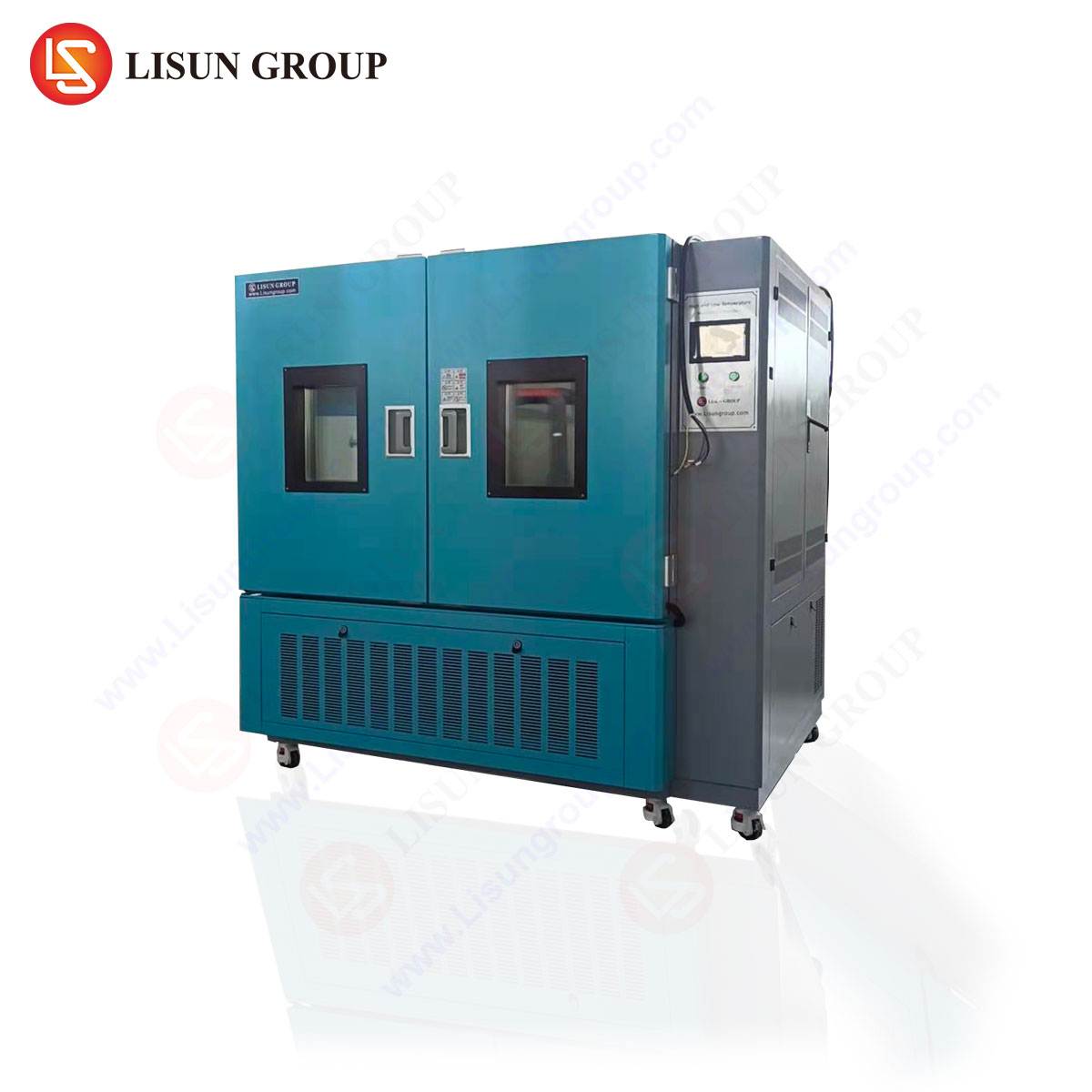
To illustrate the application of these principles, we examine the GDJS-015B Temperature Humidity Test Chamber. This model is engineered for high-precision stability testing across a broad range of conditions.
Core Specifications:
- Temperature Range: -70°C to +150°C
- Humidity Range: 20% to 98% RH
- Temperature Fluctuation: ≤±0.5°C
- Temperature Uniformity: ≤2.0°C
- Humidity Deviation: +2/-3% RH
- Heating Rate: 3°C/min (ambient to +150°C, nominal)
- Cooling Rate: 1°C/min (ambient to -70°C, nominal)
- Internal Volume: 150 Liters
- Controller: Programmable touch-screen controller with RS-232/485, USB, and Ethernet connectivity.
Testing Principles and System Integration:
The GDJS-015B employs a balanced climatic system. Humidity is generated via a boiler system, producing pure steam to avoid contaminant deposition on test specimens. Dehumidification is achieved through a mechanical refrigeration system; when the evaporator coil temperature is driven below the dew point of the chamber air, moisture condenses and is removed. The air circulation system uses a centrifugal fan and carefully designed ducting to ensure a uniform laminar flow over the test specimens, minimizing vertical stratification. The cascaded refrigeration system, using eco-friendly refrigerants, enables the extended low-temperature range while maintaining stable control at sub-zero conditions with high humidity setpoints—a technically demanding scenario.
Industry-Specific Applications and Validation Protocols
The GDJS-015B and comparable chambers are deployed for qualification and reliability growth testing across industries.
- Automotive Electronics & Aerospace Components: Testing to standards like ISO 16750-4 (Automotive) or DO-160 (Aerospace) requires cycling between extreme temperatures with concurrent humidity exposure to validate engine control units (ECUs), avionics, and sensor resilience against condensation and thermal fatigue.
- Medical Devices & Telecommunications Equipment: Products must comply with IEC 60601-1 and Telcordia GR-63, respectively. Chambers perform steady-state damp heat tests (e.g., 40°C, 93% RH for 56 days) to assess material degradation, seal integrity, and PCB (Printed Circuit Board) performance under prolonged humid stress.
- Lighting Fixtures & Electrical Components: IP (Ingress Protection) rating validation, particularly against moisture ingress (IPX5-IPX8), often utilizes humidity chambers for preconditioning prior to water spray testing. Switches, sockets, and connectors are tested for dielectric strength and insulation resistance after humidity exposure per IEC 60529.
- Consumer Electronics & Household Appliances: Devices undergo thermal-humidity bias testing, where operational power is applied during exposure to accelerated conditions (e.g., 85°C/85% RH) to induce electrochemical migration and identify latent manufacturing defects in PCB assemblies.
Comparative Advantages in Precision and Operational Efficiency
The technical advantages of a well-engineered chamber like the GDJS-015B manifest in test integrity and operational cost. The use of a cascaded refrigeration system provides a wider usable testing envelope compared to single-stage systems, which may struggle with low-temperature humidity control. The independent boiler humidification system avoids the mineral deposition issues common in atomizer systems, ensuring consistent humidity generation and reducing maintenance downtime. The integration of a programmable controller with standard communication protocols facilitates seamless integration into factory data acquisition (DAQ) systems and Manufacturing Execution Systems (MES), enabling automated test logging and traceability for quality audits.
Furthermore, design features such as a water-level indicator for the humidification tank, a condensate drain with trap, and front-access service panels for key components contribute to operational reliability by simplifying preventative maintenance and reducing mean time to repair (MTTR).
Standards Compliance and Metrological Traceability
A hallmark of a reliable manufacturer is the explicit design and validation of equipment against internationally recognized standards. Chambers should be designed to meet the performance criteria outlined in IEC 60068-3-5 (Guidance for Confirmation of Performance) and IEC 60068-3-6 (Guidance for Temperature and Humidity Chambers). Compliance ensures that the chamber’s performance metrics (uniformity, stability, rate of change) are measured and reported using consistent, rigorous methodologies. Data generated from such equipment is therefore suitable for supporting certifications from bodies like UL (Underwriters Laboratories), TÜV (Technischer Überwachungsverein), and national military standards (e.g., MIL-STD-810).
Selection Criteria for a Qualified Chamber Manufacturer
Prospective users should evaluate manufacturers based on a multi-faceted technical checklist:
- Design Transparency: Availability of detailed technical schematics, P&IDs (Piping and Instrumentation Diagrams), and material specifications.
- Validation Data: Provision of chamber mapping reports (empty and loaded) performed per IEC 60068-3-5, demonstrating spatial uniformity and temporal stability.
- Component Provenance: Use of industrial-grade, name-brand components for compressors, controllers, sensors, and contactors.
- Software Capability: Controller software should allow for real-time monitoring, remote operation, and export of data in standard formats (e.g., .csv).
- Service and Calibration: Availability of accredited calibration services (traceable to NIST, NPL, or equivalent) and a responsive technical support network.
Conclusion
The procurement of a temperature humidity test chamber is a strategic investment in product reliability. By prioritizing manufacturers whose design philosophy emphasizes metrological accuracy, robust construction, and adherence to international standards, engineering and quality assurance teams can ensure the generation of defensible, high-integrity test data. As product lifecycles compress and reliability expectations escalate, the role of precisely controlled environmental stress screening becomes only more central to successful product development across the electrical, electronic, automotive, and aerospace industries.
Frequently Asked Questions (FAQ)
Q1: What is the significance of the “uniformity” specification, and how does it differ from “fluctuation”?
A1: Uniformity refers to the spatial variation of temperature or humidity across the chamber’s workspace at a single point in time, typically measured at multiple locations under stable conditions. Fluctuation (or stability) refers to the temporal variation at a single, fixed point over time. A chamber may have excellent stability (low fluctuation) at the control sensor but poor uniformity, meaning test specimens in different locations experience different conditions. Both metrics are critical for test validity.
Q2: For testing automotive electronics, is a humidity range down to 20% RH necessary when many standards specify higher humidity levels?
A2: While many tests specify humid conditions, the ability to accurately control at lower humidity levels, such as 20% RH, is an indicator of the chamber’s overall control system precision and dehumidification capability. Furthermore, some geographic use-case simulations or specific material tests (e.g., for plastics prone to static discharge in dry conditions) require precise low-humidity environments. A wider, well-controlled range offers greater future test flexibility.
Q3: Why is a boiler-based humidification system often preferred over an atomizer or ultrasonic system for reliability testing?
A3: Boiler systems vaporize water into pure steam, which introduces no minerals or impurities into the chamber atmosphere. Atomizer and ultrasonic systems create an aerosol of water droplets, which contain dissolved solids. These solids can deposit as a fine powder on test specimens, heating elements, and sensors, potentially causing electrical leakage paths on PCBs, insulating heaters, and contaminating or clogging sensors, leading to drift and increased maintenance.
Q4: How critical is the chamber’s cooling rate specification for my application?
A4: The required cooling rate is application-dependent. For steady-state or slow-ramp tests (e.g., storage qualification), a standard rate of 1°C/min may be sufficient. For thermal cycling tests designed to induce solder joint fatigue or assess material coefficient of thermal expansion (CTE) mismatches, faster rates (e.g., 3°C/min, 5°C/min, or higher) are necessary to achieve meaningful acceleration factors. Specifying an unnecessarily high ramp rate can significantly increase capital and operational costs.
Q5: Can the chamber accommodate active load testing, where the test specimen generates its own heat during operation?
A5: Reputable chambers are designed to handle a specified thermal load, often expressed in Watts. When testing powered devices like servers, power supplies, or illuminated lighting fixtures, the heat dissipated by the unit-under-test (UUT) must be accounted for. The chamber’s refrigeration capacity must be sized to overcome both the environmental setpoint and the heat load from the UUT to maintain stable conditions. This requires detailed consultation with the manufacturer during the specification phase.