




Abstract
In the realm of electromagnetic compatibility (EMC) validation, ensuring a product’s resilience to radio frequency (RF) interference conducted via its power and signal ports is a critical compliance hurdle. The LISUN RFCI61000-6-85W RF Conducted Immunity Test System provides a comprehensive, integrated solution for this essential testing. Designed to meet rigorous international standards, this system enables precise injection of disturbance signals from 150 kHz to 230 MHz, with an 85W forward power capability suitable for testing a wide range of equipment. Its integrated architecture, combining signal source, power amplifier, and power meter, streamlines the validation process for technical professionals in industries such as medical devices, industrial controls, and power equipment, ensuring robust RF conducted immunity assessment and reliable compliance certification.
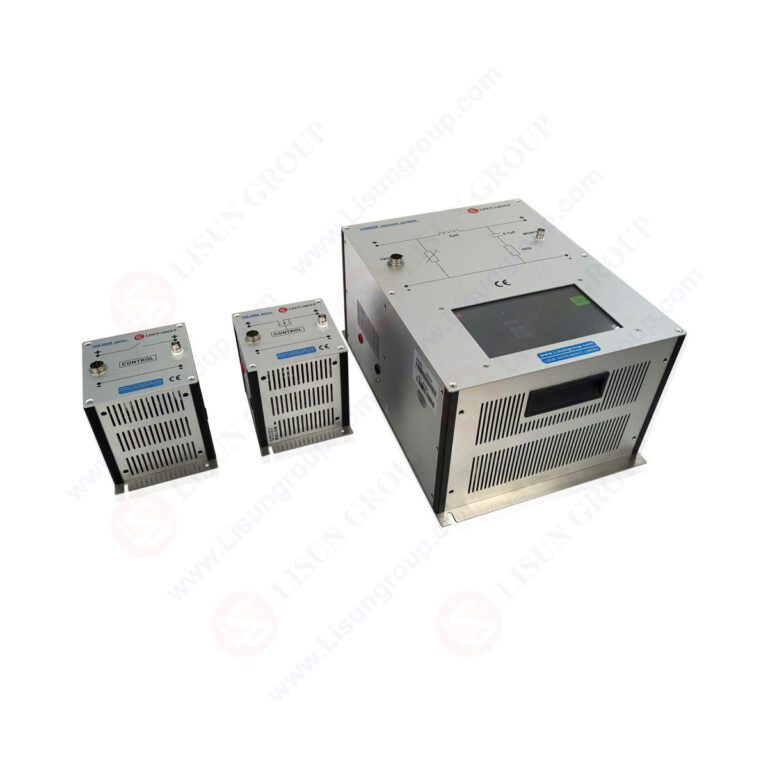
1.1 The Principle of Conducted RF Disturbance
1.2 The Role of Standards in Compliance Validation
2.1 Integrated Signal Source, Amplifier, and Power Meter
2.2 Dual-Power Variant Design Philosophy
3.1 Frequency Range and Output Power Capabilities
3.2 Modulation Modes and Signal Integrity
4.1 Direct Injection and Clamp-Based Coupling
4.2 CDN Selection and System Integration
5.1 Adherence to IEC/EN 61000-4-6
5.2 Alignment with GB/T 17626.6 and Other Regional Standards
6.1 Medical Devices and Industrial Control Systems
6.2 Power Equipment and New Energy Infrastructure
7.1 Streamlined Test Setup and Execution
7.2 Enhanced Measurement Accuracy and Repeatability
The LISUN RFCI61000-6-85W RF Conducted Immunity Test System stands as a technically proficient solution for modern EMC laboratories. By integrating core test instruments into a single, user-controlled platform and offering robust 85W output power, it addresses the critical need for reliable, repeatable, and standards-compliant immunity testing. Its compatibility with various injection methods and CDNs, coupled with a focus on low VSWR and precise modulation, ensures accurate simulation of real-world RF interference scenarios. For engineers across medical, industrial, energy, and telecommunications sectors, this system provides a dependable pathway to validating product durability, accelerating time-to-market, and achieving global regulatory compliance with confidence.
Q1: What are the primary differences between the LISUN RFCI61000-6-35W and RFCI61000-6-85W models, and how do I select the appropriate one?
A: The core distinction lies in the continuous wave (CW) forward output power, which directly determines the test severity level achievable, especially when accounting for coupling losses. The 35W model is suitable for basic compliance testing per standards like IEC 61000-4-6 for many commercial products. The 85W model is essential for testing equipment with higher immunity requirements, for use with coupling devices that introduce significant loss (e.g., certain bulk current injection clamps), or for applications demanding a larger test margin. Selection should be based on the target test level (e.g., 10Vrms requires substantial forward power), the associated coupling factor of the injection device, and the specific industry sector’s norms. The table below provides a direct comparison of key specifications.
| Performance Metric | RFCI61000-6-35W | RFCI61000-6-85W | Industry Relevance |
|---|---|---|---|
| Output Power (CW, max) | 35 W | 85 W | Determines achievable test level after coupling losses. |
| Output Voltage (max) | 200 V | 200 V | Must meet or exceed standard requirements (e.g., 10Vrms ~ 28Vpk). |
| Frequency Range | 150 kHz – 230 MHz | 150 kHz – 230 MHz | Fully covers IEC 61000-4-6 and related standards. |
| AM Modulation Depth | 0-99% | 0-99% | Critical for simulating modulated interference per standard clauses. |
| Typical Application Scope | Consumer electronics, basic industrial controls | Medical devices, power systems, automotive, rigorous industrial | Based on required immunity test levels and coupling losses. |
Q2: How does the system ensure compliance with the precise test signal requirements outlined in IEC 61000-4-6, particularly regarding modulation and output control?
A: The LISUN RFCI61000-6 series is engineered to meet the specific performance check requirements of IEC 61000-4-6, Clause 6. The integrated system architecture is key. It features a built-in power meter that continuously monitors forward and reflected power at the injection point, allowing for real-time leveling and ensuring the correct test signal amplitude is delivered to the EUT port, as mandated by the standard. For modulation, the system provides precise 1 kHz sine wave amplitude modulation (AM) at 80% depth, which is a fundamental requirement for the majority of test levels. This integrated control loop—from signal generation through amplification to verified delivery—ensures the test signal’s characteristics (frequency, modulation, and amplitude) remain within the tolerances specified by the standard, thereby guaranteeing the validity and repeatability of the immunity test.
Q3: Can the RFCI61000-6 system be used with existing Coupling-Decoupling Networks (CDNs) from other manufacturers, and what are the key interface considerations?
A: Yes, the system is designed for broad compatibility with standard CDNs, such as those meeting the specifications in IEC 61000-4-6. The primary interface consideration is the use of a 50-ohm coaxial connection between the system’s RF output and the CDN’s input port. The system’s capability to measure and compensate for voltage standing wave ratio (VSWR) is crucial here. A low system VSWR ensures maximum power transfer and minimizes signal reflections that could cause measurement inaccuracies or potential damage. When integrating third-party CDNs, engineers must verify the CDN’s coupling factor and power handling capability align with the test levels and the 85W output of the system. The system’s leveling function, based on its internal power meter, will automatically adjust to deliver the correct voltage to the EUT, regardless of the specific CDN’s insertion loss, provided the total system loss does not exceed the amplifier’s power capability.
Q4: What makes this system suitable for testing medical electrical equipment, which often faces stringent regulatory scrutiny?
A: Testing medical electrical equipment requires not only adherence to generic EMC standards like IEC 61000-4-6 but also to specific collateral standards such as IEC 60601-1-2. The LISUN RFCI61000-6-85W system is particularly suited for this field due to its high output power and precision. Medical devices often require higher immunity test levels to ensure safety and essential performance in electromagnetically noisy environments like hospitals. The 85W power headroom ensures that even when using CDNs with significant loss, the required test level (e.g., 10 Vrms or higher) can be reliably and consistently achieved at all frequencies. Furthermore, the system’s measurement accuracy, repeatability, and comprehensive documentation features support the rigorous quality management and audit trail requirements mandated by medical device regulators, providing verifiable evidence of compliant testing.