




Evaluating Material Durability: The Role of Salt Corrosion Test Chambers in Accelerated Environmental Simulation
The relentless degradation of materials through atmospheric corrosion represents a significant economic and safety challenge across global manufacturing sectors. Among the most aggressive and prevalent corrosive agents is chloride, ubiquitously present in coastal environments, de-icing road salts, and industrial atmospheres. To predict long-term material performance and component reliability within a compressed timeframe, industry relies on standardized accelerated corrosion testing. The salt corrosion test chamber, often termed a salt spray or salt fog chamber, serves as the cornerstone apparatus for this critical evaluation. This technical article delineates the operational principles, technical specifications, and diverse applications of these chambers, with a focused examination of the LISUN YWX/Q-010X model as a representative advanced system.
Fundamental Principles of Accelerated Salt Spray Testing
The underlying methodology of salt spray testing is not to replicate natural environmental conditions in a one-to-one temporal ratio, but to create a controlled, severely corrosive atmosphere that accelerates failure mechanisms observed in service. The primary corrosive agent is a neutral (pH 6.5 to 7.2) or acidified (pH 3.1 to 3.3, per ASTM B368 / ISO 9227 CASS test) sodium chloride solution, atomized into a fine mist within the test chamber’s exposure zone. This mist settles uniformly onto test specimens, initiating and propagating corrosion through electrochemical reactions.
The process simulates and accelerates the formation of corrosion products—primarily iron oxides (rust) on ferrous metals, and white or green corrosion on zinc, aluminum, and copper alloys. Key factors governing the test’s severity and reproducibility include solution concentration, chamber temperature (typically maintained at 35°C ± 2°C for neutral tests), saturation tower temperature (to control humidity and droplet size), collection rate of settled spray, and the purity of the compressed air used for atomization. The test does not produce cyclical environmental stresses such as drying or UV radiation unless incorporated into a cyclic corrosion test (CCT) chamber, a more advanced variant.
Architectural and Operational Specifications of Modern Test Chambers
A contemporary salt corrosion test chamber is an integrated electromechanical system designed for precise, consistent, and repeatable testing over extended periods, often running continuously for hundreds or thousands of hours. Core subsystems include the chamber body, salt solution reservoir, air saturator, nozzle atomization system, specimen supports, heating and humidification units, and a programmable logic controller (PLC).
The chamber interior is invariably constructed from corrosion-resistant materials, with premium models utilizing thick, welded polypropylene (PP) or fiber-reinforced plastic (FRP) for exceptional chemical resistance and thermal stability. Heating is typically achieved via titanium or quartz sheathed heaters with PID (Proportional-Integral-Derivative) temperature control to minimize fluctuation. The air supply must be oil-free, filtered, and humidified to over 95% relative humidity in a saturation tower prior to atomization to prevent evaporation of the salt droplets en route to the specimen, ensuring a consistent settlement rate. Modern chambers incorporate transparent lid panels, often made of tempered glass or advanced polymers, for in-process observation without disturbing the test environment.
Data integrity is paramount. Therefore, features such as automatic level control for the reservoir, digital monitoring of chamber and saturation tower temperatures, and built-in fog collectors to verify settlement rate (typically 1.0 to 2.0 ml/80cm²/hour) are standard requirements for compliance with international standards.
The LISUN YWX/Q-010X: A Paradigm of Controlled Corrosion Assessment
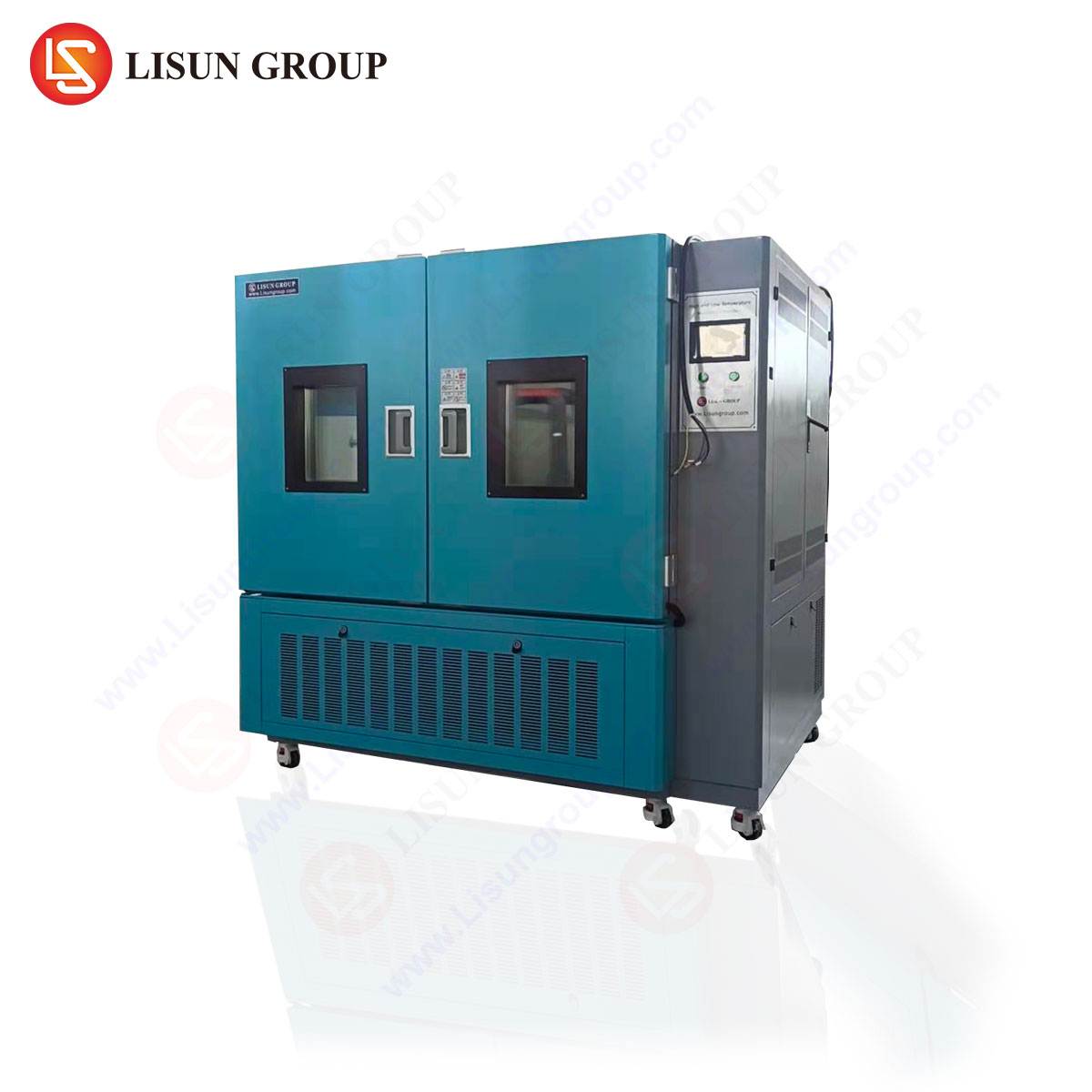
The LISUN YWX/Q-010X Salt Spray Test Chamber exemplifies the engineering required for standards-compliant, high-reliability testing. Designed to execute neutral salt spray (NSS), acetic acid salt spray (AASS), and copper-accelerated acetic acid salt spray (CASS) tests, it provides a versatile platform for a broad spectrum of materials and coatings.
Key Technical Specifications:
- Test Chamber Volume: 1080 Liters (a common benchtop model variant).
- Interior Construction: Molded, 8mm-thick reinforced polypropylene (PP), seamless to prevent leakage and corrosion.
- Exterior Casing: Powder-coated mild steel or stainless steel, offering structural rigidity.
- Temperature Control: Digital PID controller for chamber temperature (ambient to +55°C, ±0.5°C stability) and saturation tower temperature (ambient to +63°C, ±0.5°C). Independent over-temperature protection is integrated.
- Spray System: Utilizing the Bernoulli principle with a precision nozzle, adjustable tower, and large-bore salt solution feed lines to prevent crystallization blockages. Compressed air is preconditioned through a series of filters and a humidification tower.
- Compliance: Engineered to meet the core parameters of major international standards including ASTM B117, ISO 9227, JIS Z 2371, and equivalent GB, IEC, and MIL-STD specifications.
- Control Interface: Microprocessor-based touchscreen controller allowing for programmable test parameters, timers, and real-time monitoring of temperature and collection rate.
Testing Principle Implementation: In the YWX/Q-010X, a 5% ± 1% sodium chloride solution is prepared with deionized water. The solution is fed to the atomizer nozzle, where it is sheared by the pre-humidified, pressurized air into a dense fog. The saturated tower ensures the air is at a higher temperature than the chamber, guaranteeing the fog delivered is at 100% relative humidity. This prevents evaporation, ensuring droplets settle on specimens in a liquid state, initiating corrosion. The chamber’s PID-controlled heating system maintains a uniform temperature profile, eliminating cold spots that could cause condensation variability.
Cross-Industry Applications and Material Validation
The application of salt spray testing is pervasive, serving as a critical gatekeeper for product durability and safety.
- Automotive Electronics & Components: Validating corrosion resistance of engine control units (ECUs), sensor housings, connector systems, brake system components, and chassis parts. A 720-hour NSS test might be specified for underbody electronics to simulate years of exposure to road salt.
- Electrical & Electronic Equipment / Industrial Control Systems: Testing protective conformal coatings on printed circuit boards (PCBs), enclosures for PLCs, drive systems, and terminal blocks. The test verifies that coatings withstand corrosive industrial atmospheres without delamination or loss of dielectric properties.
- Aerospace and Aviation Components: While often requiring more sophisticated cyclic tests, standard salt fog is used for evaluating non-critical structural alloys, fasteners, and ground support equipment coatings per standards like MIL-STD-810.
- Lighting Fixtures & Outdoor Telecommunications Equipment: Assessing the integrity of luminaire housings, optical lens seals, antenna radomes, and base station cabinet coatings against coastal or roadside corrosive environments.
- Medical Devices & Consumer Electronics: Ensuring the longevity of metallic components in handheld diagnostics, surgical tool finishes, and the exterior casings of smartphones or laptops where sweat and occasional saline exposure can occur.
- Cable and Wiring Systems: Evaluating the jacket materials, shielding, and connector corrosion resistance, crucial for data integrity and safety in power transmission, automotive wiring harnesses, and submarine communications cables.
- Household Appliances & Office Equipment: Testing the coated steel panels of washing machines, refrigerators, and HVAC units, as well as the metallic finishes on printers and copiers, to ensure aesthetic and functional longevity in humid home/office environments.
Standards Compliance and Methodological Rigor
Adherence to published standards is non-negotiable for test validity and inter-laboratory comparison. The YWX/Q-010X is designed to facilitate compliance with the stringent requirements of these documents.
Table 1: Key Referenced Test Standards and Parameters
| Standard | Test Name | Typical Solution | Chamber Temp. | Key Application Focus |
| :— | :— | :— | :— | :— |
| ASTM B117 | Standard Practice for Operating Salt Spray (Fog) Apparatus | 5% NaCl, pH 6.5-7.2 | 35°C ± 2°C | Universal baseline for metals & coatings |
| ISO 9227 | Corrosion tests in artificial atmospheres – Salt spray tests | 5% NaCl, pH Neutral or Acidic | 35°C ± 2°C | International equivalent to ASTM B117 |
| IEC 60068-2-11 | Environmental testing – Salt mist | 5% NaCl, pH 6.5-7.2 | 35°C ± 2°C | Specific for electrical/electronic components |
| JIS Z 2371 | Methods of salt spray testing | 5% NaCl, various pH | 35°C ± 2°C | Prevalent in Asian automotive/electronics |
| ASTM B368 / ISO 9227 CASS | Copper-Accelerated Acetic Acid-Salt Spray | 5% NaCl + CuCl₂, pH 3.1-3.3 | 50°C ± 2°C | Accelerated testing for decorative Cu/Ni/Cr |
Methodological rigor extends beyond the chamber itself. It encompasses specimen preparation (cleaning, masking), positioning (typically at 15° to 30° from vertical), solution chemistry verification, and post-test evaluation per standards like ASTM D1654 (evaluating corroded and scribed coated panels).
Comparative Advantages of Engineered Chamber Design
The technical merits of a chamber like the YWX/Q-010X translate directly into test reliability and operational efficiency. Its seamless, thick PP construction eliminates a primary failure point—corrosion-induced leakage from welded seams in inferior chambers. The precision PID temperature control system, with separate controls for the chamber and saturation tower, ensures strict adherence to the narrow tolerances mandated by standards, a common shortfall in rudimentary systems.
The anti-crystallization nozzle and large-diameter feed system drastically reduce maintenance downtime associated with clogged atomizers, a frequent nuisance that interrupts long-duration tests. Furthermore, the integration of a user-friendly programmable controller not only simplifies operation but also provides an audit trail of environmental conditions, which is crucial for quality documentation and resolving disputes over test validity. When compared to chambers using less durable interior materials or simplistic on/off temperature controls, such engineered features provide superior long-term stability, lower cost of ownership, and, most critically, generate corrosion data that carries greater credibility in the supply chain.
Interpretation of Test Results and Limitations
The output of a salt spray test is not a direct prediction of service life in years. It is a comparative, qualitative, or semi-quantitative tool. Results are typically expressed as the number of hours to first red rust (for steel), to a specified amount of surface corrosion, or to blistering of a coating. A common metric is the “protection rating” based on the percentage of the surface area corroded after a fixed duration.
A critical understanding of the test’s limitations is essential. The continuous wet, saline environment does not replicate the dry-wet cycles, UV degradation, or pollutant variations of real-world exposure. It is particularly aggressive towards porous or defective coatings and can produce failure modes not seen in natural environments. Therefore, its value is greatest as a rapid quality control check for coating processes, a comparative tool for selecting materials or finishes, and a pass/fail criterion based on historical correlation between test performance and field service for a specific product in a known environment. It is one vital tool within a broader suite of environmental stress tests, including humidity, thermal cycling, and UV exposure.
Frequently Asked Questions (FAQ)
Q1: What is the critical difference between NSS, AASS, and CASS tests, and how do I select the appropriate one?
A1: The Neutral Salt Spray (NSS) test is the baseline, using a 5% NaCl solution at neutral pH. Acetic Acid Salt Spray (AASS) acidifies the solution to pH ~3.1, increasing aggressiveness, particularly for decorative nickel-chromium or aluminum coatings. Copper-accelerated Acetic Acid Salt Spray (CASS) adds copper chloride and is performed at 50°C, providing the most rapid results for quality control of decorative copper-nickel-chromium plating. Selection is dictated by the material system under test and the relevant industry or customer specification.
Q2: Why is the air saturation tower temperature critical, and what happens if it malfunctions?
A2: The saturation tower humidifies the compressed air to 95-98% RH at a temperature higher than the chamber. This prevents the salt droplets from evaporating before they settle on the specimens. If the tower temperature is too low or the system fails, droplets will evaporate, producing fine, dry salt crystals that are less corrosive, leading to an invalid test with a lower-than-specified settlement rate and reduced severity.
Q3: For a new product, how is the required test duration (e.g., 500 vs. 1000 hours) determined?
A3: The test duration is rarely arbitrary. It is typically established through one of three methods: 1) Compliance with an industry-wide standard for that product category (e.g., automotive specs), 2) A customer’s specific requirement based on their field failure history, or 3) Internal company correlation studies that link a certain number of test hours to a target number of years of service in a defined environment (e.g., 720 hours NSS correlates to 10 years in a mild coastal climate for a specific coating).
Q4: Can the YWX/Q-010X chamber test plastic or composite materials?
A4: Yes, but the purpose differs. For non-metallic materials, the test often evaluates the effects of salt deposits on surface properties (e.g., electrical insulation resistance, changes in gloss or color) or the performance of metallic coatings applied over the plastic. The chamber can also assess galvanic corrosion where dissimilar metals are in contact on a composite assembly.
Q5: What are the most common causes of non-reproducible or invalid test results?
A5: The primary causes are: improper solution concentration or pH; incorrect chamber or saturation tower temperatures; use of impure water or salt; clogged or misaligned atomizers leading to low/uneven settlement; contaminated air supply (oil, dirt); poor specimen preparation or positioning; and overcrowding of the chamber, which disrupts fog circulation and settlement uniformity. Regular calibration and maintenance per the standard are essential to mitigate these issues.