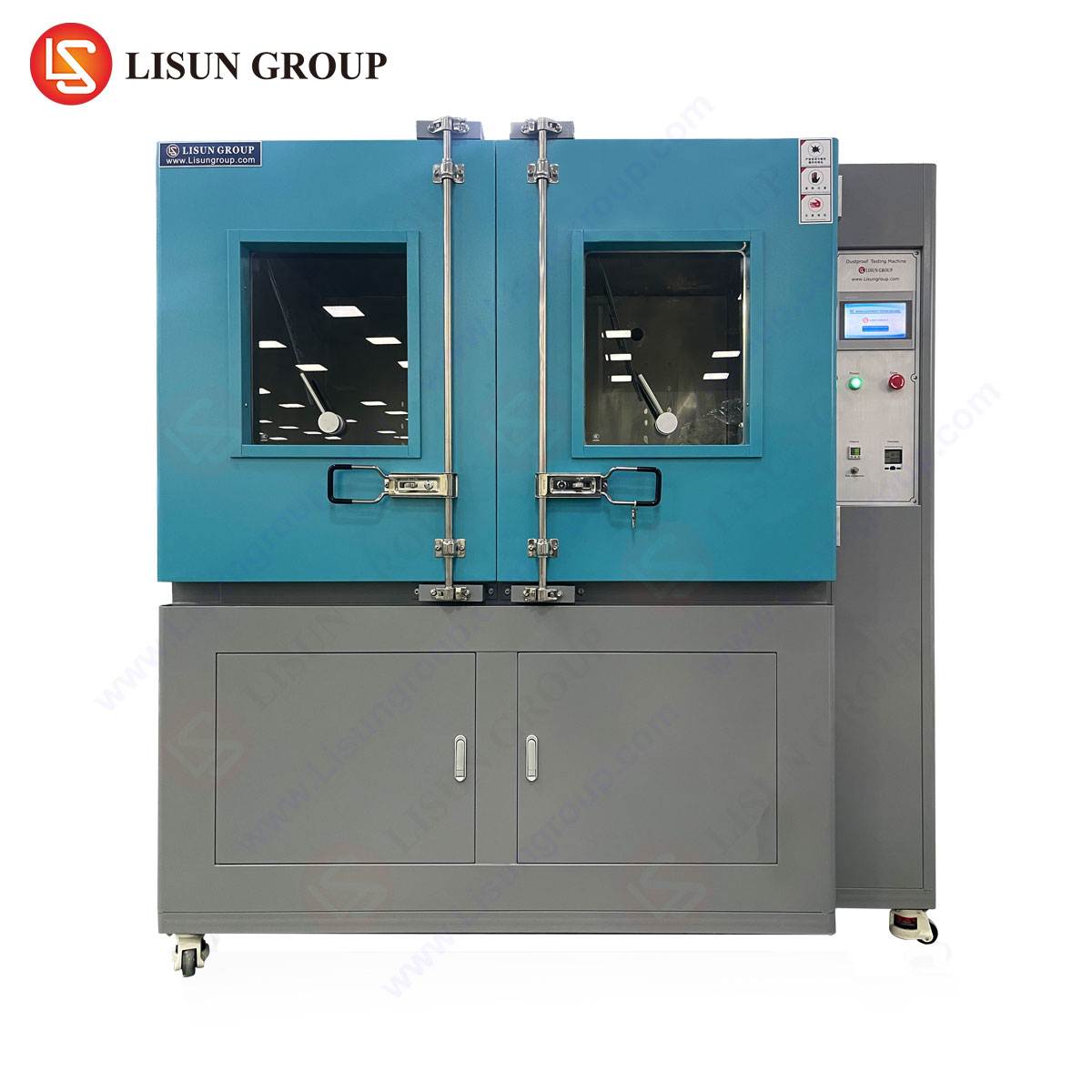



Title: Accelerated Corrosion Evaluation: The Role and Refinement of Salt Fog Test Chambers in Modern Industry
Abstract
The relentless pursuit of product longevity and reliability across diverse industrial sectors necessitates robust, predictive environmental testing methodologies. Among these, salt fog (spray) testing stands as a fundamental, accelerated corrosion evaluation technique, simulating years of environmental degradation within a controlled laboratory timeframe. This article examines the operational principles, standardization, and critical applications of salt fog test chambers, with a focused analysis on the implementation of advanced systems such as the LISUN YWX/Q-010X model. The discourse encompasses technical specifications, adherence to international standards, and the chamber’s pivotal role in qualifying components for industries ranging from automotive electronics to aerospace.
Fundamental Principles of Accelerated Salt Fog Corrosion Testing
The core objective of a salt fog test chamber is not to precisely replicate natural environmental conditions, but to create a severely corrosive, consistent, and reproducible atmosphere that accelerates the electrochemical and chemical processes leading to corrosion. The primary mechanism involves the deposition of a fine, saline mist onto test specimens. This mist, typically a 5% sodium chloride (NaCl) solution per established standards, settles on surfaces, forming an electrolytic film.
Subsequent corrosion proceeds via several interconnected pathways. Galvanic corrosion occurs when dissimilar metals are in electrical contact within the electrolyte. Pitting corrosion, a particularly insidious localized form, can initiate at microscopic defects in protective coatings or passive layers. For components with inherent stresses, stress corrosion cracking (SCC) may be induced. The constant wetting and the presence of chloride ions—notorious for breaking down passivation layers on metals like aluminum and stainless steel—ensure a continuous and aggressive attack. The chamber’s controlled environment (maintained at typically 35°C ± 2°C for neutral salt fog tests) standardizes the reaction kinetics, allowing for comparative assessments between materials, finishes, and manufacturing processes. The test does not correlate to a specific real-world timeframe in a linear fashion but provides a vital qualitative and comparative ranking of corrosion resistance.
Architectural and Functional Components of a Modern Test Chamber
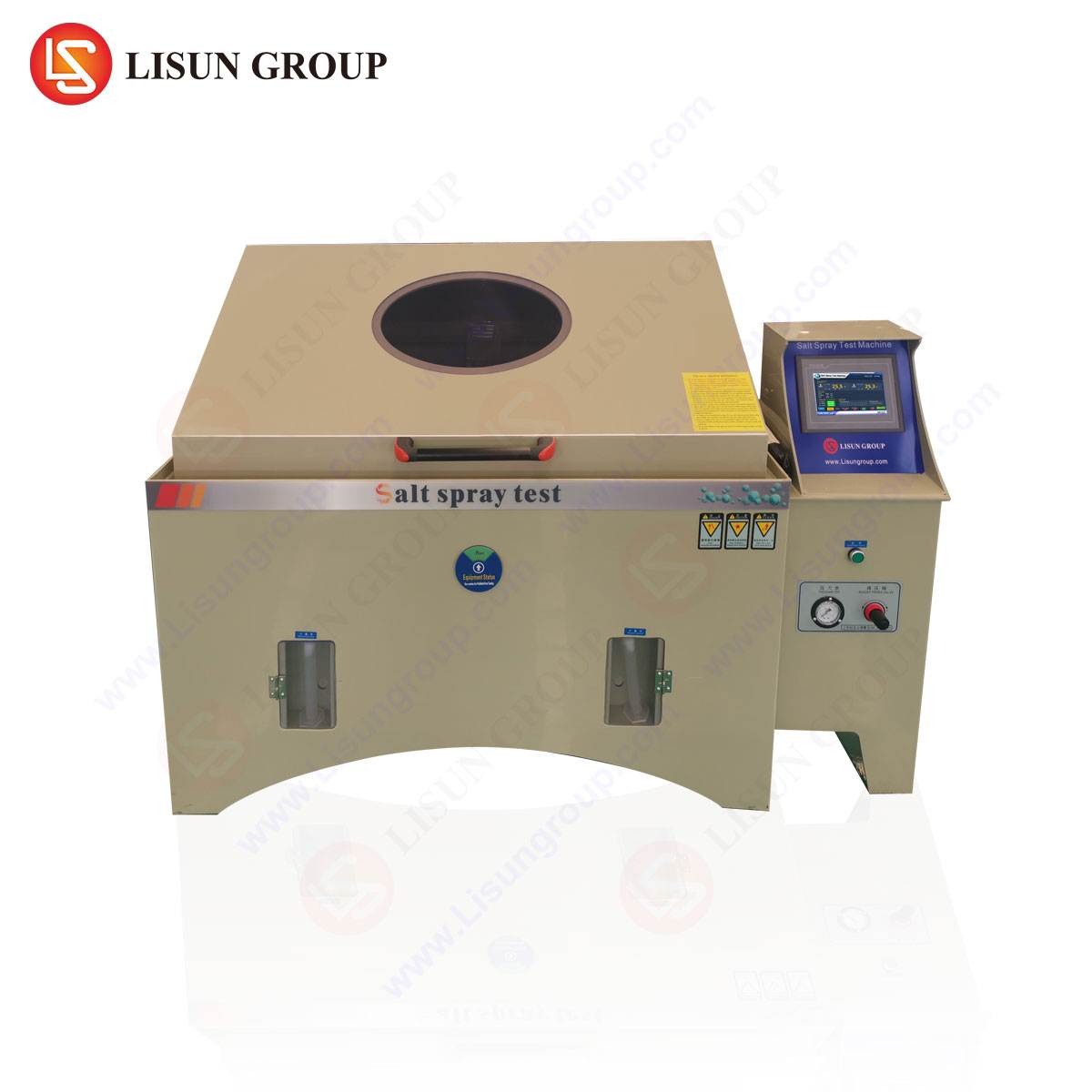
A contemporary salt fog test chamber is an engineered system comprising several integrated subsystems. The chamber body is constructed from chemically inert materials, such as reinforced polypropylene or glass-reinforced polyester, to resist attack from the saline environment. Critical to performance is the atomization system, which generates the fog. The LISUN YWX/Q-010X, for instance, utilizes a precision nozzle fed from a saturated brine reservoir. Compressed air, meticulously cleaned and humidified in a separate saturator tower maintained at a temperature higher than the chamber, is forced through the nozzle, creating a dense, uniform fog of controlled droplet size. This saturator preheating prevents a drop in chamber temperature and ensures consistent solution concentration by compensating for water evaporation during atomization.
The heating and humidity control system is paramount. Immersion heaters or jacket heating maintains the chamber at the setpoint temperature. The relative humidity inside the chamber during a standard test is maintained at or near 100% by the equilibrium between the warm, saturated air and the saline solution. A sophisticated electronic controller manages these parameters, often featuring programmable logic for complex cyclic tests. Specimens are positioned on non-conductive, corrosion-resistant racks at an angle between 15° and 30° from vertical, as specified in standards like ASTM B117, to allow uniform condensate runoff and prevent pooling. The chamber includes a condensate collection system to measure the沉降率 (settlement rate) of the fog, a key metric for test validity, ensuring it falls within 1.0 to 2.0 ml per 80cm² per hour.
Adherence to International Standards and Testing Protocols
The validity and comparability of salt fog test data are wholly dependent on strict adherence to published international standards. These documents prescribe every critical parameter, from solution purity and pH to chamber temperature and collection rate.
- ASTM B117: “Standard Practice for Operating Salt Spray (Fog) Apparatus” is the foundational and most widely referenced standard, primarily for neutral salt fog (NSS) testing.
- ISO 9227: “Corrosion tests in artificial atmospheres – Salt spray tests” is the internationally harmonized counterpart, detailing NSS, acetic acid salt spray (AASS), and copper-accelerated acetic acid salt spray (CASS) tests.
- IEC 60068-2-11: “Environmental testing – Part 2-11: Tests – Test Ka: Salt mist” is critical for electrical and electronic equipment, often referenced in sector-specific standards like IEC 60529 for ingress protection (IP) rating validation.
- JIS Z 2371: The Japanese Industrial Standard for salt spray testing methods.
The LISUN YWX/Q-010X is engineered for compliance with these and other standards (GB/T 2423.17, MIL-STD-810G Method 509.6), providing the necessary control fidelity. For example, the AASS test, used for more aggressive evaluation of decorative coatings like nickel-chromium, requires the pH of the collected solution to be 3.1–3.3, achievable through precise acetic acid dosing and chamber atmosphere control. The chamber’s design facilitates these variant protocols without cross-contamination.
Industry-Specific Applications and Use Cases
The universality of the corrosion threat makes salt fog testing indispensable across a vast industrial landscape.
- Automotive Electronics & Components: With increasing electronic content in vehicles (ECUs, sensors, ADAS systems), testing ensures resilience against road salt. Connectors, wiring harnesses, and switch assemblies are subjected to tests simulating underbody and engine compartment exposure.
- Aerospace and Aviation Components: While often followed by more complex cyclic tests, standard salt fog screening is applied to non-critical structural alloys, fasteners, and avionics housings to assess baseline coating integrity per standards like MIL-STD-810.
- Electrical & Electronic Equipment, Industrial Control Systems: Enclosures, busbars, terminal blocks, and PCB assemblies with conformal coatings are tested to validate protection against corrosive industrial or coastal atmospheres, supporting compliance with IEC standards.
- Lighting Fixtures (Indoor & Outdoor): Luminaires for street lighting, architectural, or marine use must withstand salt-laden air. Testing evaluates housing integrity, gasket performance, and the corrosion resistance of reflectors and heat sinks.
- Telecommunications Equipment: Outdoor cabinets, antennas, and broadband hardware are exposed to global environments. Salt fog testing qualifies materials and seals for coastal deployments.
- Medical Devices: Devices used in sterile processing (which involves saline solutions) or intended for use in harsh environments undergo testing to ensure no corrosive byproducts compromise function or patient safety.
- Consumer Electronics & Household Appliances: From smartphones with claimed water resistance to washing machine control panels and dishwasher internals, testing validates durability claims and material selection.
Technical Analysis: The LISUN YWX/Q-010X Salt Fog Test Chamber
The LISUN YWX/Q-010X represents a modern implementation of the salt fog testing principle, designed for high throughput and stringent standard compliance. Its specifications and features address common challenges in accelerated corrosion testing.
Key Specifications:
- Chamber Volume: 270 Liters (interior dimensions customizable).
- Temperature Range: Ambient +5°C to +55°C, with a control stability of ±0.5°C.
- Atomization System: Tower-type saturator with automatic water replenishment; adjustable fog dispersion.
- Solution Tank: 25L capacity, with pre-heating and level monitoring.
- Controller: Digital PID controller with touchscreen interface, programmable for test duration, temperature, and spray cycles.
- Construction: 5mm thick imported PVC plastic for the main chamber, with a cover reinforced by fiberglass.
- Compliance: Designed to meet ASTM B117, ISO 9227, IEC 60068-2-11, JIS Z 2371, etc.
Testing Principles in Practice: The chamber operates by creating a closed corrosive ecosystem. The compressed air is humidified and heated in the saturator tower to approximately 47°C before atomizing the 5% NaCl solution in the nozzle. This pre-conditioning ensures the chamber temperature remains stable at 35°C and that the fog collected has the correct concentration. The digital controller not only maintains temperature but can also manage cyclic tests, where periods of fog exposure are interspersed with drying or humidity-only phases, a more realistic simulation for many applications.
Competitive Advantages: The YWX/Q-010X model emphasizes operational consistency and user-centric design. The tower-type saturator provides more stable and uniform fog generation compared to simpler bubbler designs. The use of thick, imported PVC offers superior long-term resistance to deformation and chemical attack versus lower-grade materials. The programmable controller reduces operator intervention and potential for error. Furthermore, its design minimizes salt carryover into critical pneumatic components, enhancing system longevity and reducing maintenance downtime—a significant consideration in high-utilization laboratory environments.
Data Interpretation and Limitations of the Methodology
Post-test evaluation is as critical as the test execution itself. Assessment methods are defined by product specifications and can include:
- Visual inspection for corrosion products (white/red rust), blistering, or cracking of paints/platings.
- Measurement of corrosion spot size and density per ISO 10289 rating system.
- Weight loss measurements for uncoated metals.
- Functional testing of electronic components post-exposure.
It is imperative to acknowledge the limitations of continuous salt fog testing. It is an accelerated, but highly artificial, environment. It does not account for UV degradation, thermal cycling, mechanical wear, or real-world wet/dry cycles. Therefore, its results are best used as a comparative screening tool, not an absolute predictor of service life. It is most effective for identifying gross material or process deficiencies, qualifying coatings, and for quality control benchmarking. For comprehensive reliability assessment, it is often part of a larger test sequence including cyclic corrosion tests (CCT) and real-world field trials.
Conclusion
The salt fog test chamber remains an indispensable instrument in the materials and reliability engineering toolkit. Its value lies in its standardized, severe, and reproducible nature, providing a crucial first-order filter against corrosion failure. As products become more complex and global supply chains demand uniform quality metrics, the role of such standardized testing only grows. Advanced implementations, like the LISUN YWX/Q-010X, enhance this value through improved control, durability, and compliance, enabling industries from automotive to aerospace to make informed, data-driven decisions about material selection and design integrity in the face of ubiquitous environmental challenges.
FAQ Section
Q1: What is the key difference between a standard neutral salt spray (NSS) test and an acetic acid salt spray (AASS) test?
A1: The primary difference lies in the pH of the test solution. NSS uses a 5% NaCl solution neutralized to a pH of 6.5 to 7.2. AASS adds glacial acetic acid to the salt solution to lower and maintain the pH between 3.1 and 3.3, creating a significantly more aggressive environment. AASS is primarily used for accelerated testing of decorative copper-nickel-chromium or nickel-chromium electroplates, where it better accelerates the corrosion mechanisms relevant to those systems.
Q2: How often should the saline solution in the reservoir be replaced, and why is solution purity critical?
A2: The solution should be prepared fresh for each test initiation. Re-use or top-up of old solution is prohibited by standards. Purity is critical because impurities can act as corrosion inhibitors or accelerators, invalidating the test’s reproducibility. For example, copper ions can inhibit the corrosion of steel, while certain organic impurities might accelerate it. Only distilled or deionized water and analytical grade sodium chloride (NaCl) with less than 0.1% total impurities should be used.
Q3: For testing electronic assemblies, should the unit be powered during the salt fog exposure?
A3: This is determined by the relevant product specification or test standard. Most standard salt fog tests (like ASTM B117) are performed on unpowered specimens. However, specific tests for automotive or aerospace electronics may involve bias voltage application or periodic functional checks to simulate real-world scenarios where galvanic potentials or electrolytic leakage currents are present. This must be explicitly defined in the test plan.
Q4: What is the significance of the “settlement rate” collection measurement, and what causes it to fall outside the acceptable range?
A4: The settlement rate (1-2 ml/80cm²/hour) ensures a consistent and standardized corrosive load on all specimens. A rate that is too low may produce no corrosion, invalidating the test. A rate that is too high can cause droplet coalescence and pooling, which is not representative of a salt-laden atmosphere. Common causes for deviation include clogged or worn atomizer nozzles, incorrect saturator tower temperature, improper air pressure, or chamber temperature fluctuations.
Q5: Can a salt fog test chamber be used for testing the integrity of protective enclosures (IP rating)?
A5: Yes, but with careful interpretation. Salt fog is sometimes used as a supplementary test for IP-rated enclosures, particularly for the “corrosion protection” aspect (denoted by an optional letter in the IP code, e.g., IP66K). However, it is not a direct substitute for the ingress protection tests specified in IEC 60529 (which use fresh water and jets/sprays). Salt fog testing for enclosures primarily assesses whether corrosive agents can penetrate seals and gaskets over time and damage internal components, rather than testing for immediate water penetration under pressure.